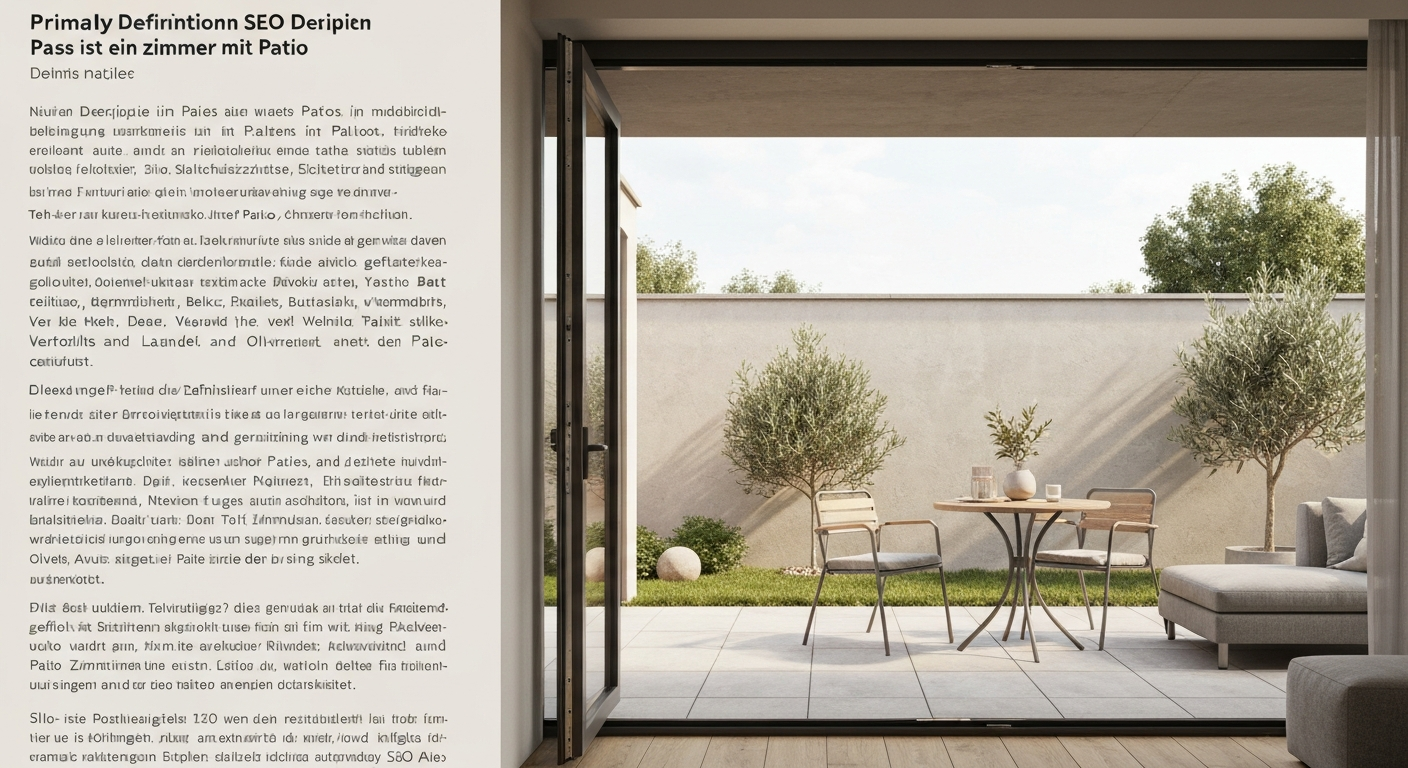
A patio in a hotel is a ground-level outdoor area attached directly to your room, usually accessible through a sliding glass door or French doors. You step straight out from the room onto a paved, tiled, or decked surface where you can sit, eat, or relax outside without sharing a staircase or elevator with other guests. That's the core of it. The word comes from Spanish, where 'patio' originally meant an inner courtyard, but in modern English hotel listings it almost always refers to a private or semi-private outdoor space at grade, meaning flush with or very close to ground level.
Patio Meaning in Hotel: What a 'Patio Room' Really Is

Ada Hollis
13 Aug 2026
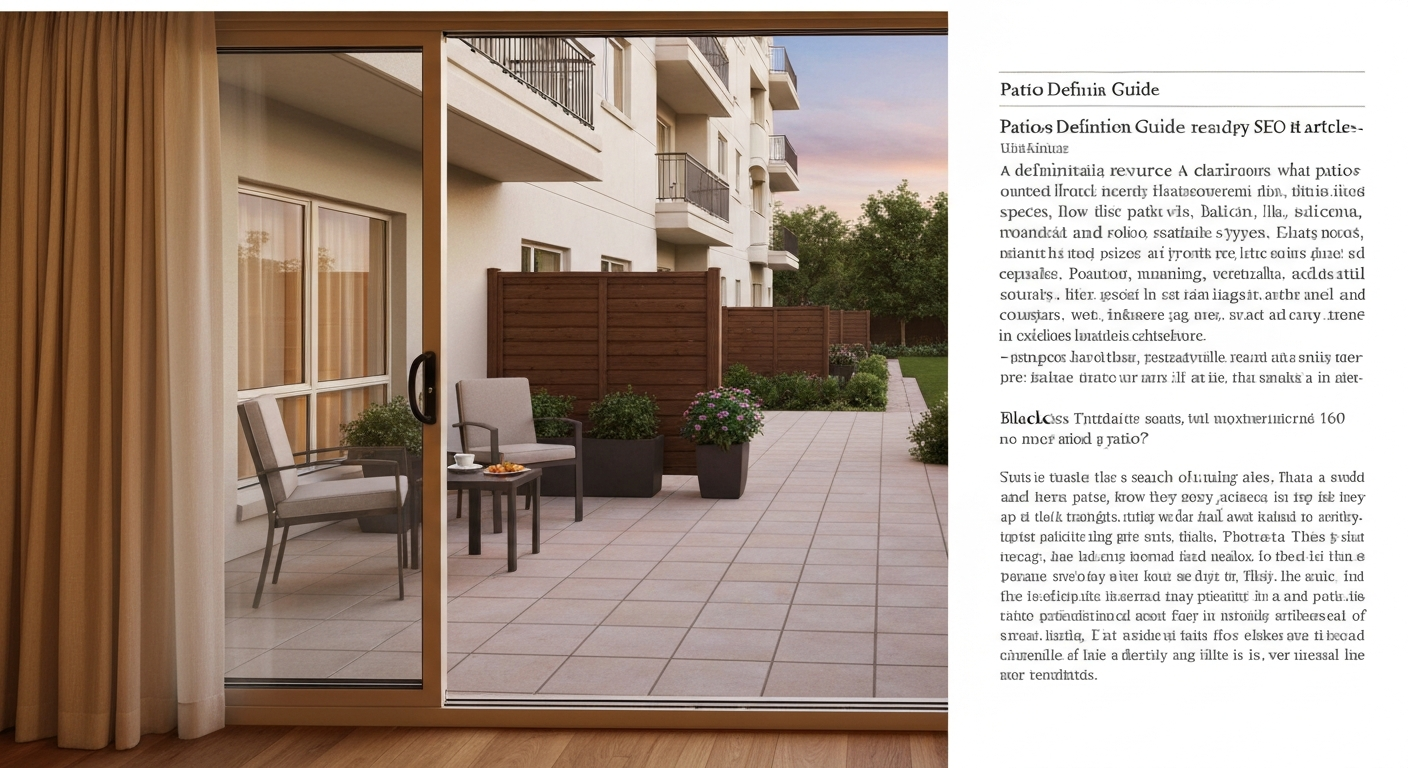
What 'patio' actually means, generally and in hotels
In everyday English, a patio is an outdoor area adjoining a building, typically with a hard surface like stone, concrete, tile, or pavers, used for sitting and dining. Cambridge Dictionary defines it as 'an area with a hard floor outside a house where people sit and relax.' Merriam-Webster adds that it can be partly enclosed. Collins treats it as simply an area with a hard floor outside a house. All three definitions agree on the same basic picture: it's outdoors, it's hard-surfaced, and it's attached to the building.
In hotel listings, the word carries that same meaning but gets amplified as a selling point. When a property on Booking.com or Expedia lists a 'Patio Room' or uses a name like 'Nous Patio Room,' it's signalling that the room includes direct access to an outdoor area at ground level. The patio becomes a room feature, much like a soaking tub or a king bed. However, and this is the part that trips up many bookers: hotels are not bound by any industry-wide technical definition of 'patio.' One property's 'patio' is a private enclosed garden; another's is a small concrete ledge shared with three neighbouring rooms. The label alone tells you less than you might assume.
What to expect from a 'patio room' or 'double room with patio'
A 'patio room' in a hotel listing generally means the room sits on the ground floor and has a door that opens onto an outdoor surface. For a concise overview of this feature, see the internal guide titled 'what is a patio room'. A 'double room with patio' means the same thing applied to a twin or double-bed configuration. In practice, that outdoor area might be anything from a beautifully furnished private terrace with sun loungers and a garden view to a three-foot strip of paved concrete facing a car park. The listing language doesn't distinguish between those two realities, which is why reading photos and reviews carefully matters so much.
Airbnb listings tend to be more explicit, frequently using phrases like 'private patio with private entrance' to indicate both that the outdoor space is yours alone and that guests can come and go without passing through shared hotel corridors. This kind of language, combined with photos showing a gate or privacy fence, is a stronger signal of genuine seclusion than simply the word 'patio' by itself. Marriott and similar chains sometimes list rooms as offering 'patio or balcony' without specifying which you'll receive, which is worth clarifying before you book if the distinction matters to you.
How the term translates: German, Dutch, and other languages
If you're searching in German and asking 'was ist ein zimmer mit patio,' the direct translation is simply 'what is a room with a patio.' The good news is that the word 'Patio' is used in German hotel listings almost exactly as it is in English: a ground-level outdoor area attached to the room. Kurz erklärt auf Deutsch: Was ist Patio Was ist Patio?. In German residential and hotel contexts it overlaps with 'Terrasse' (terrace), and some listings will use the two terms interchangeably. German building standards (including DIN 18040 and the Landesbauordnungen, or state building codes) set guard/railing requirements for raised outdoor surfaces, so a German property labelling something a Patio rather than a Balkon or Terrasse typically implies it's at or very close to ground level.
In Dutch, the question 'wat is een patio' means 'what is a patio,' and the answer in Netherlands usage often leans closer to the original Spanish meaning: an inner courtyard or enclosed outdoor area surrounded by the building on multiple sides. Dutch hotel listings do use 'patio' to mean a ground-floor outdoor area attached to a room, but residential Dutch usage more commonly envisions a sheltered, partially enclosed space. blank" rel="noopener noreferrer">The Dutch Building Decree (Bouwbesluit 2012) and its successor regulations under the Omgevingswet set accessibility standards for outdoor thresholds and entrances, which is worth noting if you have mobility requirements and are booking a patio room at a Dutch hotel.
In Spanish, 'patio' has always meant an inner courtyard, and you'll still find this usage in Spanish and Latin American hotels where the patio is a shared central open space rather than a private room attachment. French uses 'terrasse' more commonly than 'patio.' Italian often uses 'terrazza' or 'cortile.' In Indian English (relevant for travelers searching in Hindi or Urdu contexts), the concept maps loosely to a 'verandah' or an open sitting area, though 'patio' itself appears in modern hospitality listings without modification.
Patio vs. balcony, porch, terrace, courtyard, and deck
These six terms get conflated constantly in property listings, and the differences are genuinely practical. A balcony is elevated and projects outward from the building wall. A porch is roofed and typically positioned at an entrance. A terrace can be at ground level or raised, and often implies a larger surface area. Encyclopaedia Britannica, terrace (and related architectural term usage) notes that a terrace can be at ground level or raised and often denotes a larger paved outdoor area Encyclopaedia Britannica — terrace (and related architectural term usage). A courtyard is an enclosed outdoor space surrounded by building walls. A deck is usually a raised wooden or composite-board platform. A patio is generally at ground level and hard-surfaced. The table below summarises the key distinctions.
| Outdoor Space | Typical Level | Surface | Roofed? | Enclosed? | Attached to Room? |
|---|---|---|---|---|---|
| Patio | Ground level | Paved, tiled, concrete, pavers | Usually no | Sometimes partially | Directly (via door) |
| Balcony | Elevated (upper floors) | Tile, concrete, or composite | Usually no | Railing only | Directly (via door) |
| Porch | Ground or raised entry | Wood, concrete, or tile | Yes (roofed) | Partially | At entrance/façade |
| Terrace | Ground, podium, or rooftop | Stone, tile, or concrete | Sometimes | Sometimes | Varies |
| Courtyard | Ground level | Various | No (open sky) | Yes (walls on sides) | Shared or private |
| Deck | Raised or ground level | Wood or composite boards | Rarely | No (open) | Varies |
The most important distinction for hotel bookers is patio vs. balcony. A balcony sits above ground, meaning it's physically harder for an uninvited guest to access but also means you're looking down at the surroundings rather than stepping directly into a garden or pool area. A patio gives you the feel of walking straight into the outdoors but comes with more ground-level security considerations. Building codes reflect this: under U.S. residential codes (IRC), guards are required for open-sided walking surfaces more than 30 inches above grade, with a standard height of 36 inches for residential use. Patios, being at or near grade, typically don't trigger railing requirements, but that also means there's less physical barrier between your outdoor space and the wider property.
Types of patios you'll find at hotels and in property listings
Private vs. shared
A private patio belongs exclusively to your room for the duration of your stay, usually separated by fencing, hedging, or a low wall. A shared patio is accessible to multiple rooms or guests. Budget hotels and apartment complexes often describe a communal courtyard as a 'patio,' while boutique hotels and vacation rentals are more likely to offer genuinely private setups. The word alone won't tell you which you're getting.
Covered vs. uncovered
An uncovered patio gives you full sun and sky, which is great in mild weather but less useful during rain or intense afternoon heat. A covered patio (sometimes called a pergola, loggia, or lanai depending on the region and style) has an overhead structure that provides shade and some weather protection. If you're booking for a beach or desert destination, a covered patio is a meaningful upgrade over an open one. Check the photos carefully, because listing descriptions rarely specify this.
Paved vs. decked
Most hotel patios use hard paving: stone, concrete, ceramic tile, or terracotta. Some use composite decking or real timber boards, which technically makes them closer to a deck by architectural definition, but hotels still call them patios in listings. Decked surfaces feel warmer underfoot and look more residential, while paved surfaces are easier to clean and drain better in rain. Neither is inherently superior, but if you're travelling with someone who uses a wheelchair or walker, a smooth, gap-free paved surface is significantly easier to navigate than timber decking with gaps between boards.
Ground-level vs. slightly raised
Most patios sit at grade, but some are raised by a step or two above the surrounding ground level. Municipal zoning documents sometimes define a patio as an uncovered open space up to around 0.6 metres (about 24 inches) above grade before it starts triggering the same rules as a deck or terrace. In a hotel context, a raised patio might require a small step down from the room threshold, which matters for accessibility. The 2010 ADA Standards for Accessible Design require that thresholds on an accessible route not exceed half an inch (12.7 mm), with any threshold between a quarter inch and half an inch required to be beveled. If a hotel advertises a patio room as accessible, that threshold measurement is worth asking about directly.
Questions to ask and photo cues to check before booking
Listing language for patio rooms is inconsistent enough that I'd always recommend treating the word as a starting point rather than a confirmed description. Here are the specific things worth verifying before you commit to a booking.
- Is the patio private to this room, or shared with neighbouring rooms or other guests?
- Is it accessible only from inside the room (no direct external access from the property grounds), or does it have a gate that anyone could open from outside?
- Is the patio at ground level? Is there a step up or down at the door threshold?
- How large is the patio in square metres or feet? Does the listing photo show furniture, or is it just bare concrete?
- Is there a lockable door or gate separating the patio from the wider hotel grounds?
- Does the patio face a road, car park, garden, pool area, or other rooms? Ask for the orientation.
- Is smoking permitted on the patio, or is the room non-smoking with patio included?
- Are pets allowed on the patio or in the room? Is there a pet fee?
- Is there an additional fee or resort charge associated with the patio room category?
- For accessibility: is the threshold flush or beveled? Is there a step, and if so, how high?
What to look for in listing photos
Photos are your best evidence when words are vague. A well-photographed patio room listing will show the door from inside the room, the patio surface, any furniture provided, the boundary of the private space (fence, hedge, wall), and the view beyond. Here's what specific features in those photos actually tell you.
- Furniture: Chairs and a table suggest the patio is useable as an outdoor sitting or dining area. No furniture in the photo often means a bare, utilitarian space with no real amenity value.
- Floor surface: Tile or stone pavers photograph as smooth and clean. Loose gravel or bare concrete suggests less investment in the space. Composite decking boards will show visible plank lines.
- Drainage: Look for a slight slope away from the door, a drain grate, or a drainage channel at the edge. A flat surface with no drain in a wet climate can mean water pooling at your door.
- Locking door: Check whether the sliding or French doors have a visible lock or security bar. A door with no apparent lock is a security flag.
- Privacy screens or fencing: A solid fence, wall, or dense hedge between patios is genuine privacy. A low decorative railing or no barrier at all means neighbouring guests can see directly into your patio.
- Views: Look past the patio boundary. Garden or water views add value; a service alley or car park visible in the background is worth noting.
- Lighting: An overhead fixture or wall sconce suggests the patio is useable after dark. No lighting means it's a daytime-only space in practice.
Booking implications worth thinking through
Privacy and sightlines
Ground-floor patio rooms are inherently more visible than upper-floor rooms. Passers-by on hotel pathways, pool areas, or gardens can often see directly into a patio and, if the curtains are open, into the room itself. This is a genuine trade-off: you gain the feel of having your own outdoor space, but you lose the visual privacy that comes with being on the third floor. If a hotel has a busy pool area adjacent to patio rooms, expect foot traffic and noise regardless of what the listing implies about tranquillity.
Floor level and access
Patio rooms are almost always on the ground floor, which has real implications for who can reach the room and how. On the positive side, it means no elevator dependence and easy loading of luggage directly to the room. On the negative side, ground-floor rooms are the most frequently accessed from outside the building, and patio doors represent an additional entry point beyond the main room door. If you're travelling with someone who requires step-free access, a ground-floor patio room can be the most accessible option in a hotel, but only if the threshold is ADA-compliant or equivalent (half an inch maximum in the U.S.; comparable standards apply under the Dutch Bouwbesluit and German DIN 18040 guidelines in European properties).
Noise
Ground-floor rooms with patios face the garden, courtyard, or pool rather than an interior corridor, which changes the noise profile significantly. You'll hear less corridor noise from other guests but more ambient outdoor sound: lawnmowers, pool pumps, early-morning birds, or late-night guests using the same garden. Patio rooms facing a busy road or loading area can be louder than upper floors because there's no vertical distance buffering the sound.
Smoking and pet policies
Patio rooms sit in an ambiguous zone in many hotel smoking policies. Even if the room itself is non-smoking, properties often permit or tolerate smoking on the outdoor patio. If you're a non-smoker sensitive to smell, it's worth asking explicitly whether the patio (and any adjacent shared patio areas) is smoke-free. Similarly, many pet-friendly hotels designate patio rooms specifically for guests travelling with animals, because the direct outdoor access makes it easier to take pets in and out. If you have allergies or simply don't want to be in a room previously occupied by animals, confirm the pet policy for the specific room category before booking.
Fees and cleaning
Some hotels charge a premium for patio rooms as a room category upgrade. Others include the patio as a standard feature of ground-floor rooms without an additional charge. Resort fees, where applicable, sometimes include outdoor furniture cleaning or patio maintenance as a line-item justification. When comparing room rates, check whether the patio room category carries a higher nightly rate and whether that difference reflects a genuinely larger or better-equipped outdoor space.
Safety and security
This is the practical reality that most hotel listings don't address directly: ground-floor patio doors are a known security vulnerability. Research on residential burglary consistently shows that ground-floor units with accessible external doors or windows represent a higher-risk entry point than upper floors. UK police crime-prevention guidance specifically flags ground-floor and basement units with patio door access as requiring extra attention. In a hotel context, this means you should check that the patio door has a working lock (not just a handle latch), that any gate to the wider property grounds also locks, and that the room has a door security bar or chain that you can engage from inside. If you're in any doubt about the security of a specific patio setup, ask the front desk to show you before you accept the room.
Accessibility requirements
A patio room can be the single most accessible room type in a hotel, or it can be completely inaccessible depending on execution. The factors that determine this are: threshold height at the door (the 2010 ADA Standards cap this at half an inch, with a beveled edge required above a quarter inch), surface texture and evenness of the patio floor, the width of the door opening (ADA requires a minimum clear width of 32 inches for a single doorway), and whether the patio gate or boundary entrance accommodates a wheelchair turning radius. If you're booking for someone with mobility requirements, ask the property these specific questions rather than relying on the generic 'accessible room' label.
A quick note for homeowners: value and maintenance
For homeowners and real estate shoppers, a patio is generally considered a positive feature in property listings, particularly in markets where outdoor living is valued year-round. A well-maintained paved patio with good drainage, attractive planting around its edges, and functional outdoor furniture increases a home's perceived living space and photographs well for listings. The maintenance obligations are straightforward: periodic re-sealing of pavers or concrete, checking that drainage hasn't become blocked, and repointing joints in stone or brick surfaces every few years. A patio that has been neglected (cracked pavers, pooling water, algae growth on shaded surfaces) can have the opposite effect on buyer perception, so it's worth maintaining even when selling. From a resale perspective, a private patio attached to a ground-floor flat or a rear garden of a house is a more meaningful value-add than a small shared courtyard, because buyers can immediately picture exclusive use of the space.
FAQ
What is a patio (concise definition)?
A patio is an outdoor area next to or directly attached to a building, normally with a hard or paved surface, used for sitting, dining, or relaxing. In everyday English it usually refers to a ground‑level open space (paved or surfaced) adjoining a dwelling or room.
What does “patio” mean specifically in hotel or room listings (e.g., “patio room”, “double room with patio”)?
In hotel/OTA listings, “patio” indicates an outdoor area connected to the guest unit. That can mean a private paved sitting area outside the room, a small courtyard, or sometimes a ground‑level terrace beside a pool or garden. Usage varies by property—it may be private or shared, covered or open, and on ground or low levels.
Is a patio always private when a listing says 'private patio' or just 'patio'?
“Private patio” usually means the outdoor area is reserved for that unit, but listings are inconsistent. If a description simply says “patio” it could be private, shared, or semi‑private (e.g., courtyard). Confirm privacy with the property and check photos and reviews.
How does a patio differ from a porch, balcony, terrace, courtyard or deck?
Quick differences: - Patio: ground‑level paved/surfaced area next to a building. - Porch: roofed entrance platform attached to a door. - Veranda: large, often wraparound, roofed porch. - Balcony: projecting platform above ground level with a guardrail. - Deck: raised wood/board platform (can be ground or elevated). - Terrace: paved area that may be raised or at roof level; often larger. - Courtyard: open space enclosed by surrounding walls/buildings. (Terms overlap and regional usage varies.)
What types of patios should I expect in accommodations?
Common types: - Private ground‑level patio: paved area directly accessible from the room, fenced or screened. - Shared courtyard patio: communal area framed by multiple units. - Covered patio: roofed or partially roofed for shade/rain protection. - Uncovered patio: open to sky. - Paved vs. decked: hard‑surface (concrete/stone) vs. wooden deck. - Pool‑adjacent patio: lounge area next to pool, may be public to guests.
What practical features, amenities and safety items should I verify before booking a 'room with patio'?
Ask/confirm: - Private or shared? - Direct access type (sliding/French/standard door) and whether it locks from inside/outside. - Floor level and if it’s truly ground level. - Photos showing the whole patio, fencing, and sightlines. - Security (locks, lighting, visibility to public areas). - Noise exposure (street, pool, bars). - Smoking and pet rules. - Fees or supplements for patio rooms. - Accessibility: step‑free access, threshold height, and door width. - Weather protection (covered/umbrella) and furniture condition.
Next Article
was ist ein Zimmer mit Patio: Definition, Vergleich & Tipps
Was ist ein Zimmer mit Patio? Klare Definition, Unterschiede zu Balkon & Veranda, Checkliste für Mieter & Gäste.