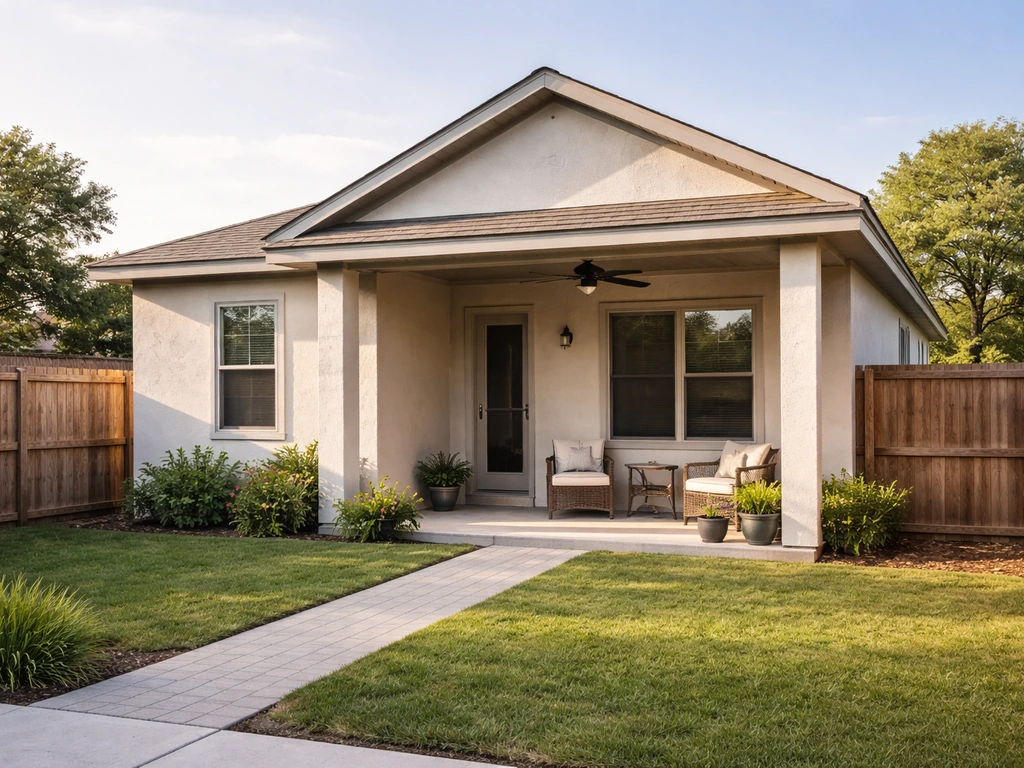
In Arizona real estate listings, a 'patio home' is typically a smaller, often single-level residence that's clustered with other similar homes and built around a private or semi-private patio area. It's not just a regular house that happens to have a patio out back. The term signals a specific housing style: reduced lot size, minimal front-yard setback, shared or HOA-managed exterior spaces, and a layout deliberately designed to push daily living toward an enclosed or semi-enclosed outdoor area.
What Is a Patio Home in Arizona? Definition and Differences

Ada Hollis
25 Jun 2026
In Texas, patio homes are generally designed around smaller footprints and outdoor living spaces, but the exact meaning can vary by local market and listing rules patio homes in Texas. About 85% of patio homes listed in the Phoenix metro are single-level, and they usually come in under the price of a comparable single-family detached home.
What 'patio' and 'patio home' actually mean in Arizona listings
The word 'patio' on its own just means a hard-surfaced outdoor area attached to a home, typically at ground level. But 'patio home' in an Arizona MLS listing is something more specific: it's a dwelling-type classification. The Arizona Regional Multiple Listing Service (ARMLS) lists 'Patio Home' as its own distinct category alongside Townhouse, Single Family Residence, Apartment Style/Flat, and Gemini/Twin Home. That means when a listing says 'patio home,' it's not just describing a feature of the house; it's telling you what kind of property it is.
Here's where it gets a little messy: there is no universal legal definition of a patio home. blank" rel="noopener noreferrer">Wikipedia puts it plainly, and any Arizona buyer should take this to heart. The same property could be marketed as a patio home in one listing and a garden home, carriage home, or even a townhome in another. The label is largely a marketing and MLS classification choice. What ties them together is a cluster of common physical characteristics, not a legal standard. So when you see 'patio home' in an Arizona listing, your job is to confirm the actual traits, not just trust the label.
The Arizona Department of Water Resources formally recognizes 'patio home' as a distinct residential unit type alongside single-family dwellings, condominiums, and mobile homes, which shows the term has practical administrative weight in the state even without a tight legal definition. That's enough to make it a real category worth understanding, especially since Arizona's climate makes the outdoor-living component of a patio home genuinely central to how you'll use the property.
Core traits that define a patio home
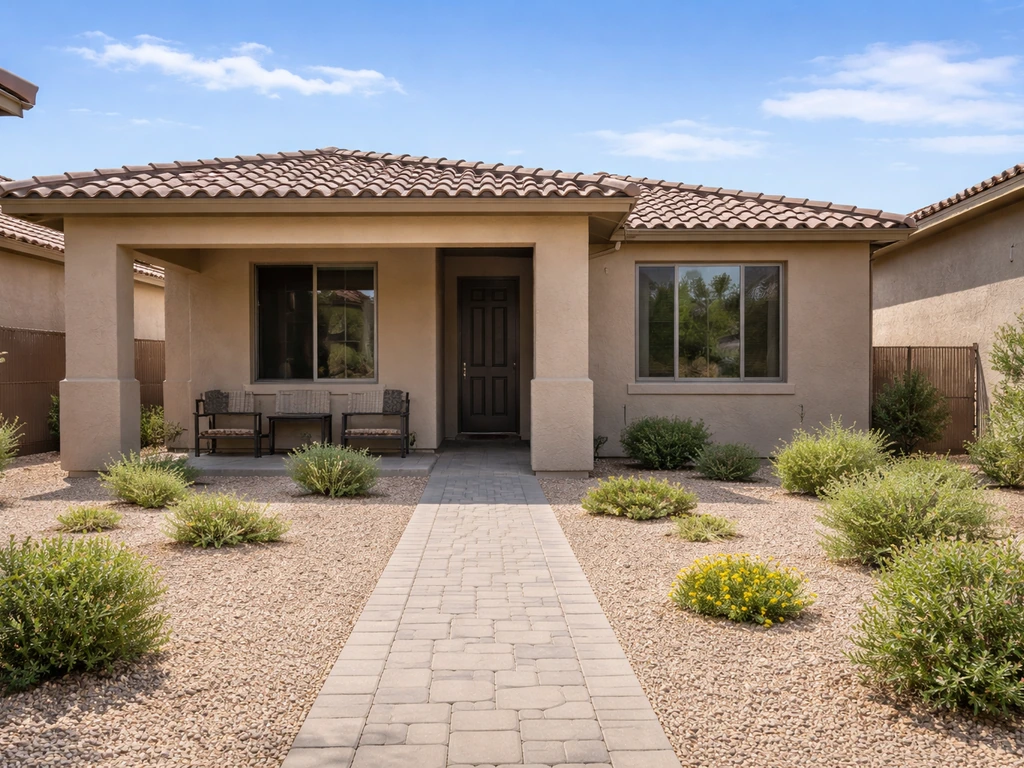
Across Arizona markets, patio homes share a handful of reliable characteristics. Knowing these helps you quickly filter listings and avoid wasting time on homes that are just using the term loosely.
- Single-level layout: Roughly 85% of Arizona patio homes are one-story, making them accessible and easy to navigate without stairs.
- Smaller lot with reduced setbacks: The front yard is often minimal, sometimes just a narrow strip or a shared driveway approach. The outdoor focus is typically at the rear or interior of the home.
- Private patio as the primary outdoor space: Instead of a conventional backyard, you get an enclosed or semi-enclosed patio, sometimes designed as an inner courtyard. This is the defining outdoor feature.
- Cluster siting: Patio homes are grouped together, sometimes sharing a wall (attached) or set closely together with shared driveways or walkways (detached but clustered).
- HOA involvement: The overwhelming majority of patio home communities in Arizona have a homeowners association that manages exterior landscaping, shared driveways, and common areas.
- You own the lot: Unlike a condo, a patio homeowner typically owns the land beneath the home and the building's exterior, not just the interior air space.
ARMLS even distinguishes between 'Patio Home Attached' and 'Patio Home Detached' as separate MLS sub-types. In the attached version, you share at least one wall with a neighbor. In the detached version, the structures are freestanding but still clustered on small lots with shared community features. Both types typically come with HOA oversight.
Arizona-specific design and lifestyle considerations
Arizona's climate shapes patio home design in ways you won't see in Ohio or Colorado. If you're looking in Ohio, the idea is similar, but the local definition and how these homes are marketed can differ from what you'll see in Arizona patio home in Ohio. Summers regularly hit 110°F in the Phoenix area, which means shade, airflow, and wall orientation aren't aesthetic choices; they're survival factors. Here's what that looks like in practice.
Shade structures and HOA rules
Arizona law has been actively debated around HOA restrictions on shade structures. There have been legislative efforts to protect homeowners' rights to install backyard shade structures even when HOA rules would otherwise block them. The current legal framework allows HOAs to regulate the size, placement, and appearance of shade structures, but they cannot adopt rules that make shading your patio unreasonably expensive or impractical. If you're buying a patio home, check the CC&Rs specifically for shade structure language. A west-facing patio without a ramada or shade sail in an Arizona summer is essentially unusable from about 2 p.m. to sunset.
The Arizona room connection
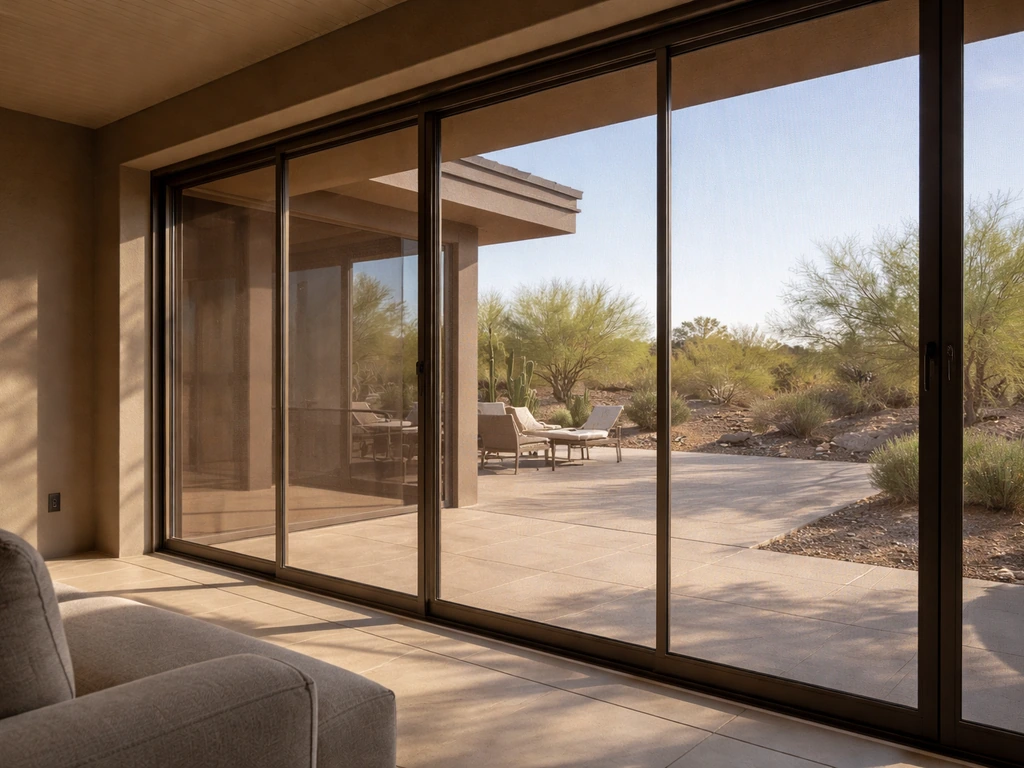
Many Arizona patio homes incorporate what's locally called an 'Arizona room': a covered, screened, or enclosed transitional space between the interior and the outdoor patio. It functions like an insulated breezeway that blank" rel="noopener noreferrer">keeps insects out and softens the heat while still giving you the feel of being outdoors. If a listing mentions an Arizona room adjacent to the patio, that's usually a significant lifestyle upgrade in the summer months. It's worth distinguishing this from a full indoor addition, which would be climate-controlled and not the same thing.
Courtyard and inner patio designs
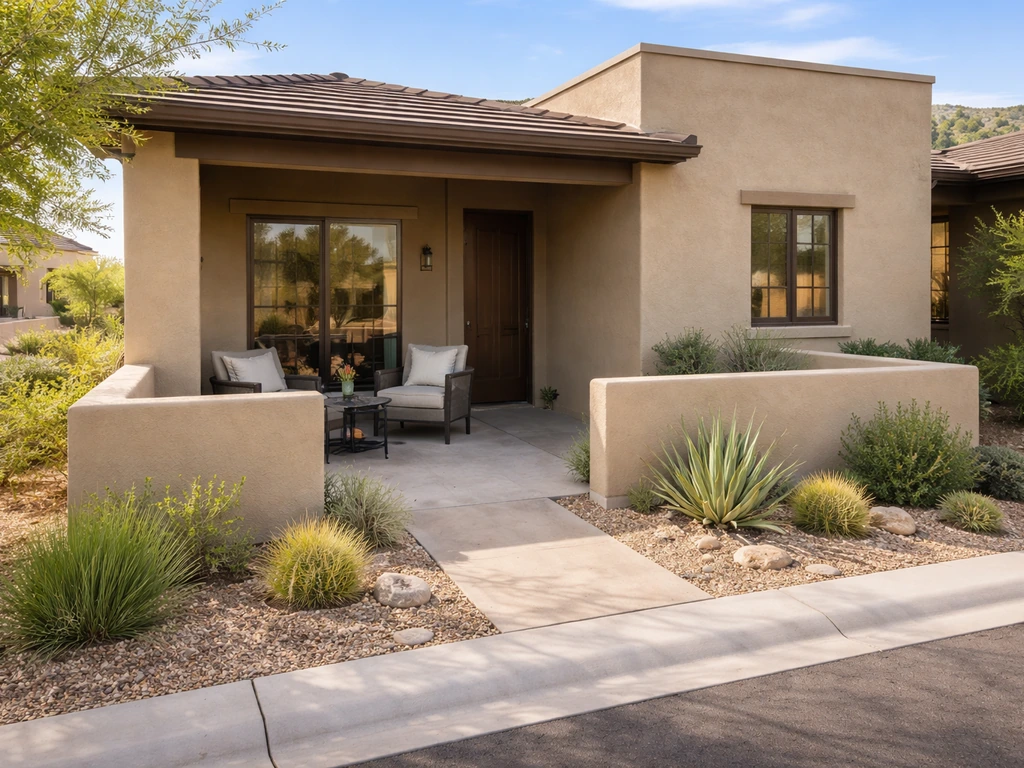
Higher-end patio home communities in areas like Scottsdale often feature a private inner courtyard rather than a rear patio. The courtyard is surrounded on multiple sides by the home's walls, creating a shaded, intimate outdoor space that naturally stays cooler than an open backyard. These designs pull from Spanish colonial and Mediterranean traditions and are genuinely well-suited to the Arizona climate. When a Scottsdale listing describes a 'private inner courtyard designed for intimate gatherings,' that's not just marketing language: it's describing a functional heat-management strategy.
Privacy walls and perimeter fencing
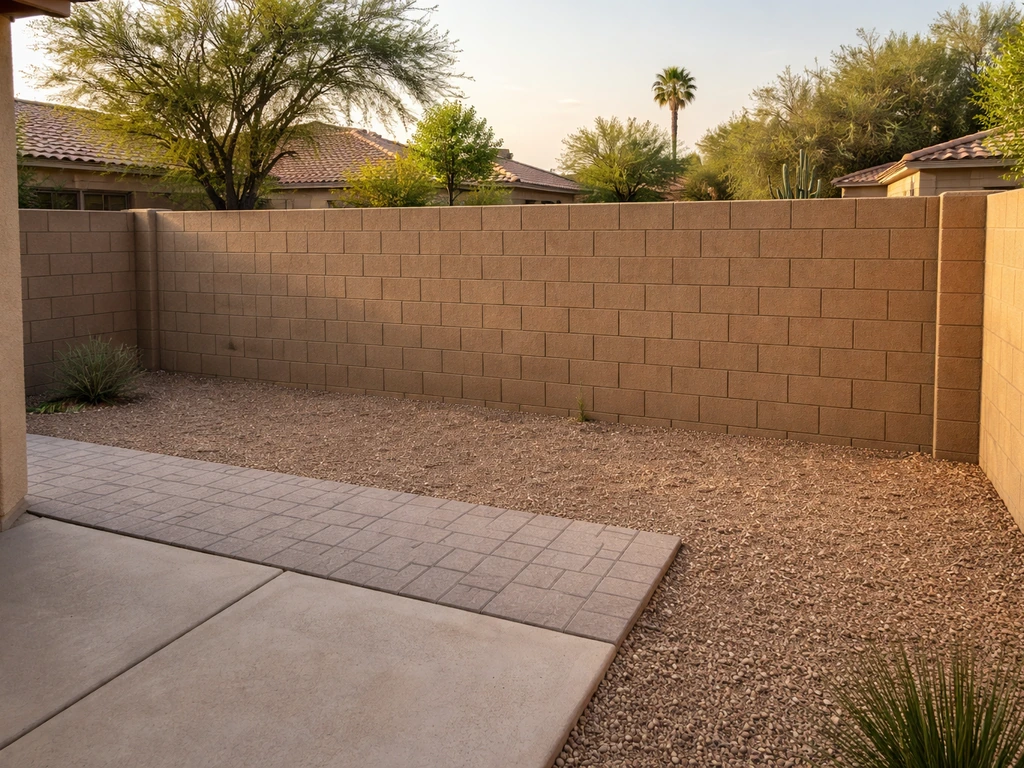
Because lot sizes are small and homes are clustered, privacy walls (usually block masonry, which is standard in Arizona) are critical. A patio home without solid perimeter walls around the patio area is a much less appealing proposition than one where you're fully enclosed. When you tour, pay attention to wall height and what's visible from neighboring homes. Six-foot block walls are common and functional; anything shorter starts to feel like a fishbowl.
Patio homes vs. townhomes, condos, and attached housing
These three housing types frequently get confused in listings, and the differences matter because they affect what you own, what the HOA controls, and what your monthly costs look like.
| Feature | Patio Home | Townhome | Condo |
|---|---|---|---|
| Lot ownership | You own the lot | You usually own the lot | You own interior air space only |
| Exterior ownership | You own the exterior | Typically shared or HOA-managed | HOA owns and manages exterior |
| Stories | Usually single-level (85%+ in AZ) | Often 2-3 stories | Varies |
| Shared walls | Sometimes (attached type) or none (detached) | Almost always | Almost always |
| HOA involvement | Common; manages exterior/common areas | Common; manages shared spaces | Always; manages building and common areas |
| Outdoor space type | Private enclosed patio or courtyard | Small patio or balcony | Balcony or shared courtyard/pool |
| ARMLS classification | Listed as 'Patio Home' | Listed as 'Townhouse' | Listed as 'Apartment Style/Flat' |
The clearest practical difference between a patio home and a condo in Arizona is land ownership. In a condo, the HOA owns the structure and you own the interior. In a patio home, you own the lot and the building, and the HOA governs shared spaces and exterior standards.
In Arizona, courts' legal info sheets note that HOA fees are commonly assessed for maintaining common areas and the property’s exterior, and they describe process requirements such as notice and an opportunity to be heard for penalties or fines HOA governs shared spaces and exterior standards. That distinction affects your property taxes, your insurance (you'll need homeowner's insurance, not condo insurance), your financing options, and what the HOA can tell you to do.
Townhomes in Arizona are their own ARMLS category and are typically multi-story, whereas patio homes lean strongly single-level. If someone is trying to sell you a two-story attached unit as a 'patio home,' that's worth questioning. Townhomes often have smaller patios or balconies as secondary features, not the defining outdoor space a true patio home emphasizes.
Patio, porch, balcony, verandah, and courtyard: clearing up the terminology

Because this site is about understanding patio terminology in all its forms, it's worth being clear about what the outdoor spaces attached to these homes actually are, and what they're not. Buyers sometimes conflate these terms and end up confused about what they're actually getting.
- Patio: A ground-level hard-surfaced outdoor area, usually paved with concrete, pavers, or flagstone. It is not elevated and is not covered by definition, though it can be. In a patio home, the patio is the signature outdoor feature, typically enclosed by walls or the home's own structure.
- Porch: A covered entrance or wraparound feature attached to the front or side of a home, usually with a roof supported by posts. Porches are typically open-air but sheltered. Most Arizona patio homes don't have traditional porches; they're not part of the design language.
- Balcony: An elevated, cantilevered or supported platform attached to an upper floor. Patio homes are almost always single-story, so a balcony is rarely part of the picture. If you see a 'patio home' listing with a balcony, double-check whether it's actually a townhome.
- Verandah: A roofed, open-sided platform that often wraps around a house, similar to a porch but typically larger and more integrated with the structure. Common in some regional styles but not standard in Arizona patio home communities.
- Courtyard: An enclosed outdoor space surrounded on multiple sides by a building's walls. In Arizona patio home design, a courtyard is the premium version of a patio: more private, better shade, and often accessible from multiple interior rooms. Some listings use 'patio' and 'courtyard' interchangeably, so confirm what you're actually getting.
When you read an Arizona listing that says 'patio home with private courtyard,' that usually means the home wraps around or partially surrounds a sheltered outdoor space, which is both the most functional and most desirable outdoor format for the climate. When it just says 'patio,' expect a more conventional slab or paver area off the back of the home, enclosed by block walls.
How to verify a property is actually a patio home before you commit
Given how loosely the term gets used, you should treat every patio home listing as a starting hypothesis, not a guaranteed fact. Here's a practical checklist to work through during your tour and document review.
During the tour
- Confirm the ARMLS dwelling type: Ask your agent to pull up the MLS sheet and find the 'Dwelling Type' field. It should say 'Patio Home' or 'Patio Home Detached/Attached,' not 'Single Family Residence' or 'Townhouse.' If it says something else, the label in the marketing copy is just marketing.
- Check the patio itself: Is it enclosed by block walls or the home's own walls? Is it private, or does it open into a shared common area? Walk the perimeter and look at wall height. Six feet is the Arizona functional minimum for privacy.
- Look for HOA signage or shared driveway features: Patio home communities almost always show visible signs of shared management: uniform landscaping out front, shared drive approaches, HOA signage at the entrance.
- Assess shade and orientation: Which direction does the patio face? West-facing patios need significant shade infrastructure. Note whether a ramada, pergola, patio cover, or Arizona room is already in place.
- Check shared walls: Knock on interior walls that face neighboring units. Shared walls in attached patio homes vary significantly in soundproofing quality.
- Identify what's common vs. private: Ask the agent or listing documentation whether the patio area is part of the owner's lot or a limited common element managed by the HOA. This affects who pays for maintenance and what you can do with the space.
Document review before you sign
- Request the CC&Rs and HOA governing documents: Look specifically for rules about shade structures, landscaping, exterior modifications, and patio enclosures. Arizona law requires HOAs to give you these before you sign.
- Check the Arizona Department of Real Estate Public Report: For new communities, this report is legally required and discloses water supply, legal access, and HOA structure. For resale, ask for the seller's disclosure and any HOA disclosure packet.
- Confirm lot ownership: Verify in the title documentation that you're buying the lot and the structure, not just an interior unit. If the HOA owns the land and you're leasing it, that's a fundamentally different arrangement.
- Review HOA fee breakdowns: Arizona law allows HOAs to assess fees for common area maintenance and exterior upkeep. Get a written breakdown of what the monthly fee covers, especially whether it includes front landscaping, driveways, or any patio structure maintenance.
- Ask about pending HOA rules or disputes: Arizona courts have a specific process for HOA enforcement actions, including notice requirements before fines. Ask whether any rule changes related to shade structures or exterior modifications are in process.
One real-world pattern worth knowing: some Arizona patio home communities, like certain Anthem Parkside developments in North Phoenix, are described as having enclosed patios instead of a back yard, with HOA-managed front landscaping and shared courtyard-style driveways. That setup is a genuine patio home experience. What you want to avoid is paying a patio home price for a house that simply has a concrete slab in the backyard and an HOA that does nothing except collect fees.
If you're also comparing patio home definitions across states, the core concept is consistent but local climate and design culture shift the details significantly. The single-level, heat-adapted, courtyard-oriented version you find in Arizona is distinct from what you might encounter in Colorado or Ohio, where the same term can describe a slightly different housing configuration shaped by different climate pressures and architectural traditions. In Colorado, the term "patio home" generally refers to a smaller, low-maintenance home designed around an outdoor living space, often with shared or managed community elements patio home in Colorado.
FAQ
If a listing says “patio home” but doesn’t mention HOA, should I assume there is none?
No. Many Arizona patio homes have HOA-managed exterior standards even if the listing is vague. Ask for the CC&Rs and HOA budget before touring, and confirm whether landscaping, exterior paint, gates, shade structures, and community amenities are covered.
Are patio homes always single-level in Arizona?
Most commonly, yes in Phoenix-area listings, but not universally. Use ARMLS sub-type (attached vs detached) plus the floor plan to confirm whether bedrooms are all on one level, and check whether there is any interior stair access for garages or bonus rooms.
What documents should I request to verify what I truly own in a patio home?
Request the recorded deed description, HOA governing documents (CC&Rs, rules, and bylaws), and any plat or map showing common areas versus your lot boundaries. This clarifies whether outdoor walls, gates, and driveways are private or shared.
How can I tell whether a “patio home” is really a patio home or just a house with a patio?
Confirm the MLS classification plus the build traits: reduced setbacks, clustered lots, and an outdoor space that is enclosed or semi-enclosed by design (block walls, courtyard, ramada, or Arizona-room style coverage). During the tour, verify whether the HOA actually manages the exterior and shared areas.
Do “patio home attached” and “patio home detached” change my privacy and maintenance responsibilities?
They can. Attached units usually share at least one wall, which can limit exterior modification options and can affect noise and maintenance scope. Detached clustered units still often require HOA compliance for perimeter walls, gates, and exterior paint, so ask what’s considered “exclusive use” versus “common.”
Are shade structures like ramadas and shade sails automatically allowed on patio homes with HOAs?
Not automatically. HOAs can regulate size, placement, and appearance, and they can also require approval timelines. Review the exact CC&R language and ask for the approval process, including whether there are limits that would make the patio unusable during peak heat.
What’s the practical difference between an Arizona room and adding a full room onto the house?
An Arizona room is typically a covered and enclosed transitional space that is not treated like a fully climate-controlled living area. Check whether it has HVAC, what insulation is used, and how it is classified on the listing or appraisal, because that affects comfort, permits, and resale expectations.
If I’m buying a patio home, how should I budget for insurance and taxes compared with a condo?
Expect different insurance types and rating factors based on land and building ownership. Condo buyers often have more structure coverage handled through the HOA, while patio home owners usually need homeowner’s insurance tied to the building they own, and property taxes may reflect a land-and-structure setup.
What is a common mistake when comparing patio homes to townhomes in Arizona?
Assuming “attached” means the same thing. Townhomes are often multi-story, and their defining feature is usually the overall unit layout, with outdoor space as a secondary element. If the listing is two-story, verify whether it’s actually classified as a townhome on ARMLS and whether the patio is the centerpiece or just an accessory.
How do I evaluate privacy in an Arizona patio home before I buy?
Inspect the perimeter walls and what you can see from neighboring yards. Look for substantial block masonry around the patio area, and check whether there are any sightlines created by shorter walls, landscaping gaps, or neighbor-facing windows.
What questions should I ask during the tour about the “courtyard” style patio home design?
Ask whether the courtyard is truly private (exclusive use), whether its exterior boundaries are yours or shared, and what the HOA controls for landscaping and hardscape. Also confirm how the courtyard is oriented for shade during afternoon heat.
If the listing says “enclosed patio,” what should I check to avoid surprises?
Confirm whether the enclosure is permanent and permitted, what materials were used (screens, fixed panels, or masonry), and whether any part is considered HOA common area. Ask whether maintenance or replacement of enclosure components is your responsibility or the HOA’s.
Next Article
What Is a Patio Home in Texas? Definition and How to Spot One
Learn what a Texas patio home is, key layout traits, patio meaning, and a checklist to verify boundaries and HOA.