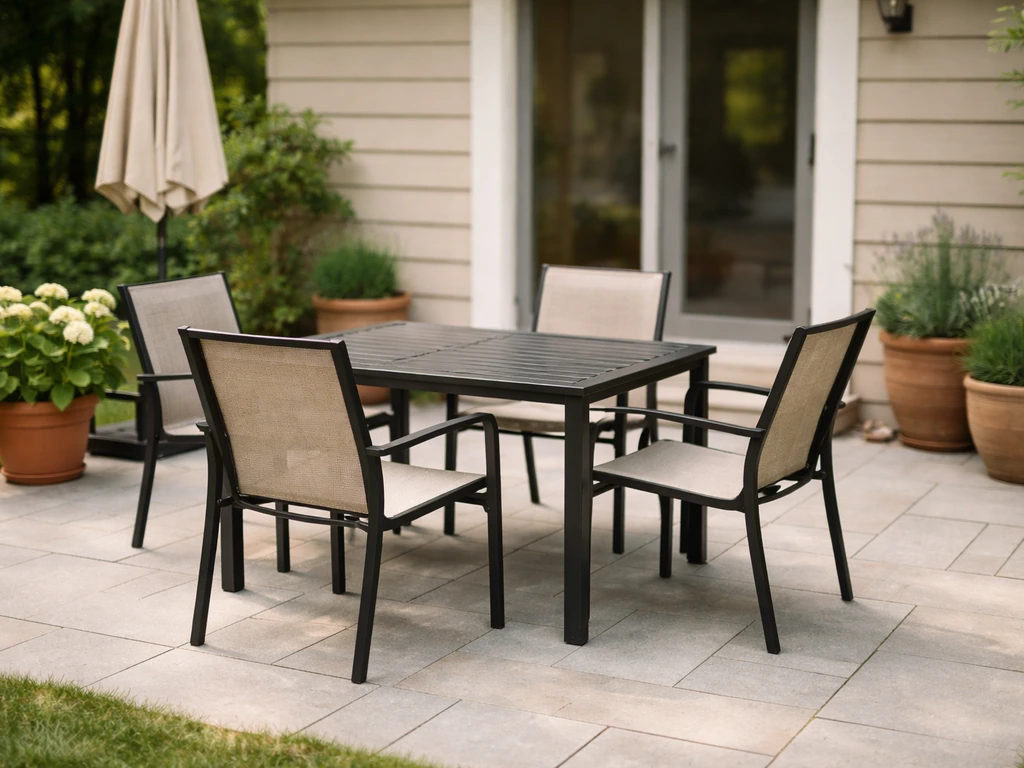
A patio set is a coordinated collection of outdoor furniture pieces sold together as a matched group, designed specifically to furnish a patio. At its simplest, that means a table and chairs. In practice, it can mean a sofa, loveseat, armchairs, and coffee table arranged for lounging, or just a tiny bistro table with two seats for a small corner space. The key word is "set", the pieces are designed to go together, so you get a finished, cohesive look without hunting for individual items that may or may not match. A patio tree is another way to add height and natural interest to your outdoor seating area, especially if you want more privacy or shade.
What Is a Patio Set? Types, Sizes, and How to Choose

Ada Hollis
18 Jun 2026
What a patio actually is (before we talk about what goes on it)
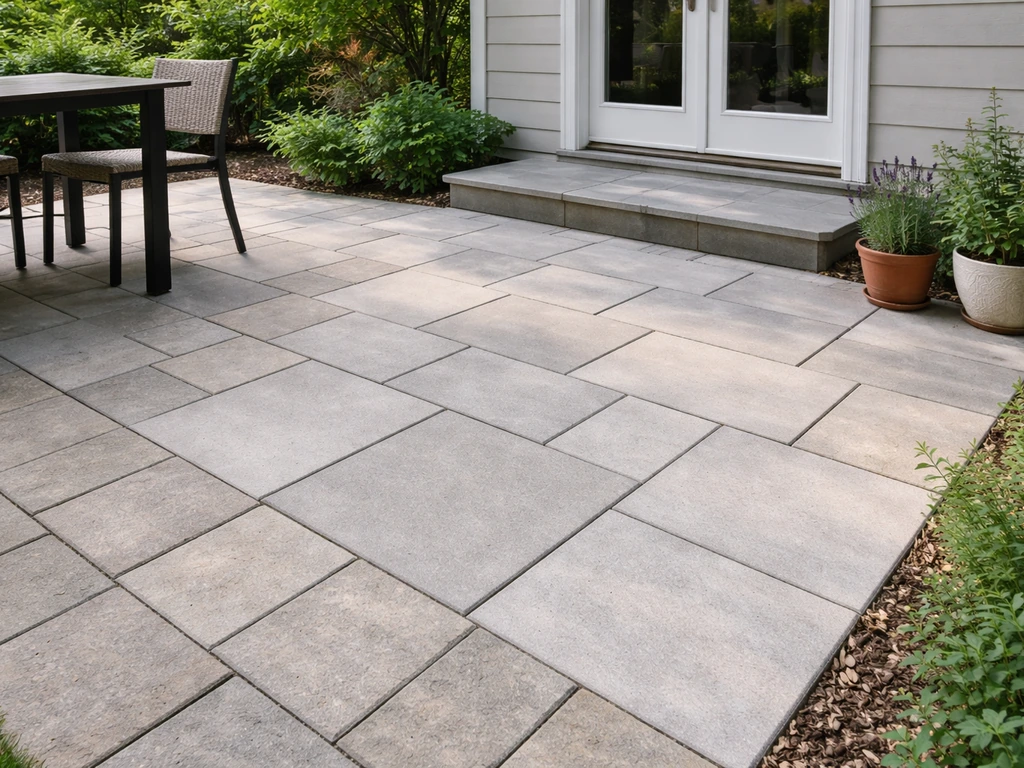
A patio is a paved outdoor area adjoining a house, used for dining or recreation. It sits at ground level, typically made from concrete, pavers, tile, or stone, and it's directly connected to the home. That last detail matters when you're shopping: a patio set is sized and built for ground-level, open-air use. It's not designed for a balcony suspended off the second floor, a covered front porch, or a raised verandah, even though people do use outdoor furniture in all those spaces. The patio is the baseline reference point the furniture industry uses when it labels something a "patio set."
Patios differ from porches (typically covered and often screened), balconies (elevated and cantilevered off a building), verandahs (wrap-around covered structures), and courtyards (enclosed on multiple sides by walls or buildings). Each space has different size constraints and exposure conditions, which affects what furniture actually fits and holds up. So when a product listing says "patio set," it's pointing at the ground-level, semi-exposed outdoor space next to your house, not every outdoor area you might own.
The main types of patio sets you'll actually find
Retailers organize patio sets into a few clear categories. Knowing which category fits your use case before you shop saves a lot of time.
Dining sets
A patio dining set is an outdoor table-and-chair grouping built for eating, entertaining, and gathering. Piece counts typically range from 3-piece (table plus two chairs) on the small end up to 7- or 9-piece sets for larger patios. A 7-piece dining set, for example, commonly includes one rectangle table, two swivel chairs, and four stackable chairs. These are the sets to look at if your primary goal is outdoor meals or hosting.
Conversation sets (chat sets)
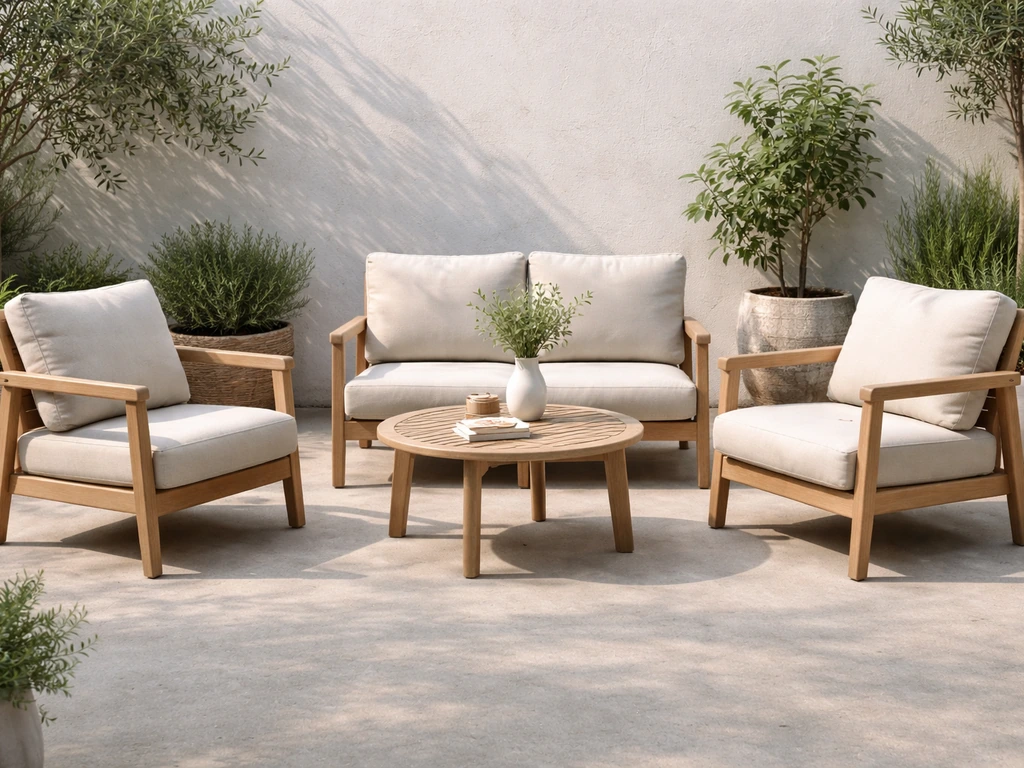
Conversation sets are built for lounging and talking rather than dining. A typical 4-piece conversation set includes two armchairs, one loveseat, and one coffee table or side table. Larger conversation sets can range up to arrangements that seat eight people. These often use deeper, cushioned seating more like indoor living room furniture than traditional patio chairs. If your patio is your outdoor living room, this is the category to focus on. A related topic worth exploring separately is what a patio conversation set includes in detail, since the configurations can vary widely. A patio conversation set is a lounge-focused seating arrangement that lets you chat comfortably outdoors.
Bistro sets
A bistro set is the smallest category: typically a small round table and exactly two chairs. It's a 2-seat concept designed for tight spaces like a small patio corner, a balcony edge, or a narrow side yard. Once you add a third or fourth chair, you've generally crossed into a small dining set rather than a bistro set. If space is your main constraint, bistro sets are worth a look, they need roughly a 3-by-3-foot footprint at minimum.
Quick size reference by set type
| Set Type | Typical Pieces | Minimum Space Needed | Best For |
|---|---|---|---|
| Bistro set | 1 small table + 2 chairs | ~3 x 3 ft | Tight corners, solo or couple use |
| 3–4 piece dining set | 1 table + 2–4 chairs | ~8 x 8 ft | Small family dining outdoors |
| 4 piece conversation set | Sofa/loveseat + chairs + table | ~8 x 8 ft | Lounging and casual entertaining |
| 6–7 piece dining set | 1 large table + 4–6 chairs | ~10 x 10 ft | Hosting groups and family meals |
| Large sectional/conversation | Sectional sofa + chairs + tables | ~10 x 10 ft or more | Outdoor living room feel |
How to pick the right patio set for your space
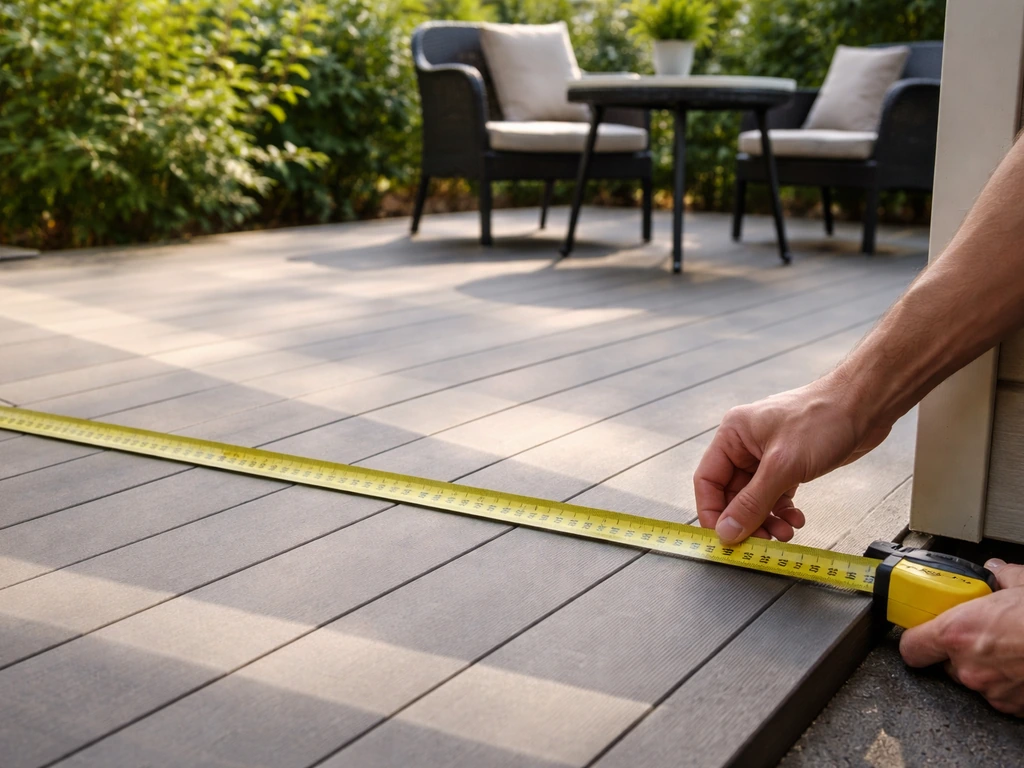
Before you look at a single product listing, measure your patio. Walk the space with a tape measure and note the total dimensions, then subtract for clearance. You need at least 30 to 36 inches of walkway clearance around any furniture grouping so people can move comfortably. For a dining set specifically, plan for 24 to 36 inches of clear space behind each chair so people can pull it out and sit down without bumping into a wall or planter. Around an outdoor sofa and coffee table, leave about 14 to 18 inches of gap between them so the layout feels comfortable rather than cramped.
Once you have your usable measurements, match the set type to how you actually use the space. If you eat outside regularly, a dining set makes the most sense. If you mostly sit outside with drinks and conversation, a conversation set will serve you better. If the patio is small and used by one or two people, a bistro set may be all you need and will leave breathing room rather than cramping the space.
Also think about your patio's shape and any fixed features like a grill, door swings, or garden beds. A rectangular dining table fits long narrow patios better than a round one. A sectional conversation set works best in a square or L-shaped space with a clear wall or boundary to anchor it.
Materials, weather resistance, and keeping it looking good
Material choice has a bigger impact on long-term satisfaction than almost anything else. Here's how the most common frame materials compare:
| Material | Weather Resistance | Weight | Maintenance | Price Range |
|---|---|---|---|---|
| Aluminum | Rust-proof, excellent | Lightweight, easy to move | Very low — wipe clean | Mid-range |
| Teak | Very high (natural oils) | Heavy | Oil treatment to preserve color | Premium |
| Resin wicker | Better than natural wicker | Light to medium | Low — hose down | Mid-range |
| Wrought iron | Susceptible to rust | Very heavy | Needs covers or covered storage | Mid to high |
| Steel | Moderate (can rust) | Heavy | Keep dry, use covers | Budget to mid |
Aluminum is the most practical all-rounder for most homeowners: it's rust-proof, lightweight enough to rearrange, and nearly maintenance-free. Teak is genuinely premium and naturally weather-resistant due to its high oil content, but it costs more and needs periodic teak-oil treatment if you want to keep its warm color rather than letting it go silver-grey. Wrought iron looks classic but needs to live on a covered patio or stay under furniture covers to avoid rust.
Cushions and fabric
Cushions are where most patio sets lose their appeal within a season or two if you buy the wrong fabric. Look for solution-dyed acrylic fabrics, Sunbrella is the most recognized brand name, which resist UV fading, mildew, and moisture far better than standard polyester. For seasonal care, remove cushions or store them inside during heavy rain or when the set won't be used for a stretch. If you're covering the whole set, make sure both the cushions and the furniture itself are clean and completely dry before covering, otherwise you're trapping moisture and inviting mold. When measuring for replacement cushions, add about an inch to your measured dimension to ensure a snug fit.
Patio set vs other outdoor furniture groupings
The term "patio set" is sometimes used loosely, but it has a fairly clear meaning in the retail context: it's a matched, multi-piece outdoor furniture package. Here's how it differs from terms you might encounter alongside it:
- Patio furniture (general): Any individual piece or mix of pieces for outdoor use. A single Adirondack chair is patio furniture. It's not a patio set.
- Garden furniture: A broader term used more in British English that covers all outdoor furniture, including what Americans call patio sets. Wikipedia specifically notes garden furniture is often sold as a patio set — a table plus chairs, sometimes with a parasol.
- Outdoor living set: A marketing phrase some retailers use for larger, living-room-style conversation groupings. Functionally the same as a conversation set.
- Patio conversation set: A specific type of patio set focused on lounging seating rather than dining. Covered in more detail as a standalone topic.
- Deck furniture: Same concept as a patio set but placed on a raised wooden deck rather than a ground-level paved patio. The furniture itself is often identical.
The short version: if it's matched, sold together, and designed for outdoor use on a ground-level paved space, it's a patio set. The furniture industry doesn't draw a hard line between deck and patio sets in practice, but the term "patio set" is the dominant search and retail category label.
Practical buying checklist before you order
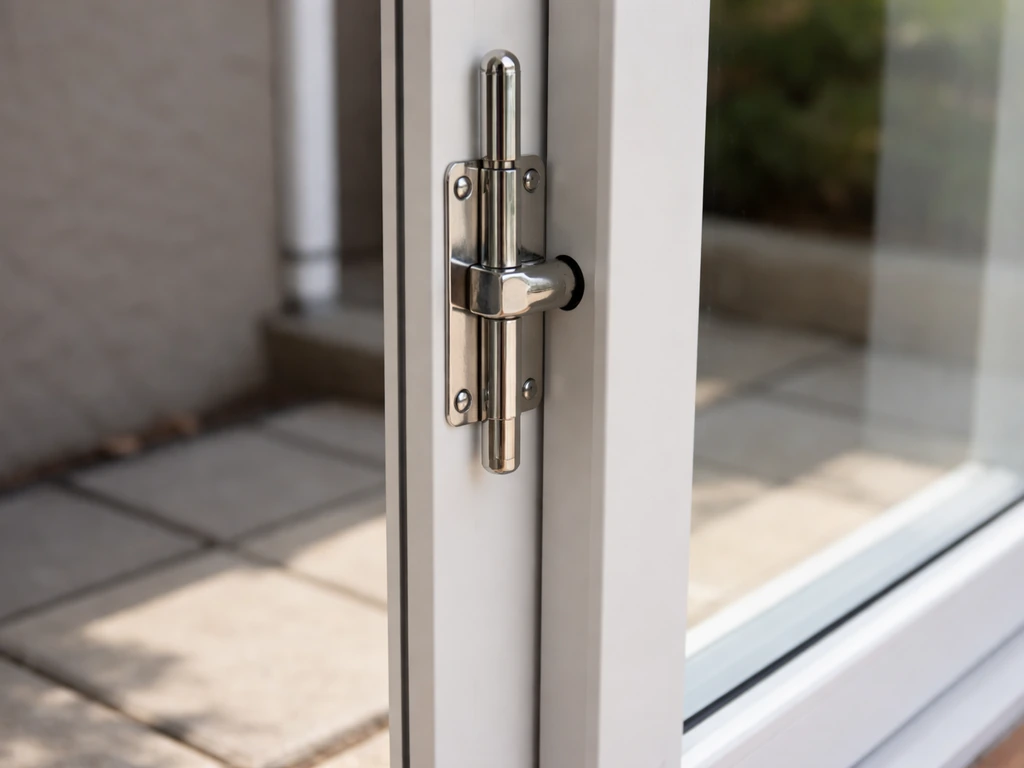
Shopping for a patio set today is mostly done online, which means you need to do your homework before committing. If you are assembling or securing patio furniture, a patio bolt is one of the key fasteners to use for a solid, stable connection. Here's what to work through before you buy:
- Measure your patio: total length and width, noting doors, pathways, and fixed obstacles.
- Subtract clearance: plan for 30–36 inches of walkway around the set, plus 24–36 inches behind dining chairs for pull-out room.
- Decide the primary use: dining and eating, lounging and conversation, or both.
- Count seats honestly: how many people do you realistically host at once? Don't buy a 6-seat set if it's usually just two of you.
- Set a budget range: entry-level sets start around $150–$300 for basic bistro or 3-piece dining, mid-range runs $500–$1,500 for aluminum or resin wicker, and premium teak or large sectional sets can run $2,000 and up.
- Check what's included: verify the exact piece count (table, how many chairs, whether a parasol or umbrella is included or sold separately).
- Ask about storage: if you live in a climate with harsh winters or frequent storms, factor in whether you can store the set or need covers. Confirm whether the set folds or stacks for easier storage.
- Check assembly requirements: most sets arrive flat-packed and require attaching table legs and chair frames. Factor in time and tools.
- Read the cushion details: check fabric type and whether cushions are included or an add-on.
One more thing worth noting: patio sets are a distinct product from other patio-related items you might encounter while shopping. A patio steak, a patio tree, and a patio bolt are all entirely separate concepts that share the word "patio" but have nothing to do with outdoor furniture. A patio steak is a term people search for, but it actually doesn’t refer to patio furniture or a patio set. If you end up in those search results, you've gone off track.
Once you have your measurements, your use case, and your budget clear, narrowing down a patio set becomes a much simpler decision. The matched-set format does most of the design work for you, your job is making sure it physically fits, holds up in your climate, and suits how you actually spend time outside.
FAQ
Can I call it a patio set if I mix and match pieces from different brands?
Usually no. A patio set is sold as a coordinated group meant to look cohesive together. Mixing brands can still work if dimensions and finishes match, but it will not be marketed as a patio set, and warranty coverage may not apply to the combination.
What if my space is covered but still not fully indoor, is that considered a patio setup?
Often yes if the furniture sits on a ground-level open-air patio, even with partial cover. The key difference is exposure, not just roofing. If it is a covered porch or raised entry, durability needs and labeling may differ, and wrought iron may still rust if it gets misty moisture.
How do I choose between a bistro set and a small dining set when I want occasional guests?
Start by planning for your most realistic seating needs. If you mainly eat solo or as a couple, a 2-seat bistro fits better and keeps walkway space open. If you regularly host more than two people, step up to a small dining set so you avoid squeezing people in and pulling chairs too close to walls or planters.
What clearance should I use for chair arms, not just chair backs?
Build your clearance around how wide the seating actually becomes in use. For dining, allow extra space for chair arm width when pulled out, and for swing directions if any chairs pivot. A safe approach is to keep the walkway clearance target around the outside edge of the pulled-out chair, not just the table footprint.
Are solution-dyed acrylic cushions always the best choice for every climate?
They are very durable, but not automatically perfect. In very hot, dry climates, you may prioritize breathable foam and easy cleaning to prevent heat discomfort. In cold climates, also look for cushions rated to handle freeze-thaw cycles and consider removing cushions in winter to reduce water damage.
Should I cover a patio set when it is not in use?
Only if the cover is breathable or you can keep moisture from getting trapped. If you cover while anything is damp, you can lock in moisture and create mildew. If you cannot dry items thoroughly before covering, consider storing cushions inside and leaving the frame uncovered so it can vent.
How can I tell if a set will be stable on uneven patio surfaces?
Check for adjustable feet or leveling glides on the chair and table frames. If your patio has slight slopes or is uneven, a non-adjustable base can wobble. Also confirm weight distribution for sets with swivel chairs or larger tabletops, since instability becomes more noticeable when chairs are pulled out.
What should I measure for replacements if I buy cushions later?
Measure the cushion length and width, and also note the thickness and whether the corners are rounded or squared. A small fit error can happen because many cushions are sized for specific manufacturers. Adding about an inch for snug fit helps, but you should still match thickness to avoid pressure on zippers or seams.
What fasteners matter most when assembling a patio set?
Use hardware designed for outdoor use, and make sure it matches the frame material. Corrosion-resistant patio bolts and properly sized brackets prevent loosening after rain cycles. If your set includes plastic components or pre-drilled inserts, do not over-tighten, since it can crack mounts and void parts of the assembly integrity.
Do patio sets come with storage options, and is that worth paying for?
Some sets include drawers, hidden compartments, or ottomans that lift for storage. It can be valuable if you do not want to bring small items inside, but it does not replace weather protection for cushions. If you live in a wet area, pay attention to drainage and whether storage compartments are sealed or simply covered.
Next Article
What Is a Patio Bolt? Types, Uses, and Installation
Learn what a patio bolt is, common types for doors and gates, and how to choose and install or fix one safely.