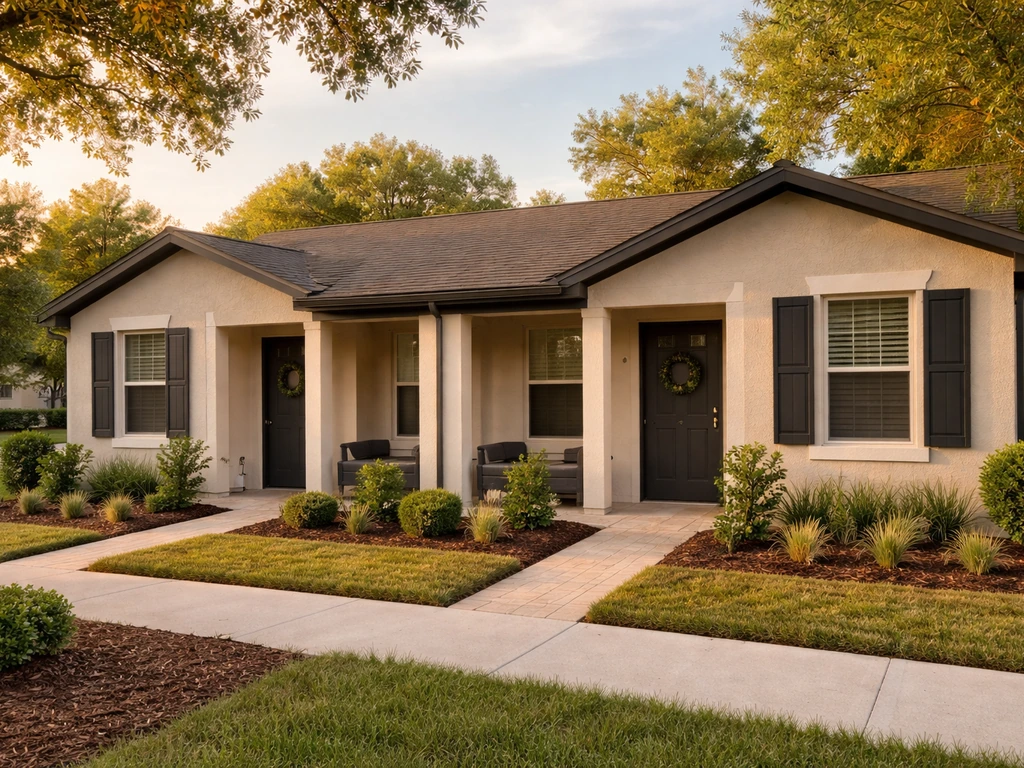
A patio gives you usable outdoor living space directly off your home, at ground level, on a paved or finished surface. That's the core of it. Whether you're a homeowner thinking about adding one, a buyer sizing up a listing, or a renter trying to understand what a "patio unit" actually means, the practical case for patios is straightforward: they extend where you live, they cost less per square foot than interior additions, and done well, they make a property more appealing to the next buyer too.
Benefits of a Patio: Value, Types, Costs & When to Build

Ada Hollis
17 Jul 2026
Who this guide is for
This guide is written for homeowners deciding whether to build or upgrade a patio, buyers evaluating listings that mention patio features, and renters who want to understand what patio apartments or patio homes actually are. It covers what patios are by definition, how they differ from porches, balconies, verandahs, and courtyards, why they matter for everyday living, and how they affect resale value and ROI. By the end, you'll have a clear framework for deciding whether a patio is worth the investment in your specific situation.
What a patio actually is
Merriam-Webster defines a patio two ways: first as a courtyard open to the sky (reflecting the word's Spanish roots), and second as a recreation area adjoining a dwelling, often paved and adapted to outdoor dining. Oxford and Cambridge both echo the second meaning: a flat, hard outdoor area, usually behind or beside a house, where people sit and spend time. That dictionary consensus is worth noting because it matches how appraisers, architects, and real estate listings actually use the term.
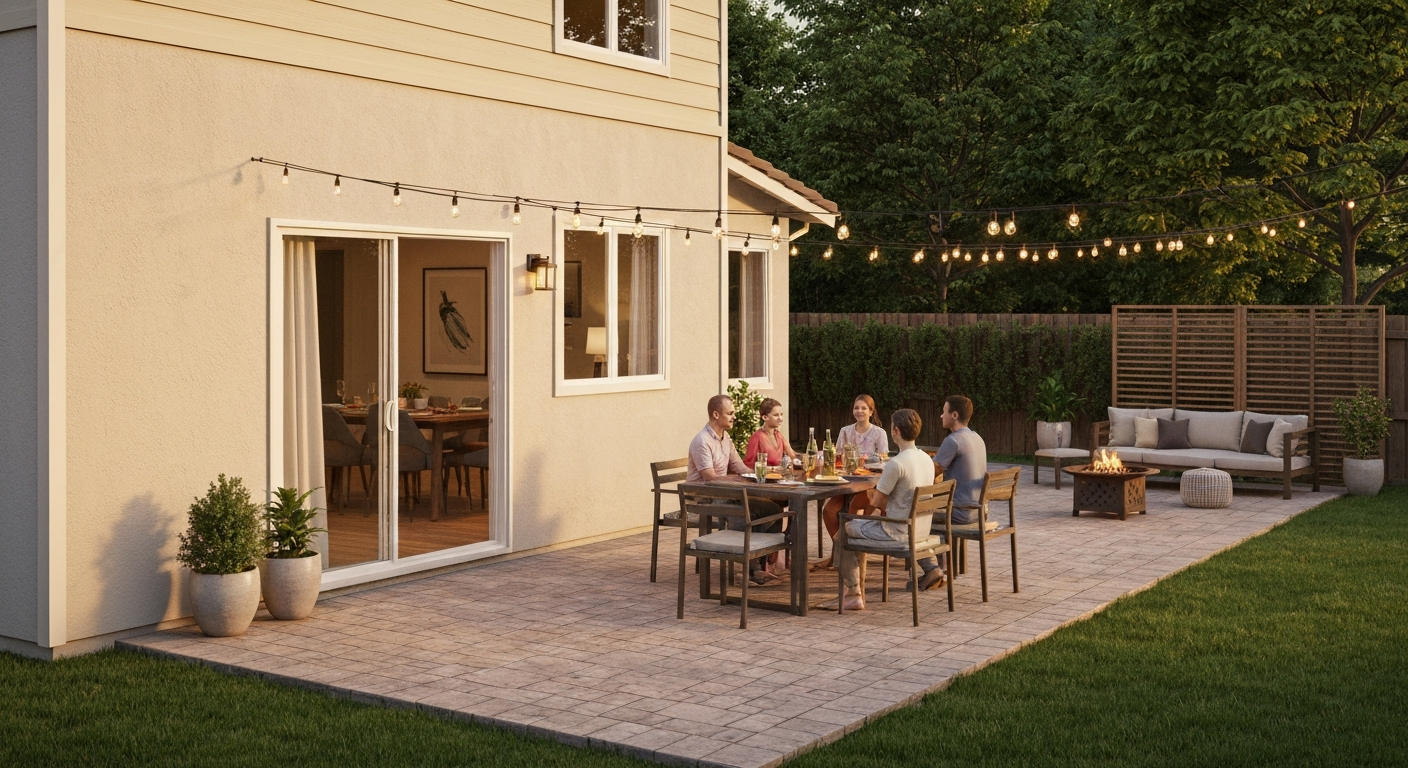
In residential architecture, a patio has three defining characteristics. It sits at ground level (not elevated above grade like a deck). It has a hard, finished surface, typically concrete, pavers, flagstone, or brick. And it connects directly to the house, functioning as an outdoor extension of the interior living area. It may be covered or open to the sky, but it is not a roofed room. That last point is what separates a patio from a sunroom or screened porch.
Patio vs. porch vs. balcony vs. verandah vs. courtyard
These terms get mixed up constantly, even in real estate listings, so a clean comparison is useful before anything else. Each space has a distinct structural definition that affects how it's appraised, how it's used, and what it costs to build.
| Space | Level | Roof/Cover | Attachment | Typical Use |
|---|---|---|---|---|
| Patio | Ground level | Usually open; may have pergola or shade sail | Adjacent to house, often off rear or side | Dining, lounging, entertaining |
| Porch | Ground level or raised one step | Roofed (this is the defining feature) | Attached to front, rear, or side of house | Entrance transition, seating, shelter |
| Balcony | Elevated, above ground floor | Usually open; may have overhang | Projects from upper floor of building | Views, fresh air, small seating area |
| Verandah | Ground level, may wrap around | Roofed, often full perimeter | Attached to exterior walls of house | Shade, circulation, traditional/heritage homes |
| Courtyard | Ground level | Open to sky | Enclosed or semi-enclosed by walls/wings | Private garden, Mediterranean/Spanish-style homes |
The practical difference comes down to roof and level. A porch is always roofed. A balcony is always elevated. A verandah is roofed and typically wraps the perimeter of a house. A courtyard is enclosed by walls rather than attached to a single rear wall. A patio is the simplest form: ground level, mostly open, paved, and immediately outside a main door. The Spanish origin of the word (patio as inner courtyard) explains why some older or Mediterranean-influenced properties use it to mean an enclosed outdoor room surrounded by the house's own walls.
The practical benefits of having a patio
More usable living and entertaining space
A well-designed patio is functionally another room. It's where outdoor dining happens, where guests gather, where kids play and adults decompress after work. Houzz's 2024 U.S. Outdoor Trends Study found that roughly one in three homeowners who upgraded their outdoor areas did so specifically to extend their living space. Houzz’s 2024 U.S. Outdoor Trends Study, Houzz press release (survey of about 1,100 U.S. homeowners) reports that roughly one in three homeowners who upgraded outdoor areas did so to extend living space and that younger buyers especially prioritize outdoor features for entertaining Houzz’s 2024 U.S. Outdoor Trends Study — Houzz press release. For households that feel space-constrained indoors, a patio provides relief without the cost or disruption of an interior renovation.
Curb appeal and first impressions
A finished patio, especially one visible from the street or photographed well in listing photos, signals that outdoor space has been thoughtfully designed. NAR's Remodeling Impact Report on Outdoor Features consistently shows that Realtors rate new patios among the outdoor projects most likely to improve buyer appeal at the point of sale. Even a modest concrete patio with clean edges and a few well-placed planters reads better to buyers than raw dirt or an overgrown lawn.
Affordable footprint expansion
Adding a room to a house typically costs $100 to $300 per square foot or more depending on finishes and location. A basic poured concrete patio runs roughly $6 to $17 per square foot installed, and even higher-end paver patios typically land in the $12 to $30 per square foot range according to current contractor cost data from Angi. That's a fraction of interior build-out cost for livable square footage you can actually use. The trade-off is that patio square footage doesn't count as GLA (gross living area) in appraisals, so it doesn't add value dollar-for-dollar the way interior space does. But as a cost-efficient way to expand where your household actually spends time, it's hard to beat.
Connection to landscape and nature
Research published in Scientific Reports (2024) and npj Urban Sustainability (2023) both found that access to private outdoor spaces, including patios and yards, is associated with improved mental wellbeing and reduced stress, effects that became especially pronounced during COVID-19 lockdowns when private green space was one of the only options available. A patio specifically acts as the transition zone between interior life and the garden, making it more likely that you'll actually use your outdoor space daily rather than just look at it through a window.
Privacy
A ground-level patio, particularly at the rear of a house, offers more privacy than a front porch or an elevated balcony. Add a low fence, trellis, or screening hedge and you create a genuinely private outdoor room. This matters most in higher-density neighborhoods or subdivisions with closely spaced homes, where a back patio is one of the few genuinely secluded spaces a household has access to.
Extended seasonal use and comfort
A bare-dirt or lawn yard is seasonal by default: too wet in spring, too cold in winter, too muddy after rain to comfortably use. A paved patio extends usable outdoor time substantially. Add a pergola with a shade sail and a portable heater, and a climate-moderate patio can function nine to ten months of the year in many U.S. regions. The more comfortable and weather-adaptable a patio is, the more value it provides both to you as an occupant and to future buyers evaluating the property.
How patios affect property value
Patios do affect resale value, but not uniformly. If you're asking "do patios add value to a house", read our detailed analysis of how different patio features influence resale and ROI. The honest picture is nuanced, and it depends heavily on what's around it in the market. Zillow research analyzing nearly one million listings found that specific patio features do carry measurable sale-price premiums: a bluestone patio was associated with approximately a 2.2% sale-price premium over comparable homes without one. An outdoor kitchen or pizza oven adds more. A plain concrete slab adds less but still contributes to buyer appeal.
The 2025 Cost vs. Value Report from Remodeling Magazine puts the average national cost recoup for a backyard patio at approximately 46%. The 2025 Cost vs. Value Report, Remodeling Magazine / Journal of Light Construction shows a Backyard Patio recoups about 46% of project cost nationally, while a wood Deck Addition recoups about 95% 2025 Cost vs. Value Report — Remodeling Magazine / Journal of Light Construction. That sounds modest compared to, say, a wood deck addition (approximately 95% cost recoup in the same report), but it doesn't capture the full picture. Cost recoup measures what you get back at resale relative to what you spent. It doesn't measure the day-to-day value of using the space, the speed of sale, or the likelihood that buyers will choose your property over a comparable one without a patio. In markets where outdoor living is a priority for buyers, a well-designed patio can tip a purchase decision even if it doesn't recoup its full build cost at appraisal.
Fannie Mae's Uniform Residential Appraisal Report (Form 1004) requires appraisers to note patios, decks, and porches as site features, separate from gross living area, and to reflect them through adjustments in the sales comparison grid. That means appraisers are accounting for your patio, but they're comparing it to patios in sold comps, not adding interior square footage value. The bottom line: a patio is most likely to capture value at resale when it fits what local buyers actually want, when it's well-maintained, and when it's built with quality materials.
If you're also evaluating whether a patio home or patio-style apartment is a smart purchase, those are related but distinct questions. Patio homes (attached or detached single-level properties marketed around private outdoor space) and patio apartments (ground-floor units with private patio access) carry their own investment considerations that are worth reviewing separately. See our separate note on how patio apartments are similar to garden-level flats and the specific pros and cons for ground-floor rental units. For a focused look at investment pros and cons, see our guide on whether patio homes are a good investment are patio homes a good investment.
What changes a patio's contribution to resale and ROI
Not all patios are equal in the eyes of buyers or appraisers. These are the factors that consistently separate a patio that adds meaningful value from one that's more or less neutral.
Materials and finish quality
A bluestone or natural flagstone patio reads as a premium feature in listing photos and in person. Concrete pavers are a mid-tier option that hold up well and photograph cleanly. Poured concrete is the most affordable but also the least distinctive, and it's prone to cracking over time without proper expansion joints and reinforcement. The higher the material quality, the more likely a buyer interprets the patio as a feature worth paying for rather than a maintenance item they'll need to replace.
Size and usable layout
A patio needs to be large enough to function as a real outdoor room. Industry rule of thumb is a minimum of 12 by 12 feet for a basic dining setup; 16 by 20 feet or larger starts to feel genuinely spacious for entertaining. A patio that can only fit one chair adds little value. One that accommodates a table, chairs, a grill station, and a lounge area communicates actual livability to buyers.
Location on the lot and orientation
A rear patio that's sheltered from prevailing wind, catches afternoon sun in a cooler climate, or sits in afternoon shade in a hot one, is inherently more usable and more appealing than one that bakes at high noon or gets constant wind. South- or southwest-facing rear patios tend to perform best in northern climates. In the Sun Belt, east-facing or shaded patios can extend comfortable outdoor use by hours each day.
Integration with house flow
A patio that opens directly off the kitchen, dining room, or main living area through a sliding door or French door is demonstrably more functional than one you have to walk through two other rooms to reach. Seamless indoor-outdoor flow is one of the things buyers consistently respond to, and it's also harder to retrofit than most people expect. When building or upgrading a patio, the relationship to the interior layout is one of the first things to get right.
Local real estate market demand
In markets where outdoor living is a baseline expectation (Southern California, Florida, Texas, the Pacific Northwest), a patio is table stakes and its absence is a negative rather than its presence being a positive. In colder northern markets, a well-designed patio with seasonal features like a fire pit or heating elements can genuinely differentiate a property. Know your market: what buyers in your area actually want drives whether your patio investment is recovered at resale.
Workmanship, permits, and records
HUD and FHA appraisal guidance notes that additions and improvements to a property, including patios, may trigger permit verification for government-insured loans. An unpermitted patio won't necessarily kill a sale, but it can complicate financing and give buyers negotiating leverage. A patio with a clean permit history and professional workmanship is straightforwardly a better asset than one built without permits or with visible quality issues.
Maintenance level and longevity
A neglected patio with cracked concrete, heaved pavers, or missing grout reads as a liability in a showing, not a feature. A well-maintained patio signals that the homeowner has taken care of the property overall. Concrete and pavers both require periodic sealing to prevent staining and freeze-thaw damage. Flagstone and natural stone need occasional releveling. Budgeting a small amount annually for upkeep pays disproportionate dividends at resale.
Climate and seasonal use potential
A patio in Miami is usable 12 months a year. A patio in Minneapolis might be genuinely comfortable for five or six months without added features like a pergola, heaters, or a fire pit. The more climate-adaptable the patio design, the stronger its contribution to daily living value and to buyer appeal. In cold-climate markets especially, features that extend the season (covered portions, wind screens, radiant heating) are worth considering if you're building from scratch.
Common patio types and materials at a glance
| Material | Typical Installed Cost (per sq ft) | Durability | Maintenance | Best For |
|---|---|---|---|---|
| Poured concrete | $6–$17 | Good, but cracks over time | Seal every 2–3 years; repair cracks | Budget builds, clean modern look |
| Concrete pavers | $12–$30 | Very good; individual units replaceable | Sweep, re-sand joints, occasional sealing | Mid-range builds, flexible patterns |
| Natural flagstone | $15–$30+ | Excellent if properly set | Releveling, repointing over time | High-end naturalistic designs |
| Bluestone | $20–$35+ | Excellent; premium appearance | Sealing recommended; low ongoing | Premium builds with resale focus |
| Brick | $14–$25 | Very good; classic appearance | Occasional repointing, sealing | Traditional homes, heritage properties |
Cost ranges are based on current national contractor averages from Angi (2026 data). Actual costs vary by region, site conditions, patio size, and complexity. A basic 200 to 400 square foot patio is the most common residential size and the best starting point for most households balancing function against budget.
When a patio is worth building or upgrading
Build or upgrade a patio when at least two of these conditions apply: you plan to stay in the home long enough to use it (three or more years at minimum), your property currently has no usable outdoor surface, your local market treats outdoor living space as a standard feature, or you have a clear use case (frequent outdoor dining, kids' play area, entertaining) that an indoor space can't satisfy.
If you're building primarily for resale, the data suggests prioritizing quality materials over size, ensuring seamless connection to the interior, and keeping the design clean and broadly appealing rather than highly personalized. An outdoor kitchen or premium paver surface will photograph better and attract more buyers than a large plain slab with elaborate built-in features that only certain buyers will value.
Practical tips to maximize value
- Pull permits for any new patio construction or major resurfacing, especially if you anticipate selling within five years or using FHA or VA financing.
- Check HOA rules before starting: many communities restrict materials, sizes, and finishes for visible outdoor structures.
- Connect the patio directly to a main living area (kitchen or living room) rather than a bedroom or utility space.
- Choose materials that complement the house's exterior, not materials that look out of place against brick, stucco, or siding.
- Add edge landscaping (border plants, low hedges, raised planters) to frame the patio and make it photograph well.
- Stage the patio during showings with actual furniture: a bare concrete slab is much harder for buyers to visualize than a set table and two chairs.
- Include at least one shade or weather element (pergola, umbrella, shade sail) if your climate has hot summers, as covered outdoor areas consistently test better with buyers.
The bottom line on patio benefits
A patio is one of the most cost-effective ways to improve how you live in a home and how the home is perceived by buyers. It's not a guaranteed dollar-for-dollar return at appraisal, but no single home improvement is. What it consistently delivers is expanded daily living space, stronger connection to your outdoor environment, improved curb appeal, and a feature that buyers in most markets actively look for. For a direct evaluation of financial return and resale considerations, see our guide on whether patios are a good investment are patios a good investment. Get the materials, size, and placement right, keep it maintained, and pull the right permits, and a patio earns its cost across multiple dimensions, not just resale.
FAQ
What primary definitional questions must research answer for the article?
What is a patio (dictionary and architectural definitions)? How does a patio differ from porches, balconies, verandahs, courtyards, and decks in form, roofing, and relationship to the main structure? What common patio types and products exist (paved slab, pavers, flagstone, stamped concrete, covered patio, patio home, patio apartment)?
What evidence is needed to support claims about practical benefits?
Which peer‑reviewed studies or authoritative reviews link private outdoor space to mental and physical wellbeing (stress reduction, nature contact benefits)? What surveys or industry studies document homeowner use‑cases (entertaining, living‑space extension)? What source data show how patios influence comfort, privacy and seasonal use?
What research questions address patio impacts on property value and resale?
Do patios add value to homes (percent effects or price premiums)? What reputable market analyses or appraisal guidance quantify resale impact and ROI for patio projects? How do specific features (outdoor kitchen, bluestone, covered patio) correlate with sale‑price premiums?
What authoritative sources are required for cost, ROI and construction data?
What national/regional cost‑vs‑value tables (e.g., Remodeling/Cost vs. Value) report recoup percentages for patios and decks? What construction cost databases (RSMeans) or aggregated contractor marketplaces (Angi, HomeAdvisor, Fixr) give per‑sq‑ft installed cost ranges by material? What contractor/estimator guides explain maintenance needs?
What appraisal and lending guidance must be consulted?
How do appraisal forms and protocols (Fannie Mae URAR, FHA/HUD handbook) instruct appraisers to treat patios in valuation and loan approvals? Are there lender requirements or permit/verification triggers for added exterior features?
What local‑market and contextual factors should be researched to explain value variability?
Which local factors change patio value: regional climate/seasonality, neighborhood norms, lot size, material costs, and local market demand? What data sources (local MLS analyses, Zillow research, NAR reports) can illustrate geographic variation in buyer preferences and price effects?
Next Article
Are Patio Homes a Good Investment? Costs, Risks, and Returns
Evaluate if patio homes are a good investment: costs, HOA risks, resale demand, and net yield checklist vs condos and to