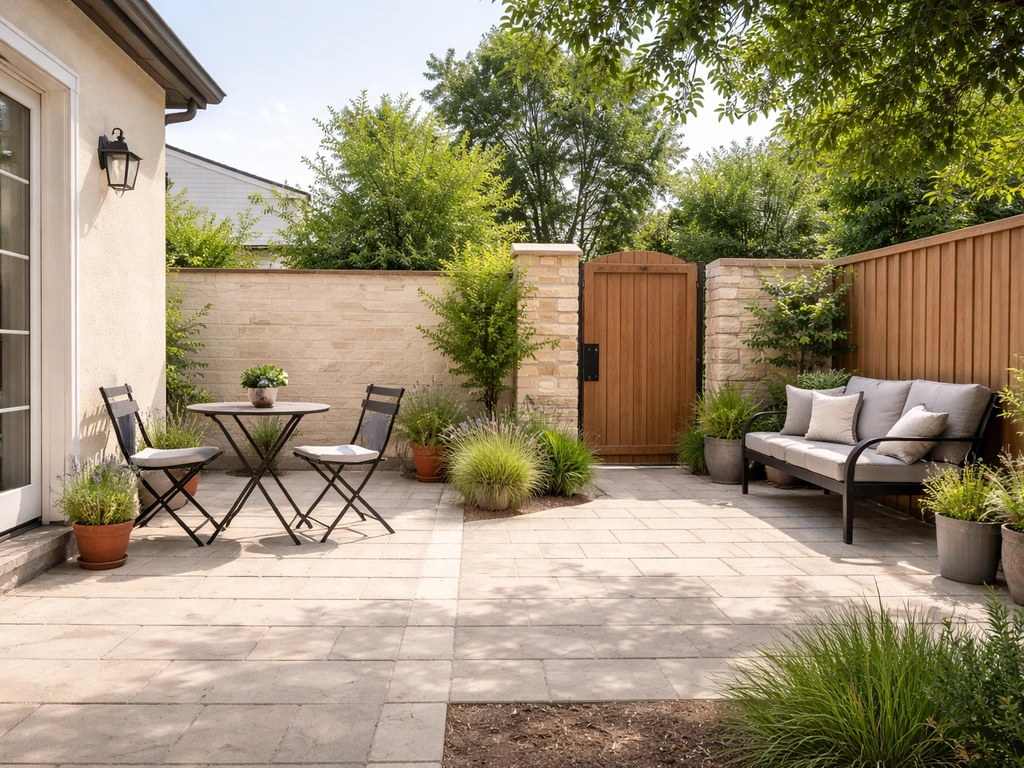
A patio is a physical thing: a paved outdoor surface attached to or near your home, built at ground level, used for sitting, dining, or entertaining. Alfresco is not a physical thing at all. It means 'in the open air' and describes how or where you do something, most often eating. So when a real estate listing says 'alfresco dining area,' it usually means a patio (or terrace, or deck) set up specifically for outdoor meals. The two terms overlap a lot in practice, but they are not interchangeable, and knowing the difference saves real confusion when you're shopping for a home or planning a renovation.
Difference Between Alfresco and Patio: Key Meaning

Ada Hollis
22 Jun 2026
What each word actually means
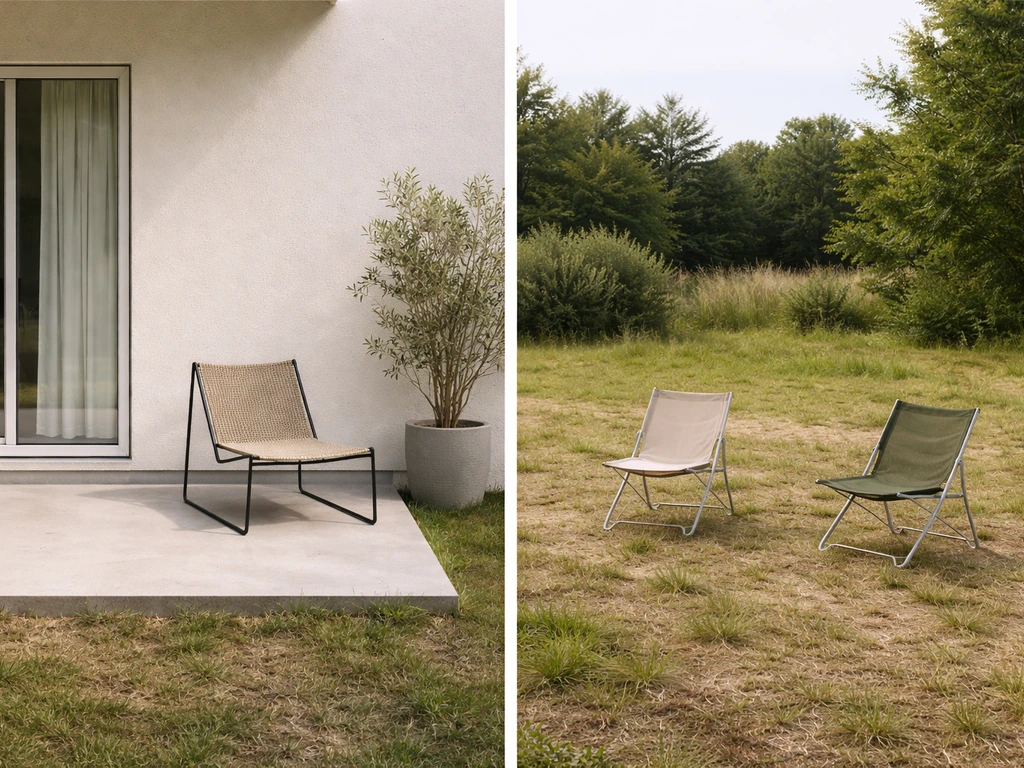
Patio has a concrete, architectural definition. The Cambridge Dictionary describes it as 'an outside area with a solid floor next to a house, where people can sit.' Architecture and planning glossaries go one step further: a patio is specifically an at-grade paved outdoor area that adjoins a structure. That matters because it tells you what to expect physically: a defined surface (concrete, pavers, stone, brick), at ground level, attached to or immediately beside the home.
Alfresco is an Italian-origin adverb and adjective that simply means 'in the open air' or 'outdoors.' Merriam-Webster defines it as 'taking place or located in the open air.' Britannica gives the same reading: outdoor, outdoors. Its most common modern use is 'alfresco dining,' meaning eating outside. The word describes the experience or activity, not the built space where that activity happens. A restaurant with tables on a sidewalk offers alfresco dining. So does a picnic blanket on your lawn. So does your patio with a table and chairs.
How they differ physically
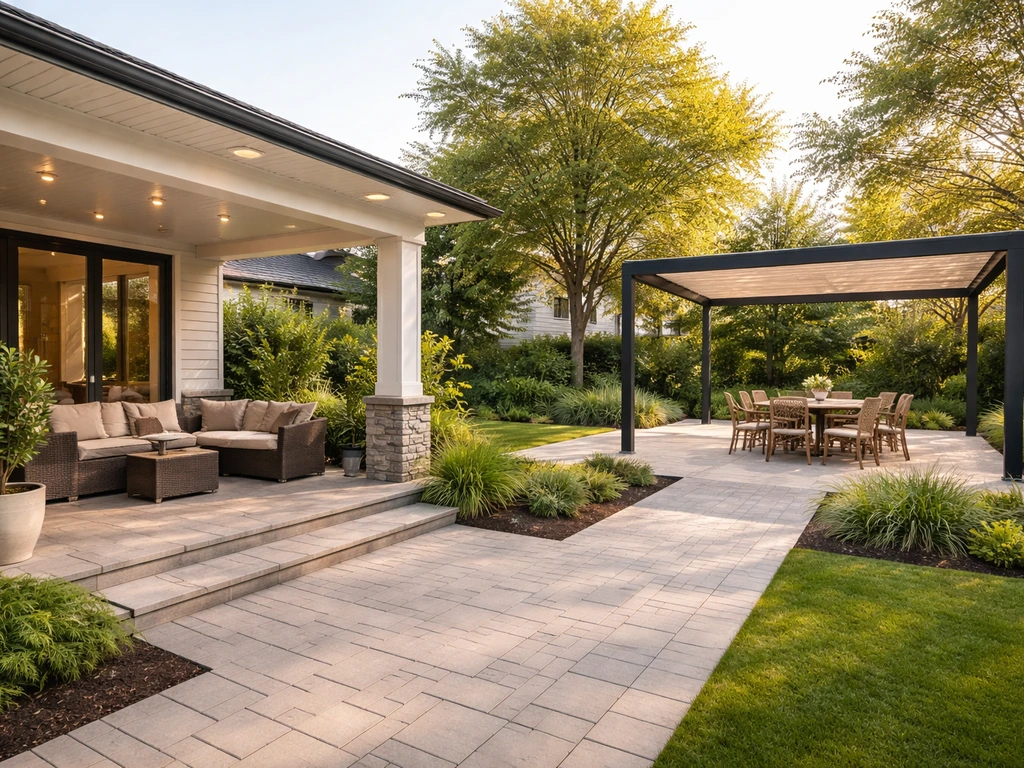
A patio is defined by its construction. It has a hard, paved surface, it sits at ground level, and it is physically attached to or very close to a building. It may be completely open to the sky, or it may have a roof structure above it, like a pergola, a solid insulated roof panel, or a shade sail. The paving surface is what makes it a patio, not whether it is covered or uncovered.
Alfresco, as a term, has no fixed physical requirements on its own. In regulated contexts, like Los Angeles' outdoor dining program, an 'al fresco' dining area can have a roof covering 100% of the space, as long as it is not enclosed by walls on more than 75% of its perimeter. That tells you something useful: even a covered, roofed outdoor area can legitimately be called alfresco, as long as it stays open to the air. In everyday residential use, an alfresco area just needs to feel outdoors. The paving, the roof, the size, the layout: all of those are design decisions that vary.
| Feature | Patio | Alfresco |
|---|---|---|
| What it is | A physical built structure | A concept or lifestyle descriptor |
| Surface | Paved (concrete, pavers, stone, brick) | No fixed surface requirement |
| Level | At grade (ground level) | Not defined by level |
| Covering | Can be open or covered | Can be open or covered |
| Attached to home? | Yes, typically adjoins the house | Not necessarily |
| Used in real estate listings? | Yes, as a property feature | Yes, usually to describe dining setup |
Where you'll find each on a property
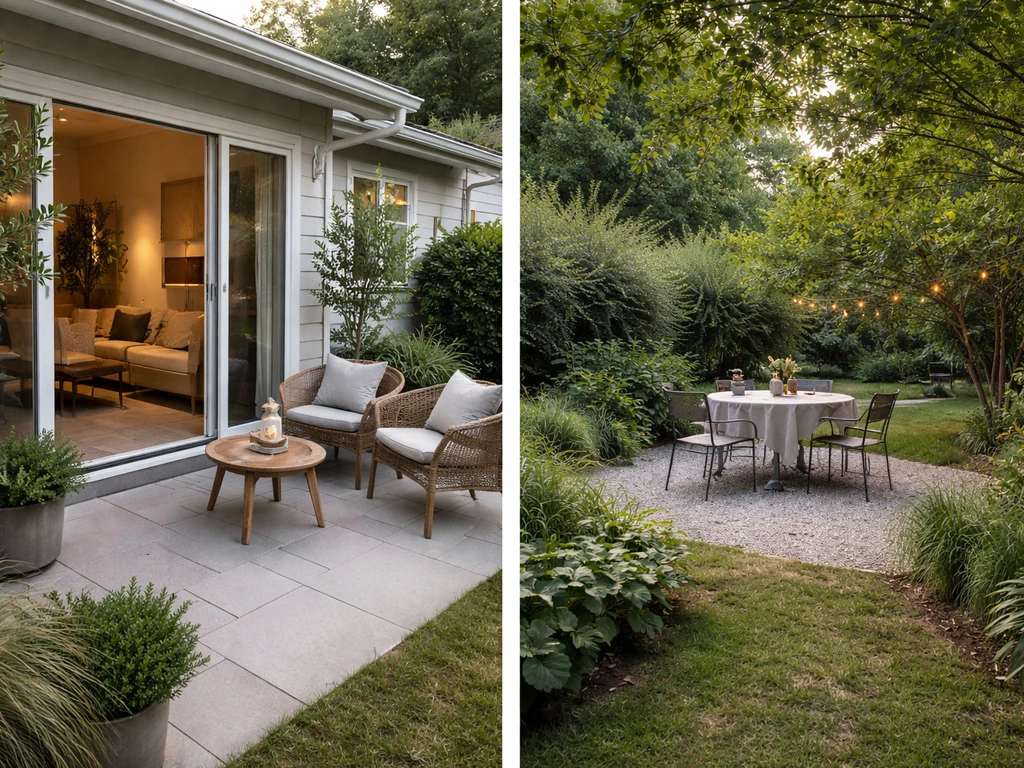
A patio almost always sits right next to the house, accessed through a back door, sliding glass door, or French doors off a living area or kitchen. It is typically the first outdoor surface you step onto when you leave the building. In landscape planning, a patio is treated as a distinct zone separated from the lawn, sometimes by a garden bed, a low wall, or a simple change in surface material. That separation is intentional: it defines the patio as a room-like space with its own purpose, as distinct from the open lawn beyond it.
An alfresco area, in contrast, could be anywhere outdoors. It might be the patio itself, a terrace further down the garden, a rooftop, or even a section of lawn. In Australian real estate in particular, 'alfresco' is widely used to describe a covered outdoor area at the back of the house, often functioning exactly like a patio but with an attached roof structure. In that regional usage, 'alfresco' has taken on a more architectural meaning and refers to a specific built feature. If you are reading listings in Australia, 'alfresco' often means a covered paved entertaining area directly off the main living space.
Purpose and how people actually use each space
A patio is a general-purpose outdoor living area. People use patios for morning coffee, barbecues, kids playing, container gardening, reading, and pretty much anything else that benefits from being outdoors near the home. It is a flexible space, and what it gets used for depends entirely on how you furnish and design it.
Alfresco is almost always tied to dining and entertaining. When a builder markets a home with an 'alfresco area' or a listing highlights 'alfresco dining,' the implication is that the space is set up specifically for meals and social gatherings outdoors. That usually means it has or is designed for a table and chairs, good access to the kitchen, lighting suitable for evening use, and often some weather protection like a roof or shade structure. It is still a patio in physical terms, but the label signals its intended use more narrowly.
Materials and build considerations
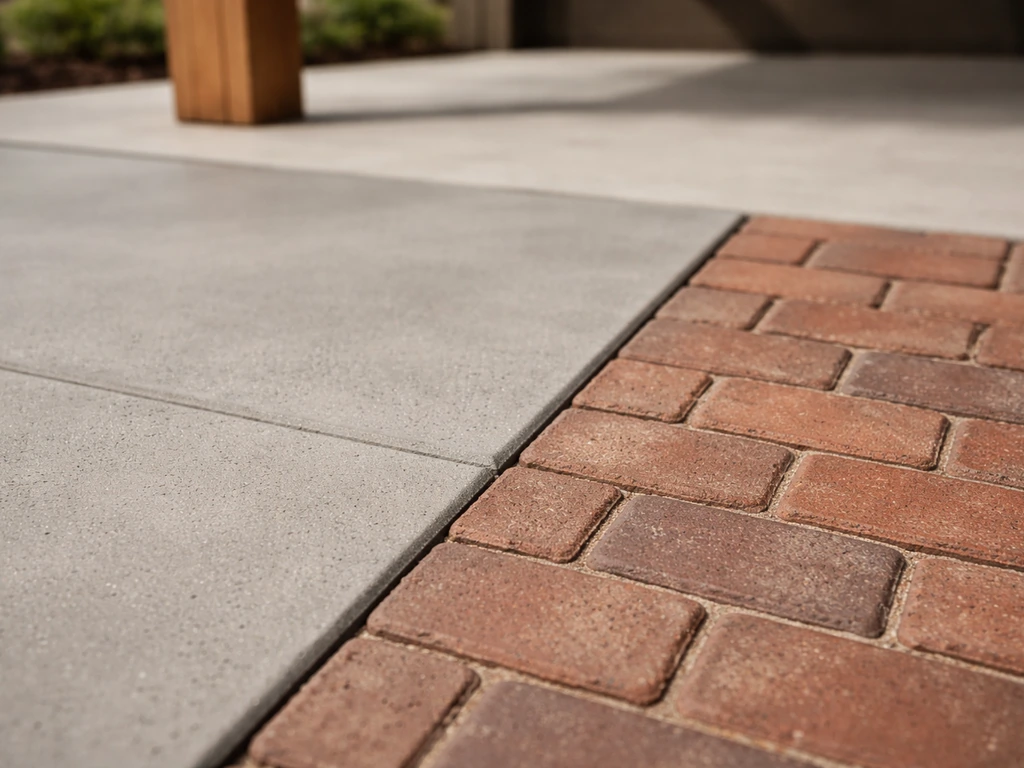
Because a patio is a paved surface, the material choice matters a lot for durability, maintenance, and aesthetics. Concrete is the most common and affordable option. Pavers (brick, concrete, or natural stone) offer more visual appeal and are easier to repair since individual units can be replaced. Slate and bluestone look great but cost more. Whatever you choose, the surface needs to slope slightly away from the house to drain water, typically around a 1 to 2 percent grade. Getting that drainage right matters whether your patio is open to the sky or covered.
If you're building or renovating an alfresco-style covered entertaining area, the roof structure adds another layer of decisions. A pergola (an open wood-framed roof, often with lattice) provides partial shade and a defined overhead structure without blocking light entirely. An insulated roof panel or solid patio cover gives you full weather protection and makes the space usable in rain. The choice affects building permits, cost, and how much natural light reaches the space.
A solid roof over a patio effectively creates an outdoor room, which is also a concept worth knowing about if you're trying to understand how these spaces get classified in listings. In many listings, you will also see gazebos mentioned, which are typically freestanding structures designed for shade and gatherings, unlike patios or alfresco areas outdoor room.
- Concrete: affordable, durable, needs sealing every few years
- Concrete pavers: more flexible, easier to repair, wide style range
- Brick: classic look, good durability, can shift in freeze-thaw climates
- Natural stone (slate, bluestone, travertine): premium appearance, higher cost
- Gravel or decomposed granite: lower cost, informal look, not ideal for heavy furniture
- Roof options: pergola (open, partial shade), shade sail (flexible, no structure), solid insulated panel (full weather protection)
How to choose and what to do next
If you are designing or renovating, decide what you actually want to do in the space before you choose a label or a layout. If outdoor dining and evening entertaining are the priority, think alfresco-style: design for a dining table, plan your kitchen access and lighting, and consider whether a roof structure is worth the investment for your climate. If you want a more flexible outdoor living zone, a straightforward open patio gives you more freedom to shift the space around as your needs change.
If you are reading real estate listings, treat 'patio' as a description of a physical feature (paved, at ground level, attached to the house) and 'alfresco' as a signal about intended use (dining, entertaining, often covered). In Australian listings especially, 'alfresco' usually means a covered outdoor entertaining area directly off the living room or kitchen, so it carries more weight as a physical descriptor than it does in American or British listings, where it tends to stay closer to its original lifestyle meaning.
As a practical checklist, here is what to look for depending on your goal:
- Identify the surface: is the outdoor area paved? That is the core requirement for a true patio.
- Check the connection to the house: is it directly accessible from the main living or kitchen area? That matters for both daily use and resale value.
- Assess coverage: is the space open to the sky, partially covered (pergola), or fully covered (solid roof)? This affects how usable it is year-round in your climate.
- Consider size relative to your furniture: a dining table for six needs at least roughly 3 x 4 metres of clear space to be comfortable.
- Check drainage: look for a slight slope away from the house and no signs of water pooling or staining near the foundation.
- If renovating: price out your surface material, roofing option, and any electrical or lighting work separately before combining into a total budget.
One last thing worth noting: patio and alfresco are not the only related terms you'll encounter. Verandahs, courtyards, gazebos, and backyards all describe outdoor spaces with their own specific meanings, and listings use them inconsistently. The patio specifically sits at ground level and is paved and attached to the home. To really get the difference between patio and backyard, start by separating built, paved outdoor features from the wider outdoor area around the home The patio specifically sits at ground level and is paved and attached to the home.. That definition is the baseline to keep in mind whenever another term gets used in a way that sounds like it might mean the same thing.
FAQ
In a real estate listing, how can I tell whether “alfresco” is just marketing language or a specific built space?
Treat “alfresco” as a use label first, then confirm with physical cues. Look for details like attached roof or pergola, paving type, and direct access from the kitchen or living area. If the listing only mentions “alfresco dining” with no mention of a paved surface or roof structure, it may be describing an area concept rather than a clearly defined feature.
Can a covered area still be called “alfresco” if it is mostly open air?
Yes. The term can still fit when the space remains open to air, even if it has a roof covering. What matters is openness around the sides, not whether the sun is fully blocked. If the space is enclosed by substantial walls, the listing may shift to terms like “sunroom” or “enclosed patio” instead.
Is every outdoor dining setup on a patio automatically “alfresco dining”?
Not necessarily. “Alfresco dining” describes the activity taking place outdoors. A patio table and chairs can be alfresco dining, but if a listing uses “alfresco” to highlight a dedicated dining-ready setup, you should expect meal-focused features like suitable seating area, lighting, and practical kitchen access.
What drainage and slope should I verify if I’m worried about water pooling on a patio or alfresco area?
Verify that the paving slopes away from the house, typically about a 1 to 2 percent grade. Also check whether roof runoff from an attached cover is directed to gutters and drainage rather than onto the patio surface. Pooling is a common problem point during inspections and later maintenance.
Are “terrace” and “patio” always the same thing in listings?
Often they overlap, but “terrace” can imply an elevated platform rather than at-grade ground-level construction. Use the description clues, like whether it is directly at ground level, its attachment to the house, and the presence of stairs or multiple levels.
What’s the most reliable way to compare two homes when one uses the word “alfresco” and the other uses “patio”?
Compare function and build details, not the word choice. For each listing, note exact location (off kitchen or living room), surface type (pavers or concrete), whether it has a roof or pergola, and how much usable space is dedicated to dining or entertaining. That will usually reveal whether “alfresco” is essentially a patio with a dining focus.
If I’m renovating, can I design one area to serve as both a flexible patio and an alfresco dining space?
Yes, but plan layout intentionally. Put the dining table closer to kitchen access and consider lighting and weather protection over that portion, while leaving the rest of the patio more open for other uses. You can also use zoning, like rugs or a slight surface change, to signal “dining” versus “general outdoor living” areas.
Do “gazebo” and “alfresco” refer to the same kind of space?
Usually not. A gazebo is typically freestanding and primarily for shade and gatherings, while “alfresco” is often used for an outdoor dining or entertaining area that is functionally tied to the home. If the space is not directly connected to the house and is positioned like a standalone shelter, “gazebo” may be the more accurate term.
Next Article
Difference Between Courtyard and Patio: Practical Guide
Plain-English guide to the difference between courtyard and patio, including layout, placement, privacy, and spot-it tip