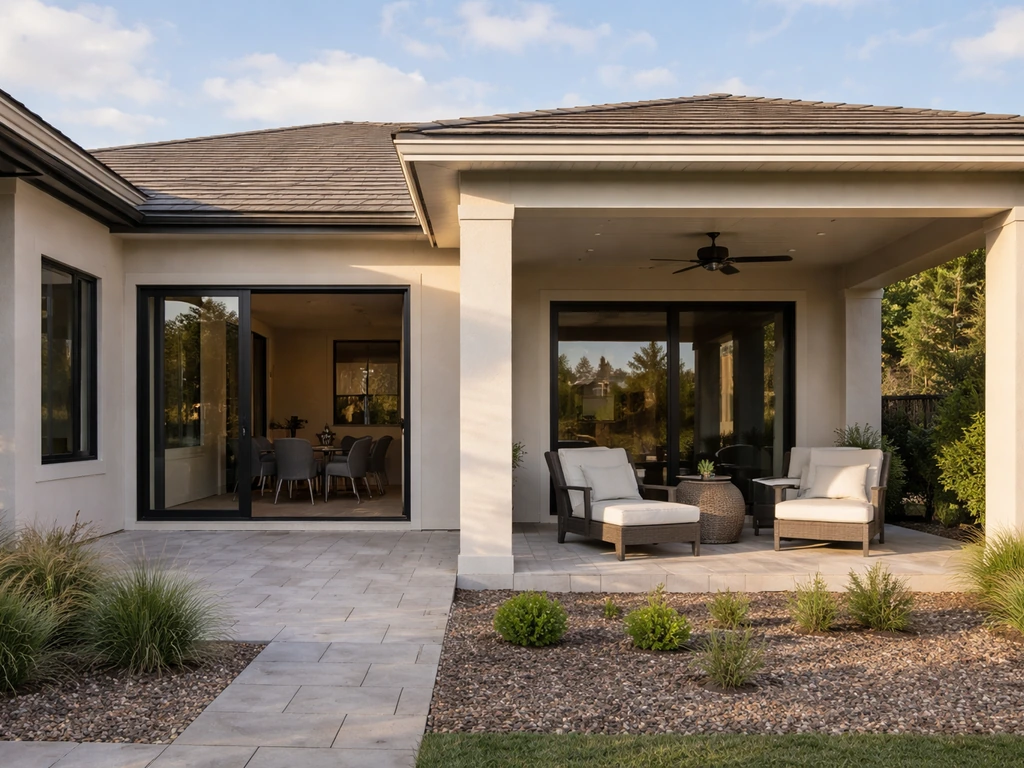
A patio is a ground-level paved area directly beside a house, while a terrace is an elevated or raised outdoor platform that can sit above ground, on a rooftop, or step up from a garden. That's the core distinction. Both are open-air, both are used for relaxing and eating outside, and both can look nearly identical when you're standing on them, but their position relative to the ground and the building they're attached to is what separates them.
Difference Between Terrace and Patio: Key Rules

Ada Hollis
13 May 2026
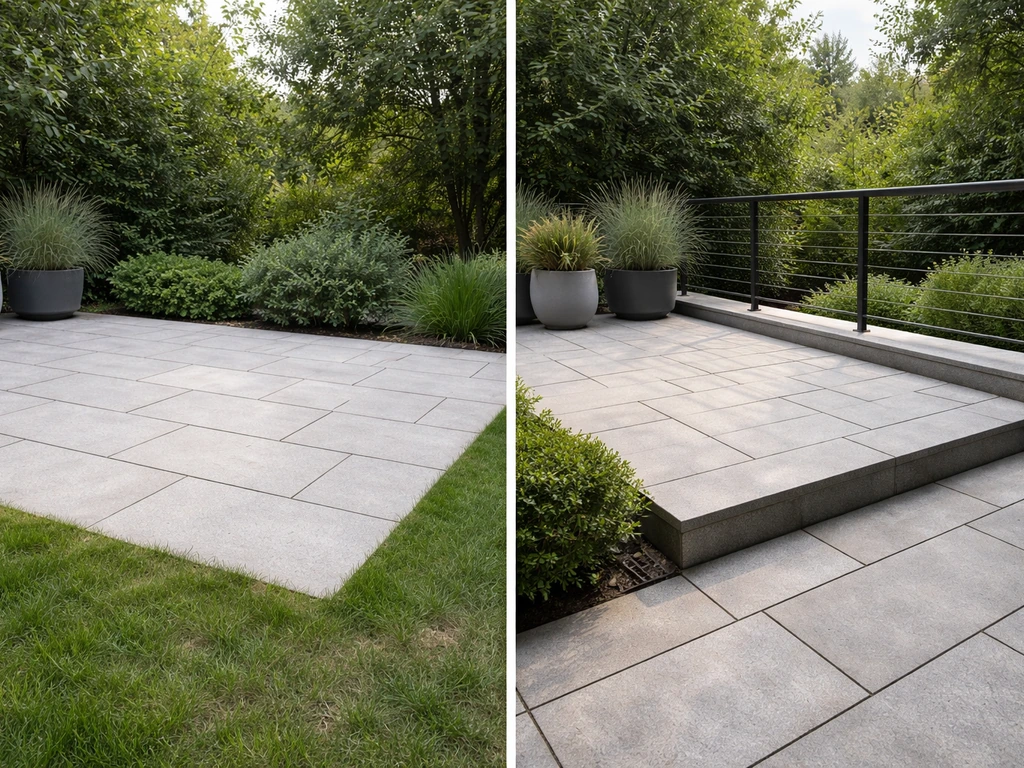
What each word actually means
A patio is defined consistently across major dictionaries as a flat, paved, roofless area that adjoins a dwelling and is used for outdoor dining and relaxation. Merriam-Webster describes it as a recreation area adapted especially for outdoor dining. Cambridge Dictionary emphasizes the solid floor with no roof. Britannica ties it specifically to ground level, usually behind a house, covered in hard material like brick or concrete. Zoning codes follow the same logic, often defining a patio as simply an outdoor area, often paved, adjoining a building used for open-air space.
A terrace, on the other hand, carries an elevation component. Wikipedia's architectural definition describes it as an external raised open flat area near a building, which can include roof terraces on flat roofs. Collins describes it as a platform projecting from a building, often with a balustrade along its outer edge and access from a door. The common thread is that a terrace sits above something, whether that's a basement level, a garden slope, a garage roof, or the main structure of a building itself.
One thing worth knowing: in everyday speech, especially in the UK, Ireland, and parts of Australia, the word 'terrace' sometimes just means a row of joined houses (a terraced house). That's a completely different usage and has nothing to do with outdoor space. When you see 'terrace' in a property listing next to outdoor square footage, it almost always means the elevated platform definition.
Ground level vs. elevated: why it changes everything
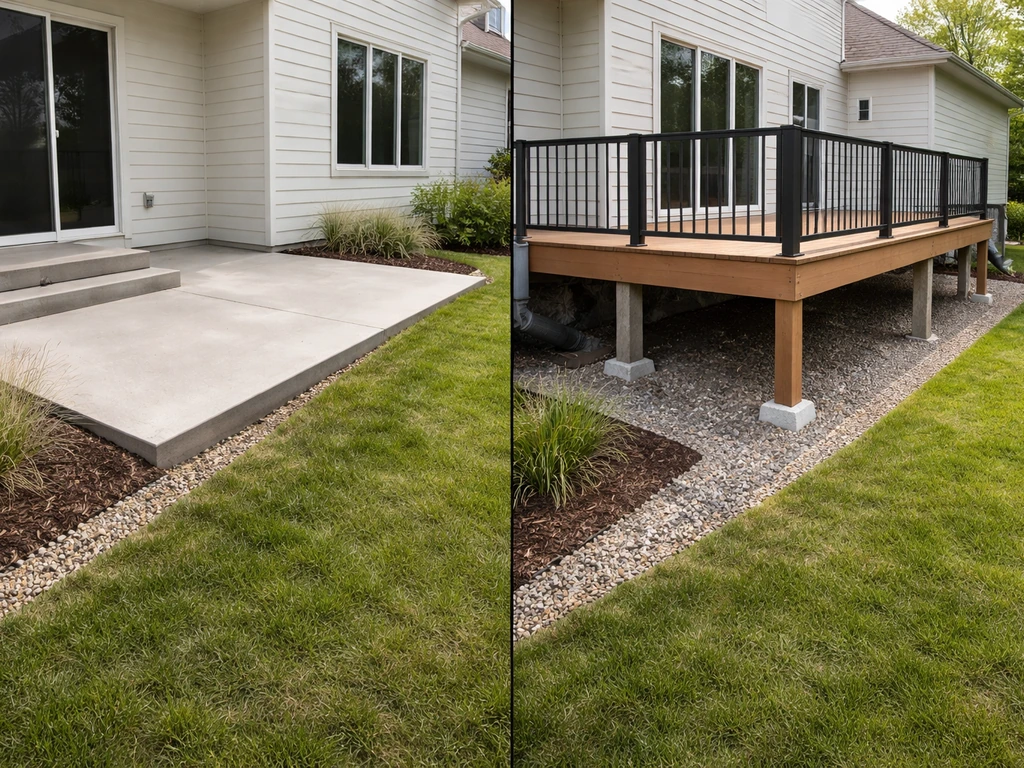
The elevation difference between a patio and a terrace isn't just academic. It changes how the space is built, what it costs, how it drains, and what safety requirements apply.
A ground-level patio is the simpler build. You're essentially creating a hard surface on or just above the soil, so you're mostly dealing with base preparation, drainage slope, and the surface material itself. There are no structural concerns about load-bearing capacity, no mandatory railings, and no complex waterproofing systems required. If the patio adjoins a back door, the threshold is typically at or just above ground level with minimal step-up.
A terrace changes the engineering picture significantly. Elevated terraces, especially roof terraces, require a waterproofing membrane underneath the surface layer, and UK standards from bodies like Premier Guarantee and NHBC require a minimum 150mm upstand above the finished roof level to maintain waterproofing continuity at edges, walls, and door thresholds. When you walk onto a terrace and notice a visible step up at the door, that step often exists precisely because of this 150mm threshold requirement. Pavers or deck tiles on rooftop terraces typically sit on adjustable pedestals above the membrane so drainage can flow freely beneath them without blocking rainwater outlets. Matrix Pedestals’ pedestal installation guide explains that rooftop deck pavers or deck tiles are installed over a waterproofing membrane using adjustable pedestals to allow drainage beneath the surface.
Railings and balustrades are another give-away. Ground-level patios rarely have mandatory perimeter railings unless they're adjacent to a drop or a pool. Elevated terraces almost always have them. The UK's Planning Portal defines a balcony as a platform with a rail, balustrade, or parapet extending outside the upper storey of a building, and terraces at height follow the same guarding logic. If you see a railing or a solid parapet wall around the perimeter of an outdoor platform, you're almost certainly looking at a terrace, not a patio.
Design, materials, and layout
Patios are typically designed as extensions of the interior floor plane at the back or side of a house. Common materials include concrete slabs, clay or porcelain pavers, natural stone like bluestone or travertine, and brick. The layout tends to be simple and functional: a seating area, maybe a dining table, and a clear sightline back to the kitchen or living room door. Because they're on the ground, planting beds, raised planters, and lawn can be integrated directly around the patio edges.
Terraces, particularly roof terraces or upper-level terraces, tend to feel more architectural. The surface materials are often porcelain or concrete pedestal pavers chosen specifically for their weather resistance and the technical requirements of elevated installation. Parapet walls frame the edges, and lighting, privacy screens, and built-in seating are common because the space feels more intentional and enclosed. A stepped garden terrace, on the other hand, can feel more informal, using the same materials as a patio but at a different level, connected to the garden by steps rather than opening directly onto flat ground.
| Feature | Patio | Terrace |
|---|---|---|
| Elevation | Ground level | Raised, elevated, or rooftop |
| Typical materials | Concrete, brick, stone, pavers | Pedestal pavers, porcelain tile, composite decking |
| Waterproofing required | Rarely (basic drainage slope) | Yes, especially on roof terraces (min. 150mm upstand) |
| Railings/balustrades | Not usually required | Common, often required at height |
| Access | Direct from door at ground level | Via door with step-up threshold or via external staircase |
| Typical setting | Back/side garden adjoining house | Rooftop, raised garden level, or projecting platform |
| Planting integration | Easy, directly adjoining lawn/beds | Usually planters or containers only |
How people actually use each space
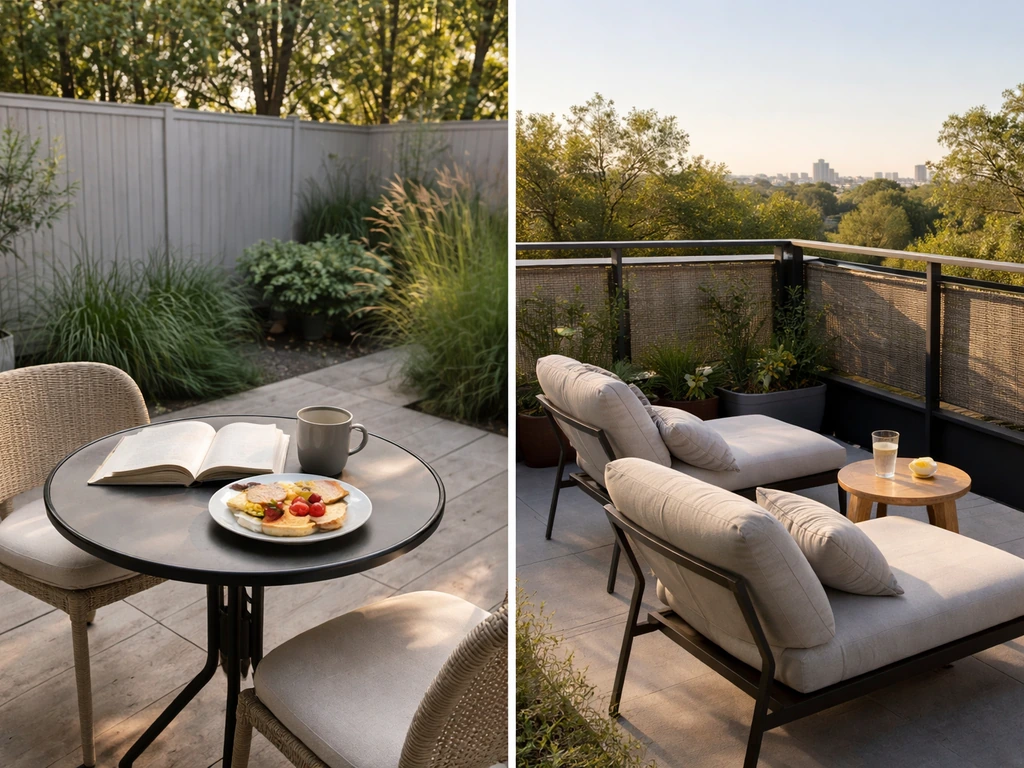
In practice, a patio is where most people do the everyday outdoor living: weekend breakfasts, evening barbecues, kids' homework in the sun, or just a coffee and a book. The ground-level connection to the garden makes it feel casual and accessible. You can step off it onto the lawn without thinking about it, drag furniture around, and let it blend into the rest of the outdoor space.
A terrace, especially an elevated or roof terrace, carries a different energy. The elevation gives you views you don't get at ground level, which makes them feel more like a destination than an everyday spillover from the kitchen. Wikipedia's architectural descriptions consistently frame terraces as leisure-oriented spaces for sitting, strolling, and resting with a sense of prospect over the surroundings. Urban apartments with roof terraces often use them for entertaining, al fresco dining with a view, or as a private outdoor retreat that compensates for no garden at ground level.
A stepped garden terrace sits somewhere in between. It's technically elevated, but the steps connecting it to the main garden keep it feeling connected rather than separate. These are popular in sloped gardens where flat, usable outdoor space has to be carved out of the gradient, and they often function just like a patio would in a flat garden.
Where patios and terraces sit among other outdoor terms
Patios and terraces are often confused with porches, balconies, verandahs, and courtyards, and it's worth placing them clearly. A porch is typically a covered entrance structure, often with a roof and a raised floor. Understanding the porch patio difference also helps you interpret listings when a covered entrance overlaps with outdoor living space. A verandah (or veranda) is a roofed, open-air porch that wraps along the front or sides of a house, and the roof is what separates it from a patio. People also ask whether a patio and balcony are the same, but they differ in elevation and how they attach to the building. A patio has no roof. A lanai, by contrast, is a covered outdoor living space commonly found in Hawaii, and it functions more like a veranda or screened porch than a typical open patio or terrace. A balcony projects from an upper storey of a building with a rail or parapet and is generally smaller than a terrace, often outside a bedroom or living room window rather than a full platform. A common point of confusion is patio or balcony meaning, because both are outdoor spaces but they differ in their level and enclosure features A balcony. Once you know what a balcony is, you can use it to quickly sort out the patio balcony difference when listings use these terms loosely. A courtyard is an enclosed outdoor space surrounded by walls or the building itself, often in the interior of a property, and may or may not have a hard floor surface.
A terrace and a balcony are the most commonly confused pair when looking at elevated spaces. If you're deciding for an apartment, the differences between a patio and a balcony matter because one is typically ground-adjacent while the other is an upper-level, railed platform patio vs balcony apartment. The practical difference is size and structure: a balcony projects from a wall and is cantilevered or supported by brackets, while a terrace is typically a larger, more substantial platform, often built on top of a lower structure (like a garage or lower floor) rather than projecting outward from a wall. If the outdoor space can hold a full dining table and a lounger with room to spare, it's probably being called a terrace. If it only fits two chairs and a railing, it's likely a balcony. If the space is smaller and cantilevered with a rail, it’s often being referred to as a balcony rather than a patio.
Regional usage adds complexity. In the United States, 'patio' is the dominant everyday term and covers almost any hard-surfaced outdoor area next to a home, regardless of elevation. In the UK and Ireland, 'terrace' is used more freely for elevated outdoor spaces attached to properties, and estate agents will sometimes label a ground-level paved area as a 'patio' and an upper-level one as a 'terrace.' In some European contexts, particularly Italian and French architecture, 'terrace' is the default term for any hard outdoor platform associated with a building. The same space can be called a patio in one listing and a terrace in another depending entirely on the market.
Choosing the right term, and the right space, for your situation
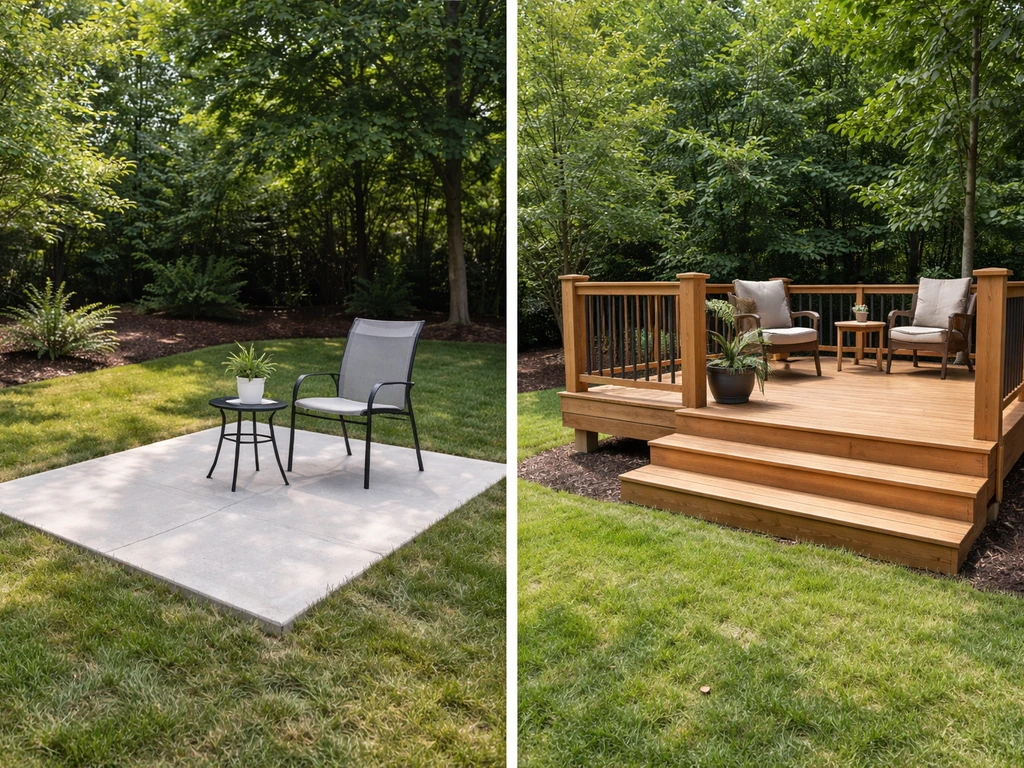
If you're trying to identify what a listing is describing, run through these questions. Is the outdoor space at ground level or elevated? Ground level almost always means patio in standard usage. Does it have a railing, parapet, or balustrade around the edges? That points to terrace (or balcony if it's small and projecting). Is it accessed from an upper-floor door, or does it sit on top of part of the building like a garage roof or flat extension roof? That's a terrace. Does it open directly from the kitchen or back door onto what feels like a continuation of the garden? That's a patio.
If you're planning a new outdoor space, the choice between a patio and a terrace usually comes down to your site. A flat garden with a back door makes a patio the obvious, cost-effective choice. A sloped garden where you want a flat usable area will require terracing, whether that's a single elevated platform or a series of stepped levels. An apartment or townhouse with a flat roof over a lower section may be a candidate for a roof terrace, though the waterproofing and structural requirements make it a more significant investment.
From a real estate perspective, both add genuine value, but roof terraces and elevated terraces in urban settings often command a premium because they solve the 'no garden' problem in dense areas. A ground-level patio is expected in most houses with a garden, so it adds less marginal value on its own unless it's well-designed and generous in size. When you're viewing a property, measure the usable space, check whether it gets direct sun at the times you'd actually use it, and note whether the access from the main living areas is easy and intuitive. Those practical factors matter far more than which word the listing uses to describe it.
- Ground level, paved, no roof, next to the house: call it a patio
- Elevated platform on top of a structure or at an upper level: call it a terrace
- Has a railing or parapet at the perimeter: likely a terrace or balcony, not a patio
- Accessed from an upper-floor door with a step-up threshold: terrace
- Surrounded by walls or the building on multiple sides: possibly a courtyard
- Has a roof overhead: porch, verandah, or lanai, not a patio or terrace
- Small, cantilevered, projecting from an upper-floor wall: balcony
FAQ
If a patio is right next to the house, how can I tell it is not actually a terrace?
Look for elevation cues at the door or edge. If you step up at the access point, or the surface sits above another roof or platform, it is behaving like a terrace even if it feels close to the building. Also check for guarding elements, a railing, parapet, or balustrade usually signals a terrace at height.
Can a terrace be roofed, and would it still be called a terrace?
Yes. Roof terraces are common, often with open-air access at the top but a roof membrane and upstand system underneath. If there is a roof covering the terrace area, it shifts the description toward balcony or veranda in everyday speech, but the structural waterproofed platform is still a terrace.
What is the usual mistake when reading property listings that use these terms loosely?
Assuming the word matches the engineering reality. Estate agents may label ground-level hardstanding as a terrace in some markets, or call an elevated space a patio. Always verify elevation, access height, and whether there is a perimeter guard, then use your own measurements rather than the label.
Are porches, courtyards, and verandas ever mistakenly described as patios or terraces?
Yes, especially courtyards and covered porches. A porch typically has a roof and is an entrance structure, a courtyard is an enclosed outdoor area defined by walls, and a veranda is roofed and open-air. If there is a roof over the space, or it is clearly an entrance structure, do not treat it as a plain patio.
How do drainage and maintenance differ in practice between patios and terraces?
Patios rely on ground drainage and a proper slope away from the house, so water usually disperses into soil or garden drainage systems. Terraces depend on membrane waterproofing below the floor build-up, plus controlled drainage paths that do not block outlets, so cleaning debris from scuppers or outlets matters more.
If my outdoor area is on stilts or over a basement, is it a terrace even if it is not a rooftop?
In most real-world interpretations, yes. If the platform is elevated above grade and part of the floor is over a lower level, it should be treated as a terrace for safety and construction planning, including the likelihood of waterproofing and edge protection requirements.
Does the presence of a railing always mean the space is a terrace?
Not always, but it is a strong indicator. Ground-level patios can have railings if there is an adjacent drop, a pool, or a significant boundary height. If the railing sits around an elevated deck or roof platform, it almost certainly indicates a terrace rather than a ground-level patio.
What should I measure before choosing between a patio and a terrace for my home?
Measure usable width and depth for seating plus clear circulation from the door. For terraces, also check the door threshold and step-up height, confirm there is space for safe entry and evacuation, and note whether the terrace gets direct sun during the specific hours you plan to use it.
In the US, should I assume 'patio' means ground-level?
No. In the US, patio is often used broadly for any hard-surfaced outdoor area next to a home, including elevated or roof-adjacent spaces. If you want to know whether it behaves like a terrace, check for height, guards, and access from an upper door or above another structure.
Next Article
What Is the Difference Between a Patio and a Lanai?
Quick guide to patio vs lanai: meanings, typical design, indoor-outdoor feel, and how to spot each in real estate listin