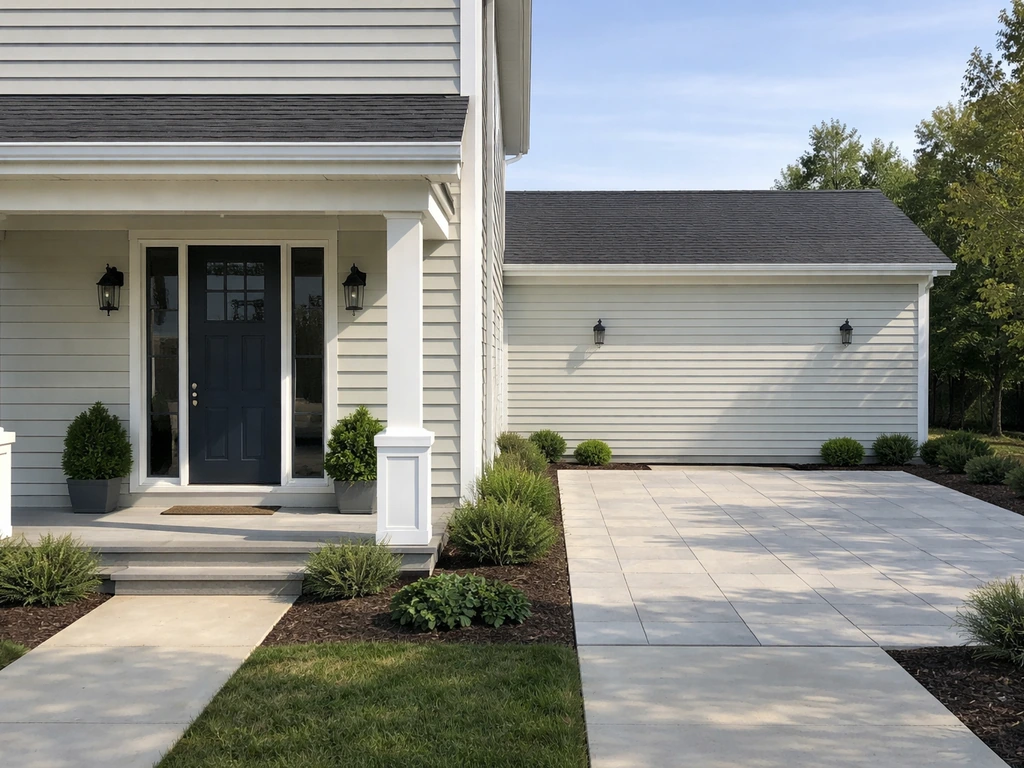
A patio is a ground-level outdoor area attached to a home, typically paved and sitting flush with the yard. blank" rel="noopener noreferrer">A balcony is an elevated platform that projects from the wall of a building, usually on an upper floor, and is always surrounded by a railing or balustrade. In most cases, a patio and a balcony are not the same because they differ mainly by height and connection to the building. A terrace sits somewhere between the two: it's a raised, open, flat outdoor area that can be on a rooftop or built into a hillside, but it's generally larger than a balcony and more architectural than a simple backyard patio. If you can walk straight out of a back door onto it without any steps and it connects to the ground, it's almost certainly a patio. If you're on the second floor or higher and there's a railing stopping you from stepping off the edge, it's a balcony. Everything else tends to get called a terrace.
Patio Balcony Difference: Definitions and Quick Photo Tips

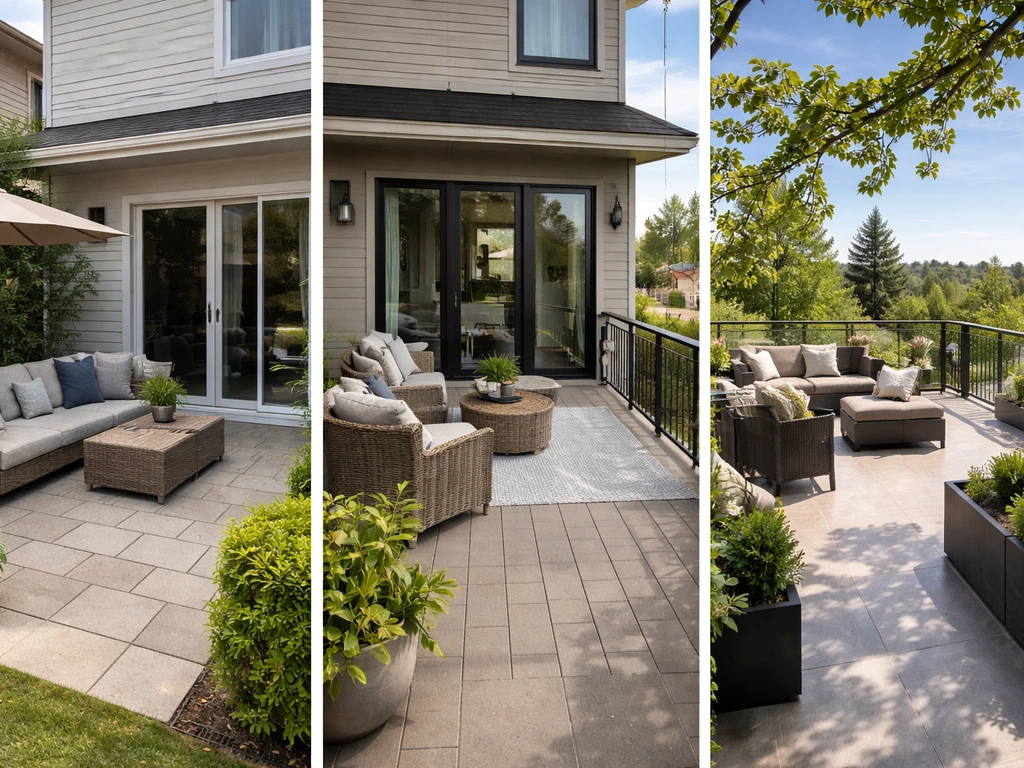
Quick definitions: patio, balcony, and terrace
A patio, by its most widely accepted definition, is a paved outside area that adjoins a house or apartment building and is used for outdoor dining or recreation. It sits at or very near ground level and doesn't project from the building's facade. You step out onto it, not down to it from a railing-guarded platform. Merriam-Webster's definition emphasizes this: it's a recreation area that adjoins a dwelling, often paved, and suited to outdoor dining.
A balcony is a platform that projects from the upper-story facade of a building, surrounded by a railing, parapet, or balustrade, with access directly from inside the building. The railing isn't optional styling: the International Residential Code requires guards on any open-sided walking surface more than 30 inches above grade. That's why every real balcony you've ever seen has one. Balconies are typically compact and connected to a single room, often a bedroom or living room.
A terrace is the trickiest of the three. In real-estate and architectural usage, it's an external, raised, open, flat area near a building. That can mean a rooftop terrace on a flat-roofed apartment block, a large paved platform above a garage, or a stepped garden area cut into a slope. The key qualities are that it's elevated (but not necessarily projecting from the building wall), usually more spacious than a balcony, and typically unroofed. Some glossaries define it simply as an unroofed paved area built adjacent to a residence, which explains why the term overlaps heavily with both patio and balcony in listing language.
Where each space sits on a home: layout and elevation
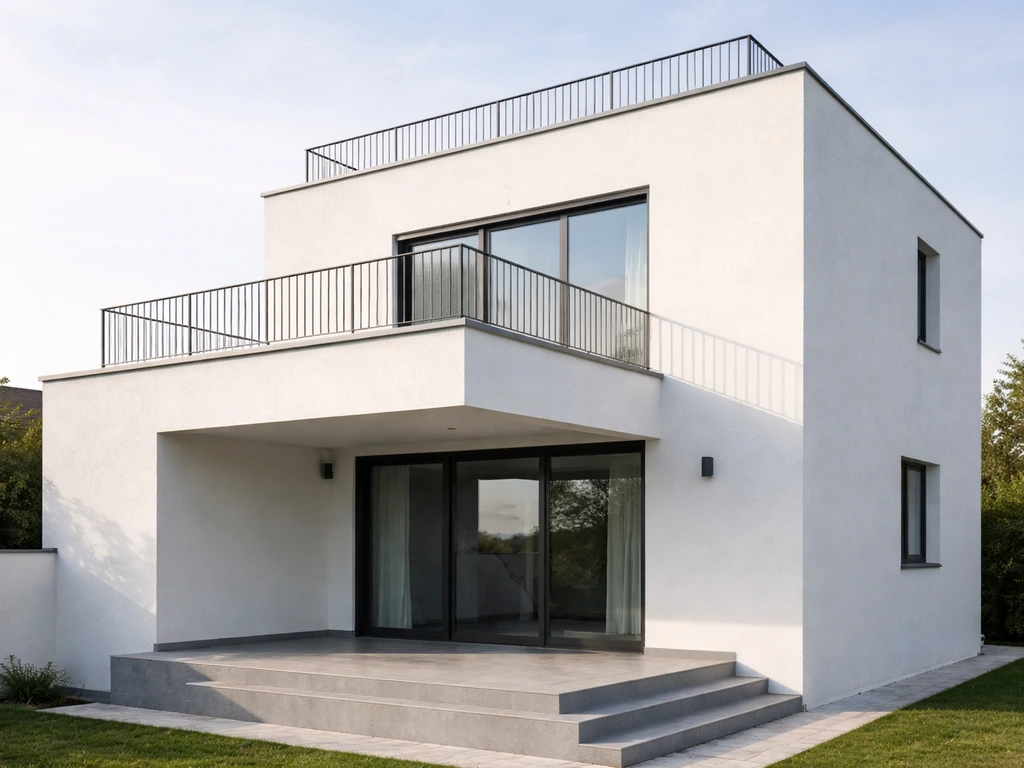
Think of these three spaces as sitting at different heights on a building. A patio lives at ground level, usually extending off the back or side of a house, a townhome, or a first-floor apartment. It's essentially part of the yard that happens to be paved or tiled. A balcony is firmly in the air, attached to an upper-floor exterior wall, and small enough to typically serve one room. A terrace occupies the middle and upper range, but it's broader in form: it might be the flat roof of a lower floor used as an outdoor deck for the floor above, a large platform built over a basement or parking structure, or a generous rooftop space on a mid-rise building.
In low-rise houses, you almost never see a true balcony, because most rooms aren't high enough above grade to require one. What looks like a balcony on a two-story house is often just a small deck off the master bedroom. In apartment buildings, especially urban mid-rise and high-rise blocks, balconies are the dominant outdoor-space type because the units are elevated. Terraces appear most commonly in urban apartment buildings and condos where flat roofs or set-back upper floors create platforms that can be used as outdoor space.
Patio vs terrace: the differences that matter
The patio-vs-terrace question trips up a lot of buyers and renters because the terms are genuinely close in meaning. Both describe open, usually paved outdoor spaces attached to a residence. The distinction most real-estate glossaries and home-services guides agree on is elevation and size. A patio is ground-level and relatively informal; a terrace is elevated and tends to be more architecturally significant, often larger, and sometimes shared in a multi-unit building.
In practice, 'terrace' in a listing often signals that the outdoor space is on a roof or on an elevated podium rather than at street or garden level. A first-floor apartment with a ground-level outdoor area will typically be listed as having a patio. A top-floor unit with access to the roof will be listed as having a terrace or roof terrace. The space itself might look similar in photos, but the elevation, the access route, and whether the space is shared or private can differ significantly.
One more distinction worth knowing: terraces are more often shared amenities in multi-unit buildings, while patios are almost always private and belong to a specific unit. That's not a hard rule, but it's a pattern worth checking when you're reading a listing. If it says 'shared terrace,' you may be booking time on the roof with your neighbors. If it says 'private patio,' you likely have an outdoor area that's yours alone.
Key differences: access, railings, roofing, and boundaries
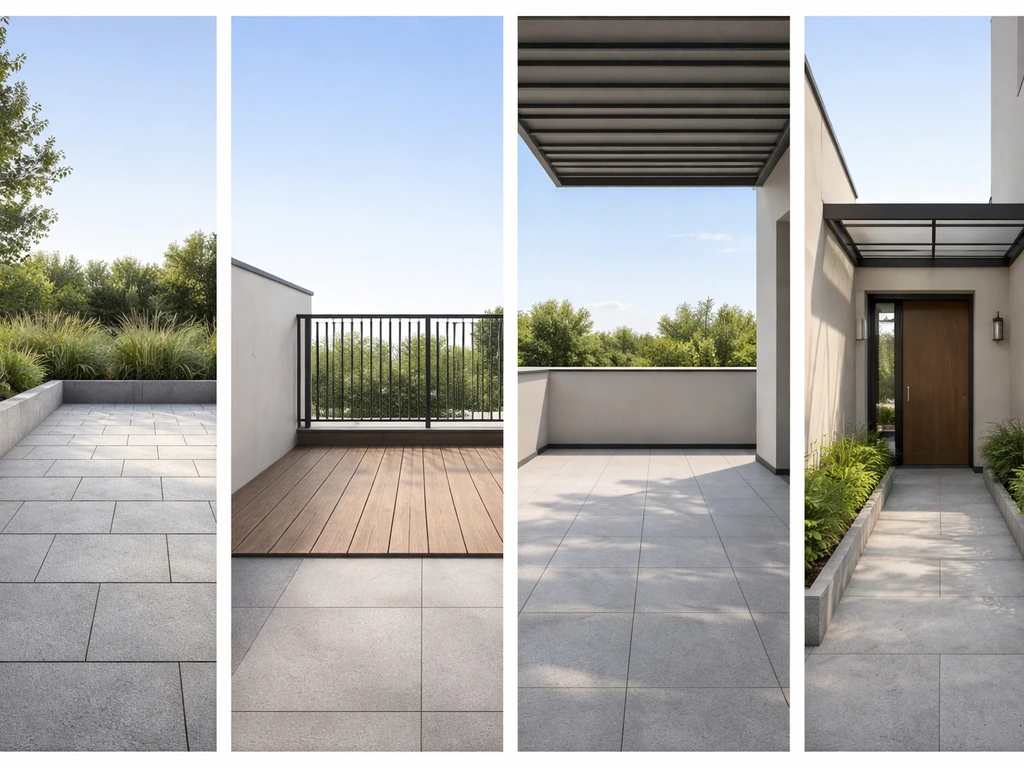
The easiest way to sort these spaces is to ask four questions: How do you get to it? Is there a railing? Is it roofed? And does it connect to the ground or to the building facade? The answers map almost perfectly onto the three categories.
| Feature | Patio | Terrace | Balcony |
|---|---|---|---|
| Typical elevation | Ground level | Elevated (roof or podium) | Upper floor, above ground |
| Access | Direct from interior door or side gate | Interior door to roof/podium, or exterior stair | Interior door from a single room |
| Railing required? | No (ground level, no drop hazard) | Sometimes (if elevated edge present) | Yes (code-required above 30 in. above grade) |
| Typically roofed? | Rarely (open to sky by default) | No (unroofed by most definitions) | Rarely (usually open, sometimes awning) |
| Boundary type | Connects to yard/ground | Building edge or parapet wall | Projects from building wall, railing-enclosed |
| Typical size | Varies, often generous | Often large/shared | Compact (one-room scale) |
| Common in | Houses, townhomes, ground-floor apartments | Rooftop apartments, condos, urban mid-rise | Upper-floor apartments, condos, high-rise |
The railing point is worth emphasizing because it's the single most reliable visual cue in listing photos. If you see a railing around the perimeter of the outdoor space and the unit appears to be on an upper floor, it's a balcony or an elevated terrace. If the outdoor area flows out at grade with no drop, it's a patio regardless of what the listing calls it. Roofing is less diagnostic because patios, terraces, and even some balconies can have pergolas or retractable awnings added, but a full solid roof over an outdoor space often pushes it into 'covered porch' or lanai territory rather than a traditional patio or balcony. A lanai is a style of outdoor living space with a more complete cover, often used in warmer climates covered porch. If the area is fully covered and you enter it like a sheltered front-to-back space, you may actually be looking at a porch instead of a patio what is the difference between a patio and a porch.
How people actually use these spaces
Patio: the most versatile outdoor room
Because a patio is at ground level and typically connected to the yard, it's the most flexible of the three. You can fit a full dining set and a sofa group, run a gas grill, add a fire pit, plant container gardens along the edge, store bikes or garden equipment nearby, and let children and pets move freely between the patio and the lawn. Patios are the go-to space for outdoor entertaining in single-family homes precisely because scale and ground access remove the restrictions you get with elevated spaces.
Balcony: outdoor access without a yard
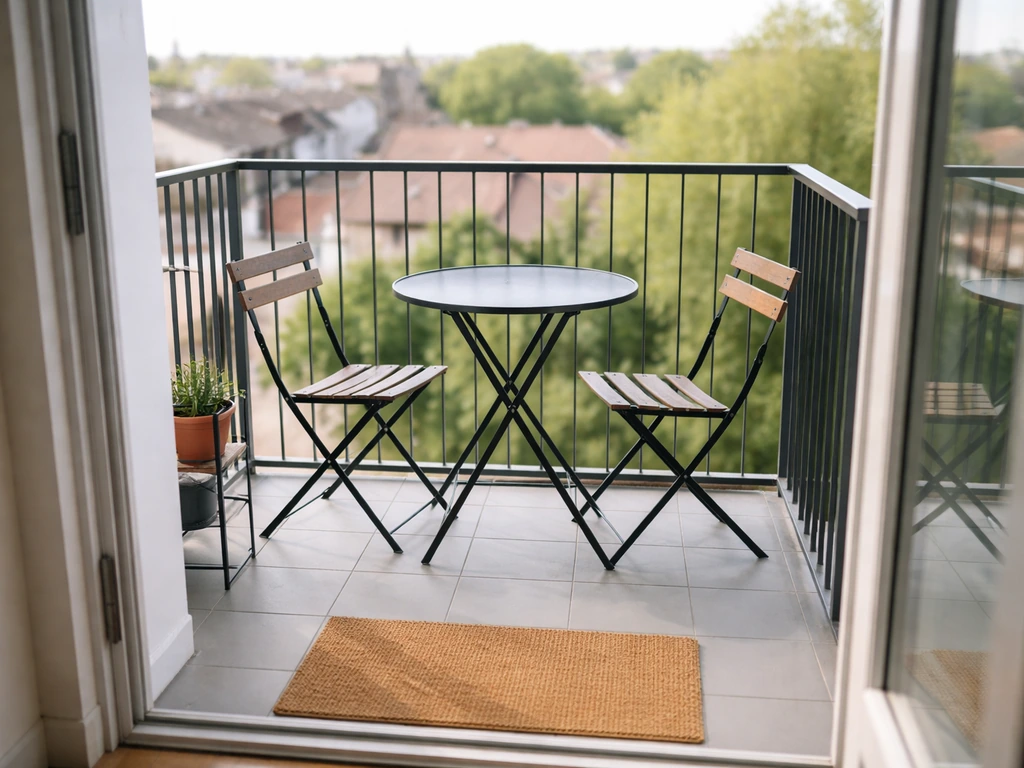
A balcony's main value is giving upper-floor residents any outdoor access at all. Most balconies are compact enough that use is limited to a small bistro table and two chairs, a couple of folding chairs with a drink table, or container plants along the railing. You can't grill on most apartment balconies (building rules and local fire codes usually prohibit it), and storage is minimal. The payoff is fresh air, a view, and the psychological value of stepping outside without leaving your floor. In urban apartments, a private balcony is a genuinely meaningful amenity that affects rental and resale value.
Terrace: space and a view, sometimes shared
Terraces, particularly rooftop terraces, tend to be the most impressive outdoor amenity in apartment and condo buildings because they combine elevation (and the views that come with it) with real usable space. A private terrace off a penthouse or set-back upper floor can comfortably hold a dining area, a seating section, and container plantings. A shared building terrace works more like a communal amenity, similar to a pool deck, where you book or claim space rather than owning it. For day-to-day use, a private terrace is fantastic but rare; a shared terrace requires compromise.
How to spot them in listing photos and what to ask
Listing language is notoriously inconsistent. Zillow, for example, has been known to use 'Patio or Balcony' as a single combined amenity field, and agents on platforms like RentHop frequently use 'terrace' and 'balcony' interchangeably. Patio or balcony meaning can also vary by market, so visuals and access questions are key. That means the label alone won't always tell you what you're actually getting. Here's how to cut through the ambiguity. Because the wording can also include nearby alternatives like porch patio differences, it's smart to verify what level the space sits on and how you access it.
Visual cues to look for in photos
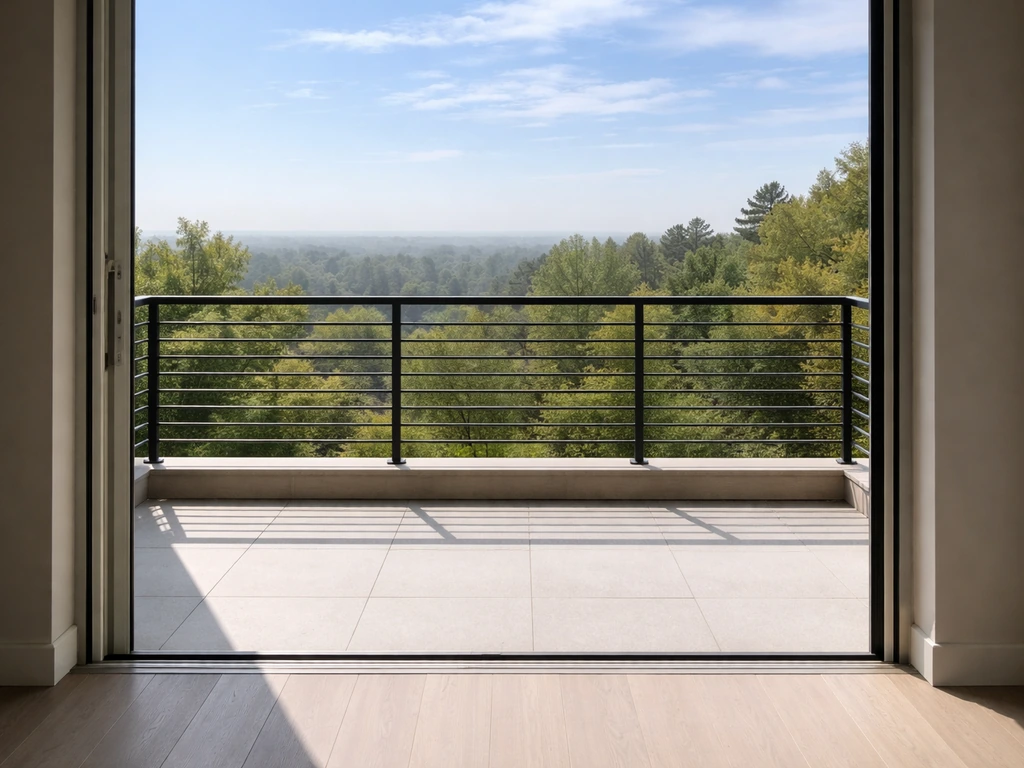
- Railing visible around all open edges: almost certainly a balcony or elevated terrace, not a ground-level patio.
- Photo taken looking down at the outdoor space from inside the unit: suggests an elevated space (balcony or terrace).
- Outdoor space appears to be at the same level as the room floor with no step down: likely a patio or ground-level terrace.
- Visible sky on all sides with a city or rooftop view: roof terrace.
- Outdoor area connects to a visible lawn, garden, or courtyard: patio.
- Outdoor space accessed through a single door from one room: typically a balcony.
- Outdoor space accessed through wide sliding or French doors from a living area: more consistent with a patio or large terrace.
- No railing visible, flat ground, neighbors' yards visible at the same level: ground-level patio.
Questions to ask a realtor or landlord
- Is the outdoor space at ground level, or is it elevated above the floor below?
- Is it private to this unit, or is it a shared amenity for the building?
- Does it have a railing or parapet wall on any side?
- What floor does it access from, and through which room or door?
- Is there a roof, pergola, or overhang above it, or is it fully open to the sky?
- Are there any restrictions on use, such as no grilling, no furniture above a certain weight, or quiet hours?
- Is outdoor storage available nearby if the space is elevated and small?
- Who is responsible for maintenance and cleaning of the outdoor surface?
The 'private vs shared' question is especially important for terraces and worth asking directly, because it changes the day-to-day reality of the space entirely. A private 200-square-foot terrace is a genuine selling point. Access to a shared rooftop terrace you can book twice a month is a building amenity, not personal outdoor space.
A note on terminology that varies by region and listing context
In the United States, 'patio' almost always means a ground-level paved area, but in British English and in many parts of Europe, 'terrace' is used for what Americans call a patio (the paved area behind a house at garden level). In urban American real estate, particularly in New York City, 'terrace' typically refers to an elevated private outdoor space larger than a balcony, often off a set-back upper floor. So the same word can mean very different things depending on where the property is located. If you're searching in a major city, lean toward asking the ground-level vs elevated question directly rather than relying on the label.
The confusion between patio and balcony in apartment listings is common enough that it's worth cross-checking the floor number of the unit against the outdoor space description. A first-floor unit with a 'balcony' is almost certainly a patio. A fourth-floor unit with a 'patio' is probably a balcony or a terrace. Treat the label as a starting point, not a definitive description, and use the visual and question checklists above to confirm what you're actually looking at.
FAQ
How can I tell if a listing’s “patio or balcony” is really a ground-level patio?
Check the unit floor and the access path. If the unit is on the first floor (or “ground floor”) and the outdoor space is reached by a door with no steps or deck height, it is usually a patio. If it’s on the second floor or higher and there is a guard rail around the perimeter, it is more likely a balcony or an elevated terrace even if the listing uses “patio.”
What should I look for in photos when deciding patio balcony difference quickly?
The most reliable clue is whether the outdoor space is “open-sided” with a railing and appears to be elevated from the street or yard. If you see a railing plus an upper-floor door, expect balcony or terrace. If the outdoor surface looks flush with the yard level and there is no drop, expect a patio. Also look for stairs, because steps from inside often signal an elevated deck.
Can a balcony be large enough to feel like a patio?
Yes, sometimes. Some units have deep balconies that can hold a small dining set, but they will still be enclosed by guards and accessed from an upper-floor exterior door. If the space is both very large and elevated, it may be marketed as a terrace, but the deciding factor is still elevation and railing rather than square footage alone.
Are covered spaces always patios if they have a roof or pergola?
Not necessarily. A patio can have a pergola or partial cover, but if the area is fully enclosed like a sheltered room or you enter it as a porch-style space, it may be categorized as a porch or lanai instead. In listings, “covered” is often a clue that the space is being labeled for marketing, so confirm whether it’s open-air and ground-level versus sheltered and elevated.
Is it normal for a terrace to be shared with neighbors?
Common in apartments and condos, especially for rooftop or podium terraces. If the listing does not explicitly say “private,” assume it may be shared, then ask how the space is allocated (first-come, booked time, number of units with access). This changes daily use, privacy, and sometimes even whether you can store items there.
What’s the safest way to verify private vs shared when the listing is vague?
Ask directly: “Is the terrace/patio accessible only to my unit, and do I have exclusive use?” Then ask whether there are any booking rules, guest limits, or shared storage areas. For rooftop spaces, ask who maintains it and whether there are posted schedules that affect access.
How should I interpret patio, terrace, and balcony terms differently in the UK or Europe?
In some UK and European contexts, “terrace” can mean what Americans would call a garden-level patio behind a home. Meanwhile, in parts of the US, especially big cities, “terrace” often means an elevated outdoor space off an upper floor. If you are searching across countries, rely more on elevation and access (stairs, railing, floor level) than the word itself.
If my unit is labeled “balcony” but I’m on the first floor, what is it likely to be?
It is likely a ground-level patio or a low deck. Many listings use “balcony” loosely for any fenced outdoor area. Confirm by asking whether there are guards for an elevated drop, and whether you exit directly onto the yard or onto a deck above grade.
Can I grill on a balcony or terrace?
Often no for balconies in apartments, and sometimes restricted for terraces. Building rules and fire codes typically limit or prohibit grilling on certain types of elevated, rail-adjacent spaces. If grilling matters, ask whether there is an approved method (electric only, small propane in designated areas) and whether there is a dedicated grill location on shared terraces.
How do I decide patio balcony difference when the outdoor area is on a rooftop?
A roof deck is usually a terrace, particularly if it’s elevated above street level and accessed from an upper unit. Even if it looks similar to a patio in photos, the combination of rooftop height, guardrails, and entry through an upper-floor door points to terrace use rather than a yard-level patio.
What mistakes do buyers and renters make when relying on the label only?
They assume the marketing term is accurate, they ignore floor number, and they miss the railing and elevation cues in photos. Another common mistake is overlooking whether the space is shared, especially for “terrace” wording. Always confirm access (stairs or no stairs), railing presence, and whether it connects to ground level.
What Is the Difference Between a Patio and a Porch
Clear definitions and side by side differences between patios and porches, including location, coverage, height, and use