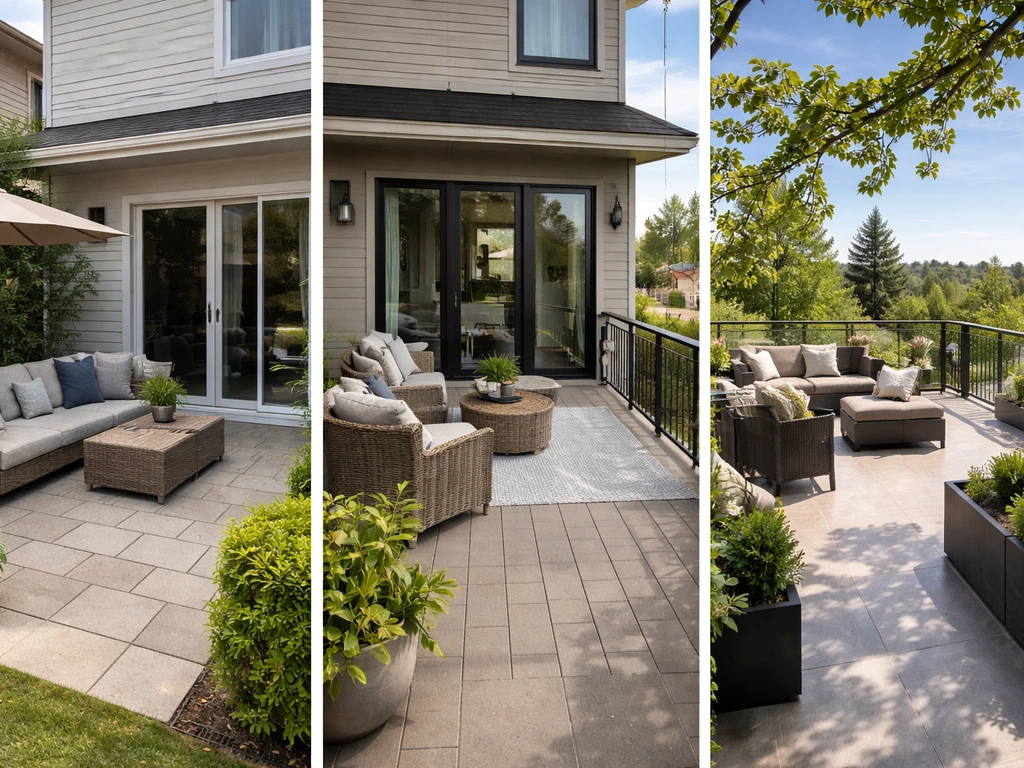
A patio is an open, ground-level outdoor surface attached to a home, usually paved with concrete, stone, or pavers, and exposed to the sky. Dictionary.com defines a patio as an area, usually paved, adjoining a house and used for outdoor lounging, dining, and similar activities blank" rel="noopener noreferrer">a patio is an area adjoining a house used for outdoor lounging and dining. A lanai is a roofed, open-sided porch or veranda, Hawaiian in origin, that gives you covered outdoor living space. The porch patio difference matters most when you are trying to figure out whether the space is front-facing and roofed or open to the elements. The core difference comes down to one word: a roof. Patios are typically open to the elements; lanais have overhead cover built in, and are often screened as well.
What Is the Difference Between a Patio and a Lanai?

Quick definitions: patio vs lanai
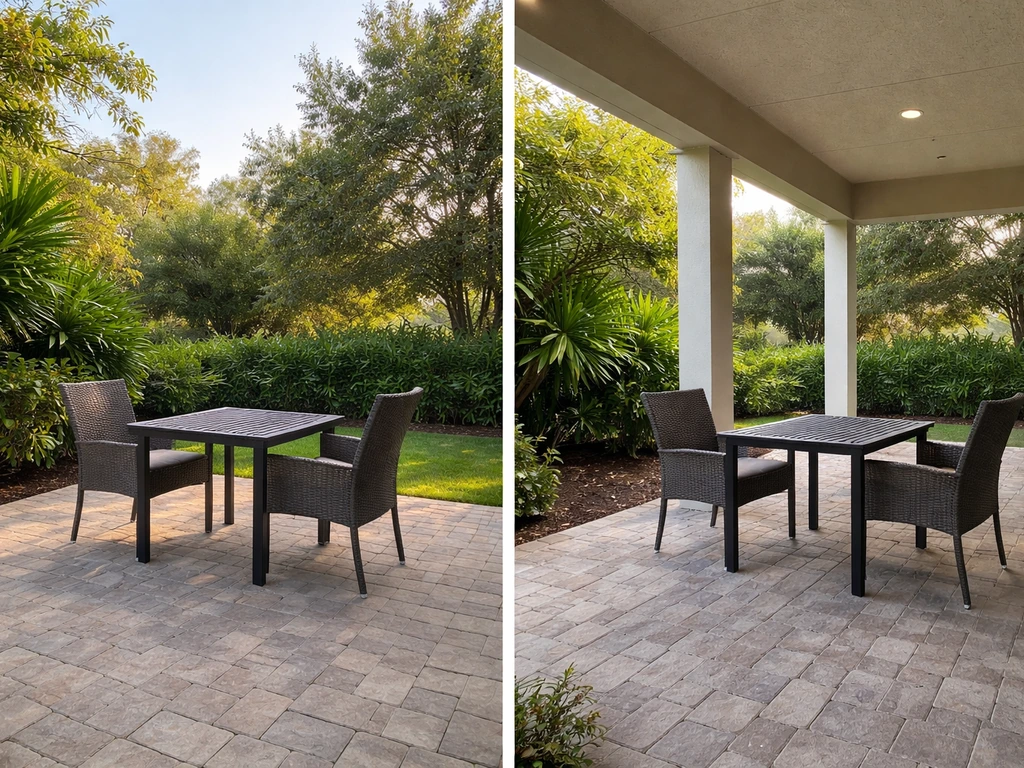
A patio, as most dictionaries describe it, is an outdoor area adjoining a house that's used for sitting, dining, and relaxing outside. If you are wondering about patio or balcony meaning, the key idea is whether it is an open exterior space and whether it is ground-level or attached above the main structure. It sits at ground level, is usually paved, and can be covered or uncovered depending on what you've added to it. The key trait is that it starts as an open outdoor surface at grade.
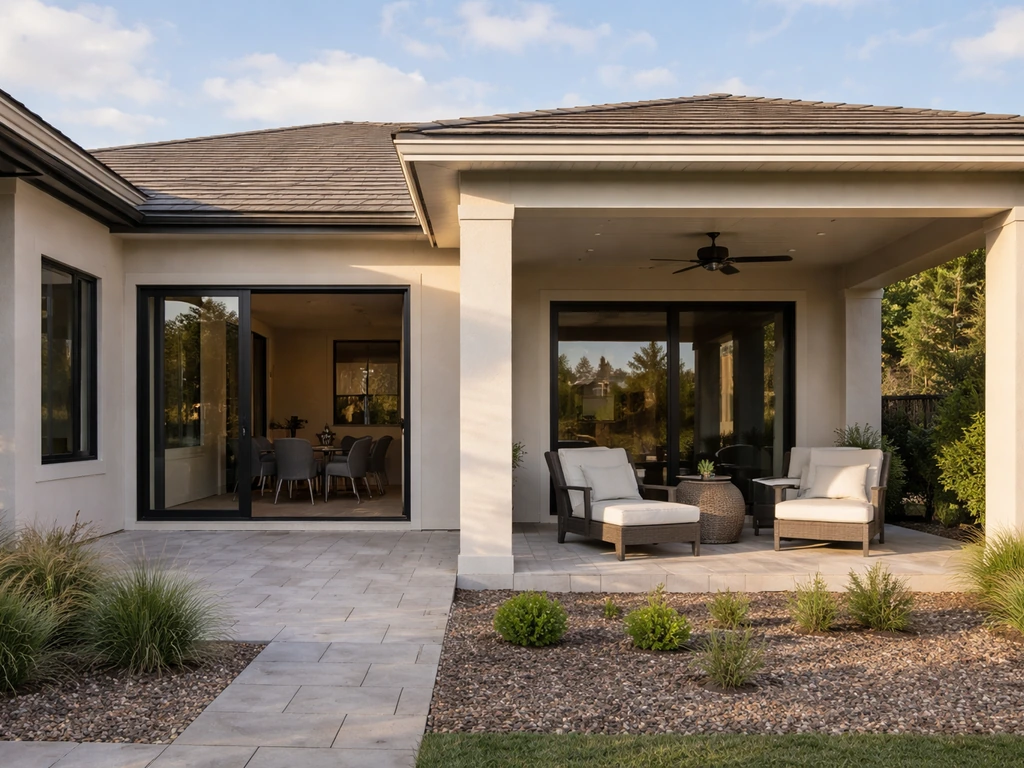
A lanai comes from Hawaiian architecture and Merriam-Webster defines it simply as a roofed porch or veranda. In practice, it's a covered outdoor living space attached to the home, open-sided (so air flows through), and often screened to keep out bugs. You're most likely to encounter the term in Hawaii, Florida, and parts of Southern California, where year-round outdoor living makes covered, weather-protected spaces a priority.
The simplest way to remember the distinction: if you're sitting under a roof, you're on a lanai (or something very much like one). If you're under the open sky, you're on a patio.
Where each space typically lives on a home
Patios are ground-floor additions built directly at grade. They're almost always at the back of a house, sometimes wrapping around the side, and are flush with or just slightly above the surrounding lawn or garden. They don't require structural connection to the home's roofline. A patio can exist as a freestanding slab in a backyard with no wall attachment at all.
A lanai, by contrast, is architecturally integrated into the home. It sits under the main roofline or has its own dedicated roof structure extending from the house walls. In traditional Hawaiian homes, the lanai is often tucked under the overhanging eaves of the main roof, making it feel like an outdoor room that's part of the house rather than an afterthought. In Florida new construction, builders typically pour a concrete or tile-floored covered slab at the rear of the home, attach a roof to the house structure, and call the whole thing the lanai. It's deliberately designed into the floor plan rather than added later.
One practical implication: because a lanai is roofed and structurally attached, it usually requires a building permit to construct or modify. A basic open patio slab in most jurisdictions does not, though adding a patio cover (a roof) brings you back under permit requirements. Local codes often define patio covers as one-story roofed structures no more than 12 feet above grade used for outdoor living, not as habitable rooms or storage.
How they feel and function day to day
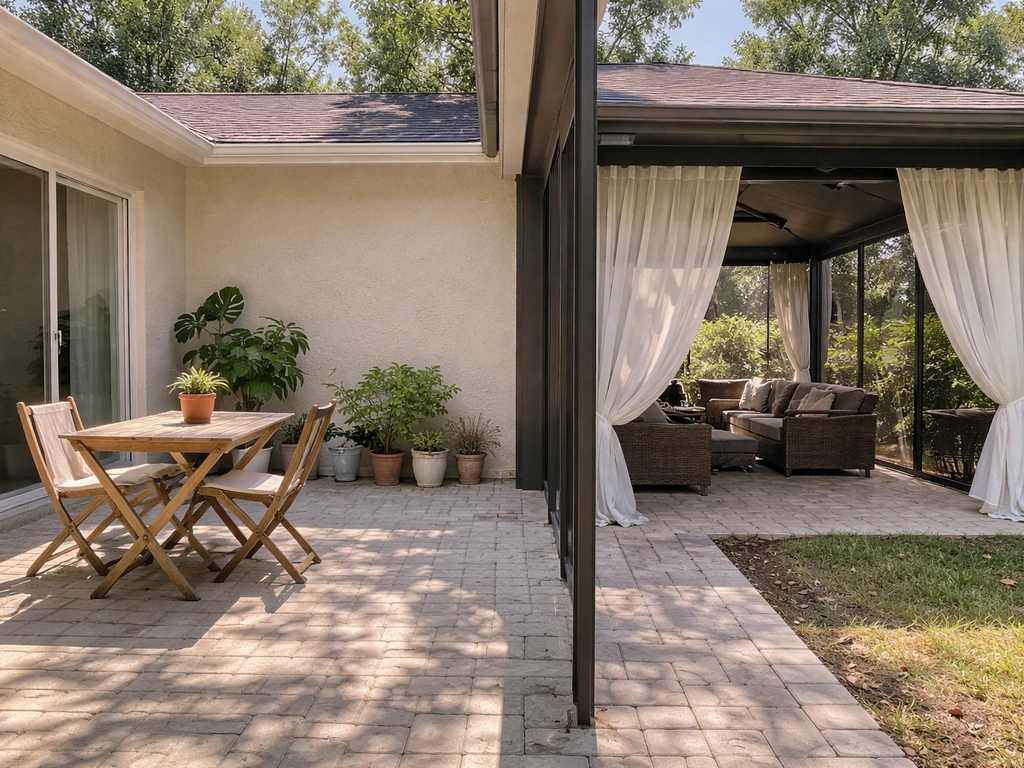
A patio is the more flexible of the two. You can furnish it however you like, leave it completely open to sun and rain, add a pergola for partial shade, or eventually enclose it with a patio cover. It's informal and adaptable. The trade-off is exposure: on a hot afternoon or a rainy day, the patio is uncomfortable or unusable without additional shade structures.
A lanai solves that problem from the start. Because it's roofed and commonly screened, it functions almost like an outdoor room you can use year-round in warm climates. The screen keeps out mosquitoes and other insects, which matters enormously in Florida and coastal Hawaii. Many Florida lanais also enclose a pool area, creating a screened cage that covers both the swimming pool and the adjacent covered porch in one structure. In those setups, the lanai is less about being outside and more about being in a climate-controlled buffer zone between the house interior and the open yard.
From a furniture and comfort standpoint, a lanai lets you use softer, less weather-resistant furnishings than an exposed patio would allow, because rain and direct UV aren't constant threats. A screened lanai can hold rugs, upholstered chairs, and even a dining table setup you'd treat almost like interior furniture. On an open patio, everything needs to handle full weather exposure.
Why real estate listings make this confusing
If you're shopping for a home in Florida, you'll quickly notice that sellers and agents use patio, lanai, screened porch, and covered patio almost interchangeably in listings. In many real estate listings, patio and balcony are also discussed as if they overlap, but they refer to different outdoor layouts. A covered rear slab might be listed as a patio in one listing and a lanai in the next, even if the structures are physically identical. In Florida, a Florida Building Commission document even lists "lanai" as one of several synonyms for a veranda-type covered structure, alongside terrace and porch, acknowledging the overlap in common use. A FloridaBuilding.org document on the modifications blank" rel="noopener noreferrer">lists “lanai” among common synonyms for a veranda-type covered structure, alongside terrace, plaza, balcony, and porch.
Outside of Hawaii and Florida, the word lanai rarely appears in listings at all. In most of the continental U.S., what would be called a lanai in Florida is simply listed as a covered patio or screened porch. So the term is regionally loaded: seeing "lanai" in a listing almost always signals you're looking at a property in Hawaii, Florida, or a community with strong Florida-style construction influence.
The terminology matters because covered outdoor square footage and screened enclosures can affect home valuation and insurance. A screened lanai enclosure that includes a pool cage is a significant structural addition worth factoring into a purchase offer, while a plain open patio slab is not. When you see either term in a listing, ask specifically: Is it roofed? Is it screened? Is the screening a full enclosure or partial? What's the floor surface? Those answers tell you more than the label does.
Patio vs lanai vs the other outdoor spaces
Patios and lanais are just two entries in a larger family of outdoor living terms, and knowing where each fits helps you read listings and evaluate properties more clearly.
| Space | At grade? | Roofed? | Attached to home? | Typical enclosure | Common regions |
|---|---|---|---|---|---|
| Patio | Yes | No (usually) | Often, but not always | Open or pergola-covered | Nationwide |
| Lanai | Yes | Yes | Yes | Open-sided or screened | Hawaii, Florida |
| Porch | Yes (ground) or raised | Yes | Yes | Open-sided or screened | Nationwide |
| Balcony | No (upper floor) | Sometimes | Yes | Open or glass-railed | Apartments, multi-story |
| Verandah | Yes (ground) | Yes | Yes, wraps facade | Open-sided | Southern U.S., Australia |
| Courtyard | Yes | No | Surrounded by structure | Open to sky, walled | Mediterranean, Southwest U.S. |
A porch is the closest relative to a lanai: both are roofed and attached to the home. The practical difference is that "lanai" carries a specific regional identity (Hawaiian/Florida) and often implies a rear-of-home placement, while a porch is more commonly at the front. A screened porch and a screened lanai are functionally nearly identical structures; the name usually just reflects regional habit. The difference between a patio and a porch follows similar logic: the roof. That same roof-driven distinction is what people usually mean by the difference between balcony and patio difference between a patio and a porch. Patios and balconies share the trait of being more exposed, though balconies are elevated rather than at grade, which sets them apart from everything else on this list. Patio and balcony difference is mostly about exposure and height: balconies are elevated, while patios are at or near grade.
How to tell which you're actually looking at
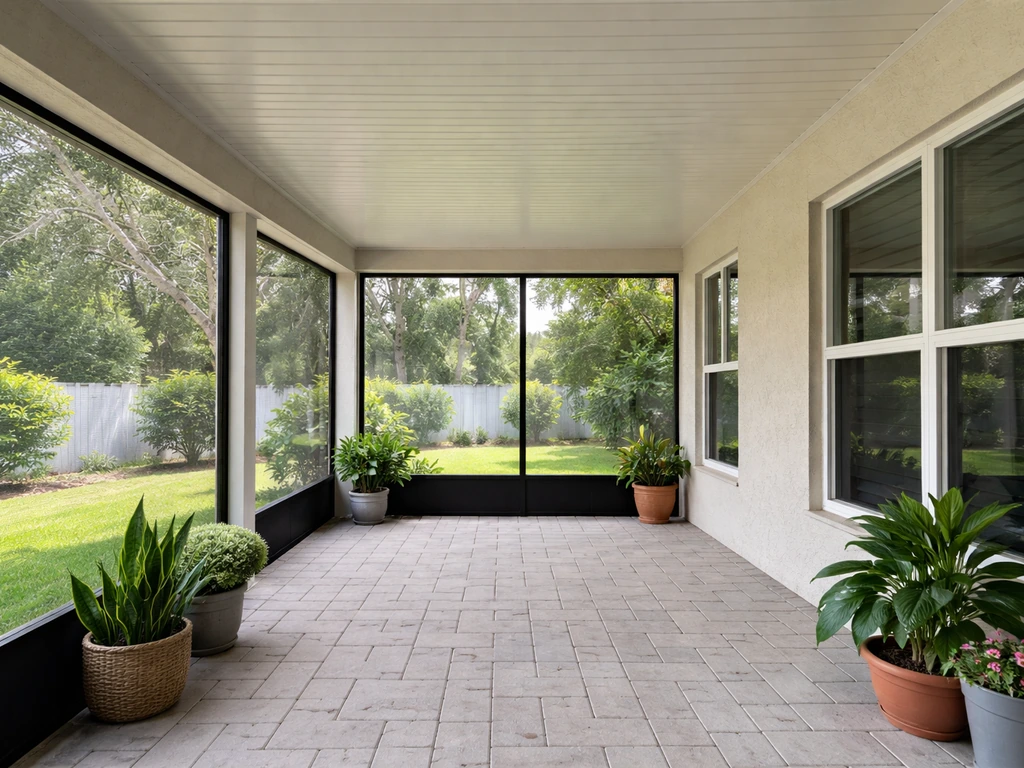
Whether you're viewing a home in person or evaluating a listing online, a few quick checks will tell you what type of outdoor space you're really dealing with, regardless of what it's called.
- Look up first. If there's a solid roof structure overhead connected to the house, it's a covered outdoor space, not a basic open patio. That immediately puts it in lanai, porch, or covered patio territory.
- Check for screening. A screened enclosure, especially one that wraps a pool, is a strong signal you're looking at a Florida-style lanai. Ask whether the screen is a full cage or just window-style panels.
- Look at the floor surface. Lanais and upscale patios typically use hard flooring: concrete slab, ceramic or porcelain tile, or decorative pavers. A bare dirt or gravel area is a patio in the loosest sense, not a lanai.
- Assess attachment to the structure. A true lanai shares roofline with the house or has a dedicated structural roof tied into the home's framing. A freestanding pergola over a slab is a covered patio, not a lanai.
- Note the location on the home. Rear of the home, integrated into the floor plan, accessible through sliding glass doors from the main living area: that's a lanai layout. A side slab or front seating area is almost always called a patio.
- Ask about permits and HOA rules. In communities with screened lanais, HOA documents often have specific "Standards for Enclosing Screened Lanai" that regulate what changes owners can make, which tells you something about how the space is officially classified.
If you're shopping a listing that uses both terms loosely, ask the agent for photos that show the ceiling of the outdoor space and the connection to the home's roofline. That one detail resolves most of the ambiguity immediately.
Which is better for your situation
If you live in a hot, humid, or bug-prone climate, a lanai (or any covered, screened outdoor room) gives you meaningfully more usable outdoor space than an open patio. You can sit outside comfortably in rain, intense heat, or mosquito season. If you're in a mild climate where outdoor exposure is pleasant most of the year, an open patio is simpler, cheaper to build, and easy to adapt with a pergola or shade sail if you ever want more cover.
From a property value standpoint, a finished screened lanai in Florida adds more perceived value than a plain patio because buyers in those markets specifically look for that feature. In a northern climate, the same screened enclosure would feel unusual and might not justify the cost. As with most decisions in residential architecture, the right answer depends heavily on where you live and how you plan to use the space.
FAQ
Why does my listing call it a patio but the photos show it is covered like a lanai?
In real estate listings, the label may not match the structure. Always confirm the ceiling, roof attachment (to the main roofline vs a separate post-and-beam), and whether screening is present. A “covered patio” is often functionally the same as what some markets call a lanai, especially if it is roofed and screened.
Can a lanai be unscreened or only partly screened?
Yes, a lanai can be open-sided without screens, and it can also be partially screened (for example, screening on one perimeter). The defining feature is overhead cover, not the presence or completeness of screening.
If I put a roof over a patio, is it then a lanai?
A patio can be covered by adding a patio cover, pergola, or roofed structure. Once it is genuinely roofed like an outdoor room, many sellers still call it a patio, but permit and usability considerations start to resemble a lanai. If you care about code requirements, treat any added roof as potentially permit-triggering.
Are patio covers and lanai roofs treated the same for permits?
A patio cover that is built as a small shade structure over an open slab may be treated differently than a fully enclosed, roofed veranda. The article mentions that adding a patio cover often brings you back under permit requirements, so the practical question is whether the cover is one-story roofed outdoor living with specific height and design limits, or whether it is engineered as a more permanent structure.
What is the quickest way to tell if it is architecturally integrated (lanai) vs just an attached slab (patio)?
Use the “connectivity test.” If the outdoor space is integrated into the house envelope (tied into the home framing or under the main roof overhang), it is more like a lanai. If it is simply an at-grade slab not structurally tied into the roof system, it is more like a patio.
How do I handle cases where the outdoor space is covered but elevated?
Ground-level location matters, but height exceptions exist. Balconies are elevated, so even if a balcony is roofed, it is typically not called a patio in the same way, and it is different from at-grade outdoor rooms. If you are deciding between patio and lanai, check whether the seating area is at grade or raised like a second-story platform.
What should I check about screening, especially if there is a pool cage?
Screening and roofing affect more than comfort. In bug-prone or humid climates, a screened lanai can significantly reduce mosquito exposure, and in purchase decisions it can affect how buyers value and insure the property. If a listing mentions “pool cage” or full enclosure, treat it as a major structural improvement to evaluate.
Why does a lanai often feel more “like part of the house” than a patio?
Yes. In many warm-climate homes, a lanai is used as a transitional space between the interior and open yard, so it can feel like a climate buffer rather than a fully exposed outdoor area. When you visit, evaluate airflow, shade coverage at different times of day, and whether the space blocks direct rain driven by wind.
What hidden costs can make a lanai more expensive than a patio?
Budget beyond the slab. An uncovered patio is usually just paving plus optional shade features, while a lanai can require roofing, electrical (lighting, fans), drainage planning, and screening hardware. If you are comparing costs, request a breakdown for roof, screening, and any pool enclosure work separately.
Patio Balcony Difference: Definitions and Quick Photo Tips
Know the patio vs balcony difference, plus terrace terms, with quick photo spotting tips and real-listing checklist.