
A patio home is not automatically a condo. The two are genuinely different things, but the confusion is completely understandable because listings use these terms loosely, and some patio homes are legally structured as condos while others are not. What matters is not the marketing label but the legal ownership structure documented in the deed, the declaration, and the association documents. That's the only place where the real answer lives.
Is a Patio Home a Condo? Key Differences and How to Verify

Ada Hollis
30 Jun 2026
What a patio home actually is

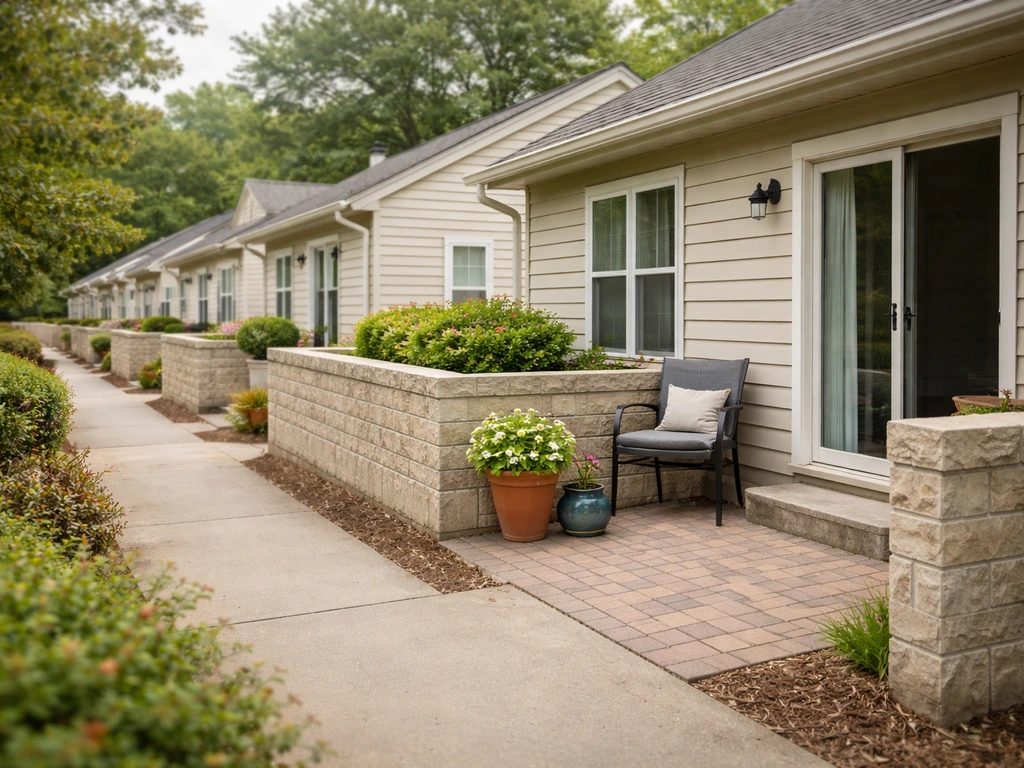
In US real estate, 'patio home' is a marketing term, not a legal category. It typically describes a smaller, low-maintenance residential unit built around or adjacent to a private patio area. These homes are often attached or clustered with neighboring units, sharing one or two walls, and are sometimes called cluster homes, garden homes, carriage homes, or twin homes depending on the region and the developer's preference.
There is no single legal definition of 'patio home' anywhere in US property law. Wikipedia flags this directly: the term is used loosely across markets, and the same physical product might be classified legally as a single-family attached unit, a planned unit development (PUD), or even a condominium. The label tells you about the architectural style and the lifestyle pitch. It does not tell you how ownership is structured.
In practice, patio homes tend to share a few physical features regardless of their legal classification. They are usually single-story or low-profile, designed for easy maintenance, built on smaller lots, and often found in age-targeted or active-adult communities. An HOA almost always comes with the deal, handling exterior upkeep and landscaping. But having an HOA does not make something a condo. That distinction matters enormously for buyers and renters.
Condo vs townhouse vs patio home: what's the real difference
The cleanest way to separate these three is to think about what you actually own. blank" rel="noopener noreferrer">A condominium is a legal ownership regime, not a building shape. When you buy a condo, you own your individual unit (the interior space) and you share an undivided interest in the common elements, such as the roof, hallways, exterior walls, and grounds. The declaration, recorded with the county, is what creates the condominium and legally designates which portions are separate ownership and which are common. States including Texas, Maine, North Carolina, and California all have specific condominium statutes that require this recorded declaration as the founding document of any condo project.
A townhouse is typically a fee-simple purchase, meaning you own the structure and the land beneath it outright. You may share walls with a neighbor, and there may be an HOA that manages shared driveways or landscaping, but your ownership boundary usually extends to the ground under your feet. That is the core legal difference from a condo, where the land and exterior structure belong to the association collectively.
A patio home sits somewhere in the middle because the term doesn't commit to either structure. In Arizona, the same “marketing label” issue applies, so you still need to check the deed and HOA or PUD documents to confirm the legal setup patio home in arizona. Physically it might look like a townhouse or a detached cottage. Legally it could be fee-simple, a PUD unit, or a condo unit. You genuinely cannot tell from the listing photo or even from walking through the property.
| Property Type | What You Own | Land Ownership | Association Type | Governing Document |
|---|---|---|---|---|
| Condo | Interior unit only | No (owned collectively) | Condo association (required) | Recorded Declaration of Condominium |
| Townhouse (fee simple) | Structure + land beneath it | Yes | HOA (common but not always) | CC&Rs / HOA docs |
| PUD unit | Structure + lot | Yes (individual lot) | HOA (mandatory membership) | HOA governing documents |
| Patio home | Depends on legal structure | Depends on legal structure | Usually HOA, sometimes condo assoc. | Check deed and declaration |
Ownership structure: deeded property, shared walls, and HOA rules

Shared walls alone do not define a condo. Plenty of fee-simple townhouses and attached patio homes share walls with their neighbors without being condominiums. The legal trigger for condo status is the recorded declaration that designates units and common elements. Without that document on file with the county, you don't have a condo regardless of how the listing reads.
Fannie Mae is useful here as a practical reference point. Their guidelines for PUD projects require that each unit owner's HOA membership be automatic and nonseverable, and that common property be owned and maintained by the HOA for the benefit of unit owners. For condo projects, they require a master property insurance policy covering common elements and residential structures. These different requirements reflect genuinely different ownership mechanics, and lenders will classify your property one way or the other during underwriting regardless of what the listing calls it.
One nuance worth knowing: in condo structures, even spaces that feel private, like a patio, balcony, or small courtyard attached to your unit, can legally be 'exclusive use common areas.' That means the association controls what you can do with your own patio even though you use it exclusively. This is a meaningful lifestyle and financial consideration, and it's determined entirely by the governing documents, not by how the space looks or feels.
How listings blur these lines
Real estate listings are written to attract buyers, not to clarify legal ownership. 'Patio home,' 'garden home,' 'cluster home,' and 'villa' get used interchangeably in the same metro area and sometimes in the same development. Agents and developers pick whichever term sounds most appealing for the target buyer. This is not fraud; it's just marketing, and it's why you can't rely on the property label.
The same physical building could be legally organized as a PUD in one development and as a condominium in the one across the street. Two attached units with identical floor plans and shared driveways might have completely different ownership structures depending on what the original developer recorded. If you're shopping in states with active patio-home markets, like Colorado, Ohio, Texas, or Arizona, you'll see this ambiguity constantly because each state has its own mix of HOA-governed PUDs and condo developments that use the same lifestyle terminology. In Colorado, patio-home listings can mask whether the unit is fee-simple, part of a PUD, or actually a condo.
The practical risk: if you assume a 'patio home' is a fee-simple purchase and it turns out to be legally structured as a condo, your mortgage, your insurance requirements, your maintenance responsibilities, and your resale options all change significantly. That's not a paperwork surprise you want after closing.
How to verify the property type before you buy or rent

The only reliable way to confirm what you're actually buying or renting is to go straight to the legal documents. Here's the sequence that works.
- Request the deed and legal description. The deed will state whether you are purchasing a lot with a structure (fee simple or PUD) or an individual unit within a condominium. The legal description will reference either a plat map with a lot number or a condominium plan with a unit number.
- Search the county recorder or clerk's office. Look for a recorded 'Declaration of Condominium' or 'Condominium Plan' tied to the address. If one exists, the property is legally a condo regardless of what the listing calls it.
- Ask for the complete governing documents. This means the Declaration, Bylaws, and any CC&Rs. A condo declaration will allocate percentages of undivided interest in common elements to each unit, as required by condominium statutes in virtually every state. An HOA governing document for a PUD will look different and will describe HOA-owned common property rather than shared fractional ownership of all elements.
- Check who owns the land. Ask the title company or your agent to confirm whether the land under the unit is included in your purchase. If the land is owned by an association rather than conveyed to you, that is a strong signal the property is structured as a condo.
- Confirm the association type. Is it a condo association or a homeowners association? The distinction affects your insurance requirements, lender options, and the association's power over your unit.
- Review the master insurance policy. Fannie Mae requires condo projects to carry a master property insurance policy covering common elements and residential structures. If the association has such a policy and requires you to carry an HO-6 (unit-owner) policy rather than a standard homeowner's HO-3, you are almost certainly in a condominium structure.
If you are renting rather than buying, ask the landlord directly whether the unit is part of a condominium or an HOA-governed community, and request the governing documents before signing. As a renter in a condo, HOA rules typically still apply to you through your lease, and the condo association can enforce rules directly against occupants in many states.
Costs and responsibilities: HOA dues, maintenance, insurance, utilities
Your financial picture changes meaningfully depending on whether your patio home is legally a condo or a PUD. Both will likely involve monthly association fees, but the scope of what those fees cover differs.
For condo structures, the master insurance policy covers the building and common elements. You pay for that coverage through your monthly dues, and you're also typically required to carry an HO-6 policy to cover your unit's interior, your personal property, and your liability. HO-6 policies also often need to address the master policy's deductible, since a large loss assessment could hit every unit owner. Average condo or high-rise HOA fees run roughly $300 to $700 per month nationally, though high-cost markets like San Francisco saw median fees hit around $502 per month in 2025.
For PUD or fee-simple patio homes with an HOA, your dues typically cover exterior landscaping, common area maintenance, and sometimes exterior building upkeep depending on the governing documents. You carry a standard HO-3 homeowner's policy covering your structure and land. Average HOA fees for single-family homes in PUD communities run closer to $200 to $300 per month, though this varies significantly by market and amenity level.
Maintenance responsibility is the other key split. In a condo, the association usually handles exterior repairs, roofing, and structural issues, funded through dues and sometimes special assessments. In a fee-simple or PUD patio home, you typically own the structure, so major repair costs like a new roof fall to you even if the HOA coordinates the work. Read the maintenance responsibility sections of the governing documents carefully. This is where 'low maintenance living' marketing language can diverge sharply from legal reality.
| Cost/Responsibility | Condo Structure | PUD / Fee-Simple Patio Home |
|---|---|---|
| Monthly HOA/association dues | $300–$700+ (covers building insurance and more) | $200–$300 (exterior maintenance, landscaping) |
| Insurance you carry | HO-6 (interior/personal/liability) | HO-3 (full structure and land) |
| Master insurance policy | Required, covers structure and common elements | May exist for common areas only |
| Roof and exterior repairs | Association's responsibility | Typically owner's responsibility |
| Land ownership | No (common element) | Yes (part of your deed) |
| Special assessments | Possible for major common-element repairs | Possible but typically narrower scope |
Your checklist before you commit
Before you sign anything on a property marketed as a patio home, run through this checklist. It takes a few hours and can save you from a very expensive misunderstanding.
- Request the deed and confirm whether you are buying a lot/structure or a condominium unit.
- Search the county recorder for a recorded Declaration of Condominium tied to the address.
- Ask whether the land under the unit is included in the purchase or owned collectively.
- Get the full governing documents: Declaration, Bylaws, and CC&Rs. Read the sections on unit boundaries, common elements, and maintenance responsibilities.
- Confirm whether the association is a condo association or a homeowners association.
- Ask for the current master insurance policy and find out what it covers and what it doesn't.
- Confirm what insurance you'll be required to carry: HO-3 or HO-6.
- Ask for the current HOA/association budget and reserve fund balance. Underfunded reserves can mean special assessments.
- Verify monthly dues, what they include, and whether any increases are planned.
- If financing, confirm with your lender how they will classify the property (condo vs. PUD), because this affects your loan product and down payment requirements.
- If renting, ask the landlord for the governing documents and confirm which HOA rules apply to you as a tenant.
The bottom line is straightforward: a patio home can be a condo, but it doesn't have to be. If you're wondering what is a patio home in Ohio, the key is still the same: confirm whether the unit is condo-governed or fee-simple/PUD based on the recorded documents. The marketing term tells you about the style; the legal documents tell you about the ownership. Always work from the documents. Your agent, the title company, and the county recorder's office can all help you pull what you need before you're locked into anything.
FAQ
How can I tell from documents whether my patio home is actually a condo or just “HOA-governed”?
A patio home becomes a condo only if the recorded condominium declaration (and related plats or amendments) legally carves out your unit as separately owned and designates shared areas as common elements under an association. If the deed or declaration does not use the condominium framework, you are more likely dealing with a fee-simple or PUD arrangement, even if an HOA exists.
What wording should I search for in the governing documents to avoid assuming the wrong ownership?
Look specifically for the recorded documents naming the entity that governs the project (condominium association vs homeowners association) and the “unit” definition, the “common elements” or “common areas” definition, and the “exclusive use common areas” language. Those sections typically spell out whether your patio is controlled by the association, even if it is outside and feels private.
Do condo fees and PUD/HOA fees work the same way for patio homes?
HOA fees do not reliably indicate condo vs PUD. What matters is what the association owns and insures (common elements under a condo setup versus shared landscaping or common property under PUD/HOA setups) and whether you are responsible for major exterior components like the roof, siding, and structural elements based on the maintenance responsibility clauses.
If I have a private patio, can the condo association still regulate what I do with it?
Yes. In condo projects, it is common for an “exclusive use” patio or courtyard to still be an association-controlled area, meaning the association can set rules about repairs, coverings, fencing, landscaping, noise, and renovations. In a fee-simple or PUD structure, you usually have more direct control because you own more of the building exterior, subject to HOA architectural rules.
Will the type of insurance I need differ if the patio home is a condo versus a PUD?
Check the insurance requirements that come with your financing package or disclosures. Condo lenders often expect an HO-6 policy (unit interior and liability) in addition to the HOA’s master policy, and the HOA may require flood or wind coverage in ways tied to the master policy. A fee-simple or PUD home is more likely to align with a standard HO-3 approach for the structure and land.
What should I ask a title company before closing to confirm the property classification?
Title and closing can uncover it late if the seller and listing are sloppy, so ask the title company to confirm the property’s legal description and whether it is under a condominium declaration, a PUD declaration, or a planned community. Request a copy of the most recent HOA or condo resale certificate, and verify who owns what before you pay nonrefundable fees.
Why does the condo vs PUD classification matter for getting a mortgage?
Fannie Mae underwriting differences can affect what the lender requires from the association and unit owners. For you, the practical risk is that the lender may treat the project differently for eligibility and reserves, which can change your loan terms or required documentation. If you see a mismatch, ask your lender whether your specific unit is categorized as condo or PUD in their system.
If I’m renting a patio home, can I still be subject to condo HOA rules?
Condo and PUD rules can affect renters too. If the property is condo-governed, the association may enforce rules against occupants based on the lease and state law, such as parking, pet restrictions, noise, and patio/balcony usage. Before signing, ask the landlord for the association rules and confirm which parts apply to you as the tenant.
What is the safest way to request the governing documents if the listing information seems inconsistent?
You can. A “condo” project often has a dedicated condominium resale package and recorded condominium governing documents, while PUD/HOA communities may provide a homeowners resale certificate and different governing documents. Request the full set, not just a one-page fee sheet, and verify that the names and legal entity match what is recorded in county records.
If the patio home shares walls with neighbors, does that automatically mean it is a condo?
Yes, “attached walls” and shared driveways are not reliable signals. Some fee-simple attached patio homes share walls and still avoid condominium ownership, while some condos are townhouse-style with units that look similar on the outside. The decisive factor is whether the project’s recorded documents create separately owned units plus common elements under a condominium structure.
What are the real financial and resale risks if I assume a patio home is fee-simple but it is actually a condo?
If you discover after inspection or underwriting that it is a condo, you may face higher or different monthly obligations, different repair responsibility for interior versus exterior, and potentially special assessments for common elements. The resale angle can also change because condo buyer pools sometimes prefer certain fee levels, reserves, and rule flexibility, so get the association financials and reserve study during your due diligence.
Next Article
What Is a Patio Home in Arizona? Definition and Differences
Learn what a patio home means in Arizona, how it differs from townhomes and courtyards, and what to verify when touring.