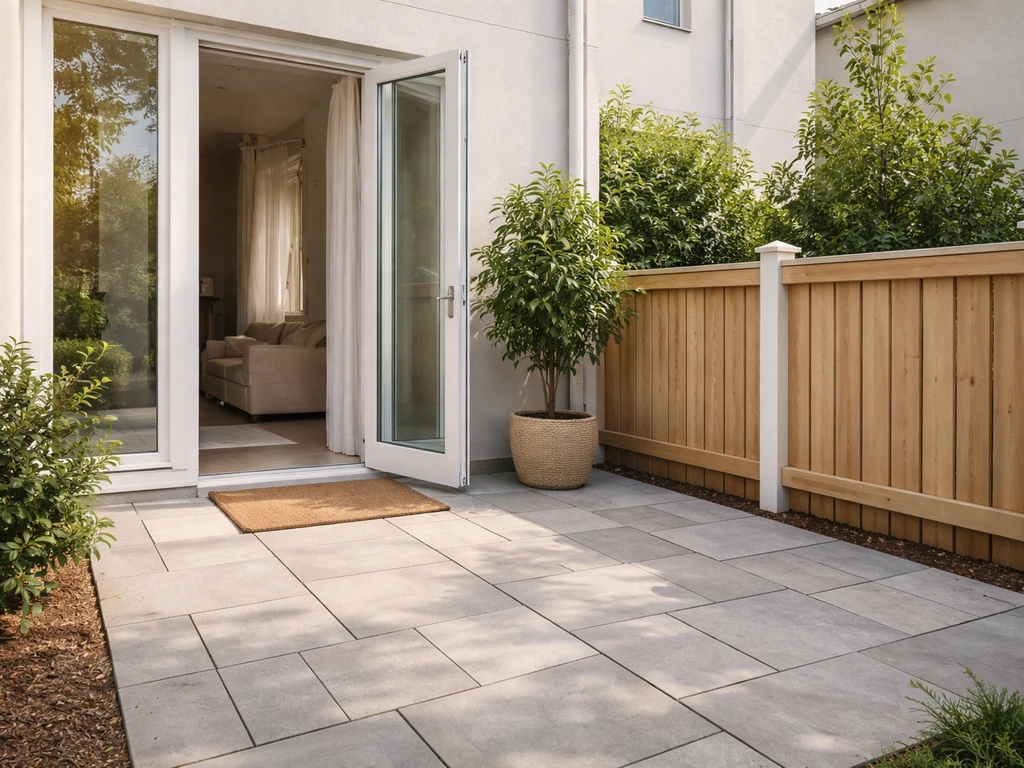
Most patios are in the back of the house. That's the default in residential construction because back patios offer privacy, direct access to the yard, and a natural extension of the living room or kitchen. But patios can absolutely be in the front, and some homes have both. The location depends on the lot shape, the home's layout, and how the builder or owner intended the space to be used.
Is the Patio in the Front or Back? Quick Home Guide

Ada Hollis
27 May 2026
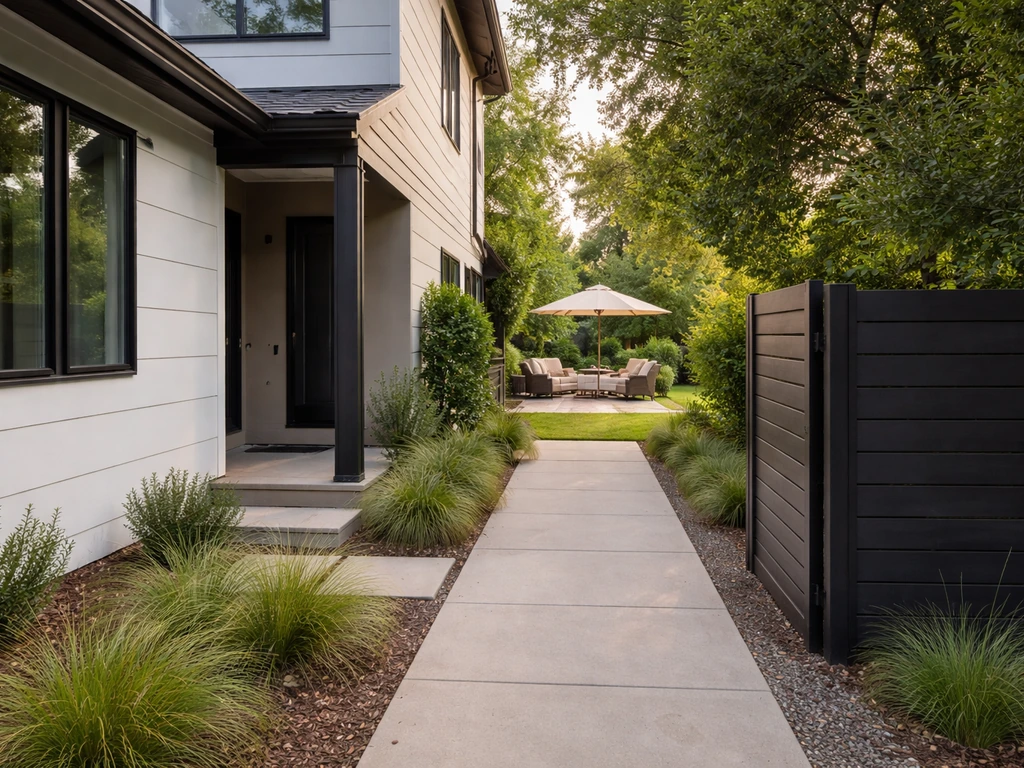
What a patio is (and what it isn't)
A patio is a ground-level outdoor surface, typically paved with concrete, pavers, stone, or brick, that sits flush with or just slightly above the surrounding grade. It's open to the sky, not enclosed, and not elevated like a deck. You walk from the house directly onto it, usually through a sliding door, French doors, or a back door. That's the core definition, and it matters here because a lot of the confusion about "front or back" comes from people using the word patio when they actually mean a porch, a stoop, or a terrace.
A patio is not a porch (which is covered and attached near an entry), not a deck (which is raised off the ground), and not a balcony (which is elevated on an upper floor). If the space you're looking at is roofed over, it might be a covered porch or a verandah, not a patio in the strict sense. And if it's surrounded on multiple sides by walls or structures, it might be better described as a courtyard. These distinctions aren't just semantic, they affect how the space is used, how it appears in listings, and where on the property you'll typically find it.
Front vs. back patio: the common real-world rule
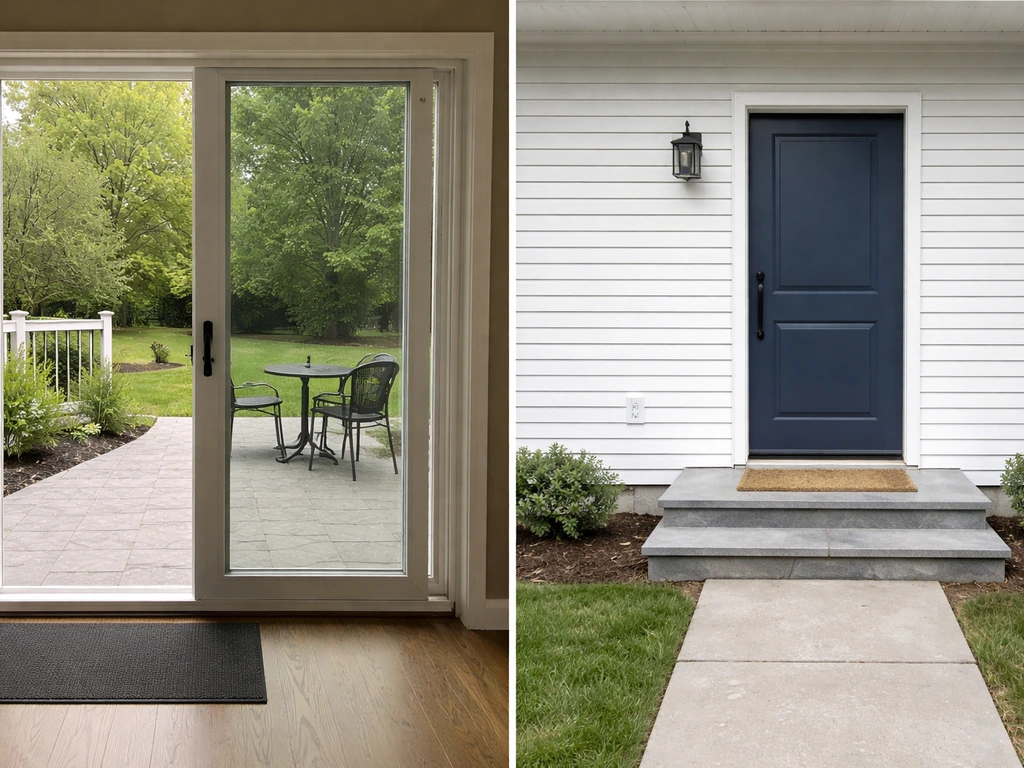
The vast majority of patios are at the back of the home. Builder convention, privacy needs, and the way floor plans are laid out all push patios to the rear. Most homes connect the patio directly to the kitchen, dining room, or living room, which are typically at the back. Backyard patios also benefit from more sun control, natural screening from neighbors, and separation from street noise. If you're trying to locate a patio on a property and you have no other information, start at the back.
The rule of thumb is simple: follow the sliding door. In the majority of single-family homes, the sliding or French door at the back of the house opens onto the patio. If you're still wondering where is patio on this type of home, look for the area you reach from the back sliding or French door. If the home has a traditional layout, the patio is behind it, and that's where you'll find the outdoor furniture, the grill, and whatever hardscape the builder poured.
Why some homes have front patios
Front patios are less common but far from rare. Several specific situations produce them, and once you know what to look for, the pattern is easy to spot.
- Corner lots: When the "front" of the home faces one street and the "side" faces another, owners often build a patio on the side that feels more private, which can technically be the front of the lot.
- Urban and narrow lots: In cities or dense neighborhoods where the backyard is tiny or nonexistent, a front courtyard-style patio is often the only viable outdoor living space.
- Spanish or Mediterranean-style homes: These designs frequently feature an enclosed front courtyard or walled entry patio as a core architectural element, not an afterthought.
- Homes with a view: If the best view, the ocean, a valley, a mountain, or a lake, is in front, the patio gets oriented toward it regardless of street-facing conventions.
- Remodeled or custom builds: Homeowners who prioritized morning sun, specific landscaping, or street-facing entertaining space may have deliberately built a front patio.
- Townhomes and condos: Many attached homes have a front patio or courtyard entry as the primary outdoor space, especially when the back is shared or minimal.
In these cases, the front patio often has a low wall, fence, or hedge to create a sense of enclosure and privacy. If it's fully enclosed by walls on multiple sides, some people will call it a courtyard rather than a patio, but the underlying space is the same concept.
How to tell where the patio is on your property
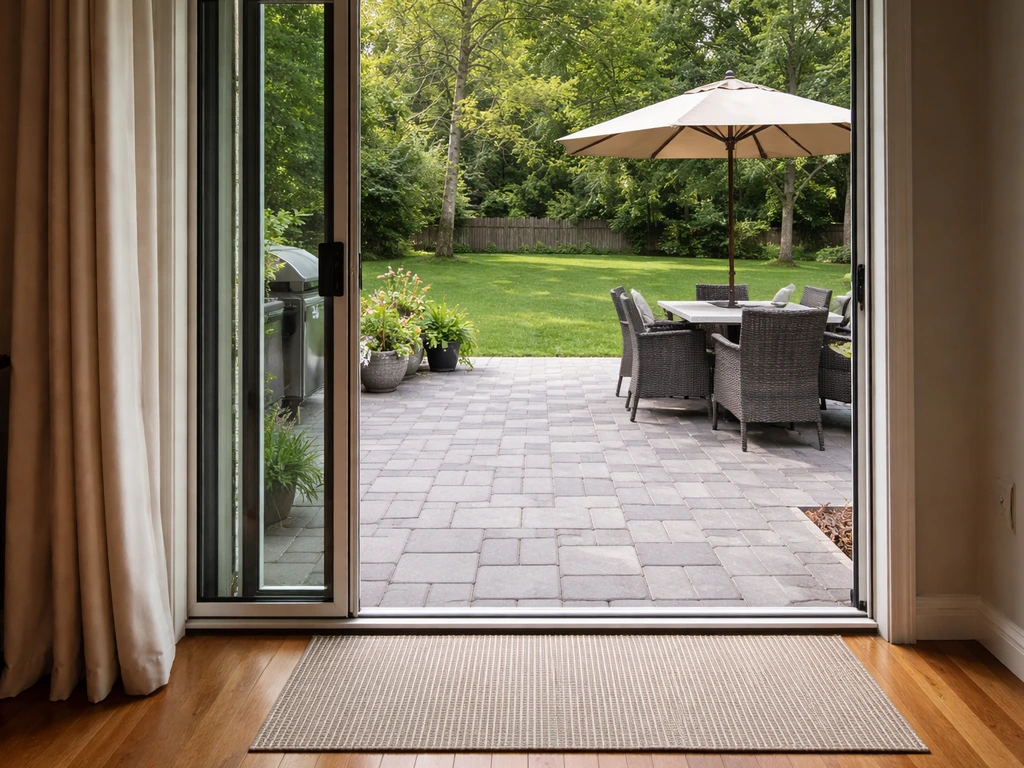
If you're standing in or viewing a home and need to locate the patio quickly, here's a practical checklist you can run through in a few minutes.
- Follow the back door or sliding door: The patio almost always connects to the home through a door. Find the door that leads directly to a paved outdoor surface, and you've found the patio.
- Check the floor plan: If you have access to a floor plan (from a listing, a builder packet, or county records), look for a labeled outdoor area. It may say "patio," "terrace," or "outdoor living." Its position relative to the home's footprint tells you front or back.
- Look at where the outdoor furniture is staged: In real estate listings and walkthroughs, patios are almost always styled with furniture. If you see a table and chairs or a seating set on a paved surface, that's the patio.
- Check the grading and drainage: Patios sit at or near grade level. If the paved surface is flush with the lawn and has a slight slope away from the house for drainage, it's a patio, not a deck.
- Note the driveway and walkway relationship: The driveway and front walkway usually lead to the front door, not the patio. If a paved area branches off the driveway near the front, it might be a front patio or entry courtyard.
- Use the listing description: Real estate listings almost always specify front or back in the description. Search the text for "back patio," "rear patio," "front courtyard," or simply "patio" and cross-reference with the photos.
- Check sun exposure: Patios designed for afternoon entertaining are often west-facing. If the home's back faces west, the patio is almost certainly back there. A south-facing front patio is common in climates where winter sun is a priority.
- Look at Google Maps satellite view: For any property address, satellite view gives you an overhead look at the hardscape layout. You can see paved areas, furniture staging, and how the outdoor space connects to the home.
Patio vs. porch, balcony, verandah, courtyard, and terrace
One reason people get confused about patio location is that different outdoor spaces get called "patio" incorrectly. Here's how the terms actually break down, because knowing the difference helps you identify what you're actually looking at and where to expect it.
| Term | Key Features | Typical Location |
|---|---|---|
| Patio | Ground-level, paved, open to sky, no roof | Back of home (most common), front on some lots |
| Porch | Attached to home near entry, usually covered/roofed | Front of home (most common), sometimes back |
| Deck | Raised platform, typically wood or composite, may be elevated several feet | Back of home, often off main living floor |
| Balcony | Elevated, attached to upper floor, enclosed by railing | Front or back, upper floors only |
| Verandah | Large covered porch, wraps around one or more sides of home | Front and/or sides, sometimes full wrap |
| Courtyard | Open-air area enclosed or semi-enclosed by walls/buildings | Front entry or interior of property |
| Terrace | Paved flat area at grade or slightly raised, sometimes used interchangeably with patio | Back or side, often in urban/European contexts |
The most common mix-up is porch vs. patio. A porch is near the front door and is typically covered. MasterClass also notes that a porch is usually attached near an entry or door, while a patio is typically a separate ground-level area in the yard, often toward the back of the home A porch is near the front door and is typically covered.. A patio is in the yard and is open to the sky. If someone tells you a home has a "front patio," double-check whether they mean a porch with a chair on it or an actual paved outdoor area. In casual conversation and even in some listings, these terms get swapped freely, which is why it pays to look at photos or a floor plan directly.
Terrace is worth calling out separately. In urban settings and some European-influenced homes, "terrace" and "patio" are used almost interchangeably for a ground-level or slightly raised paved area. In a New York apartment building or a European-style townhome, what they call a terrace is often what a suburban homeowner would call a patio. The word changes by region and property type, but the space functions the same way.
When it's unclear in a listing or floor plan
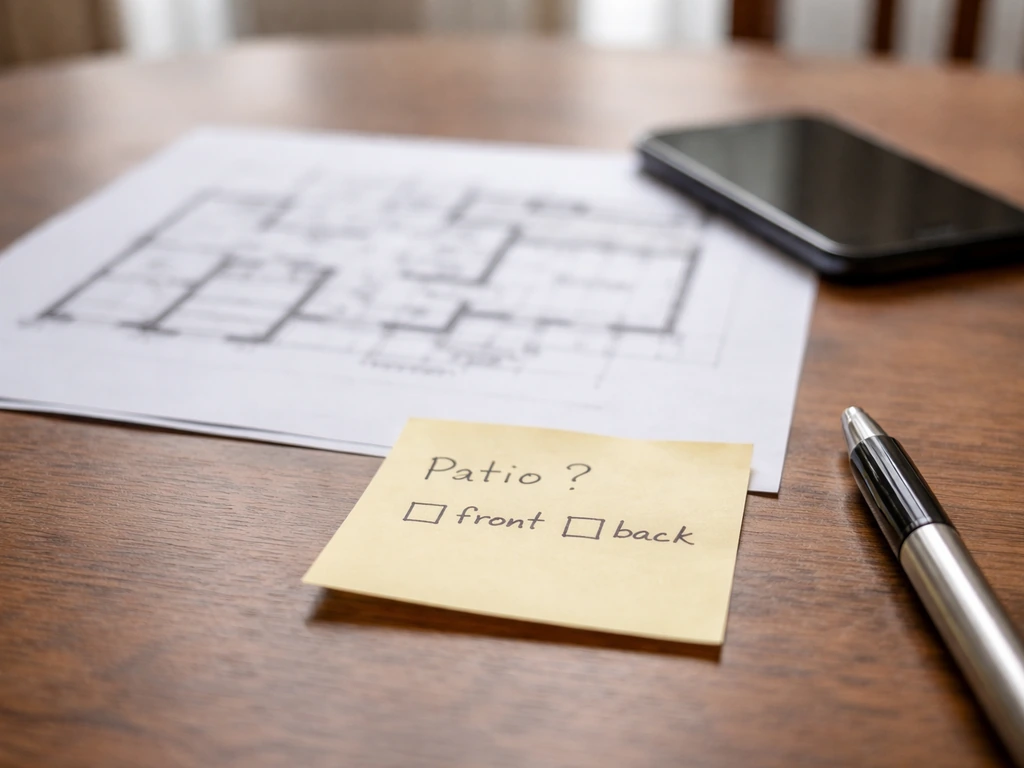
If you're shopping a property and the listing doesn't clearly say where the patio is, here are your next steps today.
- Ask the agent directly: A simple message asking "Is the patio at the front or back of the home?" takes 30 seconds and eliminates all ambiguity. Agents deal with this question constantly.
- Request the floor plan or site plan: Most new builds and many resale listings have a floor plan. The outdoor spaces, including patio location, are usually labeled. If it's not in the listing, the agent or the county assessor's office may have it.
- Pull up the property on satellite view: Google Maps or Apple Maps satellite mode shows you the overhead layout of the property. You can see pavers, patios, and outdoor structures clearly on most residential properties.
- Review all listing photos in order: Listing photographers usually shoot front exterior, then interior, then back exterior. The patio photos almost always come at the end of the set and show the view from the back door outward.
- Check county property records: Many counties have parcel viewer tools online that include survey data, building footprints, and sometimes site plan images that show where outdoor improvements are located.
- Visit in person at different times of day: If you're seriously considering a property, visiting in the morning and afternoon tells you the sun orientation of every outdoor space, which confirms whether a patio is front-facing (morning sun) or back-facing (afternoon sun in most north-hemisphere lots).
If the listing uses vague language like "outdoor living space" or "entertaining area" without specifying front or back, treat that as a signal to dig into the photos and floor plan before assuming. Listings sometimes use neutral language when the patio isn't a strong selling point or when the location might be a drawback, like a front patio on a busy street.
The bottom line: most patios are in the back, the back door is your fastest clue, and when in doubt, the satellite view or a direct question to the listing agent solves it in minutes. Front patios exist and are common in urban lots, corner homes, Mediterranean-style builds, and view-oriented properties, but they're the exception, not the rule.
FAQ
How can I tell the difference between a patio and a terrace when both sound like outdoor paving?
If you can see a walkable paved or stone area at ground level that you reach from a door (often a sliding or French door), that is the patio. If the paved area sits behind stairs, is elevated, or you have to step up from the yard, it is more likely a deck or terrace, not a patio.
Can a patio be covered by a roof?
A covered space can still be considered a patio only if it is open to the sky. If the roof substantially covers the area, most people label it a covered porch or verandah, even if it is large. Look for whether the roof encloses the top, not just decorative overhangs.
What if the outdoor paved area is surrounded by walls, is it still considered a patio?
If it is surrounded by walls on three or more sides and feels like an inner outdoor room, many listings and builders call it a courtyard. You can treat it as a patio-style outdoor surface for use and layout purposes, but expect it to behave differently for privacy, sun, and airflow.
If the listing only says “outdoor living space,” what is the quickest way to confirm front versus back?
When the listing is unclear, start with the outdoor doors shown on the floor plan. The patio is usually the area connected to the main living-area doors, and the most common pattern is a direct path from the back kitchen or dining area. If there are doors on both ends of the house, check which side the yard slopes toward.
Do some homes have a patio in both the front and the back?
Yes, some homes have both. The backyard patio is usually the main one attached to a living space, while a front patio is often smaller and used for entry seating or street-facing views. Check whether the front patio connects to a family room area or is mainly accessed from the front entry.
Why would a home have a front patio, especially on a corner lot?
In corner lots and narrow streets, front patios are sometimes placed to capture views or sun while still creating a buffer with fences, hedges, or a low wall. If the front area is heavily shielded, it may feel private even though it is technically at the front.
How can I confirm patio location if the yard slopes and the grade changes?
Use the “walking level” test. A patio is at or slightly above surrounding grade and you step onto it from inside without climbing. If the “patio” requires going up a full set of stairs or it sits above the yard line, it is more likely a deck or raised terrace.
What should I look for in satellite view when determining whether the patio is front or back?
Satellite and street-view photos help, but the best tie-breaker is sightlines from the main living doors. If you can see patio furniture or a grill directly outside the back-facing doors, that is your patio. If you only see a seating area near the front entrance, it is likely a porch or stoop.
Next Article
What Is a Patio in an Apartment? Features and Tips
Define an apartment patio, how it differs from balcony or porch, what to check in listings, and key renting tips.