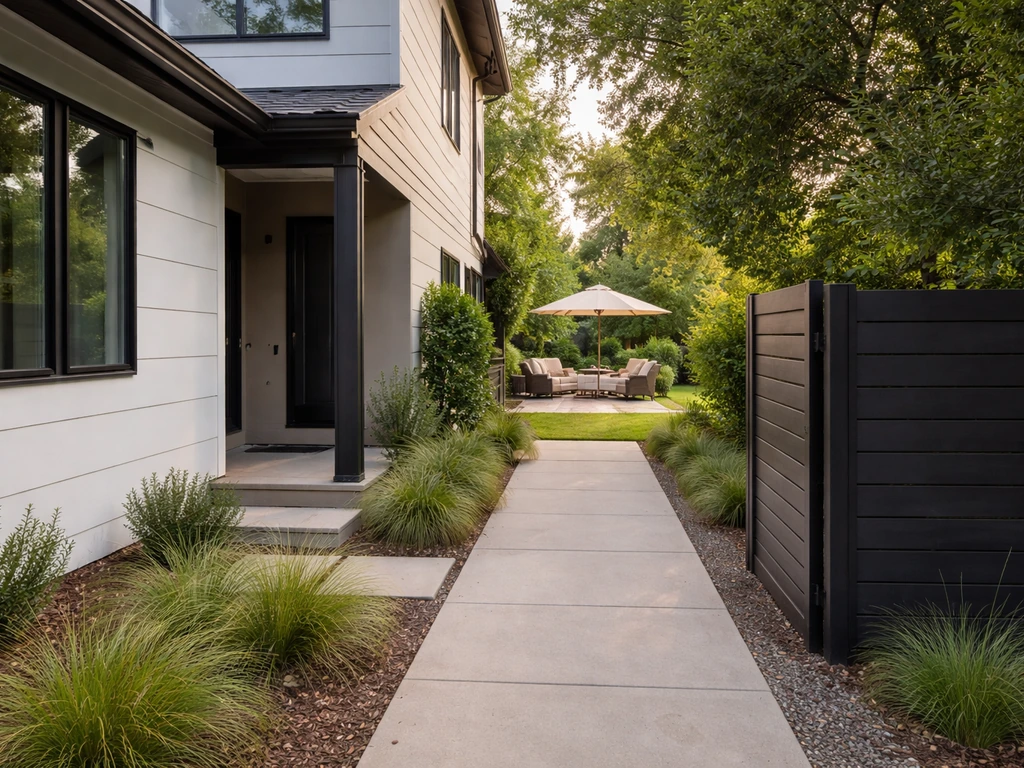
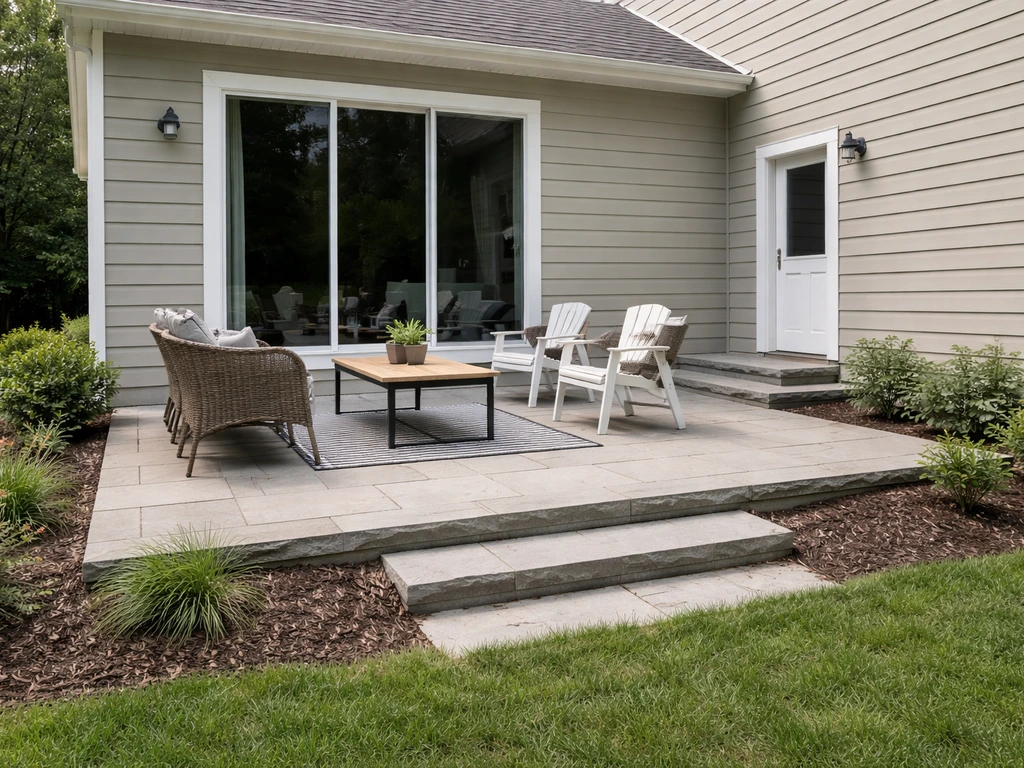
A patio is a ground-level, paved outdoor area attached to a home, and you will almost always find it right outside a back door, sliding glass door, or French door. It sits at or very close to grade (within 6 to 12 inches of the ground), has no roof or walls, and is typically made of concrete, brick, or stone. On most residential properties in the US, the patio lives in the backyard, though side-yard and front-entry patios are common too. If you are looking at a listing photo or walking a property and wondering which outdoor space is the patio, look for a flat, hard-surfaced area at ground level with direct access from inside the house.
Where Is a Patio Located on a Home? How to Identify It

Ada Hollis
27 May 2026
What people actually mean when they search "where is patio"
The search phrase mixes two different questions. Some people want a definition: what exactly is a patio and what counts as one? Others want a location answer: on this specific property, where would I find it? A smaller group is asking about terminology, because "patio" means slightly different things depending on the country or region. This article covers all three angles, because you usually need all three to confidently identify a patio on a home you are considering or already own.
On the definition side, multiple zoning codes across the country are surprisingly consistent. Oshkosh, Wisconsin defines a patio as an open, level-surfaced, typically impervious area elevated no more than 12 inches, with no walls or roof, intended for outdoor seating. Kettering, Ohio and Northbrook, Illinois use nearly identical language: uncovered, unenclosed, at or within 6 to 30 inches of finished grade, usually concrete, brick, or masonry. Papillion, Nebraska adds that it is intended as outdoor living space, the kind of place you put furniture, a grill, or a fire pit. The pattern is clear: ground level, hard surface, no roof, attached or adjacent to the house.
Where patios are actually located on a property
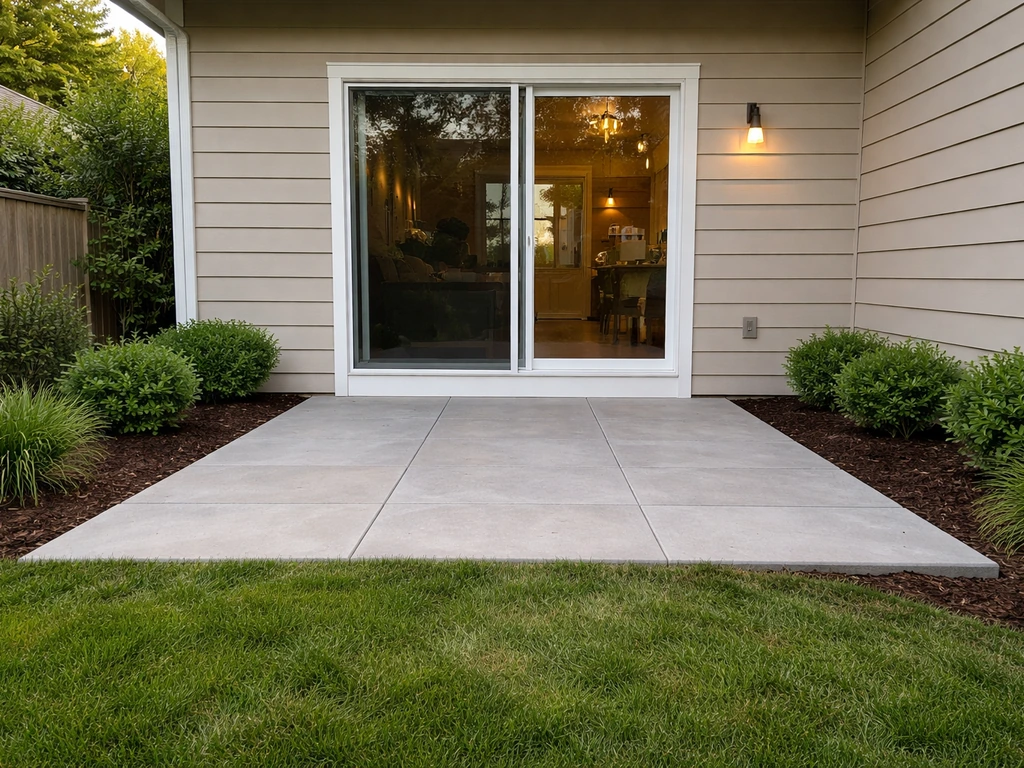
The backyard is by far the most common location. Most patios are built directly off the rear of the house, accessible through a sliding glass door, a set of French doors, or a standard back door in the kitchen or dining room. That placement makes sense: it gives privacy from the street, connects naturally to indoor living and dining spaces, and puts you close to the kitchen for grilling and entertaining.
Side-yard patios are the second most common placement, especially on narrower lots where the backyard is limited. You might see these off a side door, alongside a garage, or connecting a driveway to a garden area. They tend to be narrower and more utilitarian, though they can be nicely finished too.
Front-entry patios show up more often than people expect, particularly in warmer climates, courtyard-style homes, and newer construction. A front patio might be a paved seating area near the main entrance, separated from the sidewalk by a low wall, planting bed, or change in material. In Spanish-colonial and Mediterranean-style architecture, the front or interior courtyard patio is the centerpiece of the home, not an afterthought.
Pool patios and garden patios are just variations on placement. A pool patio wraps around a backyard pool, usually in concrete, pavers, or travertine. A garden patio sits within a landscaped yard, sometimes a short walk from the house rather than directly attached. Both still meet the core definition: ground level, hard surface, no roof.
How to spot a patio in listings and walkthroughs
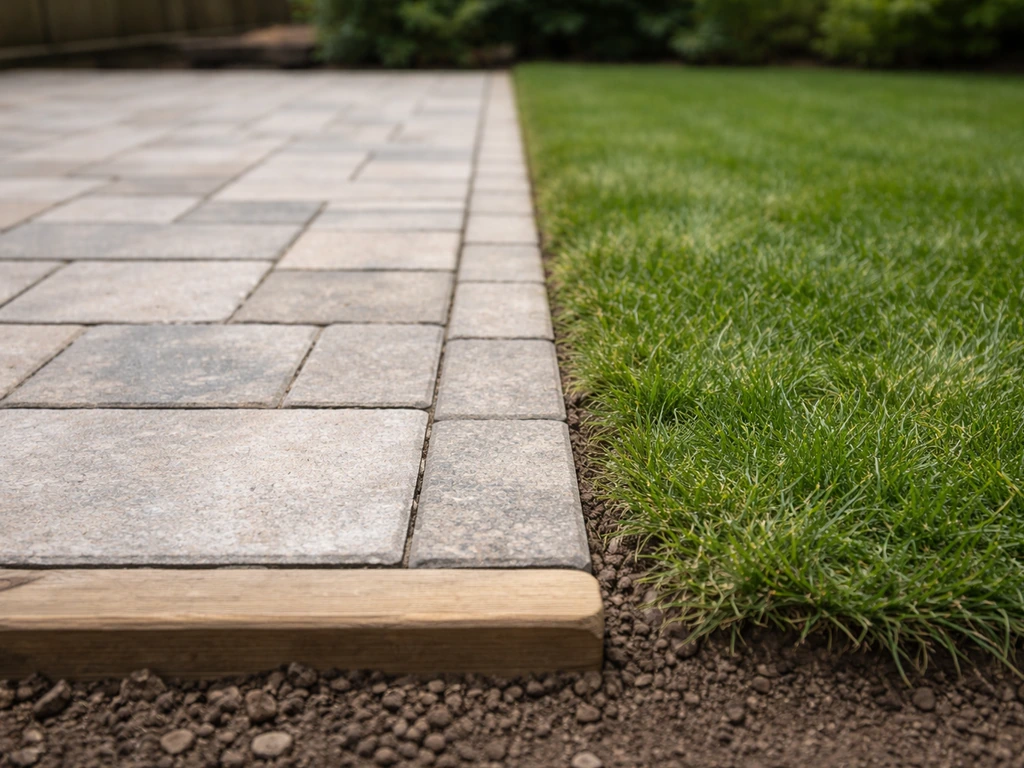
In listing photos, patios are usually easy to identify once you know what to look for. You are looking for a flat, hard-surfaced area at or near ground level, often with outdoor furniture, a grill, or potted plants on it. The key clues are the material (concrete slab, brick pavers, flagstone, tile), the border (where the hard surface ends and lawn or mulch begins), and the access point (a door opening directly onto it from inside the house).
- Material: concrete, brick, pavers, flagstone, tile, or compacted gravel
- Height: flush with the ground or just one step down from the door threshold
- Edges: a visible border where the hard surface meets grass, gravel, or planting beds
- Access: a door, sliding glass door, or French doors opening directly onto the surface
- No roof overhead: if there is a permanent roof structure above it, it may be a covered porch or patio cover instead
- Furniture or amenity clues: outdoor seating, dining sets, fire pits, grills placed on the surface
During an in-person walkthrough, step outside from every ground-floor door and look down. If you are stepping onto a hard, flat, paved surface that sits at roughly the same level as the lawn, that is the patio. If you step onto a raised wooden or composite platform, that is a deck. If there is a roof over your head when you step out, you are on a covered porch or covered patio, which is a different category depending on how it is built.
Patio vs porch vs balcony vs verandah vs courtyard vs deck: placement and function
These outdoor spaces get confused constantly, and the confusion makes sense because they often overlap in function. The easiest way to tell them apart is by asking three questions: Is it at ground level? If you are comparing patio options to nearby outdoor spaces, you may also want to review porch vs porch vs deck so you can spot the differences quickly. Does it have a roof? And is it attached to the main structure or free-standing?
| Space | Typical Level | Roof | Structural Attachment | Common Location |
|---|---|---|---|---|
| Patio | At grade (ground level) | None | Adjacent to house, may be detached | Backyard, side yard, front entry |
| Deck | Elevated (can be ground level) | None typically | Attached or free-standing | Backyard, hillside, raised floor level |
| Porch | At grade or one step up | Yes (permanent roof) | Attached to house facade | Front of house, sometimes rear |
| Balcony | Upper floor, elevated | Sometimes | Cantilevered from building wall | Upper floors, apartments, multi-story homes |
| Verandah | At grade or raised one step | Yes (full wraparound roof) | Attached, often wraps the house | Front and/or sides of house |
| Courtyard | At grade | None (open sky) | Enclosed by walls or building wings | Interior or front, often walled |
| Terrace | Flat roof or raised platform | None typically | On top of structure or cut into hillside | Rooftops, hillside homes, multi-level properties |
The patio sits closest to the deck in everyday use, but the difference is straightforward: a deck is elevated on a frame (usually wood or composite) and often requires a building permit because of its structural nature. A patio is laid directly on the ground. Wikipedia describes a patio as an outdoor space used for dining or recreation that adjoins a structure and is typically paved blank" rel="noopener noreferrer">A patio is laid directly on the ground.. In an apartment setting, a patio usually means a small, ground-level outdoor area you can access from your unit, often for seating or dining A patio is laid directly on the ground.. The porch is covered and typically fronts the house. The balcony hangs off an upper floor. The verandah is a roofed structure that wraps around a house. A courtyard is enclosed by walls or building wings. A terrace is either on a rooftop or cut into a slope. When you are dealing with real estate listings or apartment descriptions, these distinctions matter for understanding both what you get and how you will use it.
What "patio" means in different regions and countries
The word "patio" comes from Spanish and in its original context means an inner courtyard, typically enclosed by the walls of a building and open to the sky above. This is quite different from the backyard concrete slab that most Americans picture. In Spain and Latin America, the patio is the heart of the home: a central outdoor space surrounded by the house on all or most sides, often planted with trees or a fountain, and used for daily family life. That courtyard meaning still shows up in Spanish-style and Mediterranean-style homes in the American Southwest and Florida.
In the United Kingdom and Australia, "patio" is used much the same way as in the US: a paved outdoor area at the back of a house, often with garden furniture. However, in British English you will also hear "terrace" used to describe what Americans call a patio, especially in older homes or more formal garden contexts. In India, similar ground-level outdoor spaces are sometimes called a "verandah" or "sitout" (especially in South India), and the Hindi or Urdu equivalent concept of an open outdoor sitting area attached to the home carries similar meaning even when the English word patio is not used.
When you are searching property listings internationally or in heavily Spanish-speaking communities, it helps to know that "patio" may refer to an enclosed courtyard rather than an open backyard area. Read the listing photos carefully and check whether the described patio has walls around it (courtyard style) or is open to the yard (American-style patio). Both are valid uses of the word; they just describe very different spaces.
How patio placement changes how you actually use it
Where a patio sits on a property has a real impact on whether it works well for your lifestyle. Placement determines how much sun it gets, how private it feels, how exposed it is to wind or rain, and how easy it is to move between inside and outside.
Sun and shade
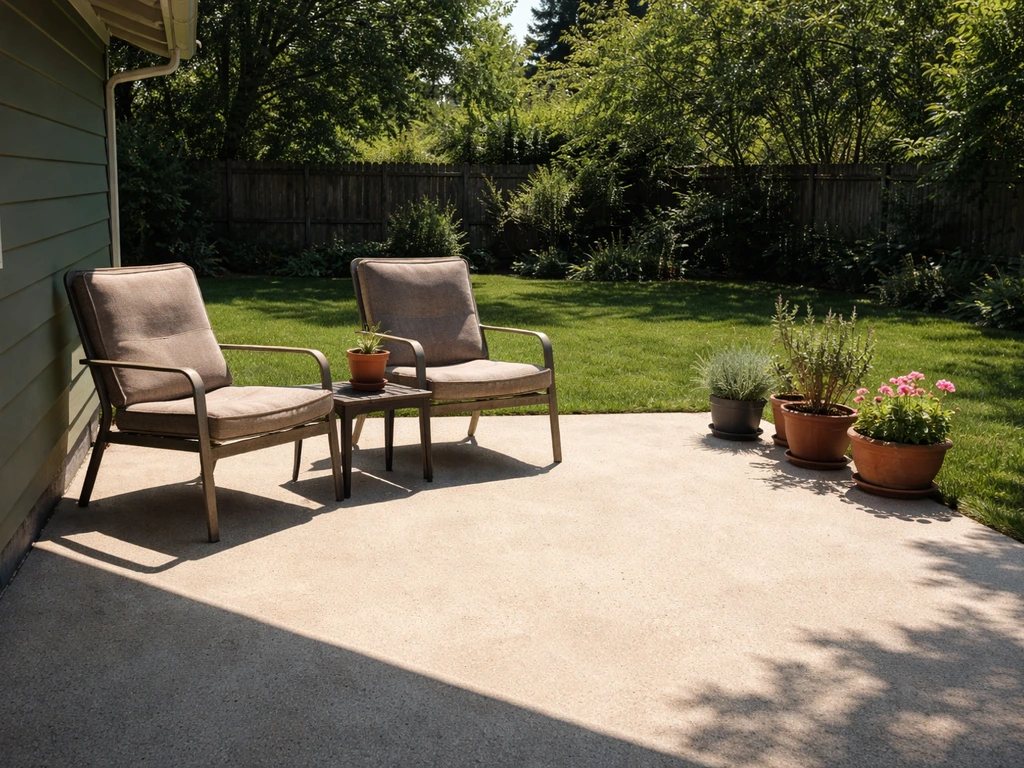
A south-facing backyard patio in the Northern Hemisphere gets sun most of the day, which is great for warming up in spring and fall but can be brutally hot in summer. A north-facing patio stays shaded and cool, which is comfortable in summer but may feel damp and cold for much of the year. East-facing patios get morning sun and afternoon shade, ideal for breakfast and mid-day use. West-facing patios are hot in the afternoon and evening but can offer dramatic sunset views. Before writing off a patio as too sunny or too shady, check what time of day you plan to use it most.
Privacy and noise
Backyard patios typically offer the most privacy, especially when fenced. Front-entry patios face street traffic and noise and have very little screening from neighbors. Side-yard patios depend entirely on lot width and fence placement. If privacy matters to you, check what is on each side of the patio in listing photos: neighboring windows, fences, hedges, or open lawn will tell you a lot.
Weather exposure and drainage
Because a patio has no roof, it is fully exposed to rain, sun, and wind. Good patios are installed with a slight slope away from the house (typically 1 to 2 percent grade) so water drains off and away from the foundation. If you see a low spot in a patio near the house, or evidence of water pooling near the door threshold, that is a drainage problem worth investigating. On exposed sites with high wind, a patio without any overhead shelter can be uncomfortable even on otherwise pleasant days.
Traffic flow and access
The best patio placement is one that lets you move naturally between indoor and outdoor spaces. A patio off the kitchen or dining room works well for entertaining because you can carry food and drinks straight out without a long walk. A patio tucked at the far end of the yard can feel disconnected and gets used less. If a listing describes a patio but the photos show it accessible only through a bedroom or a side gate, that is worth noting for daily practicality.
Confirm you have the right space: a quick checklist
Use this checklist when walking a property, reviewing listing photos, or trying to confirm whether a space described as a patio actually is one.
- Is the surface hard and paved (concrete, brick, pavers, stone, or tile)? If yes, it could be a patio.
- Is it at ground level, within about 12 inches of the surrounding grade? If it is elevated on a frame, it is more likely a deck.
- Is there no permanent roof overhead? If there is a roof, it is a covered porch, pergola, or covered patio, which is a distinct type.
- Does it adjoin or sit adjacent to the home, accessible through a door? If it is completely detached and in the middle of the yard, it may be described as a garden terrace or seating area.
- Is it intended for outdoor seating, dining, or recreation? Patios are functional living spaces, not just pathways.
- Check regional context: if the listing is for a Spanish-style home or an international property, confirm whether "patio" means a courtyard (enclosed) or an open backyard area.
- Look at drainage: is the surface sloped slightly away from the house? Flat or inward-sloping patios near the foundation can signal water issues.
- Note access quality: which interior room does the patio connect to, and does that match how you plan to use it (entertaining from kitchen vs. relaxing from living room vs. morning coffee from bedroom)?
If you are still unsure whether a specific space qualifies as a patio or something else (a porch, a courtyard, a covered terrace), the fastest shortcut is to ask: Is it at ground level, paved, open to the sky, and attached to the house? If all four are true, you have a patio. If one of those conditions does not apply, you are likely dealing with a related but different outdoor space, all of which have their own practical implications for how you will live in and enjoy the property.
FAQ
If the “patio” has a small step up or curb, does it still count as a patio?
Not automatically. If a slab is raised slightly on a step, or if there is a small curb border, it can still be a patio as long as the surface is essentially at grade and not supported by a structural frame like a deck. What matters most is whether you are stepping onto ground-level paving that is open to the sky (no roof), rather than an elevated platform.
What if the outdoor area has a roof or pergola, is it still a patio?
A covered surface can be a patio only if the main structure is open-sided or the roof element is not a fully roofed, porch-style enclosure. In practice, listings often label anything with overhead coverage as a “covered patio,” so the decision point is whether you get shelter from above in a porch-like way, and whether it is attached like a building extension versus just a partial shade structure.
How do I tell if a patio in an apartment listing is exclusive to my unit?
Yes, and it changes how to interpret placement. In many communities, “patio” is used for a designated ground-level area attached to a specific unit, sometimes separated by fencing or landscaping. Before assuming you have yard access, confirm whether you can walk from your unit directly onto that area, and whether the space is exclusive-use versus shared.
What are red flags that the patio location has poor drainage?
Check for slope and drainage evidence. A patio should shed water away from the foundation, commonly by having a slight fall away from the house. If you see stains, a dark ring near doors, or pooling at the patio edge, the issue might be water intrusion risk or grading problems, and it is worth investigating before purchase.
How can I distinguish a patio from a deck when both appear in the same yard?
Look for paved surfaces that are continuous and functional at the same level. If the dining table sits on pavers but the area immediately transitions to a raised platform, you may be looking at a patio plus a deck or step-down landing. A helpful test is whether the seating area you use is fully on the ground-level hardscape, not on a framed elevation.
In listings that say “patio,” could it actually be a terrace?
Sometimes. If a terrace is rooftop or built into a slope, it may still be called patio in marketing, especially in international listings. Use the ground-level test: if the surface is not at grade and is instead on top of a roof structure or hillside, it likely is a terrace or different category even if it is paved and open to the sky.
How do I tell if a “patio” is a courtyard-style space versus a backyard slab?
The easiest way is to look at boundaries and access. If the “patio” is inside a courtyard-like area with walls on multiple sides, the term may be used in the Spanish sense. If it is open to the yard with no surrounding walls, it is closer to the American backyard patio concept.
What should I check for so the patio is usable for everyday life, not just in photos?
Avoid relying only on the word in the listing text. Always verify the practical access path: from the correct indoor door, kitchen or dining area, or a less convenient route like through a bedroom or down a side gate. The best patio placements minimize detours for everyday use like carrying food, bins, or groceries.
Is a backyard patio always more private than a front or side patio?
Privacy depends more on what surrounds it than on whether it is in the backyard in general. Even a backyard patio can be exposed if there are nearby upper-floor windows, tall setbacks, or open views. Compare photos from multiple angles and note the closest windows, fences, and hedges relative to the patio edges.
Before I add a cover or fire feature, what rules should I confirm for a patio?
It can, and it often relates to how the space is allowed to be modified. Some HOA or municipal rules restrict building roofed structures, adding enclosures, or changing drainage. If you plan to add a cover, fire pit, or pergola, ask about whether the patio is treated as part of your lot, your unit’s exclusive area, or a regulated common improvement.
Next Article
Is the Patio in the Front or Back? Quick Home Guide
Patio in front or back? Know where patios usually are, how to spot yours, and differences from porch, terrace, and court