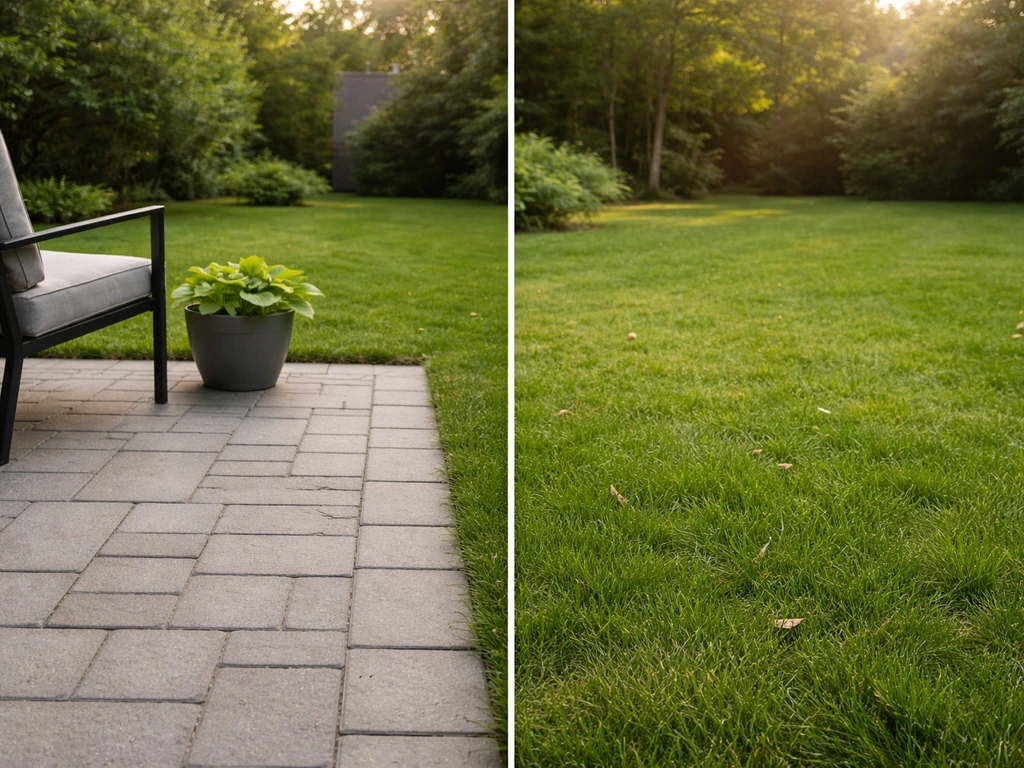
When a listing says 'patio,' it almost always means a ground-level, paved outdoor area attached to or right next to the house, open to the sky, and used for dining or relaxing. It is not elevated, not roofed (unless specifically noted as a covered patio), and not enclosed by walls on multiple sides. That single definition is enough to separate a patio from a porch, a balcony, a veranda, or a courtyard in most cases. The tricky part is that agents and homeowners use these words loosely, so knowing what to physically check saves you from surprises when you show up in person.
Patio vs Porch, Veranda, Balcony, Courtyard, Terrace

Ada Hollis
24 May 2026
What a patio actually is
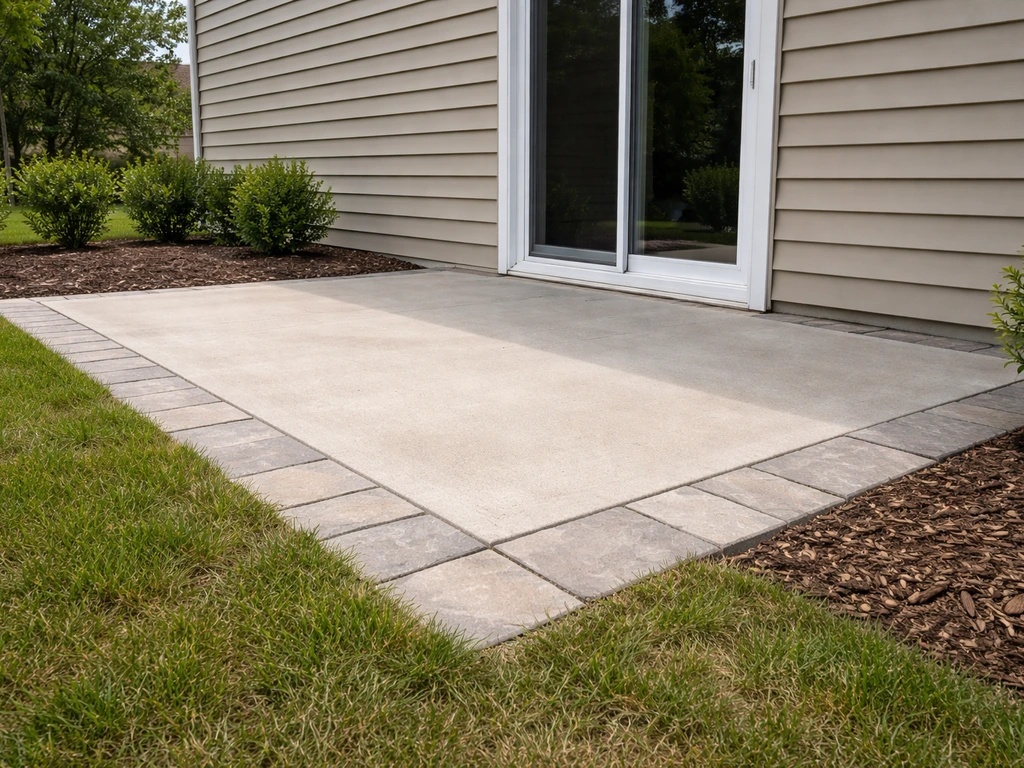
A patio is a paved or hardscaped outdoor area that sits at or very near ground level, directly adjoining the house. Britannica's definition nails it: a small outdoor area adjoining or partially enclosed by the house, used as an outdoor living or dining space. The surface is usually concrete, pavers, brick, or stone. It has no roof overhead unless someone added a cover. It is not a room of the house, it is not elevated above grade, and it does not project out from the building like a porch or balcony does.
Placement matters too. Most patios sit at the back or side of a house, accessed by a sliding glass door or a back door. That access point, a door opening directly onto a flat paved surface at ground level, is the clearest visual signal you are looking at a patio and not something else.
Local planning codes back this up. San Juan Capistrano's land-use code, for example, specifically defines a patio as an open, unenclosed area (often paved) accessory to a building. It can be covered or uncovered, but it stays unenclosed. That word 'unenclosed' is the key distinction against a courtyard or a screened room.
Patio vs porch vs veranda: what you can spot on any home
These three terms trip people up most often in real estate listings, but the differences are visible once you know what to look for. Once you identify the surface and roof status, you can also handle common patio vs patio wording differences without guessing patio vs porch vs veranda.
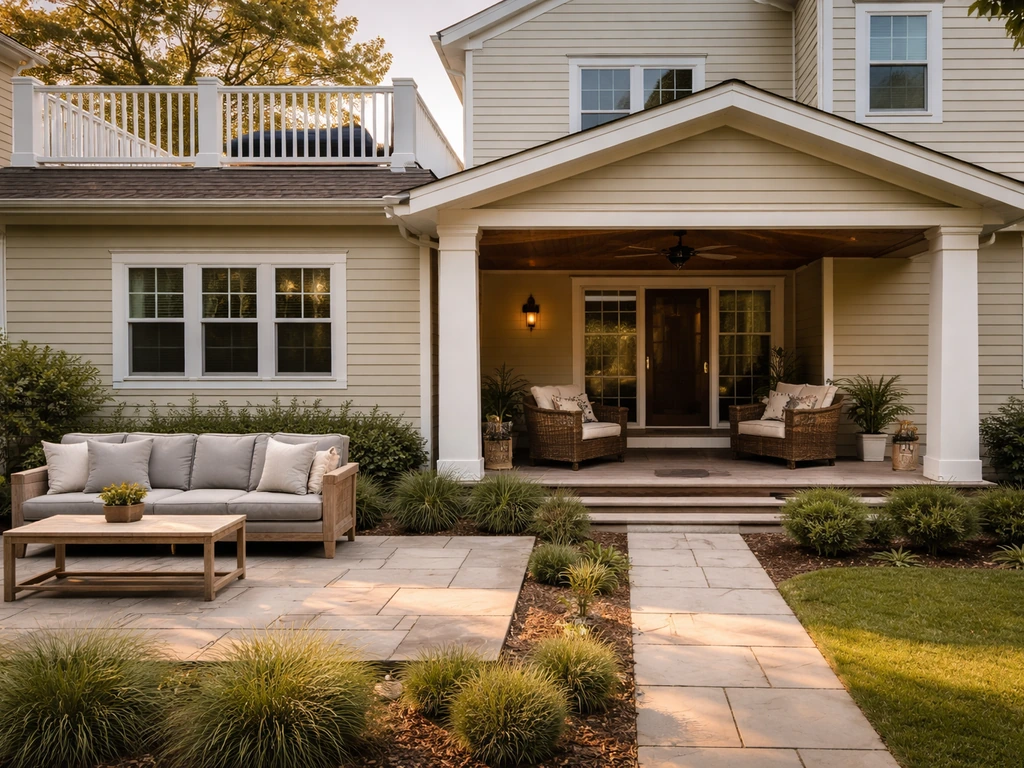
A porch, as Britannica defines it, is a roofed structure that projects from the face of a building, typically used to protect an entrance. Britannica defines a porch as a roofed structure that projects from the face of a building and is used to protect the entrance, and it notes the term is sometimes known in the US as a veranda porch, as Britannica defines it.
The roof is not optional. If it has no roof, it is not really a porch in the traditional sense. Porches are almost always at the front of the house, linked to the main entry. They sit at or just above ground level, with a step or two up from the walkway.
When a listing says 'front porch,' picture a covered, entry-adjacent platform with the house roof extending over it.
A veranda (or verandah) is essentially a porch that wraps around the side or back of a house. Britannica defines it as an open-walled, roofed porch attached to a domestic structure, usually surrounded by a railing. Merriam-Webster calls it a roofed open gallery or portico attached to a building exterior. The key combination is: roofed, open-sided, railed, and attached. You will most often see the word 'veranda' used in older Victorian homes, Southern American architecture, and Australian or South Asian residential descriptions. In US listings, 'veranda' and 'wraparound porch' are often used interchangeably.
A patio, by contrast, is at the back or side, usually at true ground level, and has no required roof or railing. The comparison is simple: if you walk out the back door and step onto a flat paved surface with open sky above, that is the patio. If you walk out the front door under a roof overhang onto a raised platform with railings, that is the porch or veranda.
| Feature | Patio | Porch | Veranda |
|---|---|---|---|
| Roof/cover | No (unless added) | Yes, always | Yes, always |
| Typical position | Back or side of house | Front, at entry | Wraps side/back |
| Railing required | No | Sometimes | Usually yes |
| Elevation | Ground level | At or just above ground | At or just above ground |
| Enclosed walls | No | No (open sides) | No (open sides) |
| Common in US listings | Very common | Very common | Less common, older homes |
Patio vs balcony: the ground-level vs elevated split
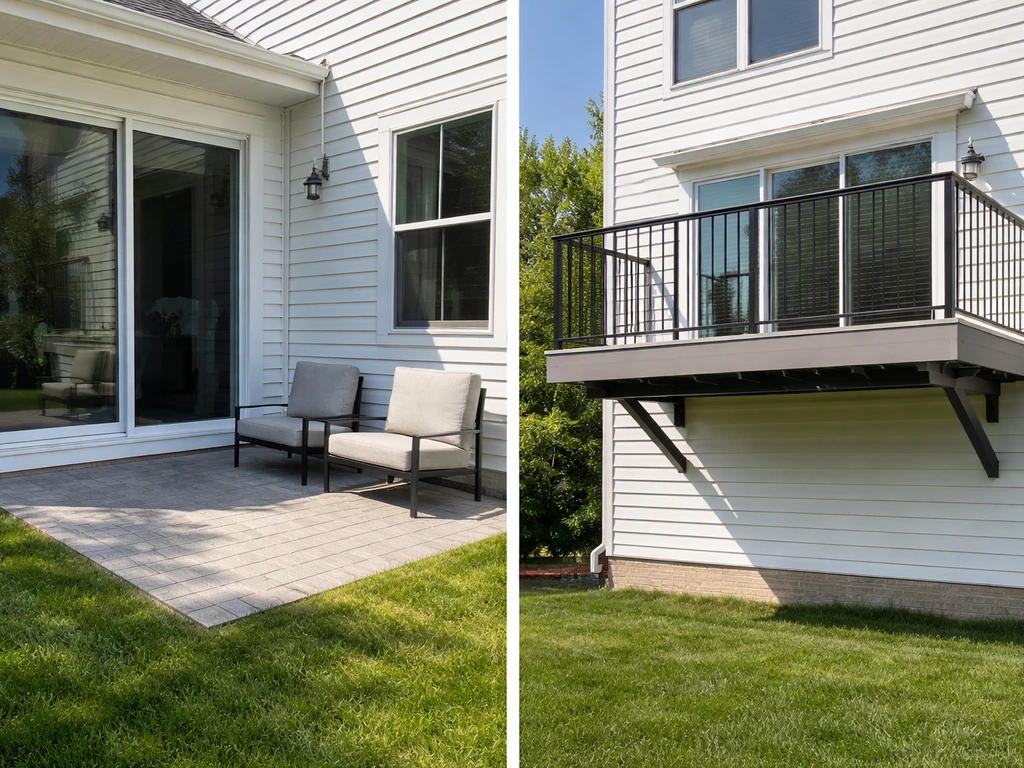
This one is the most clear-cut comparison of the bunch. A balcony is elevated above the ground floor. Wikipedia describes it as a platform projecting from a building wall, supported by brackets or columns, and enclosed by a balustrade or railing. You reach it through a door from an upper-floor interior room. A patio is on the ground. You step out of a door and you are already at grade level.
In apartment listings especially, this distinction matters. A ground-floor unit with 'patio access' usually means a small paved or pebbled area just outside a sliding door, at street or garden level. An upper-floor unit with a 'balcony' means a projecting platform that overlooks the street, garden, or pool. Balconies typically have railings for safety because of the drop. Patios do not need them because there is no drop.
Maintenance implications differ too. A balcony's structure, its brackets, connections to the building wall, and waterproofing, needs periodic inspection for moisture infiltration and structural integrity. A patio's maintenance is about the surface: concrete may need resealing every two to five years depending on climate and traffic, and paver joint sand can settle or wash out over time from rain and freeze-thaw cycles, requiring re-filling. Different problems, different inspection checklists.
Patio vs courtyard: open space vs enclosed space
A courtyard and a patio can look similar on the surface, especially in photos, but the defining difference is enclosure. Dictionary.com and Collins both define a courtyard as an open area of ground surrounded by walls or buildings. That surrounded quality is what makes it a courtyard. The walls or building facades form a boundary on most or all sides, giving it an inside-the-block or inside-the-compound feel.
A patio, even when it is partially bounded by the house on one or two sides, is generally open on the remaining sides to the yard or garden. It does not have the enclosed, four-walls feel of a courtyard. Courtyards are common in Spanish colonial architecture, Mediterranean-style homes, townhomes built around a shared central space, and apartment complexes. If you walk into a space and feel like you are inside a walled outdoor room, that is a courtyard. If you walk out onto a paved surface and can see the yard on either side, that is a patio.
The practical difference shows up in privacy and microclimate. Courtyards tend to be more sheltered from wind and more acoustically private. Patios are more open, often with better airflow and more flexible layout for furniture and foot traffic. If you want to compare these two spaces in more depth, the distinction between patio and courtyard design runs into some genuinely interesting architectural territory worth exploring separately. That same enclosure principle is also what separates a patio from a courtyard.
Patio, terrace, and veranda: how the words shift by region and listing context
This is where real estate language gets genuinely inconsistent, and it helps to know the regional patterns.
In the United States, 'patio' is the default term for any ground-level outdoor living surface at the back of a house. 'Terrace' in a US residential context often means the same thing, especially in urban areas and New York City specifically, where the NYC Buildings Department defines a terrace as an unenclosed, unroofed, relatively level paved or planted area adjoining a building. In NYC listings, 'terrace' typically describes what most suburban homeowners would simply call a patio. The upgrade in terminology usually signals something in an upscale building or unit.
In British and Australian usage, 'terrace' can also refer to a raised paved area, sometimes on an upper level, while 'patio' is used similarly to the US sense. Wikipedia notes that a terrace (building) is an external, raised, open, flat area near a building, which can include roof terraces. Merriam-Webster's definition covers both a flat roof platform and a raised leveled-off ground area. So a 'roof terrace' is legitimately a rooftop patio, while a 'garden terrace' is typically a ground-level or slightly raised paved area.
In South Asian and some South American listing contexts, 'verandah' (note the alternate spelling) is more commonly used for what US buyers would call a covered porch. The verandah vs patio distinction is explored more thoroughly in the verandah comparison on this site. For practical purposes: if you see 'terrace' in a US listing, confirm whether it is ground-level or rooftop. If you see 'verandah,' look for a roof and a railing.
Types of patios you will actually encounter
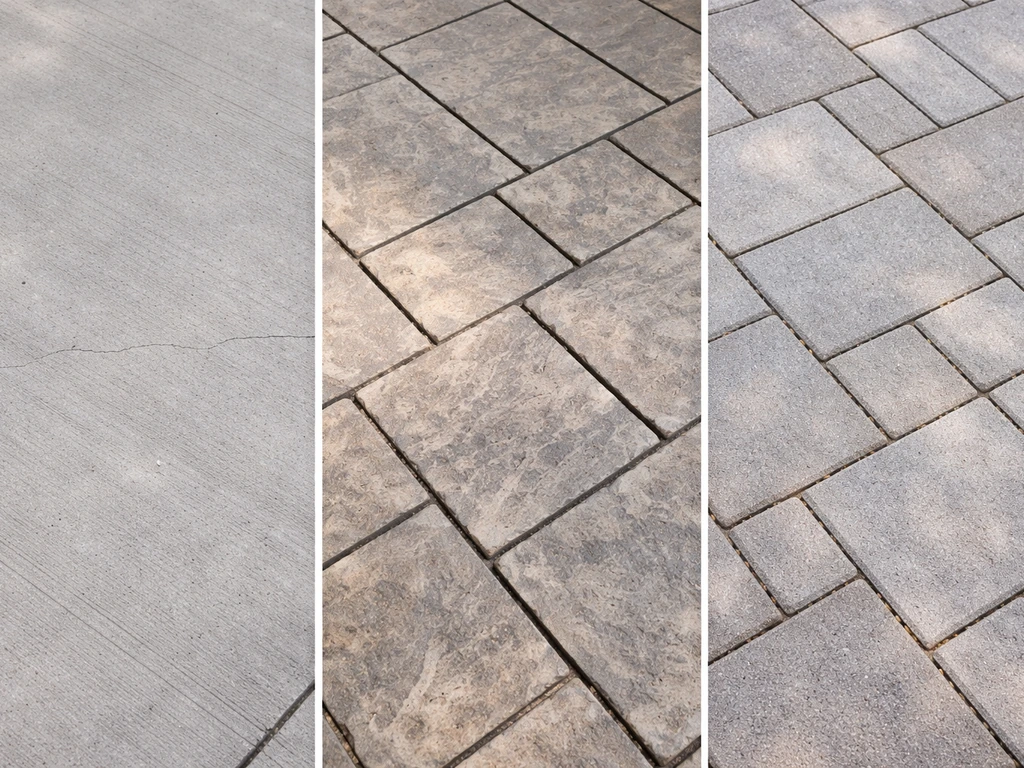
Not all patios are the same, and the type affects cost, maintenance, and how the space feels day-to-day.
- Concrete slab patio: the most common and least expensive. A poured concrete pad, often plain gray or stamped to look like stone or tile. Stamped concrete typically needs resealing every two to five years and can crack in climates with heavy freeze-thaw cycles.
- Paver patio: individual brick, concrete, or natural stone pavers set in sand or mortar. More visually flexible, easier to repair individual pieces, but joint sand can wash out over time and needs periodic refilling.
- Flagstone or natural stone patio: a premium option with irregular or cut stone. Durable and attractive, though more expensive to install and requires occasional re-grouting or re-setting of loose pieces.
- Covered patio: a patio with a permanent or semi-permanent roof structure added, usually a pergola, solid patio cover, or extension of the roofline. Still technically a patio as long as it is unenclosed on the sides. A pergola, as Britannica notes, is an open framework overhead structure, often with plants trained over it, functioning more as shade than as a true roof.
- Screened patio (or screened-in porch): walls of screen mesh added on the open sides. Once screened, many codes and agents start calling this a 'screened porch' or 'screen room' rather than a patio. The enclosure is the defining change.
- Outdoor living room patio: a larger, furnished patio designed to function as a true room outdoors, often with a fire pit, built-in grill, outdoor kitchen, or overhead structure. The American Institute of Architects describes these connected exterior rooms as spaces designed to relate directly to the home's interior layout.
How to tell what you are actually looking at
Whether you are scrolling listing photos or walking a property in person, run through these five checks to identify any outdoor space correctly.
- Check the elevation first. Is the surface at ground level or does it hang above grade? Ground level points to patio, terrace, or porch. Elevated and projecting from an upper floor means balcony.
- Look at the access point. Does a door from inside the house open directly onto the space? Which floor? A ground-floor door to a paved surface is almost always a patio. An upper-floor door leading to a railed platform is a balcony. A front door opening under a roof overhang onto a small platform is a porch.
- Check for a roof or overhead cover. No roof means patio or open terrace. A permanent solid roof means porch, veranda, or covered patio. An open lattice or pergola overhead still usually counts as a patio with shade.
- Look at the enclosure level. Open on three or more sides: patio or porch. Surrounded by walls on most sides: courtyard. Screened on all sides: screened porch or screen room.
- Check for railings. Ground-level patios do not need railings and usually do not have them. If the space has a railing or balustrade, it is either elevated or is styled as a veranda or porch. InterNACHI inspection guidance for porches and porch-like spaces specifically calls out checking railing integrity, balusters, and stair conditions because those structural elements signal something other than a simple ground-level patio.
In listing photos, look for the door that accesses the space and what floor it is on. Look for sky overhead versus a roof structure. Look at whether you can see grass or yard directly accessible on the sides. Those three visual cues will resolve most ambiguity before you even ask the agent a question.
A quick comparison of all the terms
| Space | Ground level? | Roofed? | Enclosed/walled? | Railing typical? | Where on home? |
|---|---|---|---|---|---|
| Patio | Yes | No (unless covered) | No | No | Back or side |
| Porch | At or just above ground | Yes | No (open sides) | Sometimes | Front entry |
| Veranda/Verandah | At or just above ground | Yes | No (open sides) | Yes | Front, side, or wrap |
| Balcony | No (elevated) | No | No (open sides) | Yes | Upper floor, any side |
| Courtyard | Yes | No (open sky) | Yes (walls/buildings surround) | Sometimes | Center or enclosed side |
| Terrace (US urban) | Yes or rooftop | No | No | Sometimes | Back, side, or roof |
| Screened porch/room | At ground | Yes (usually) | Yes (screened) | Sometimes | Back or side |
What this means when you are shopping or improving a home
If a listing says 'patio,' verify in person that it is actually a usable outdoor living surface and not just a small concrete step. Square footage matters here, because a 200-square-foot patio comfortably fits a dining table and chairs, while a 50-square-foot slab is functionally more of a landing. Ask the agent for the dimensions if photos are ambiguous.
If a listing says 'terrace' in a city building, check whether that means ground-floor outdoor access or a rooftop space. Rooftop terraces are attractive but often have building rules around furniture, load limits, and hours of use. Ground-level terraces in urban buildings may be shared with other units or have restrictions on modifications.
If you are comparing a home with a 'covered patio' against one with a 'screened porch,' know that the screened version offers insect protection and some weather shielding but technically changes the nature of the space. Once enclosed on all sides, a screened porch adds enclosure that a plain patio does not have, which is both a usability advantage and a maintenance consideration (screens tear, frames corrode, and doors need maintaining).
For the patio vs backyard distinction and the patio vs yard question that sometimes comes up in listings, the short version is that a backyard refers to the entire rear outdoor area of the property including lawn, landscaping, and the patio itself. The patio is one specific hardscaped element within that broader backyard space, not a synonym for it. A patio is one type of outdoor space people sometimes lump together with the yard, but the terms are not the same.
Bottom line: trust the five-check method above more than the label in the listing. Ground level, direct door access, open sky, no railings, and open sides on at least two or three faces is what a patio actually looks like. Everything else is a variation worth confirming before you sign anything.
FAQ
If a listing says “patio,” how can I tell whether it is actually a space or just a step/landing?
Ask whether the space is truly usable or just a “slab.” Common listing wording like “patio area” can mean a narrow 1 to 3 step landing, not a dining-ready surface. A quick in-person test is to bring a folding chair and check whether you can place it comfortably with clear circulation from the door, and whether the area has enough width for a small table and walkway.
Does a covered patio still count as a patio, or does it turn into a porch?
“Covered patio” is the key exception to the usual “no roof” rule. Even with a roof, it still counts as a patio if it is unenclosed (open to the sky or open on most sides) and not built like a fully roofed room with interior walls. If the cover is paired with full-height walls, doors, or screens on all sides, you may be looking at something porch-like or a screened/enclosed space instead.
What are the easiest “patio vs balcony” tells in a listing photo?
Look for guardrails, balustrades, or a safety-height barrier around the perimeter. Patios typically sit at grade and do not require railings, while balconies do, especially if there is a meaningful drop. Also check the access: if the door comes from an upstairs interior room, it is far more likely to be a balcony or similar projected platform.
Is a patio always less private than a balcony or terrace?
Request the floor level and any height notes before assuming privacy. A ground-level patio can still be “private” if it is set back, screened by fences, or bordered by mature landscaping, while an elevated terrace might be overlooked by neighbors or adjacent windows. If privacy matters, evaluate sightlines from both nearby homes and from upper-story windows, not just from street level.
When “terrace” is mentioned in a city apartment listing, should I assume it is exclusive use?
Confirm whether the outdoor space is exclusive-use or shared. In many apartment buildings, a label like “terrace” can refer to a rooftop area that other units access, which affects noise, timing, and rules for furniture or grills. Ask the agent who has access, whether any HOA or building management limits hours, and whether modifications (shade structures, planters) are allowed.
Which is more likely to have water problems, a patio or a balcony?
Check for drainage direction and water control details. Patios often rely on site grading, surface slope, and sometimes weep systems at the house wall, while balconies need waterproofing assemblies and proper sealing at the slab connection. If you see staining, rust around drains, or efflorescence near the door threshold, ask about the last time the waterproofing or sealant was inspected or replaced.
How do I distinguish a courtyard from a patio when both are paved?
If the courtyard is “inside a building block,” it is usually more enclosed on multiple sides, creating a walled-room feel. For edge cases, notice whether the boundaries are real (walls, building facades, large planter walls) or just partial (the house plus open yard). Courtyards also tend to have more controlled light and wind patterns, so spend a minute observing wind and how light moves during the day.
Can a patio be partially walled, and still be considered a patio?
A patio can be attached to a single wall, but it typically opens toward the yard on at least two or three faces. If the listing mentions “enclosed courtyard,” “walled garden,” or “terraced courtyard,” assume there are stronger boundaries. In ambiguous photos, use your “open sides” rule: can you clearly see open yard/grass or sky beyond most edges, or does it feel like an outdoor room surrounded on most sides?
If I’m comparing a house “with a patio,” how do I relate that to the backyard size and value?
“Backyard” is the property-level category, but listings can still get sloppy by calling the hardscape “the backyard.” Treat it as: backyard includes lawn, landscaping, and the patio as one component. Practically, ask what portion is for exclusive use, what portion is shared (if applicable), and whether the patio area size shown in photos matches the actual hardscape dimensions.
What questions should I ask before buying if the listing says “roof terrace” rather than patio?
Rules, loading limits, and operating hours can be stricter on rooftop terraces, even when the terminology sounds like a patio. Ask whether the rooftop is roof-top deck access only, whether there are restrictions on grills or heaters, and whether furniture requires securing for wind. Also ask if repairs are communal, since you might share responsibility through a building association.
Next Article
Patio vs Yard: Key Differences, Uses, and How to Choose
Know patio vs yard differences, uses, and upkeep, plus a checklist to identify spaces and boost outdoor value.