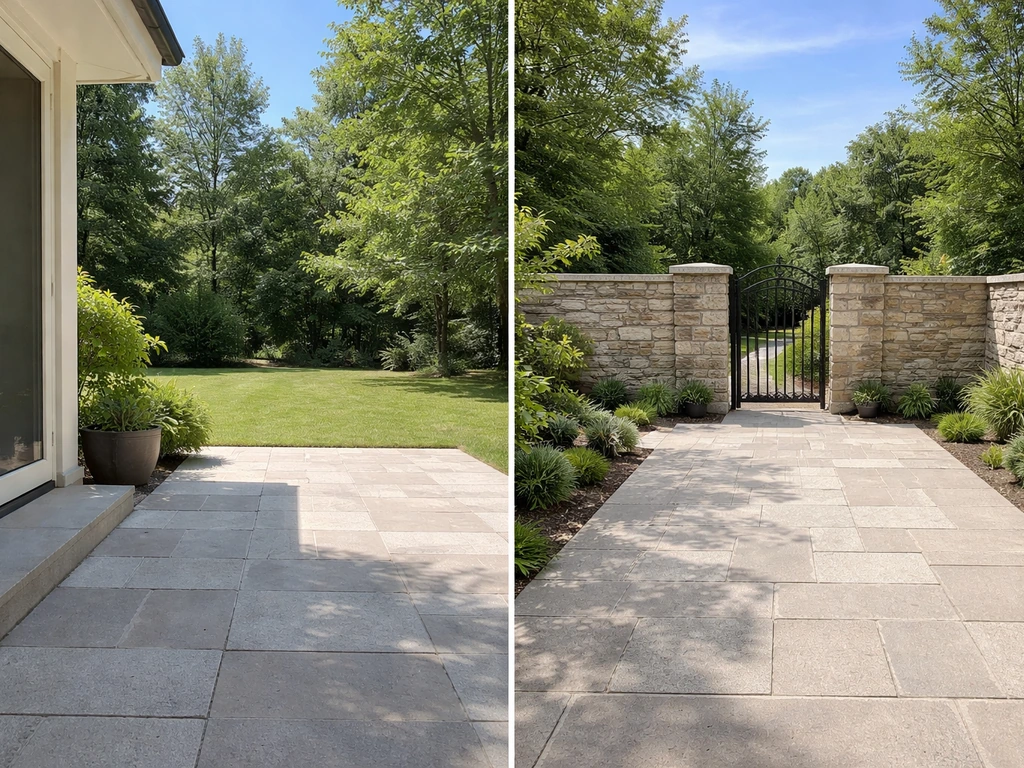
A patio is a paved surface right next to the house, built for sitting, dining, and entertaining. A yard is the surrounding land around a home, usually grassy or landscaped, used for play, gardening, and general outdoor living. The two often coexist on the same property, but they serve different purposes, require different upkeep, and carry different weight in a real estate listing. Knowing exactly which one you have, or which one you want, makes a real difference when you're shopping for a home, planning a renovation, or trying to figure out why your outdoor space isn't working the way you hoped.
Patio vs Yard: Key Differences, Uses, and How to Choose

Ada Hollis
18 May 2026
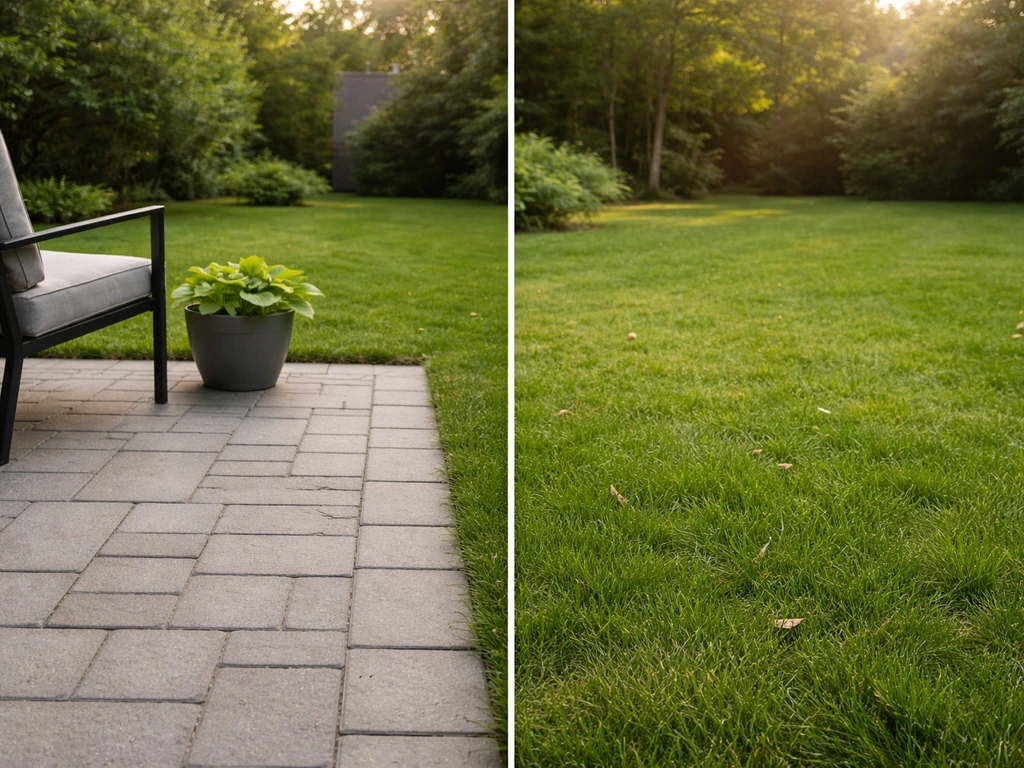
What actually counts as a patio vs a yard
A patio, by the most widely used definition, is an outdoor area that adjoins a structure and is typically paved. Cambridge defines it as 'an outside area with a solid floor next to a house, where people can sit.' That solid floor is the key detail. Concrete slabs, brick pavers, natural stone, tile, even compacted gravel all qualify. The surface is what makes it a patio, not the size, the furniture, or whether it has a cover overhead.
A yard, on the other hand, is the broader land surrounding a home. Merriam-Webster describes it as the grounds of a building, specifically including the grassy area around a house. Oxford frames it as 'a piece of land next to or around your house' where you can grow things, usually with an area of grass called a lawn. So a yard is measured in open space, not surface type. It can include grass, garden beds, trees, pathways, and yes, even a patio sitting inside it.
The practical way to think about it: the patio is a room without a roof, intentionally designed for a specific activity. The yard is the property's outdoor land in a broader sense. Your home can have both, and most with outdoor space do. The patio lives inside the yard, not in place of it.
How people actually use patios vs yards
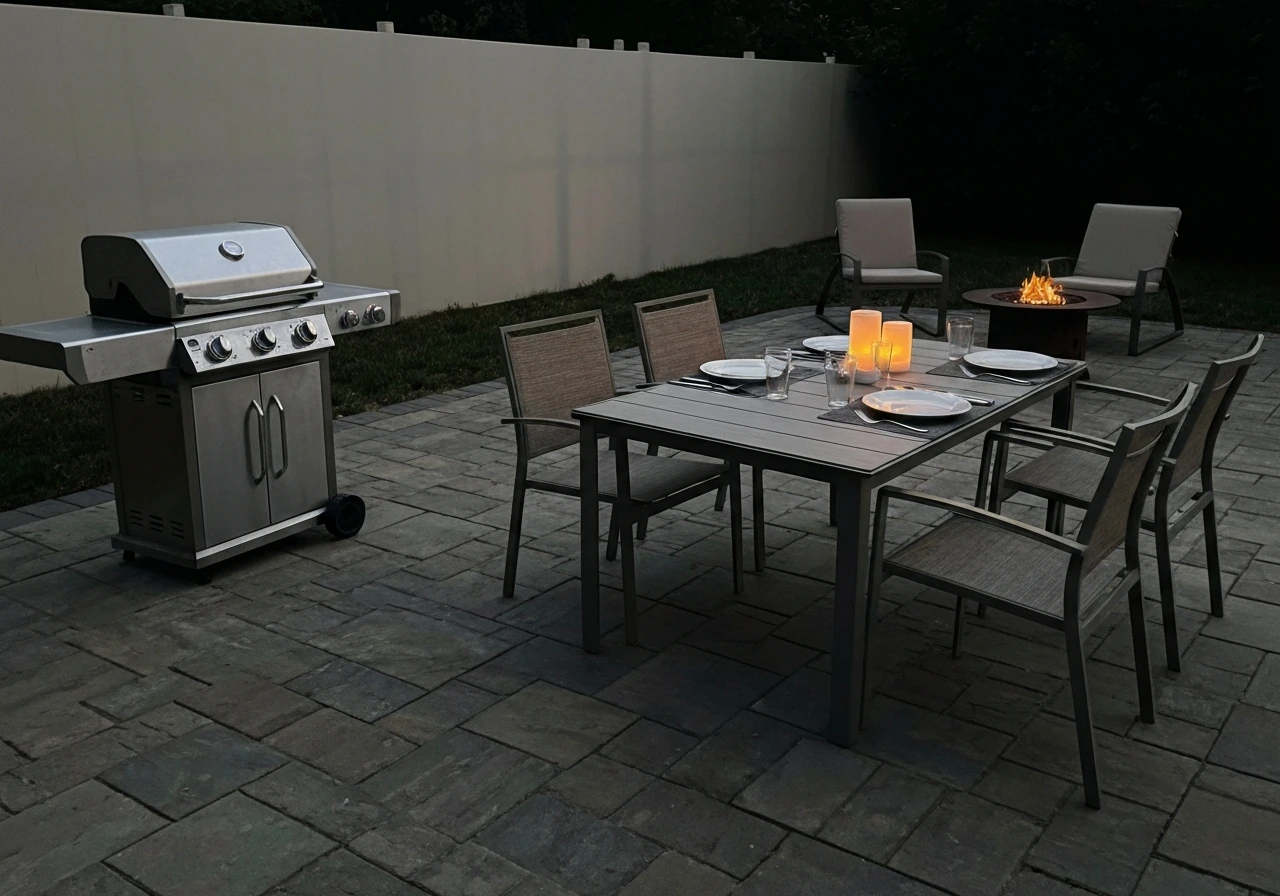
Patios are built for concentrated outdoor living. You set up chairs, a grill, a dining table, a fire pit, or a lounge area and you use that space the way you'd use an indoor room, just outside. The American Society of Landscape Architects consistently lists lighting, fire pits, seating and dining areas, grills, and built-in seating as the top outdoor living features homeowners want, and a patio is where almost all of those features land. It's a defined, intentional space.
Yards serve a much broader range of uses, many of them unstructured. Kids run around in a yard. Dogs claim it as territory. Gardeners plant vegetables or flower beds in it. Homeowners mow it, rake it, and occasionally do nothing with it at all. A yard is flexible open space. It doesn't need furniture or a specific purpose. Its value is in what you can do there, not in what's already there.
This is where the distinction matters most in day-to-day life. If you host dinner parties, a patio with good lighting and a table setup is far more functional than a grassy yard where chairs sink into the lawn. But if you have a dog, kids, or a vegetable garden habit, a yard gives you room that a paved patio never really can.
How to tell them apart in real homes and listings
Listings and walkthroughs get blurry fast. Here's a straightforward checklist to help you identify which outdoor feature you're actually looking at, whether you're walking through a property or reading a listing description from your couch.
- Check the surface: If it's paved (concrete, pavers, stone, tile), it's a patio. If it's mostly grass, mulch, or bare soil, it's yard.
- Note the position: A patio is almost always directly adjacent to the house, typically accessible through a door. A yard wraps around or extends beyond the home.
- Look for defined edges: Patios usually have a clear boundary, a step up or down, a border of pavers, or a transition material. Yards blend into each other and the surrounding landscape.
- Check the listing category: Some MLS systems, like Northwest Arkansas Realtors, categorize outdoor spaces as Patio, Balcony, Covered, Enclosed, or Partial. If the listing says 'patio,' the agent is describing a paved surface. If it says 'yard' or 'lot,' they mean the surrounding land.
- Ask about square footage: A patio is often listed with its own square footage (e.g., 200 sq ft paver patio). A yard is typically noted as lot size or backyard area.
- Check if it's attached: A patio sits on grade (at ground level), attached to the home but not elevated. If it's elevated and attached, that's more likely a deck. If it's detached and surrounded by walls, it may be a courtyard.
- Look for drainage clues: Patios often have visible slope, drainage channels, or nearby downspout management. Yards naturally absorb and drain water through soil and grass.
When in doubt during a walkthrough, just ask directly: 'Is this paved area on the listing?' and 'What's included in the yard or lot size?' Agents are used to these questions, and the answers tell you a lot about how usable each space actually is.
Maintenance, upkeep, and what each will cost you
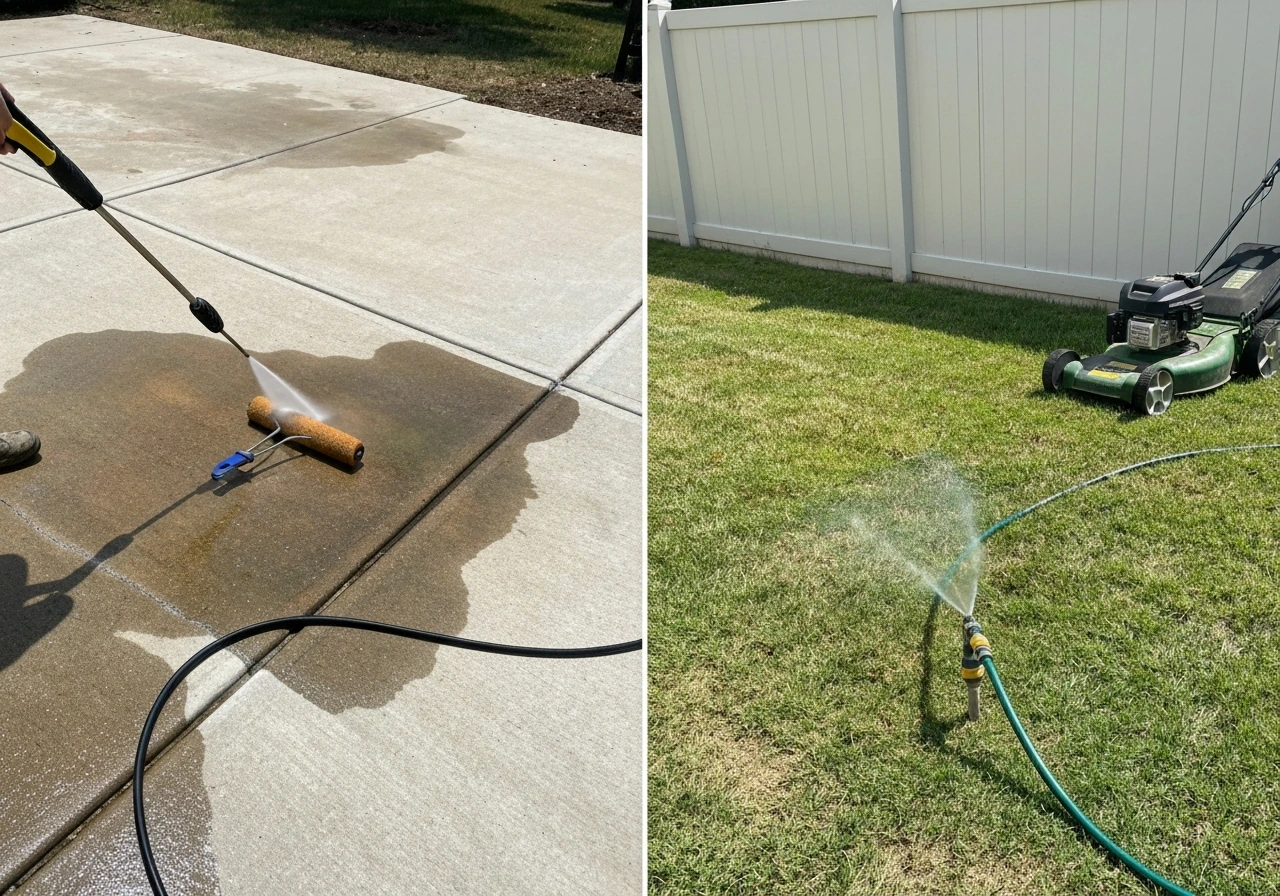
Patios and yards require very different kinds of maintenance, and the costs can surprise people who are used to one but not the other.
Patio upkeep
A paved surface needs periodic cleaning, sealing, and occasionally repair. Concrete patios typically need sealing every few years, and HomeGuide puts the cost of professional concrete cleaning and sealing at roughly $1 to $3 per square foot, so a 10x20 foot patio (200 sq ft) runs around $250 to $600. Forbes Home puts the labor and materials range at $2 to $3 per square foot with a professional.
Power washing is another regular task, and the cost varies by material: brick and pavers need gentler treatment than plain concrete. Paver installation itself, if you're adding a patio, costs $10 to $50 per square foot depending on material, pattern complexity, and your region, with complex patterns adding 10 to 20 percent to the total.
The upside is predictability. You're not mowing, fertilizing, watering, or managing pests and weeds across a large surface. Maintenance is periodic, not weekly.
Yard upkeep
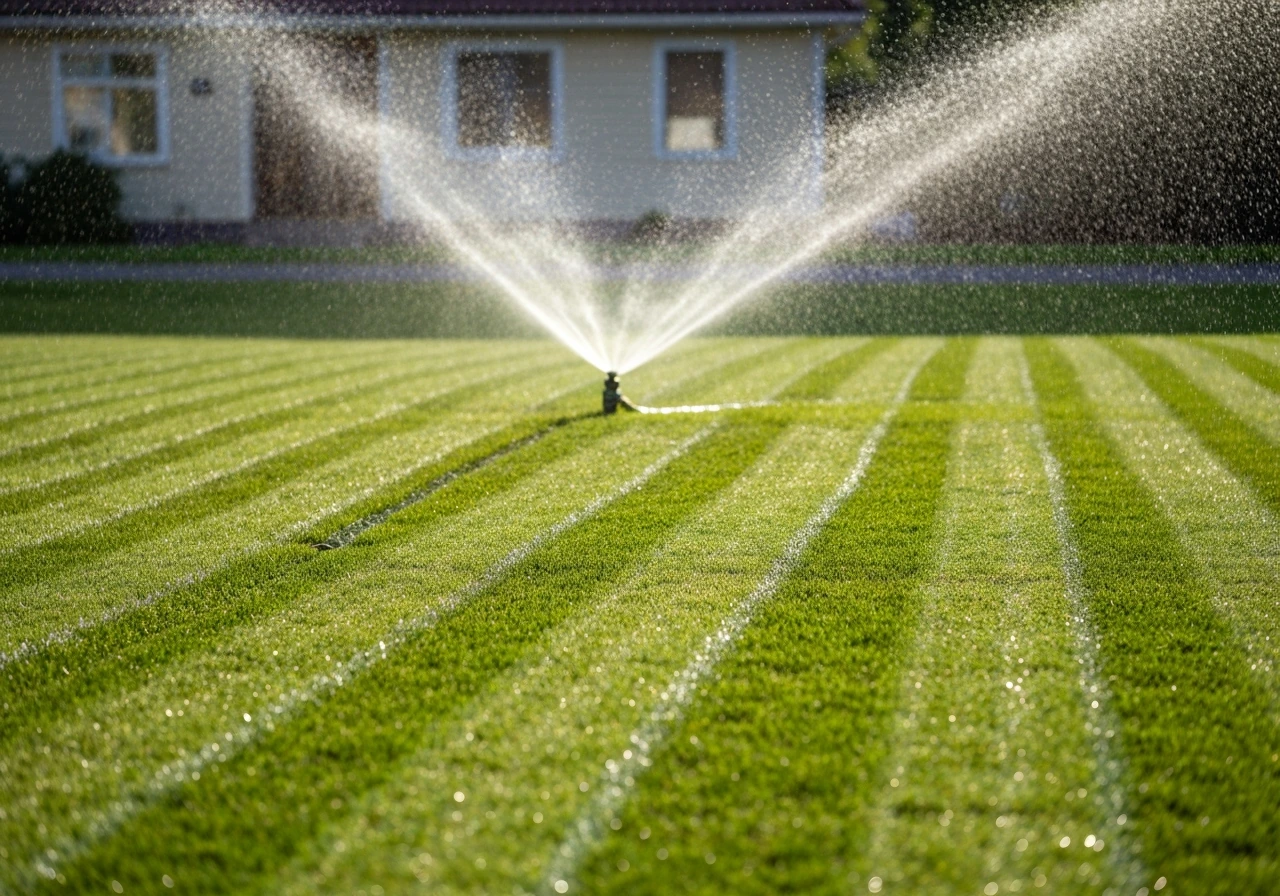
A yard is a living system and requires ongoing time or money. Mowing happens weekly or every two weeks in growing season. Watering, fertilizing, aerating, overseeding, weeding, and managing garden beds add up quickly both in time and cost. If you hire out lawn maintenance, budget for regular service fees throughout the season. If you garden, add soil amendments, mulch, and plant costs on top of that.
The NAR has noted that low-maintenance landscaping is a genuine selling point for buyers, which tells you something about how many people are surprised by how much work a yard actually takes. A yard gives you flexibility, but it costs you in ongoing effort in a way a patio simply doesn't.
| Factor | Patio | Yard |
|---|---|---|
| Surface type | Paved (concrete, pavers, stone) | Grass, soil, mulch, garden beds |
| Maintenance frequency | Periodic (sealing, cleaning) | Ongoing (mowing, watering, weeding) |
| Typical cost to maintain | $250–$600 to seal/clean (200 sq ft) | Ongoing seasonal costs (variable) |
| Installation cost | $10–$50/sq ft for pavers | Landscaping varies widely |
| Drainage behavior | Runoff (needs management) | Absorbs and filters naturally |
| Flexibility of use | Defined, structured use | Open, multi-purpose use |
| Maintenance skill needed | Low to moderate (DIY-friendly) | Moderate (gardening knowledge helps) |
Porch, balcony, verandah, courtyard: why the names confuse everyone
If you've ever read a listing and wondered whether the 'outdoor space' was a porch, a patio, or something else entirely, you're not imagining the confusion. A courtyard is another term that can overlap with patios depending on the layout and how the space is enclosed patio vs courtyard. These terms genuinely overlap in everyday use, and regional naming makes it worse. In many places, a verandah overlaps with the patio concept, especially when it is partially covered and used as a sitting area.
- Porch: A covered structure attached to the entrance of a home, usually with a roof supported by columns. Merriam-Webster defines it as a covered entrance. The key difference from a patio is the roof. No roof, it's usually a patio or a stoop.
- Verandah (or veranda): A roofed open porch that often wraps around the front and sides of a home. Dictionary.com describes it as a large, open porch, often partly enclosed. It's like a porch but typically larger and more architecturally prominent. The article on patio vs verandah goes deeper on this distinction.
- Balcony: An elevated platform projecting from the wall of a building, always above ground level. MLS glossaries separate balconies from patios precisely because of this elevation difference. You don't access a balcony through a back door onto the ground.
- Courtyard: An open space enclosed or partly enclosed by walls or buildings. Unlike a patio, a courtyard is typically surrounded by structure on multiple sides, giving it a more contained, private feel. The patio vs courtyard comparison is worth reading if your space has walls on more than one side.
- Deck: A raised platform, usually made of wood or composite material, attached to the house. Like a patio but elevated and almost never paved in stone or concrete.
The reason these names get swapped so often is that real estate agents, homeowners, and even architects use them loosely. A covered patio can get called a porch. A ground-level verandah might be listed as a patio. In practice, the physical characteristics matter more than the label: look for the roof (or lack of it), the surface material, the elevation, and how enclosed the space is. Those details tell you what you're actually working with.
Which one is actually right for your goals
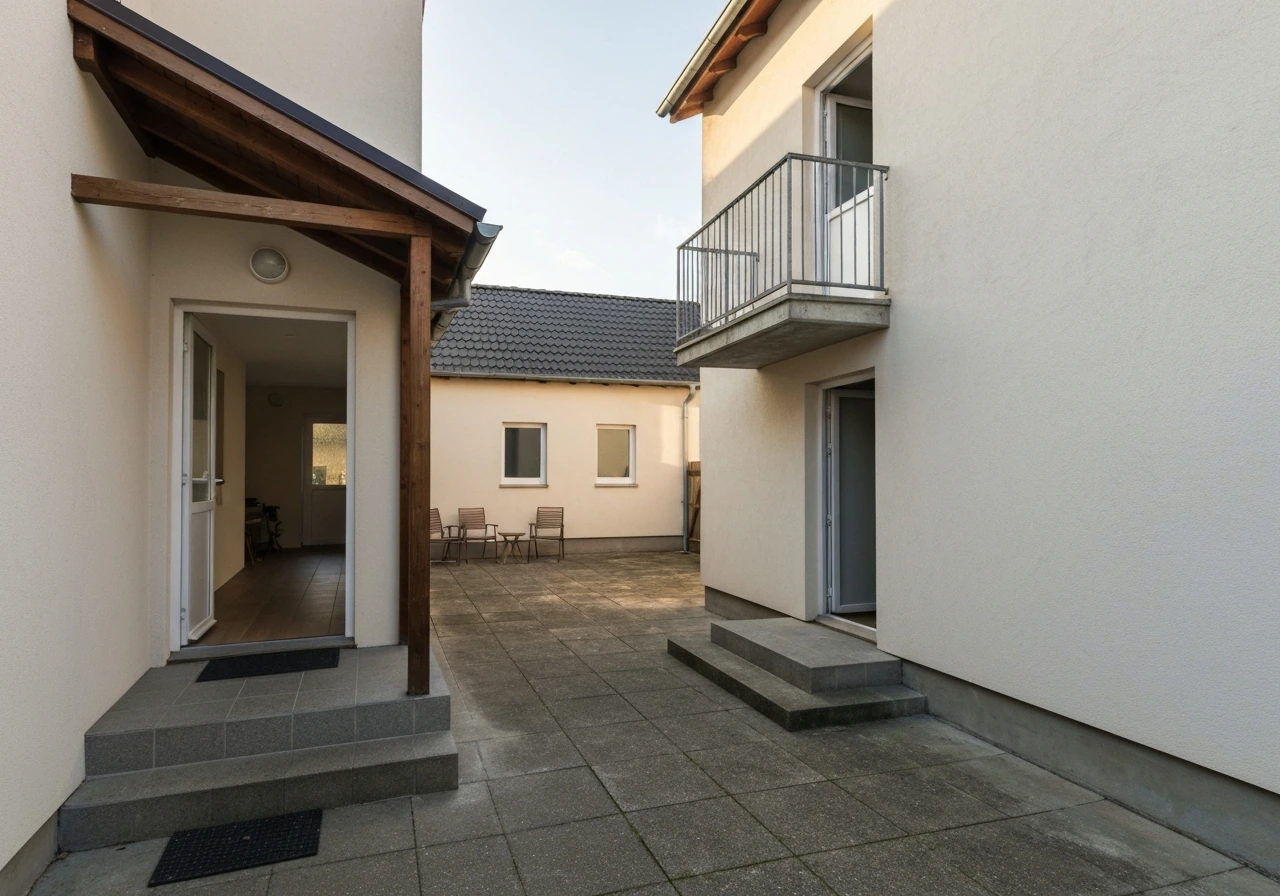
The honest answer depends entirely on what you need the outdoor space to do. Here's how each option stacks up against the most common goals.
Entertaining and hosting
A patio wins here, and it's not close. A defined paved surface gives you a stable place for furniture, a grill, a fire pit, and lighting without chairs sinking into the lawn or guests navigating uneven grass in the dark. If hosting is your primary goal, a patio with good lighting and a solid layout will outperform an open yard every time.
Kids and pets
A yard is the better fit for families with young kids or active dogs. Open grassy space allows running, playing, and tumbling without hard surfaces underfoot. A patio can complement a yard for families (outdoor dining near a play area, for example), but a property with only a patio and no yard to run around in is genuinely limiting for kids and most dogs.
Gardening
Yard, full stop. You can grow things in containers on a patio, and some people do this beautifully, but a real gardening practice (vegetable beds, fruit trees, perennial borders) needs soil, space, and room to expand. A yard gives you that. A patio doesn't.
Low maintenance
A patio is the lower-maintenance option in most cases. You're not mowing it, watering it, or managing it week to week. Occasional cleaning and periodic sealing is far less demanding than regular lawn care. If you want outdoor space without outdoor chores, a patio (especially a well-installed paver or concrete slab) is the smarter choice.
Privacy
This one depends on how the space is set up, not whether it's a patio or a yard. A small backyard patio surrounded by tall fencing or mature plantings can feel incredibly private. A large open yard with no screening can feel exposed. If privacy is the goal, look at how the space is bounded, not just what type of surface it has.
How patios and yards affect drainage, layout, and property value
Drainage
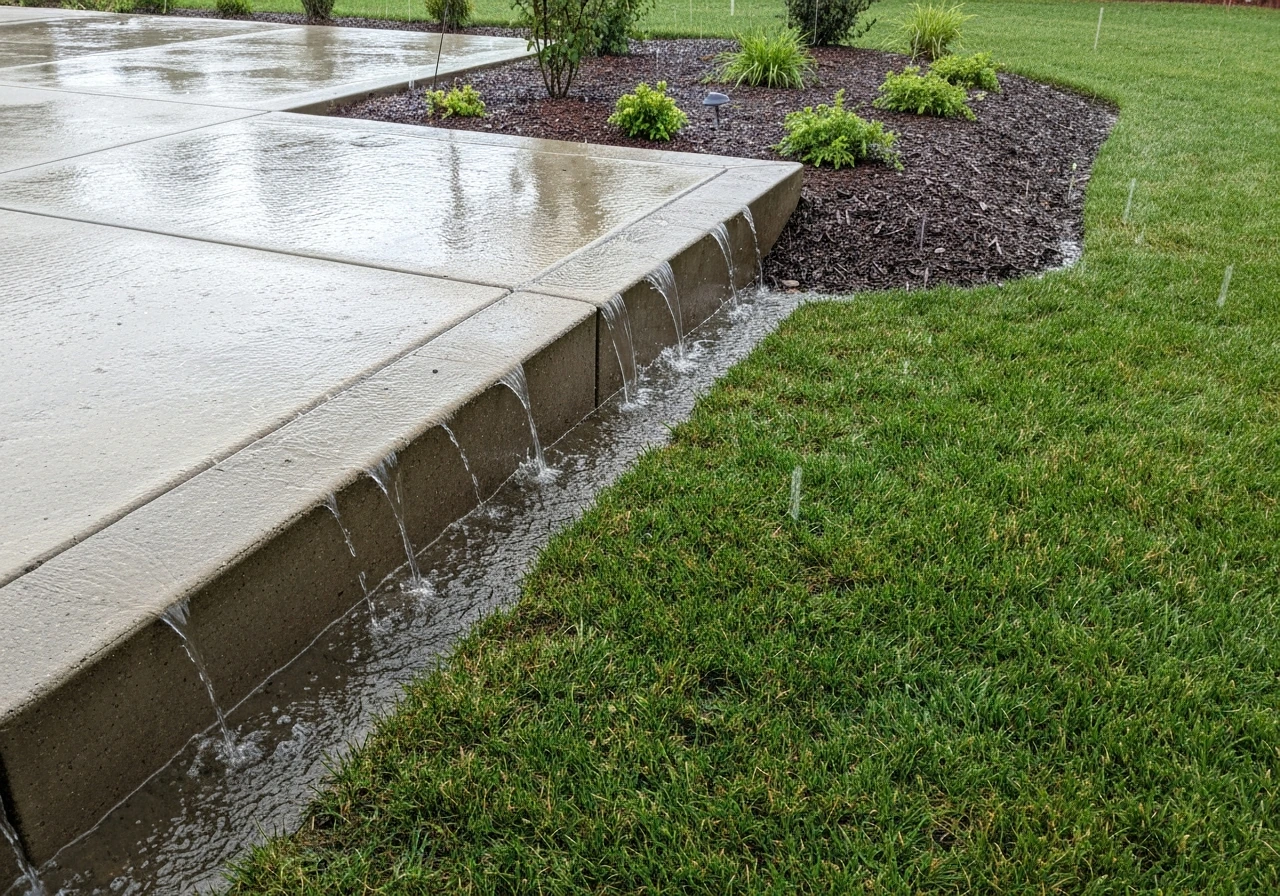
This is one area where yards have a structural advantage over patios. Grass, soil, and garden beds absorb and filter stormwater naturally. The EPA and multiple extension services note that redirecting downspouts toward permeable surfaces like lawn and landscaping reduces runoff and helps recharge groundwater. A paved patio, by contrast, is an impervious surface: rain hits it and runs off, which can cause pooling near your foundation if the patio isn't sloped and drained properly. Permeable pavers help (they allow water to pass through gaps into a gravel layer below), but a standard concrete patio needs careful drainage planning. If your patio butts up against the house without proper slope away from the foundation, you'll have problems.
Layout and usability
A patio defines space and gives outdoor areas a sense of purpose and organization. A yard without a patio can feel unfinished and underused. In practice, the most functional outdoor layouts combine both: a paved patio for dining and lounging directly off the house, with open yard space beyond it for play, gardening, or just breathing room. If you're designing or evaluating an outdoor space, look for this combination rather than choosing one over the other. When you are deciding patio vs, focus on how the layout supports your day-to-day activities, not just the surface material.
Real estate perception
Both patios and yards carry real estate appeal, but for different buyers. Apartment Therapy adds that blank" rel="noopener noreferrer">outdoor spaces like patios can enhance a home’s appeal to prospective buyers. blank" rel="noopener noreferrer">NAR reports that 92 percent of realtors recommend improving curb appeal before listing, and outdoor living features like patios are among the improvements cited since the pandemic. A well-designed patio signals move-in-ready outdoor living, something buyers increasingly want without the work. A generous yard signals space, flexibility, and room for kids, gardens, and future additions.
Low-maintenance landscaping, which often includes a patio as an alternative to high-maintenance lawn, consistently scores well with buyers according to NAR survey data. But a property with no yard at all, just paved surfaces, can feel limiting to buyers with families or gardening ambitions. The sweet spot for resale is a property that offers both: a defined patio for outdoor living and enough yard to feel like you have room to breathe.
If you're comparing outdoor spaces in listings and not sure what you're looking at, start with the surface and the position. Paved and adjacent to the house is a patio. Open land around the home is a yard. And if the listing says 'outdoor space' without specifying, ask your agent exactly what's there before you make assumptions either way.
FAQ
If a listing says “outdoor living space,” how can I tell whether they mean patio vs yard?
In most listings, a patio is the paved, hardscape area right outside the home, while the yard is everything else that comes in the lot or outdoor land description (grass, garden beds, trees, and walkways). If the listing calls the entire backyard “patio space,” ask whether the seller is including paved walkways and drive surfaces in that count, because those can inflate the “patio” square footage.
Which is easier to redesign later, a patio or a yard?
Yes, the surface matters for repairs, but the placement matters more for performance. A yard is easier to adjust over time (add beds, reposition edging, change lawn areas), while changing a patio usually means a bigger upfront project (demo plus replacement). If you expect to remodel in a few years, treat patio areas as long-term fixtures and keep more flexible zones as yard.
Do patios still require weed and joint maintenance?
For concrete and many paver patios, weed control is not optional, even though it is less frequent than lawn mowing. Plan on controlling weeds in cracks and joints, especially if you use natural stone or pavers with wider gaps. Also ask whether the installer used polymeric sand or a similar joint filler, because that affects both weed growth and joint stability.
What should I check if I’m worried about water pooling near the foundation?
If you are dealing with drainage problems, prioritize what you do with water flow, not just the surface choice. A patio needs proper slope away from the foundation and, in some cases, a drainage channel or French drain. A yard can help absorb runoff, but low spots can still turn into mud. Consider how water behaves during heavy rain at the specific edge where the patio meets the house.
Can a yard be mostly non-grass, and how does that affect its use compared with a patio?
You can have a “yard” that is mostly hardscape (gravel, stone, or turf) and still be called a yard in common language, but the functional test is whether it is intended for open-space activities and gardening. Ask whether there is usable soil for planting and whether the area is permeable or fully covered in impervious surfaces.
How do I evaluate privacy if my goal is a patio for entertaining?
If privacy is your concern, look for enclosure details that affect sightlines, not only the type of surface. Tall fences, dense hedges, pergolas, and whether the patio is set back from neighboring windows matter more than “paved vs grassy.” Also note that a patio near the property line can feel exposed even if it is enclosed by furniture and umbrellas.
What’s the most practical patio vs yard setup for dogs?
A dog-friendly setup often works best when you combine both: a patio zone for easy cleaning and a yard zone for traction and play. If you only have a patio, expect mud issues around the door during wet weather and more cleanup. If you only have a yard, expect scratches and paw scuffs on furniture and faster wear on grass in high-traffic lanes.
Are there safety or placement differences for grills on patios vs in yards?
If you plan to install a grill, check clearance from siding, overhangs, and any cover. Patios also tend to concentrate heat, so plan heat-safe surfaces and keep combustible storage away. For yards, grilling can be harder to manage if the ground is uneven or if wind shifts from open areas.
Which tends to matter more for resale in my area, a yard or a patio?
For resale, look at the buyer type and local expectations. If the neighborhood attracts families, a usable yard can be a deciding factor even if it is a smaller size. If the area has high landscaping costs or lots are small, a well-finished patio with good lighting and drainage can carry more weight. The key is whether the outdoor feature supports a specific lifestyle, not just the presence of paved space.
Does bigger always mean better when comparing a yard to a patio?
No, because square footage alone can mislead. A small patio with a smart layout (direct access from the kitchen, clear walking paths, and enough room for dining and a grill) can feel more useful than a large yard with no functional zones. When comparing homes, ask about access routes, seating placement, and whether the yard has usable space that is level and not dominated by slope or obstacles.
Next Article
Patio vs Courtyard: Key Differences and How to Tell
Patio vs courtyard guide: definitions, placement, shapes, uses, and how to spot the right one in listings and homes.