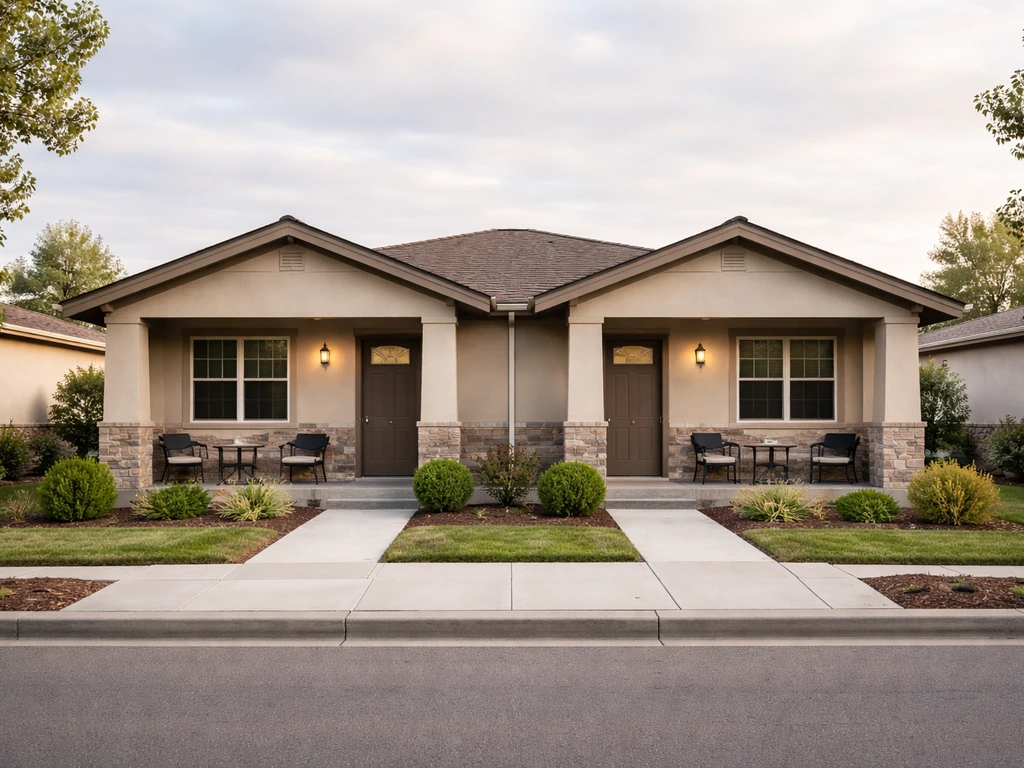
A patio home is typically a single-story (or low-profile one-and-a-half-story) house with a compact footprint, built close to its property line, and designed around a private outdoor patio or courtyard space. From the street, you'll usually see a low roofline, an attached or very short driveway, minimal front yard, and direct door access to a walled or fenced patio area on the side or rear. That visual combination, low, close to neighboring structures, with a defined private outdoor surface, is the clearest signal you're looking at a patio home.
What Does a Patio Home Look Like? Exterior Features Explained

Ada Hollis
7 Jun 2026
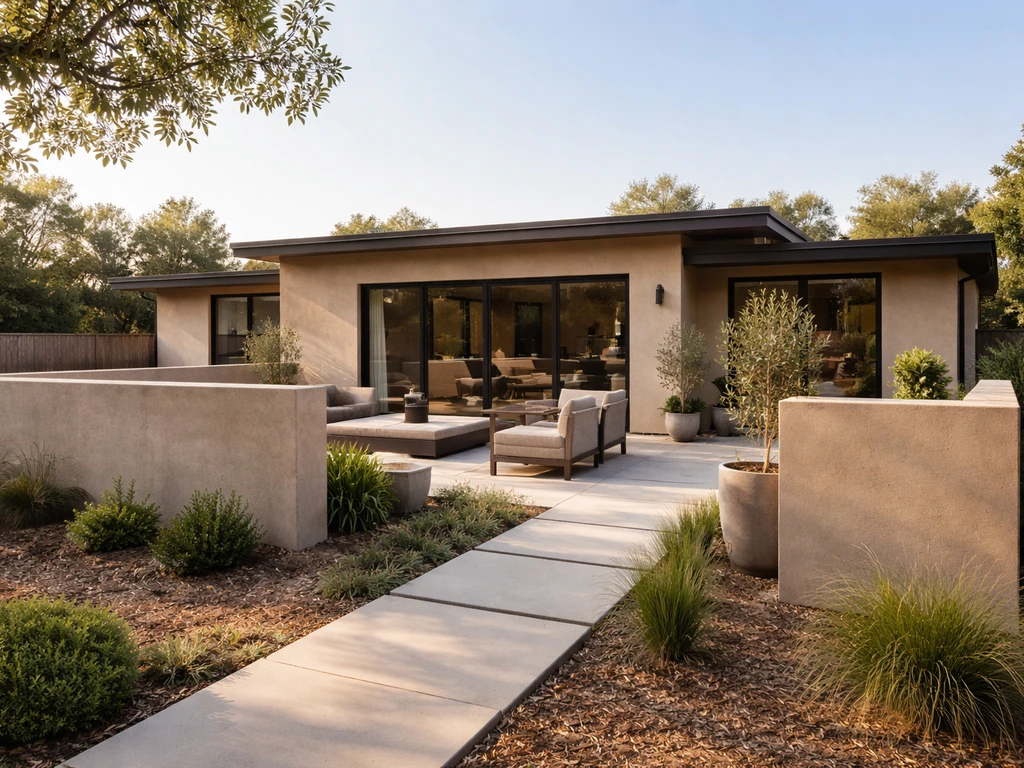
What "patio home" usually means in real estate
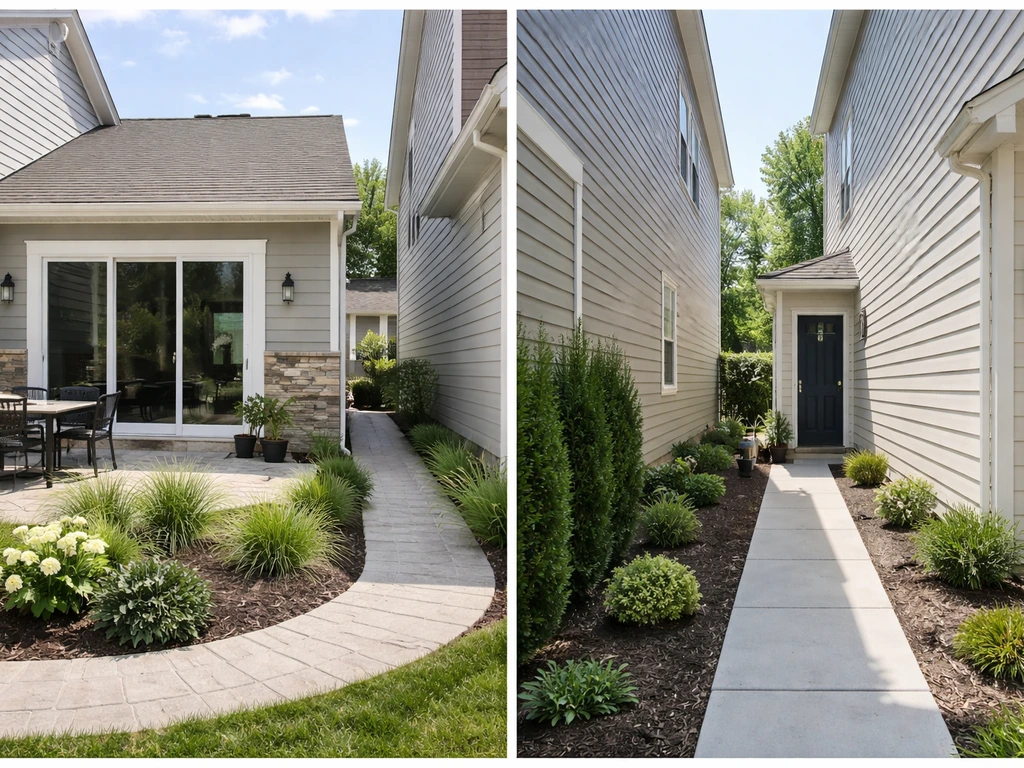
The term doesn't have a single legal definition. As Wikipedia notes, there's "not usually a legal definition of a patio home," which is why the same property might be listed as a garden home, courtyard home, cluster home, carriage home, or twin home depending on the region and the developer. ARMLS, the large Arizona MLS, defines a patio home specifically as "a single-family residence with a small footprint that features a private courtyard or patio." That's probably the most useful working definition: small footprint plus a defined private outdoor space.
The other term you'll almost always see paired with patio home is zero-lot-line. This means the structure is built very close to, or directly on, one of the side property lines, sometimes within three feet or less. Some garden (patio) home ordinances require blank" rel="noopener noreferrer">zero-lot-line development, such as one side yard coincident with the property line or an exterior wall placed just a few feet from the boundary. One municipal code example requires that one exterior wall be no more than three feet from the property line; another specifies that one side yard setback can be zero. This close-to-the-line positioning is what creates the land savings that allow that private patio to exist elsewhere on the lot.
One important thing to get straight before we go further: a "patio" (the outdoor surface) and a "patio home" (a housing type) are two different things. You can have a patio on any house. A patio home is a specific style of property where the design concept is built around that private outdoor space. Some patio homes, ironically, have very modest patios, Redfin even titled their explainer "A House Without a Patio" to highlight that the name can mislead. What really defines the type is the site layout and the zero-lot-line positioning, not the patio size.
Exterior look: common architectural features to expect
When you pull up listing photos for a patio home, here's what you're typically looking at. The roofline is low and horizontal, usually a single-story hip or gable roof without the vertical mass you'd see on a two-story colonial or a traditional townhome. The profile from the street feels compact and close to the ground.
- Roof: low-pitch hip, gable, or flat roof — single story is most common; one-and-a-half stories is possible but rare
- Siding: stucco, brick, or low-maintenance composite are most common, especially in Sun Belt patio-home communities built in the 1970s onward
- Windows: often fewer or smaller windows on the side wall nearest the property line (some municipal codes explicitly prohibit windows on the zero-lot-line side for privacy and fire reasons)
- Entry: typically a short front walk or driveway leading directly to a front door, sometimes with a small covered stoop rather than a full front porch
- Garage: an attached one- or two-car garage is common, sometimes front-facing, sometimes set to the side
- Exterior walls: you may see a solid opaque wall or solid fence beginning at or near the structure and running to define the private patio — this is one of the clearest visual identifiers
- Scale: the overall footprint reads smaller than a traditional detached single-family home on a standard lot
In planned patio-home subdivisions, the community-style developments that became popular in the 1970s, you'll also notice a repeating architectural rhythm. The homes are often clustered, set at similar distances from the street, and finished in matching or complementary materials. From an aerial or street view, they look more organized and uniform than a typical suburban street of mixed single-family homes.
Outdoor space cues: private patio design and privacy
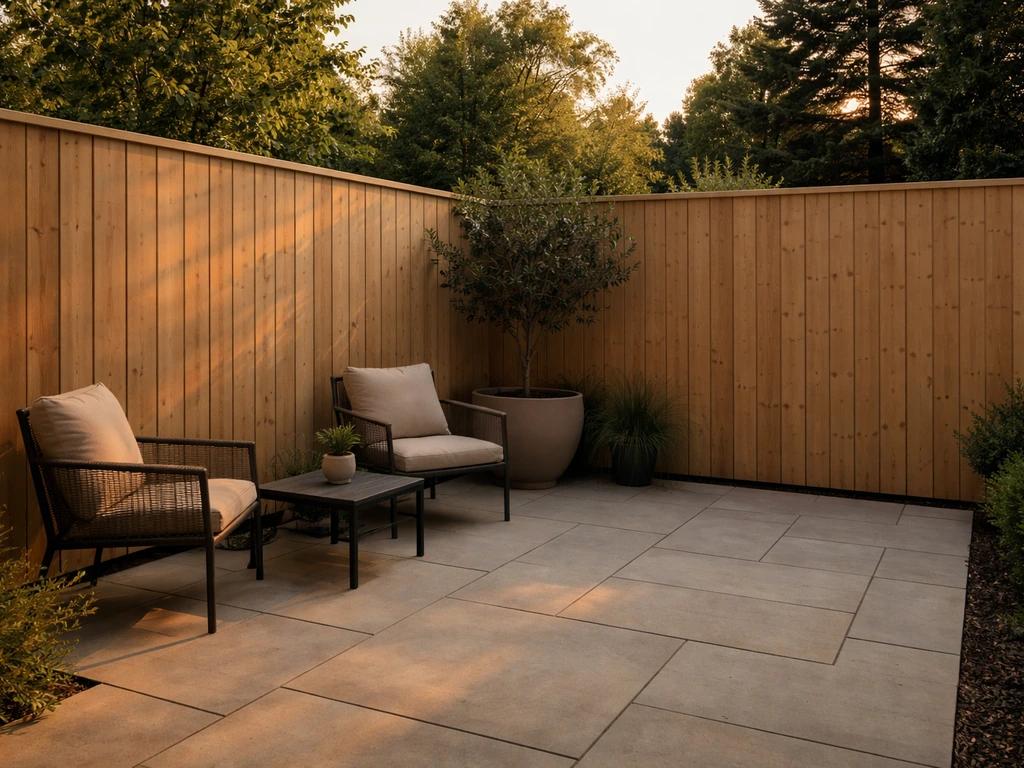
The private outdoor space is the design centerpiece of a patio home, and it's usually designed with clear visual privacy in mind. The Law Insider definition describes it well: a patio home's courtyard is "open to the sky" and "defined by a solid opaque wall abutting the exterior structure." In photos, this looks like a walled or fenced patio that feels enclosed on at least two or three sides, separate from a neighbor's view.
That wall or fence is a key visual cue. Unlike a standard backyard with an open lawn and maybe a wood fence at the back of the lot, a patio home's outdoor space is often deliberately enclosed, sometimes with masonry walls, privacy screens, or tall solid fencing that starts right at the house wall and wraps the patio area. This gives the outdoor space a courtyard feel even if the actual square footage is modest.
In MLS listing data, systems like CRMLS capture this with specific fields: "Patio Open," "Screened Patio," "Porch - Front," and "Porch - Rear" are all separate categories. If a listing tags the outdoor feature as "Patio" or "Screened Patio" rather than "Porch - Front" or "Balcony," that's a useful confirmation signal. A front porch is architecturally and functionally different from a private enclosed patio, and a screened patio is different again.
How patio homes differ from porches, courtyards, balconies, and verandahs
This is where a lot of confusion happens. People see the word "patio" and think of any outdoor space, or they confuse a patio home with a house that just happens to have a nice porch. Here's a practical breakdown.
| Feature | Patio Home | Porch Home / Rowhouse | Townhome | Home with Courtyard | Home with Balcony/Verandah |
|---|---|---|---|---|---|
| Stories | Usually 1, sometimes 1.5 | 1–3 | 2–3 typical | Varies | Usually 2+ |
| Outdoor space type | Ground-level private patio, often walled | Front/rear open porch at grade | Small balcony or small rear yard | Interior walled courtyard | Elevated deck or wraparound raised porch |
| Lot relationship | Zero-lot-line on one side | Standard or row lot | Shared walls, fee-simple or condo | Typically on a standard lot | Any lot type |
| Privacy design | Walls/fencing enclose patio from neighbors | Open to street or rear, minimal enclosure | Rear yard may be fenced but not walled | High walls create interior seclusion | Elevation provides separation |
| Street profile | Low, compact, close to property line | Prominent front porch facing street | Vertical, townhouse-style | Varies — often looks like a standard home from street | Often has visible upper deck or wraparound porch |
| Common region | Sun Belt, suburban subdivisions | Northeast, Midwest, traditional neighborhoods | Urban and suburban nationwide | Spanish-influenced, Southwest, Mediterranean | South, coastal, historic districts |
The courtyard comparison deserves a note. In Spanish architectural tradition, the word "patio" literally means an interior courtyard open to the sky. That's where the term patio home likely draws some of its imagery. But in U.S. real estate listings, a "patio home" usually refers to the housing type and zero-lot-line configuration, not necessarily a traditional Spanish-style inner courtyard. If you're looking at a home in the Southwest with a true enclosed interior courtyard surrounded by the house structure on all sides, that's closer to the original patio concept, and it will look very different from a 1980s Sun Belt patio-home cluster development.
Balconies and verandahs are elevated. A balcony projects from an upper floor; a verandah is a large roofed porch wrapping around the home. Neither is the same as a patio home's ground-level private outdoor space. If you see a listing with prominent upper-floor outdoor features, that's not a patio home layout.
Common layout types (single-story, attached/zero-lot-line, community-style)
Patio homes come in a few distinct configurations, and they look noticeably different from each other.
Single-story detached with private patio
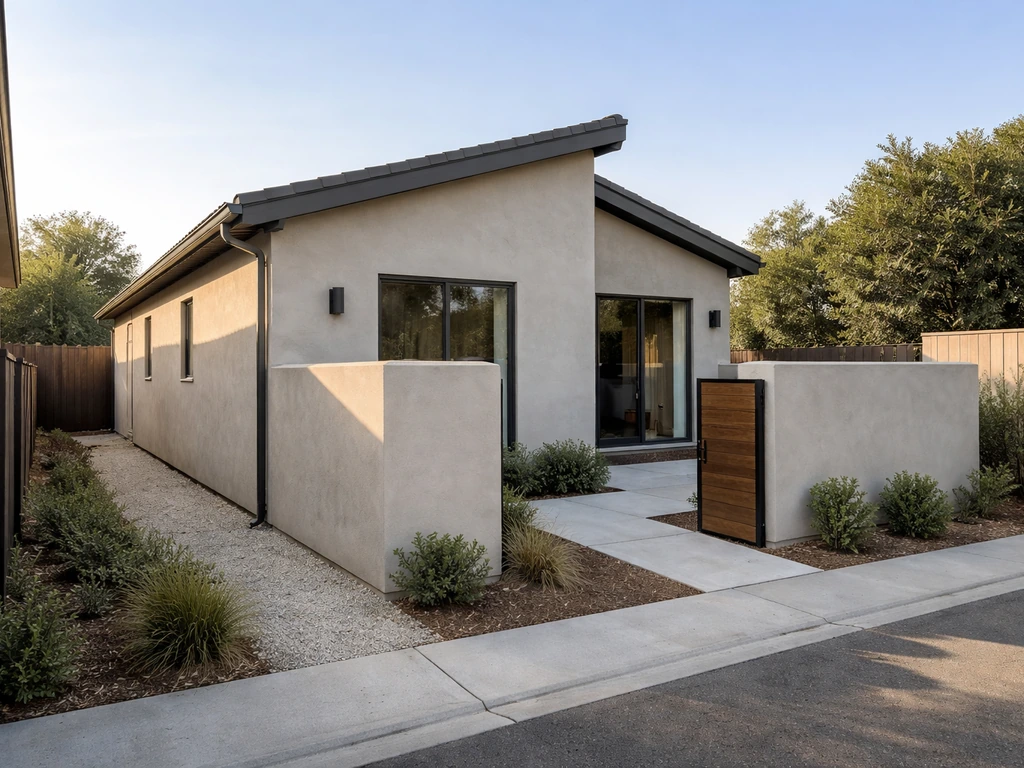
This is the cleanest version of the concept. A compact single-story house sits on a small lot, with one side wall near or on the property line and a walled private patio on the other side or rear. A detached patio home is the version where there are no shared walls with neighbors, while still featuring that private, walled patio area one side wall near or on the property line. No shared walls with neighbors. From the street it looks like a small ranch-style house, but the site plan shows the patio enclosed by walls or fencing. This type is common in planned retirement communities and low-maintenance suburban subdivisions.
Attached or zero-lot-line with shared wall
Here, two patio homes are built as a "paired" set (sometimes called twin homes or paired patio homes), sharing one common wall. In a paired patio home setup, two units share a wall while each home keeps its own private patio space paired patio homes. Each unit still has its own private patio on the opposite side. From the street these look like a single building, but each half is separately owned. This is the configuration Redfin compares to a row house. The shared-wall side will have no windows (municipal codes often require this for fire separation and privacy), which is a telltale visual cue in photos and floor plans.
Community-style patio-home subdivision
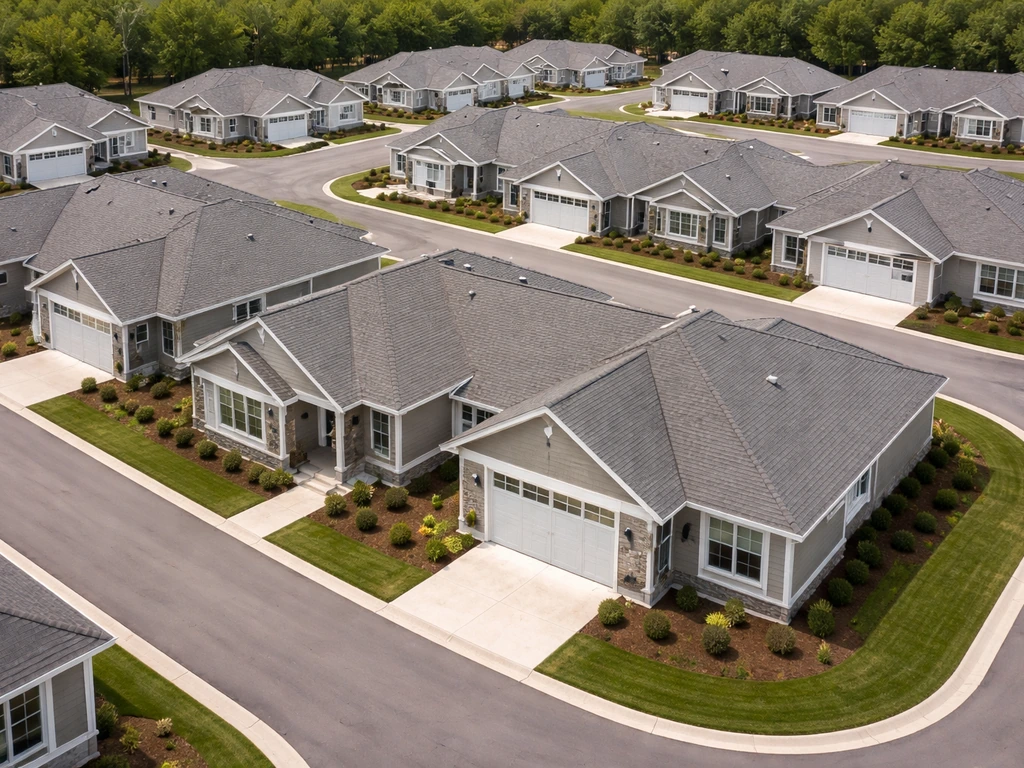
These are planned developments where many patio homes are clustered together with a consistent architectural vocabulary. You'll see repeating rooflines, matching siding materials, shared driveways or access lanes, and sometimes a homeowners association managing common areas. The homes are individually owned but the community has a coordinated look. In aerial or satellite view, you can spot them by their tight, organized layout with small yards and patios carved into each lot.
How to spot a patio home in listings (photos, floor plans, site maps)
Here's a practical checklist you can run through when you're browsing listings and want to confirm whether a property is genuinely a patio home style or just labeled that way.
- Check the exterior photos for a low, single-story roofline and a compact footprint — if the home is clearly two full stories, question the patio-home label
- Look for a walled or fenced private outdoor space on the side or rear — it should look enclosed, not just an open backyard
- Look at the site plan or lot diagram: is one side of the house at or within a few feet of the property line? That zero-lot-line positioning is the defining site characteristic
- Check window placement: are there few or no windows on one side wall? That's often the zero-lot-line side, and it's a strong confirmation signal
- Look at MLS feature tags: does the listing describe the outdoor space as "Patio," "Patio Open," or "Screened Patio" rather than "Front Porch" or "Balcony"? These are separate categories in professional MLS systems
- Review the floor plan for direct interior-to-patio access — a door or sliding glass door opening directly from a main living space onto the patio is a standard patio-home design feature
- Check whether there's a shared wall with an adjacent unit — if yes, confirm whether that's a condo (you own airspace) or fee-simple (you own the land), which changes ownership rights
- Search the listing description for terms like "zero lot line," "garden home," "courtyard home," or "cluster home" — these are regional synonyms that confirm the same housing type
Satellite or aerial views on Google Maps are genuinely useful here. Plug in the address and look at the overhead view. A real patio home will show a tight lot, a visible enclosed patio or courtyard space adjacent to the structure, and usually a uniform development pattern around it if it's in a subdivision. If the lot looks large with open lawn in all directions, the "patio home" label is probably just marketing.
Quick next steps: questions to ask and verification checks
Because "patio home" has no universal legal definition, verification matters more than the label. If you're wondering what a patio home is, start with the defining features: a tight lot, a private courtyard or patio, and a low-profile, often zero-lot-line layout. American Family Insurance notes that the difference between a patio home, condo, and townhome "can be subtle without additional research", and that's exactly right. Here's how to nail it down before you commit time or money.
- Ask the listing agent directly: Is this a fee-simple lot or a condo/HOA-owned lot? Patio homes are typically fee-simple (you own the land), while condos are not
- Request the plat map or site plan — it will show the lot boundaries and confirm whether the structure is at or near the property line on one side
- Ask whether there are any shared walls and, if so, what the shared-wall agreement or HOA documents say about maintenance responsibilities
- Review HOA documents if the home is in a community: do they govern exterior maintenance, patio enclosures, or modifications? This affects what you can do with your private patio
- Confirm whether windows are restricted on the zero-lot-line side — some ordinances and HOA rules prohibit them, and this affects natural light and future remodeling
- If you're comparing this property to others labeled "townhome," "garden home," or "paired home," request floor plans for both and compare: is the outdoor space at ground level, private, and enclosed? That's the patio-home distinguisher
- In the listing search, use alternate search terms ("zero lot line," "garden home," "courtyard home") if "patio home" returns too few or inconsistent results in your target area
The bottom line: trust the site plan over the marketing label. A true patio home will show a tight lot, one wall near the property line, a defined private outdoor space, and a low-profile single-story structure. If those four things check out on the plat and floor plan, you've found a patio home regardless of what it's called in the listing headline.
FAQ
Can a patio home look like a regular ranch or townhouse from the street?
Yes, but you need to confirm the lot and site plan. A patio home can have a covered porch, but the defining look is a walled or fenced outdoor courtyard area tied closely to the house at ground level, plus a low-profile single-story mass. If the outdoor space is mainly open yard or only upper-floor balconies, it is more likely being marketed as “patio” rather than built as the housing type.
What street-view details help me spot a patio home quickly?
Use the property-line clues. In many patio home builds, one side shows very little yard (sometimes essentially none), and the driveway or entry path often runs alongside a side wall that leads to an enclosed outdoor patio behind or to the side. A true patio home typically has a visible “inward” outdoor space, even if the street-facing side looks like a small ranch.
How can I tell if the patio is really enclosed like a patio home courtyard?
Look for the courtyard’s boundaries, not its size. Patio home patios are often enclosed by opaque walls or tall fencing that start near the house wall and wrap at least two sides. If the outdoor area is open on multiple sides with only a standard backyard fence at the rear, it usually reads more like a normal yard than a patio home courtyard.
What if the listing photos show lots of balconies, does that mean it is not a patio home?
A balcony or roofed veranda usually indicates elevated outdoor space, not the courtyard-focused layout. If the listing photos emphasize upper-floor outdoor features as the main privacy area, that conflicts with the typical patio home look. Confirm on the floor plan whether the primary private outdoor area is ground level and accessed directly from the living space.
Does “patio home” always mean the same legal ownership as a condo or townhome?
Be careful with the “patio home” label in regions where developers use it loosely. Because there is no single universal legal definition, two properties with similar photos can be different legally (for example, one could be a condo-like ownership style). Always verify whether the shared-wall condition and the outdoor courtyard belong to the unit you would own, using the plat and HOA or association documents if present.
How can I confirm whether it is a paired patio home versus a standalone patio home?
Check the shared-wall side for what codes and privacy rules commonly require. In paired patio homes, the shared wall side often shows few or no windows, and the layout on the patio side tends to have direct access to a private enclosed outdoor area. If you see windows on the shared-wall side, it may be a different configuration than the classic paired patio look.
What should I look for on satellite view beyond “there is a patio”?
In aerial views, the quickest signal is a tight lot plus an interior-feeling outdoor court adjacent to the unit. If you see a uniform neighborhood pattern where many homes sit close together with small yards carved out for patios, that supports the patio home style. If lots look large and lawns dominate all directions, the “patio home” label is likely marketing for something else.
What does “screened patio” mean in patio home listings?
Yes. Patio home patios may include screening, and listings sometimes tag the outdoor feature as “screened patio” rather than a front porch or balcony. If you want the true courtyard feel, confirm whether it is ground-level and enclosed in multiple directions, and verify whether it is separated from neighbor views by solid walls or tall screening.
What are the most common mistakes people make when judging a patio home?
Watch for a mismatch between the name and the plan. Some homes can have a “nice patio” but still fail key patio home traits, like a tight lot, one wall close to a property line, and a walled private courtyard. A reliable approach is to prioritize the site plan evidence (lot geometry and courtyard boundary) over photo styling.
What documents should I request to verify the patio home layout before committing time?
Before you schedule a showing, request the site plan or plat and a floor plan that clearly shows the patio boundary and entry points. Also ask whether any portion of the courtyard area is shared or governed by an HOA restriction, since patio-home communities sometimes manage common access lanes or landscape elements. This helps you avoid assuming all exterior space is exclusively yours just because it is enclosed.
Next Article
What Is a Paired Patio Home? Definition, Differences, Checklist
Learn what paired patio homes are, how they differ from patios and porches, and a checklist to verify layouts and shared