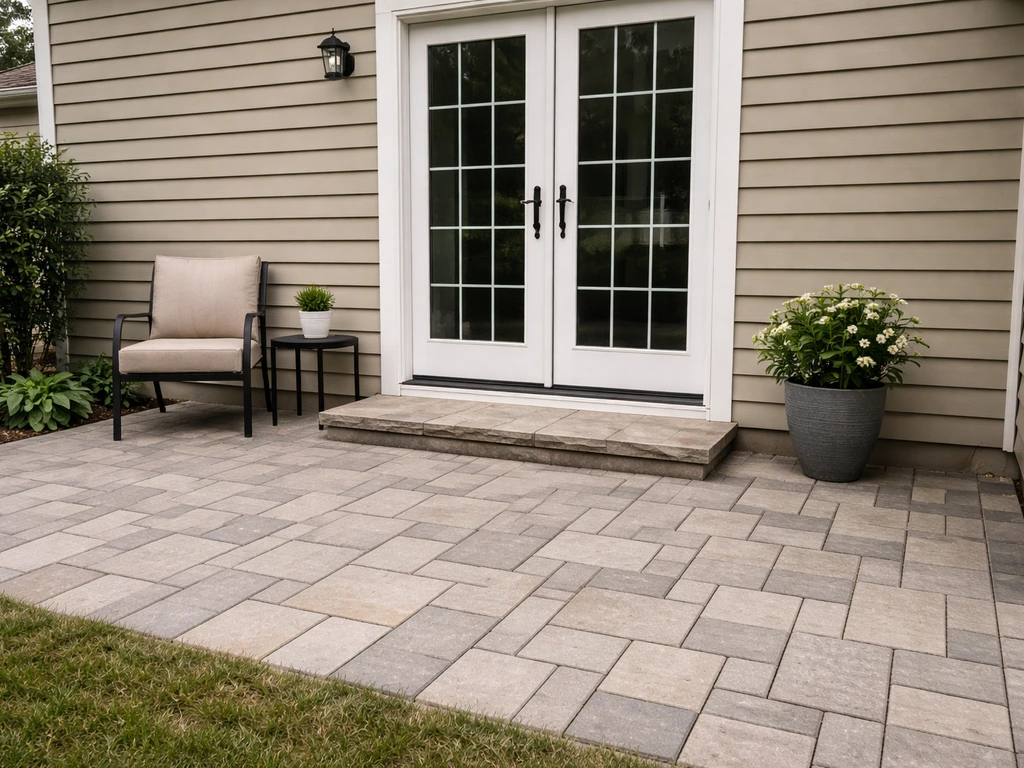
A detached patio home is a single-unit dwelling that shares no walls with any neighboring residence, sits on its own lot (sometimes a very small one), and is typically designed around easy access to a private outdoor living space like a patio, courtyard, or side yard. The word "detached" is the key: unlike a townhome or an attached patio home, your four walls are entirely your own. You might be close to your neighbors, but nothing structurally connects you to them.
What Is a Detached Patio Home? Key Features Explained

Ada Hollis
22 May 2026
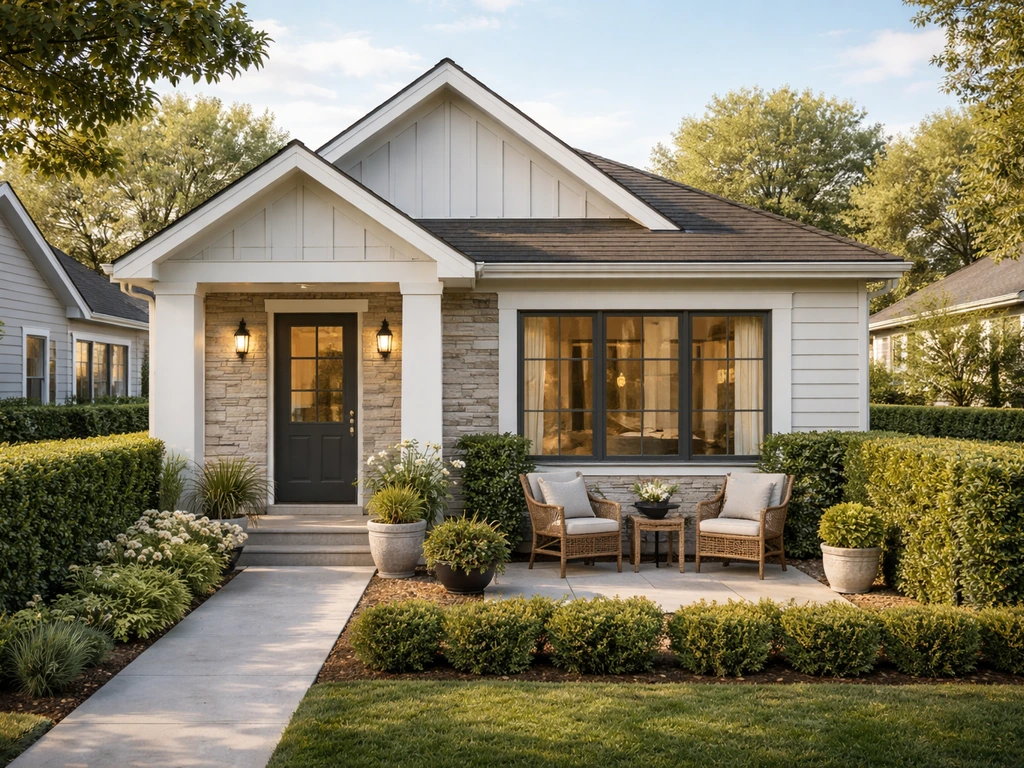
What 'Detached Patio Home' Actually Means
In real estate listings, "patio home" is a marketing term with no single legal definition nationwide. It can describe anything from a small attached condo-style unit to a freestanding cottage in a planned community. What pins down the meaning is the word "detached" in front of it. The California Regional MLS (CRMLS), one of the largest listing systems in the country, defines Detached precisely: neither the residence nor any attached garage shares any wall with another unit. That's the line. If any wall is shared with a neighbor's home, it's not detached.
Detached patio homes often appear in planned communities or subdivisions designed around a low-maintenance lifestyle. They're typically smaller than a traditional single-family home, sit on tighter lots, and are oriented so that the main outdoor living space, whether a rear patio, side courtyard, or enclosed garden, flows directly from the main living areas. The City of Pasadena, Texas, for example, formally classifies "zero lot line patio homes" as detached dwellings, meaning even when a home is built right up to a property line with almost no side yard, it can still qualify as detached if no walls are shared.
Detached vs. Attached: How They Actually Differ
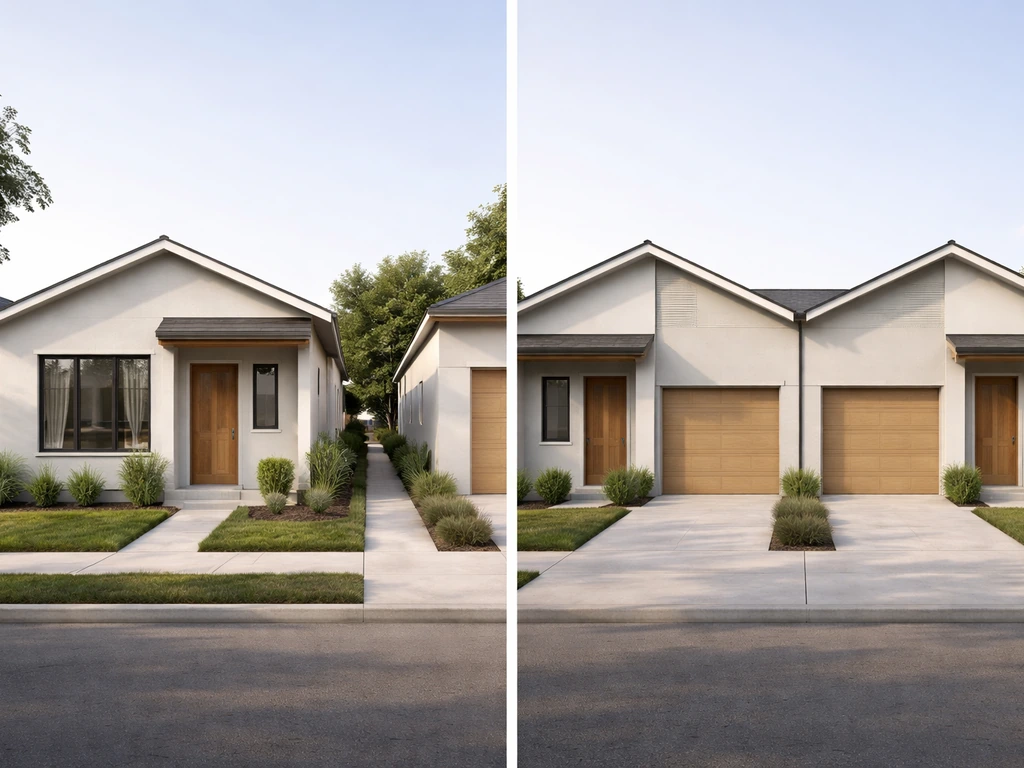
The difference between detached and attached patio homes comes down to shared walls. An attached patio home (sometimes called a townhome, twin home, or garden home depending on the community) has at least one wall it shares with an adjoining unit. A detached patio home has none. This sounds simple, but listings don't always make it obvious, and the term "patio home" gets used for both types interchangeably in marketing materials.
| Feature | Detached Patio Home | Attached Patio Home / Townhome |
|---|---|---|
| Shared walls | None | At least one |
| Lot type | Own lot, sometimes zero lot line | Often shares a building with neighbors |
| Privacy | Higher (no structural neighbor contact) | Lower (sound, vibration can transfer) |
| Maintenance responsibility | Typically owner handles exterior and yard | HOA often covers building exteriors |
| Common alternative names | Zero lot line home, garden home, patio home | Townhome, twin home, carriage home, garden home |
| Outdoor space | Private patio, yard, or courtyard | Often a small patio or balcony per unit |
One thing worth knowing: "zero lot line" does not mean shared walls. It just means the building sits very close to or on a property boundary. You can have a zero-lot-line detached home where the structure is inches from the fence line but still completely freestanding. Always check the site plan or plat, not just the listing description, to confirm.
It's also worth noting that the broader "patio home" category overlaps with several sibling concepts you may encounter while searching. Understanding what a patio home is in general, and what a paired patio home looks like, can help you quickly spot where the detached version fits in the spectrum. In other words, if you are wondering what is patio home, it helps to understand how the general category can include attached and paired options as well as truly detached designs. Paired patio homes, for instance, share exactly one wall between two mirrored units, which technically makes them attached rather than detached.
How a Detached Patio Home Is Laid Out
The layout of a detached patio home is usually designed to maximize the connection between interior living space and the outdoor area. That's actually where the "patio" in the name comes from: the home is built around the idea of outdoor living as a central feature, not an afterthought.
The Lot and Yard

Lots tend to be smaller than a standard single-family home. Side yards may be minimal or effectively zero, meaning the home's exterior wall is close to the fence or property line. Rear yards are more common and typically serve as the main private outdoor area. Fencing or low walls often define the property boundary clearly, and in zero-lot-line communities, local ordinances (like Pasadena, Texas's patio homes rules) often specify exactly how those fences must be constructed and where they must extend.
Entrances and Outdoor Flow
Most detached patio homes have a single private entrance, often with a small front approach and a more generous rear or side patio. The design frequently places the main living areas, like the living room, kitchen, or primary bedroom, with direct access to the patio through sliding or French doors. Some styles incorporate enclosed courtyards or atriums, which function as semi-private outdoor rooms integrated into the home's footprint rather than simply tacked onto the back. Law Insider’s patio home definition notes that patio homes can be detached or attached and may include interior courtyards or atriums.
Shared Amenities in Community Settings
Even though the home itself is detached, it often sits within a planned community that shares amenities like a pool, walking paths, or landscaped common areas. These are managed by a homeowners association (HOA). Your individual lot and everything on it is separate and private, but you'll likely pay HOA dues that cover the upkeep of those shared spaces.
Patio, Porch, Balcony, Veranda, Courtyard: What's the Difference?
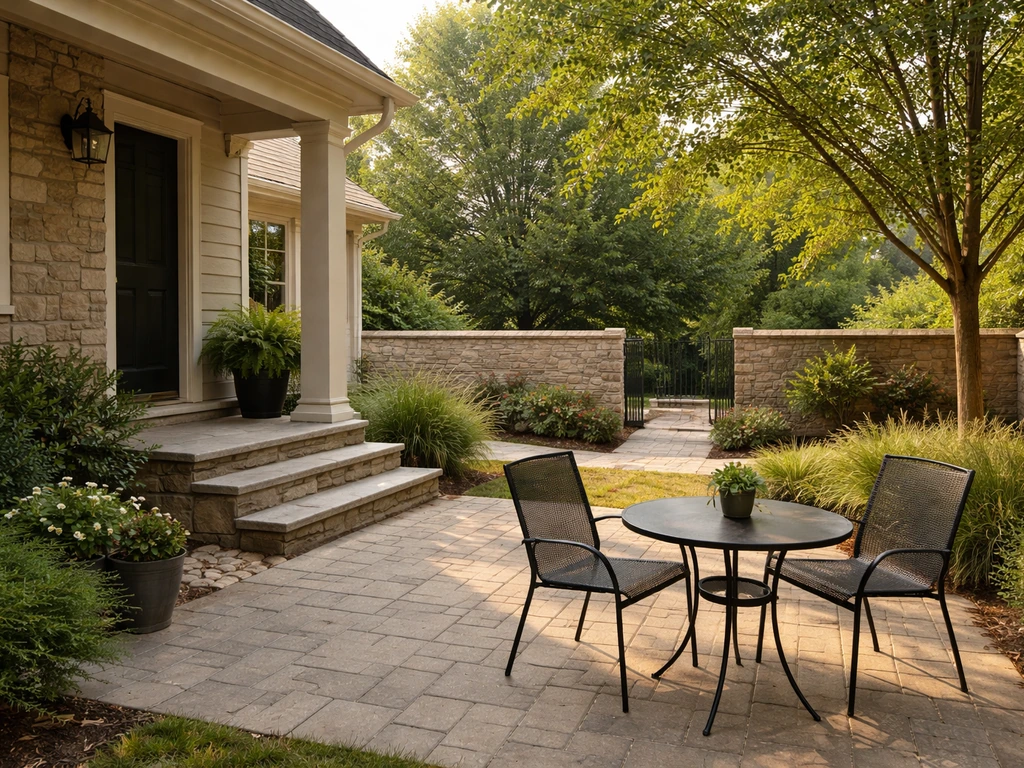
Real estate listings throw these words around loosely, and it causes real confusion when you're trying to understand what kind of outdoor space you're actually getting. Here's a quick breakdown of what each term really means architecturally, since knowing the difference helps you read a listing more accurately.
- Patio: A ground-level outdoor surface, usually paved with concrete, stone, or pavers, adjacent to the home. No roof required. In a patio home, this is typically the primary outdoor living area and gives the dwelling type its name.
- Porch: A covered structure projecting from the entrance of a house. It's attached to the building, usually has a roof, and is at or near ground level. A porch is an entryway feature; a patio is a living space.
- Balcony: An elevated platform with railings projecting from an upper floor. Balconies are common in condos and apartments. A ground-floor patio home typically won't have a balcony unless it's a two-story unit.
- Veranda (or Verandah): A roofed, open-sided gallery or porch that wraps around the exterior of a home. More common in older architectural styles and Southern or tropical climates. Larger and more architecturally integrated than a simple porch.
- Courtyard: An enclosed or partially enclosed outdoor space adjacent to or within a building. Merriam-Webster defines it as a court or enclosure adjacent to a building. Some patio homes incorporate a courtyard as the main outdoor feature, particularly in Spanish or Mediterranean-influenced designs.
In a detached patio home listing, the outdoor space being referenced is almost always a ground-level patio or courtyard. If a listing mentions a balcony, it likely indicates a two-story unit. If it mentions a porch, that's usually a small covered entry, not the main outdoor living area. Don't assume they're the same thing, because maintenance responsibilities and HOA classifications can differ by outdoor space type.
Ownership, Privacy, Maintenance, and HOA Rules
This is where the detached classification really matters in practical terms. Because the home shares no walls and sits on its own lot, the ownership structure is cleaner than with attached units. You own the structure and the land under it. But that also means the maintenance responsibilities land squarely on you.
Maintenance
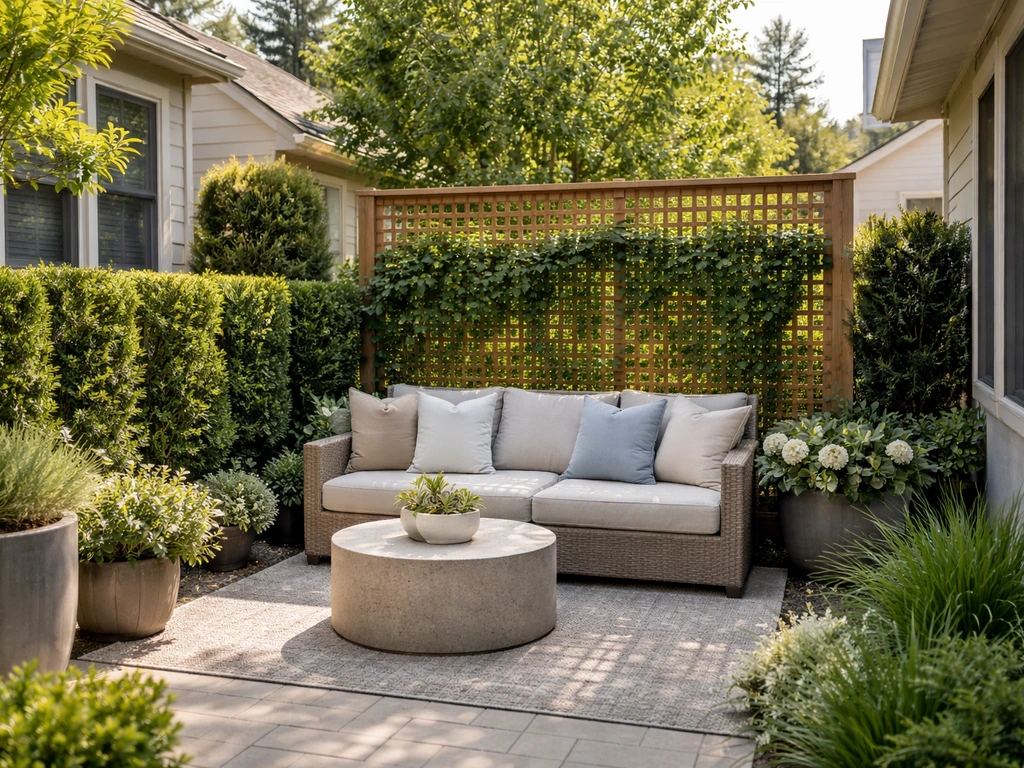
HOA documents for communities with detached patio homes typically assign maintenance of the home, its structures, landscaping, and improvements to the individual owner. The Monticello Park HOA, as one concrete example, states in its CCRs that all maintenance of the Detached Unit and all structures, landscaping, and other improvements on it is the sole responsibility of the owner, with limited exceptions. This is a meaningful contrast to attached-unit rules, where the HOA often handles exterior building maintenance. As a detached patio home owner, you're generally responsible for your roof, exterior walls, fencing, and patio surface, not the HOA.
Privacy and Noise
No shared walls means significantly better sound isolation than a townhome or attached unit. You won't hear your neighbor's television through a party wall. However, because lots in patio home communities tend to be smaller and homes sit closer together than in a traditional subdivision, backyard and outdoor noise from adjacent properties can still be noticeable. Fencing height and landscaping matter a lot here.
HOA Rules and Fees
Most detached patio home communities operate under an HOA. The HOA typically governs aesthetics (fence style, exterior paint colors, landscaping standards), common area maintenance, and sometimes rules about patio structures, pergolas, or enclosures. HOA maintenance responsibility charts often list component-by-component what is owner versus association responsibility, and these charts can vary significantly between communities. Some HOAs cover roof replacement for detached units; others don't. Eagles Bluff HOA covenants, for instance, require owners to maintain perimeter yard walls and fences appurtenant to their lot, with separate handling for shared or common fences. The point: always read the HOA documents before you commit, not after.
How to Spot a True Detached Patio Home When Shopping

Listing descriptions can be vague or even misleading. Here's how to verify you're actually looking at a detached patio home and not a townhome or attached unit with a patio.
- Check the listing's style classification. Look for the word "Detached" in the MLS property type or style field, not just in the marketing description. If the listing system uses categories, detached and attached are usually separate fields.
- Request the site plan or plat. A plat shows the physical footprint of the structure on the lot. Confirm there is physical space (even if minimal) between the exterior walls and the adjacent property, or confirm that a zero-lot-line designation applies with no structural connection to the neighboring home.
- Look at the floor plan. A true patio home layout will show direct access from interior living spaces to the patio or courtyard. If you see a shared foyer, hallway, or stairwell connecting multiple units, you may be looking at an attached or condominium-style unit.
- Ask specifically about shared walls. Don't rely on the listing. Ask the agent or landlord directly: does any wall of this home share a surface with an adjacent unit? Get the answer in writing if possible.
- Request the HOA CCRs and maintenance responsibility chart. Look for how the document categorizes the unit (Detached Unit vs. Townhome or Attached Unit) and review what maintenance is the owner's responsibility. The outdoor space classifications (patio, deck, yard) in these documents tell you a lot about what you're buying into.
- Watch for zero-lot-line language and understand it correctly. "Zero lot line" does not mean shared walls. It means the home is built at or very near the property boundary. Confirm via site plan that no structural element is shared with a neighboring unit.
- Inspect in person. Walk the perimeter of the home. You should be able to see daylight (or at minimum a clear boundary line like a fence or gap) between your exterior walls and the neighboring structure on all sides. If any wall runs flush with a neighbor's wall with no visible separation, question the detached classification.
One last thing to verify: what outdoor space is actually included. A listing might call a small covered entry a "patio" when it's really a porch, or describe a second-floor deck as if it were a ground-level patio. Now that you know the difference between a patio, porch, balcony, veranda, and courtyard, you can ask the right questions and look at photos with a more critical eye. What does the outdoor space actually look like, and what does a typical patio home layout look like in the context of the community you're considering? So, if you're wondering what does a patio home look like, focus on photos that show the single-story layout and direct indoor-to-patio flow What does the outdoor space actually look like, and what does a typical patio home layout look like in the context of the community you're considering?. In most cases, a typical detached patio home layout centers on a ground-level patio or courtyard that connects directly to the main living areas what does a patio look like. Matching the listing language to the physical reality is the most important step before signing anything.
FAQ
How can I confirm a patio home is truly detached when the listing uses “patio home” loosely?
Look for explicit language about shared walls and then verify with the site plan or plat. If the listing only says “patio home” but does not state that no walls or attached garages are shared, request the plat or ask the agent to confirm from the legal lot and building descriptions.
If my backyard fence is shared or directly connected to a neighbor’s fence, does that still qualify as detached?
Fence proximity is not the same as shared building walls. Detached typically refers to structural wall contact, but some HOAs and jurisdictions treat shared or “party” fences differently for maintenance and liability, so confirm whether the fences are designated as shared/common in the HOA rules or plat.
What if the patio home has an attached garage, is it still considered detached?
It can be, as long as the residence and any attached garage do not share a wall with another unit. Check whether any garage wall is actually common with a neighboring structure, because “attached garage” is about the garage’s placement on your property, not whether you share structure with a neighbor.
Can a detached patio home still have minimal side yards, and is that considered a “zero lot line” situation?
Yes. A detached unit can sit very close to lot lines without sharing walls. The practical difference is often setback rules and fence placement, so review the plats and HOA architectural criteria to understand how close structures and fences can be to boundaries.
Are HOA rules different for detached patio homes versus attached ones, especially for exterior upkeep?
Often, but not always. Detached-home HOAs commonly shift more exterior responsibility to the individual owner, yet some communities still manage certain elements like perimeter walls, fences, or roof components. Ask for the owner versus HOA maintenance table and confirm who pays for roof replacement, paint, and patio surface repairs.
What outdoor features should I scrutinize to avoid being surprised by “patio” wording?
Ask what is actually considered the private outdoor space: ground-level patio/courtyard, enclosed atrium, balcony (usually second floor), or a covered entry porch. Even if the listing uses “patio” broadly, photos and floor plans will show whether it is truly the main outdoor living area.
Does being detached automatically mean better noise control?
Usually you avoid the shared-wall sound pathway, which helps. But backyard-to-backyard noise can still travel depending on how close the lots are, fence height, and landscaping. When you tour, stand in the yard and also listen at interior windows facing the neighbor’s property line.
Who is responsible if something fails on the boundary line, like a retaining wall or fence?
Boundary failures are commonly handled by a mix of owner responsibility and HOA rules, especially in tighter lot communities. Request documentation that identifies whether specific walls or fences are considered exclusive to your lot, common, or shared, since that determines repair costs and approval requirements.
Are detached patio homes generally smaller, and how does size affect maintenance and costs?
They are often smaller than traditional single-family homes, which can reduce some costs like exterior painting area. However, maintenance can still be costly if features like courtyard walls, enclosures, or upgraded patio surfaces require specific materials or HOA-approved contractors.
What questions should I ask before offering on a detached patio home in an HOA community?
Confirm (1) whether roof replacement is owner or HOA-covered, (2) the fence and perimeter wall rules, (3) approval process for patio covers or pergolas, and (4) whether any parts of the outdoor area are treated as common area. Also ask for the most recent HOA budget, any pending special assessments, and the maintenance responsibility chart for detached units.
Next Article
What Does a Patio Look Like? Real Examples and How to Tell
Discover common patio looks, materials, layouts, and how to spot patios in listings versus decks, porches, or terraces.