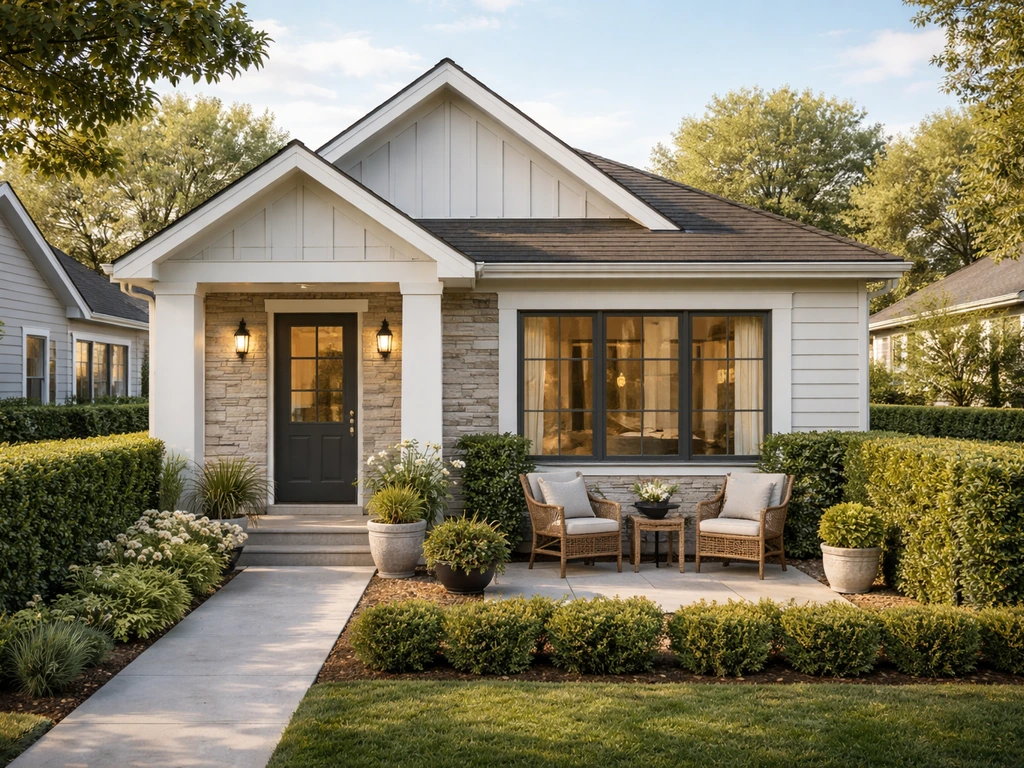
A paired patio home is a single-family style residence that shares one common wall with an adjoining unit, built on a compact or zero-lot-line lot as part of a planned low-maintenance community. Think of it as two homes placed side by side and joined at one wall, each with its own entrance, private outdoor space, and often its own garage or parking spot. The word 'paired' is doing real work here: it signals that this is not a fully detached home, but it is also not a multi-story townhome stacked above a neighbor. It sits somewhere between a detached single-family house and a duplex, and that distinction has practical consequences for privacy, maintenance costs, and what you'll find in a title or disclosure package.
What Is a Paired Patio Home? Definition, Differences, Checklist

Ada Hollis
27 May 2026
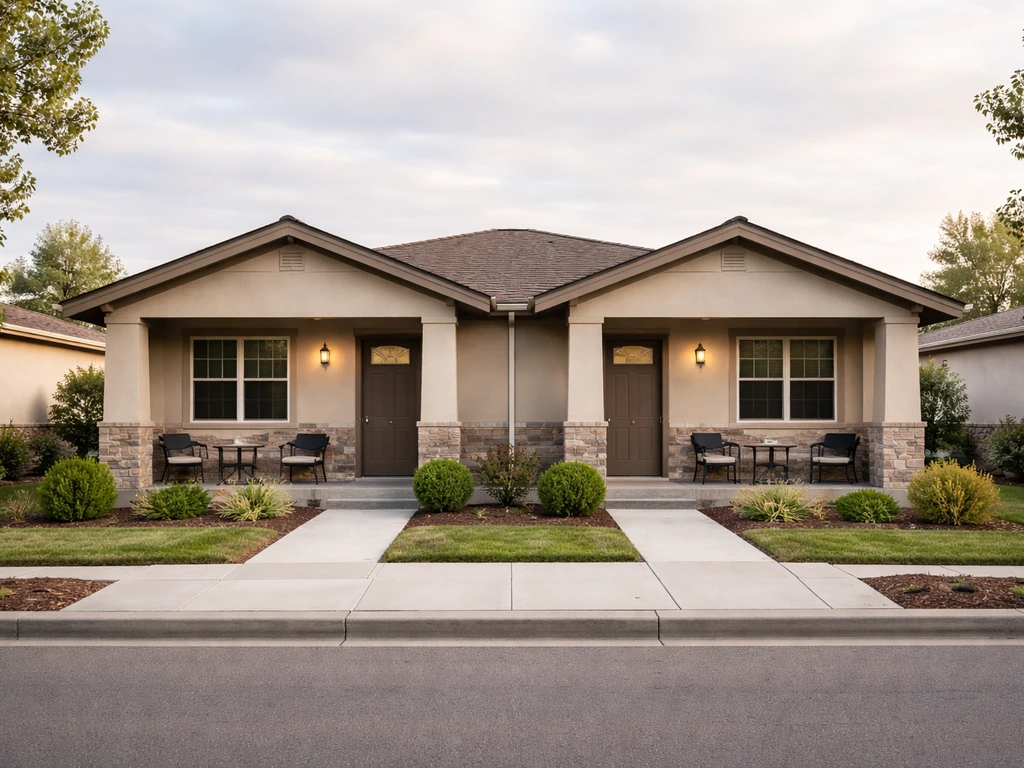
What 'paired' actually means in a home layout
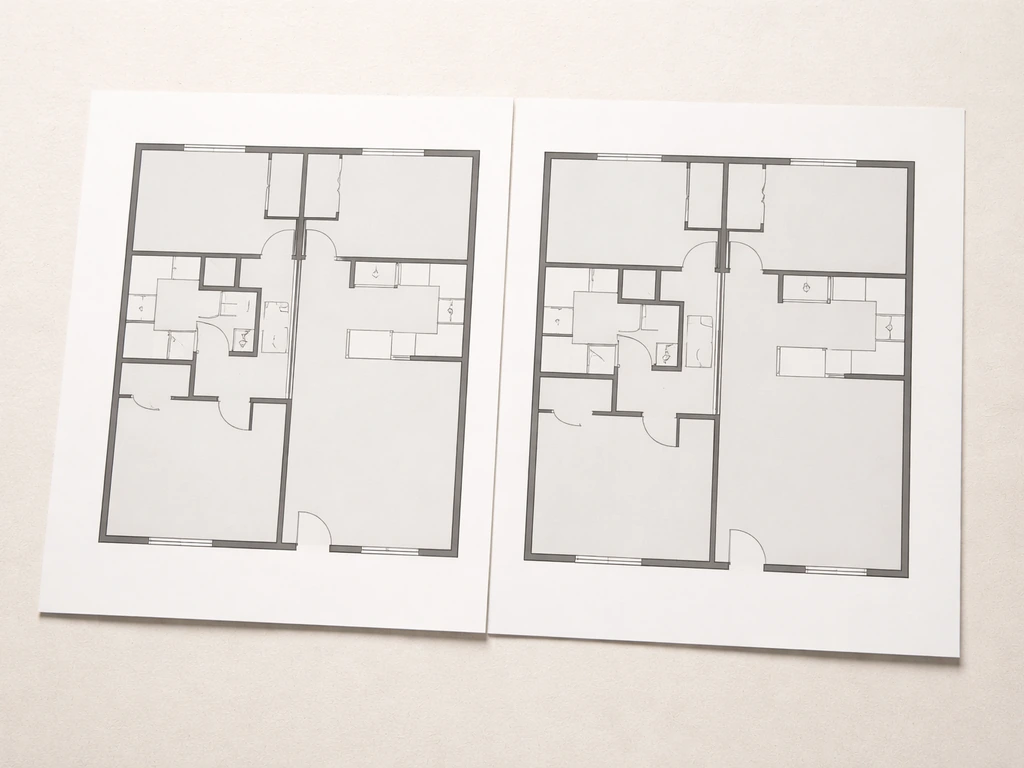
In real estate listings and zoning language, 'paired' means two dwellings share a single structural wall, sometimes called a party wall or common wall. Each home in the pair sits on its own lot, or in some developments they share one lot divided by agreement, but they are physically joined on one side. The layout is essentially semi-detached: you have a neighbor on exactly one side, a clear boundary on the other, and your own front and back exposure.
The lot configuration that makes this possible is usually a zero-lot-line setup. That means one side wall of your home sits right at, or very close to, the property line rather than being set back from it the way a conventional house is. Some city ordinances formally define this arrangement as having 'one side yard coincident with the property line,' which is planning-speak for: your wall and the lot line are in the same place. This is exactly what creates the paired condition. The two homes in the pair are mirror images of each other or complementary floor plans, each with its zero-lot-line wall facing the other.
Shared elements in a paired patio home typically include the structural wall between units, sometimes a shared driveway approach or entry path, and often a party wall easement that gives each owner the right to maintain the wall without trespassing on the neighbor's property. Roof overhangs along the shared side may also be governed by an easement, which limits where you can attach items like gutters or trellises. Outside of those shared elements, each home operates independently.
Why 'patio home' doesn't mean what it sounds like
This is a genuinely confusing naming issue worth addressing directly. A patio home is not simply a house that has a patio. The term is a marketing and zoning classification for a housing style, not a description of outdoor features. Patio homes are built close to or right on the property line, have minimal yard space, and are often part of planned communities with HOA management. The 'patio' reference loosely evokes compact, low-maintenance outdoor living, but the defining characteristic is the lot configuration and attached or near-attached construction, not the presence of a specific outdoor space type.
This matters when you're comparing listings. A house with a large patio, balcony, or courtyard is not automatically a patio home. Conversely, a patio home might have a modest concrete patio, a small walled garden, or even no traditional patio at all. The same property might be listed as a blank" rel="noopener noreferrer">garden home, cluster home, twin home, carriage home, or paired patio home depending on the market and developer. They all refer to variations of the same compact, attached or near-attached, low-maintenance housing model.
How a paired patio home compares to similar property types
Buyers encounter several overlapping terms and it helps to see them side by side. The main differences come down to how many walls are shared, how ownership is structured, and how the lot is configured.
| Property Type | Shared Walls | Lot Ownership | Typical Stories | HOA Common |
|---|---|---|---|---|
| Paired patio home | One (shared side wall) | Individual lot per unit | 1 to 1.5 | Yes, often |
| Detached patio home | None | Individual compact lot | 1 to 1.5 | Yes, often |
| Townhome | Two (both sides) | Individual or strata lot | 2 to 3 | Yes, typically |
| Duplex | One (shared side or floor) | Often one shared lot | 1 to 2 | Rarely |
| Condo | Multiple (walls, floor, ceiling) | Unit only, shared structure | Varies | Always |
| Detached single-family | None | Individual lot with setbacks | Varies | Sometimes |
The clearest distinction is between a paired patio home and a detached patio home. A detached patio home sits on its own zero-lot-line lot with no shared wall, just close proximity to neighboring homes. A paired patio home physically connects to its neighbor on one side. If you're comparing listings and the term 'detached' appears, that is a signal that no shared wall is involved, even if the lots are compact and the homes look similar from the street.
Compared to a townhome, a paired patio home is usually single-story or one-and-a-half stories and shares only one wall rather than two. Townhomes typically share both side walls and run two to three stories. If you see a listing described as a patio home but the floor plan shows neighbors on both sides and multiple stories, it is more accurately a townhome regardless of the label.
How paired patio homes are typically built
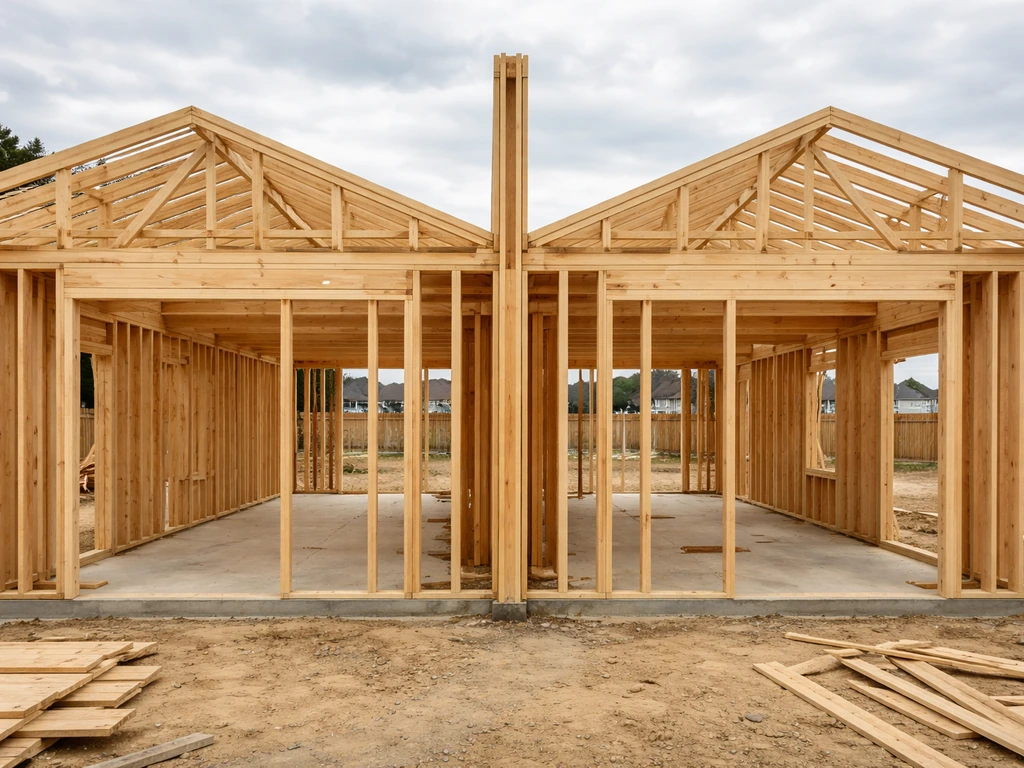
Most paired patio homes are built as part of planned communities, often in clusters or rows of pairs. The developer typically places each pair on a combined lot, then either subdivides that lot into two individual parcels or keeps it as one parcel with a condominium-style ownership overlay. The shared wall between the two units is usually a fire-rated structural wall, required by municipal building codes when two dwellings share a wall boundary. You will sometimes see this called a 'zero lot line wall' in city ordinances.
Floor plans in paired patio homes are designed to minimize the impact of the shared wall. Bedrooms and living areas are generally placed away from the party wall side, with garages, utility rooms, or closets positioned along the shared boundary to create a natural noise buffer. Windows on the zero-lot-line wall are typically restricted or eliminated entirely, both for privacy and because building codes often prohibit openings in a fire-rated wall. The exterior on the shared side may look like a blank wall, which is a useful visual cue when looking at photos.
Roof lines on paired units are often continuous or mirrored across the shared wall, giving the pair a unified exterior appearance from the front. Driveways may be side by side or shared at the approach point, then split to individual garages. Entry doors, front patios or stoops, and any private rear outdoor spaces are typically oriented away from the shared wall to maximize each resident's sense of separation.
What buying or renting a paired patio home means in practice
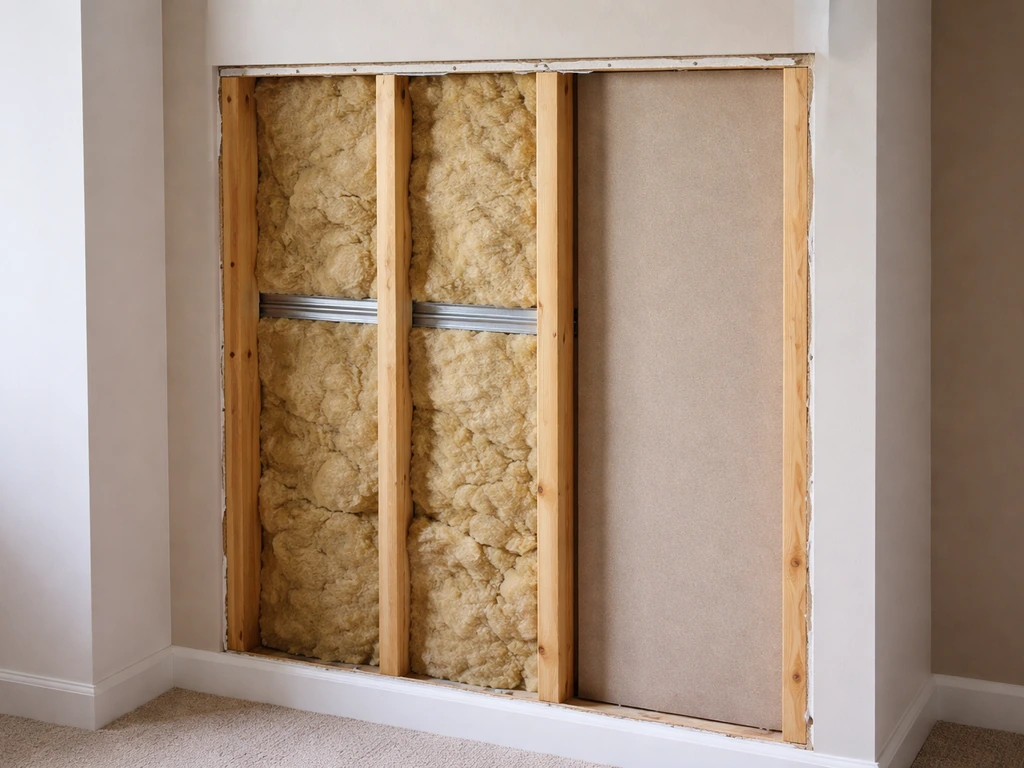
Privacy and noise
The shared wall is the most significant privacy consideration. Sound transmission through a party wall depends heavily on construction quality: mass, insulation, and the fire-rating materials used. A well-built paired patio home with a properly insulated fire-rated wall will be reasonably quiet, but you are unlikely to have the same acoustic separation you would get with a fully detached home. Before buying or renting, ask about the wall construction and, if possible, visit the unit while the neighbor is home to get a realistic sense of sound levels.
Maintenance responsibilities
Many paired patio home communities are governed by an HOA that handles exterior maintenance, landscaping, and sometimes roof and structural elements. Monthly HOA fees in these communities typically run in the range of $75 to $200 per month, though this varies widely by market and what services are covered. What matters most is reading the CC&Rs (covenants, conditions, and restrictions) carefully, because the split between HOA responsibility and owner responsibility varies by community. Some HOAs cover roofing and exterior walls; others leave those to the individual owner. The party wall between paired units is a particular gray area: confirm in writing who is responsible for maintenance and repair if that wall is ever damaged.
Costs and insurance
Insurance for a paired patio home can be structured more like a condo policy than a standard homeowners policy if the HOA carries a master policy on the structure. If the HOA does not carry a master policy, you will insure the full structure yourself just as you would with a detached single-family home. Either way, mention the shared wall to your insurance agent upfront. Some insurers treat shared-wall homes differently for liability and structural coverage, and you want your policy to reflect the actual configuration.
Parking and entry arrangements
Check whether the driveway is fully private or shared at any point with the neighboring unit. Some paired configurations share a driveway apron at the street before splitting into individual garage bays. If the approach is shared, find out whether there is a recorded easement governing use and maintenance of that shared portion. Guest parking is another practical question in compact patio communities where street parking may be limited.
How to verify a listing is actually a paired patio home

Real estate listings use terms inconsistently. A home described as a paired patio home may actually be a detached patio home, a townhome, or a duplex depending on how the agent or developer chose to label it. Here is how to verify what you are actually looking at before you commit.
Check the photos for a blank shared wall
Look at exterior photos carefully. A genuinely paired patio home will show one side of the building with no windows or doors, flush against or nearly flush against an identical structure next door. If you see windows on both sides and clear separation between units, the home may be detached rather than paired. Interior photos should also show no openings on the shared-wall side, and the floor plan (if provided) should label or clearly imply which wall is the party wall.
Read the plat map
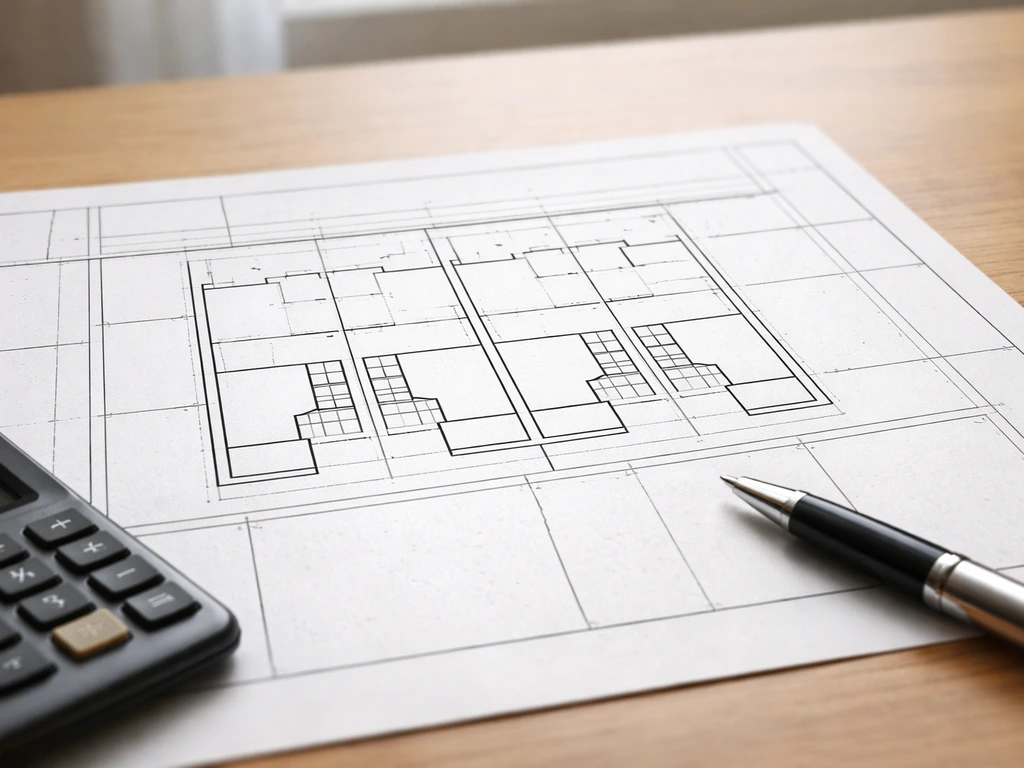
Request the plat map from your agent or through the county assessor's office. A plat map is a scaled diagram showing property lines, lot dimensions, easements, and setbacks for each parcel. On a paired patio home lot, you should see one property boundary running directly along or within inches of the building's side wall. Look for easement notations on that boundary, particularly a 'maintenance easement' or 'party wall easement,' which confirm the shared-wall arrangement is formally recorded. If the property lines show standard setbacks on all four sides with open space between units, the home is likely detached, not paired.
Review the title and disclosure documents
The title commitment and seller's disclosure should reference any easements tied to the shared wall and any HOA governing documents. Look specifically for: a recorded party wall agreement or easement, CC&Rs that describe exterior maintenance responsibilities, and any zoning classification that references zero-lot-line, garden home, or patio home development standards. If the property is classified as a duplex in county records but marketed as a paired patio home, the ownership structure may be different from what you expect, so clarify before closing.
Your verification checklist
- Exterior photos: confirm one side of the home has no windows or doors and is directly adjacent to an identical structure.
- Floor plan: locate the shared (party) wall and verify bedrooms and main living areas are not placed directly against it.
- Plat map: confirm one property boundary runs along the building wall, with a zero or near-zero setback on that side.
- Easement notations: look for a party wall easement, maintenance easement, or roof overhang easement on the shared-wall boundary.
- County records: verify the property classification matches what is listed (patio home, zero-lot-line, garden home) rather than duplex or condo.
- HOA documents: confirm which exterior elements are HOA responsibility versus owner responsibility, especially the party wall and roof.
- Insurance: confirm how the property is to be insured and whether the HOA carries a master policy.
- Driveway and parking: check whether any shared driveway approach has a recorded easement governing use and maintenance.
Going through this checklist before you make an offer takes less than an hour with help from your agent and the county assessor's website. It is well worth the effort, because the difference between a paired patio home, a detached patio home, a townhome, and a duplex has real consequences for your ongoing costs, your privacy, and what you can and cannot do with the exterior of your home. If you are also wondering what a patio looks like in real photos, that visual clue can help you compare a paired patio home's outdoor space versus a listing that simply mentions a patio what does a patio look like.
FAQ
If it is a paired patio home, does that mean I will have little to no outdoor space?
Not always. “Paired” refers to a shared structural wall between two dwellings, but a unit can still have a fully private yard even when lot lines are tight. The simplest visual check is whether the side facing the neighbor is a blank wall (no windows or exterior doors) and whether a recorded easement or party-wall agreement is referenced in the disclosures or plat/easement notes.
Can I renovate the shared-wall side or add things like gutters, shelves, or a trellis?
Yes, there can be important restrictions. Even when you own your home, the party wall and roofline along the shared side may have easements that limit drilling, attaching items, or adding gutters, trellises, or satellite equipment near the zero-lot-line wall. Ask for the exact language in the party wall easement, and confirm whether exterior modifications require neighbor consent or HOA approval.
Do I need HOA coverage and my own homeowners insurance for a paired patio home?
Often, but only if documents support it. Many paired patio communities split ownership by parcels plus HOA rules, while others use a condominium-style setup with a master structure policy. Before assuming, verify in the HOA package and insurance section of the disclosures whether the HOA carries a master policy and what that means for your deductible and coverage limits for the shared wall.
Who is responsible if the party wall needs repair, the HOA or the individual owner?
Request a copy of the governing documents and ask a targeted question about the party wall. Some HOAs treat exterior walls and roof as HOA responsibilities, others limit HOA work to landscaping and common areas, and the shared wall is commonly a gray area. Get the responsibility split in writing, especially for repairs after water intrusion or structural cracks.
How can I tell from records whether it is truly paired (shared wall) versus simply close to a neighbor?
Look for a “maintenance easement” or “party wall easement” on the plat map and title commitment. If the plat shows a building line set back from the property boundary, with open space between structures, it is more likely detached (even if marketed similarly). Also check whether the county labels the parcel as a duplex or two lots, since marketing terms can be inconsistent.
Is the driveway or guest parking shared in a paired patio home community?
You may still be able to, but it depends on the community’s layout and rules. Some paired patio communities have shared driveway approaches for access, others have fully private driveways down to the street split. Ask whether guest parking is allowed in specific spots, whether there are towing rules, and whether any shared driveway portion has a recorded easement and maintenance responsibility.
Does the way it is labeled (paired patio home, townhome, or duplex) affect my mortgage approval?
Be cautious with lender assumptions tied to “townhome” or “condo” labels. Some paired patio homes are insured like condos when a master policy exists, while others are treated like detached houses. To avoid surprises at closing, tell your lender and insurer the property’s exact classification from the county records and title documents, not just the listing label.
What should I look for in photos and the floor plan to confirm there are no openings on the shared wall?
Typically, windows and exterior openings on the shared zero-lot-line wall are restricted or eliminated, so expect a blank side. If you see doors or windows on both sides, or clear separation with two independent exteriors, the listing may be misclassified as paired. Always cross-check with interior floor plan notes and any architectural restrictions in the HOA or covenants.
How can I get a realistic sense of noise privacy before I buy or rent?
Yes. Because sound travels through shared assemblies, construction quality and insulation matter more than marketing claims. A practical next step is to ask your agent to schedule a viewing when the neighbor is likely to be home, and then listen for specific issues like voices, footfalls, or TV noise through the shared-wall side.
Next Article
What Is a Detached Patio Home? Key Features Explained
Define detached patio homes, how they differ from attached units and patios, plus layout, privacy, upkeep, HOA tips, che