
The phrase 'what happens on the patio stays on the patio' is a playful spin on the Las Vegas tourism slogan, borrowed to mean that whatever goes on within a group, in that setting, stays private afterward. It is about social discretion, not legal immunity. It does not suspend noise ordinances, HOA rules, lease terms, or nuisance law. If your late-night patio party wakes the neighbors, the fact that everyone agreed to 'keep it on the patio' means exactly nothing to a code enforcement officer.
What Happens on the Patio Stays on the Patio: What It Means

Ada Hollis
17 May 2026

What the phrase really means (and what it doesn't)
The idiom follows a straightforward template: anything scandalous, embarrassing, or private that happens within a particular group or place should not be repeated to outsiders. When someone says it about their patio, they are setting a social expectation, not a legal one. Think of it as a request for discretion from the people you are with, the same way you would say 'this stays between us.'
What it does not mean is worth spelling out clearly, because a surprising number of people treat it as a kind of magical force field. It does not mean your HOA cannot cite you for a noise violation. It does not mean your landlord cannot act on an odor complaint. It does not mean a neighbor loses their right to call the city because you asked your guests to keep things quiet. The phrase is pure social convention, and it carries zero weight in any enforcement or legal context.
The practical takeaway: use the phrase to set expectations with your guests about privacy and discretion. Just do not confuse that with the separate, very real question of what your neighbors, your HOA, or local authorities can and will do if your patio activity crosses a line.
Patio context: what counts as a patio vs. a porch, balcony, verandah, or courtyard
This distinction matters more than it might seem, because where your outdoor space sits relative to your home and your neighbors directly affects how much privacy you actually have, and therefore what realistically 'stays' on it.
A patio is a paved outdoor area at ground level, typically attached to or beside a house or apartment building. It usually has no roof overhead. That uncovered, ground-level placement means sound, smoke, and light travel freely in multiple directions. If your patio is on the side of the house facing a neighbor's window or yard, there is very little natural buffering.
| Space | Typical position | Usually covered? | Ground level? | Privacy risk |
|---|---|---|---|---|
| Patio | Beside or behind the home | No | Yes | High: open sides, sound/smoke travel easily |
| Porch | Front or side, attached to house | Yes (roof) | Yes | Medium: roof limits upward escape but open to street |
| Balcony | Above ground, attached to upper floor | Varies | No | Medium-high: elevated but exposed to neighbors above/across |
| Verandah | Along one or more sides, roofed | Yes | Yes | Medium: roofed but typically open-sided |
| Courtyard | Interior, enclosed by walls or structure | No | Yes | Lower: walls buffer sound and sight lines |
The patio's lack of a roof (unlike a porch or verandah) and its typical position beside or behind the building mean it is almost always the most exposed outdoor residential space. A courtyard with surrounding walls gives you far more genuine privacy. A balcony is elevated, which reduces some ground-level sightlines but can amplify sound upward and across. If you are trying to host a gathering where what happens genuinely stays put, a walled courtyard gives you the best odds. An open backyard patio gives you the least.
Privacy in practice: visibility, sound, odors, and behavior
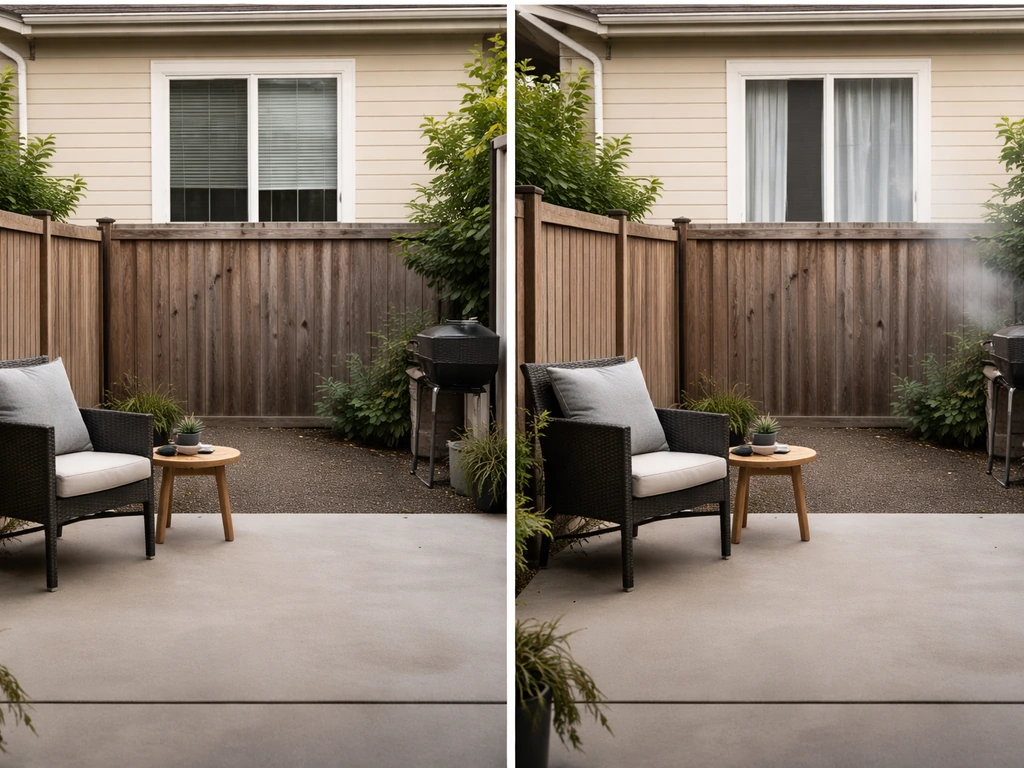
Ground-level, uncovered patios are acoustically and visually open spaces. That is not an opinion, it is a function of how they are built and where they sit. Understanding the four main ways patio activity reaches neighbors helps you plan around them.
Visibility
If your patio is adjacent to a shared fence line or a neighbor's window, they can see you. Privacy landscaping using fences, lattice panels, climbing vines, potted plants, or dense garden beds can meaningfully reduce sightlines without requiring a structural renovation. A well-placed row of tall planters or a trellis with ivy does real work here.
Sound
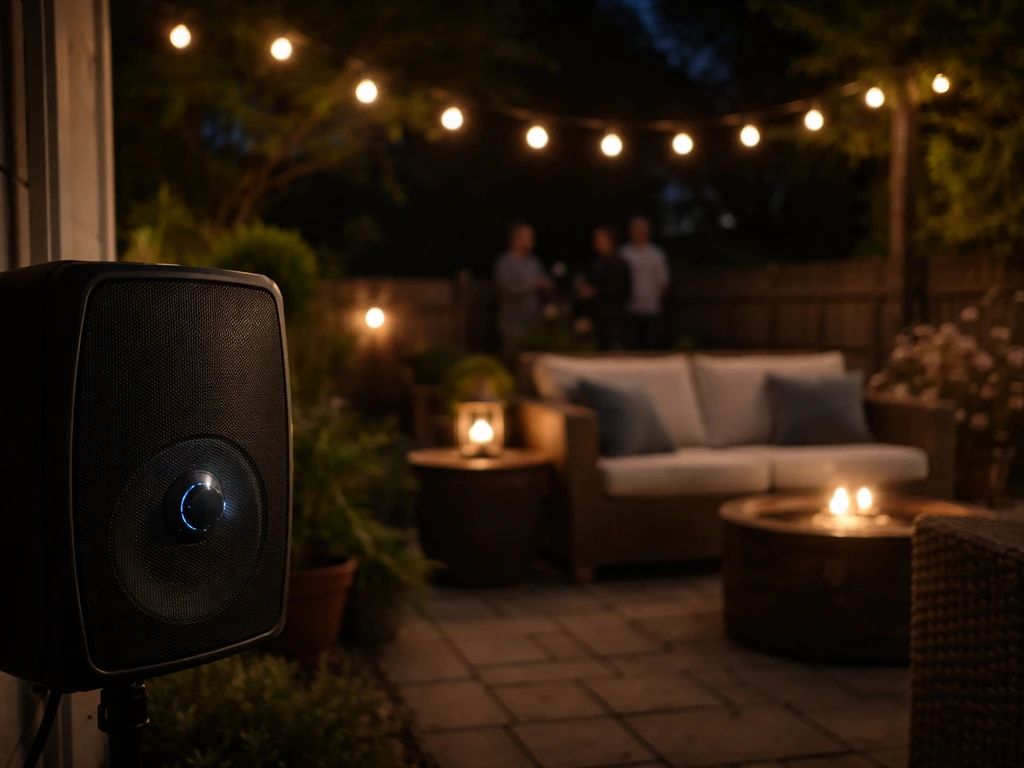
Sound from patios is one of the most common sources of neighbor disputes. Voices, music, and laughter carry easily across property lines, especially at night when ambient noise drops. Many cities enforce quiet hours with specific ordinances: Seattle, for example, uses operational quiet-hour windows of 10 PM on Fridays and 11 PM on Saturdays as enforcement triggers for loud gatherings. Jacksonville's ordinances target amplified music that is plainly audible at 50 feet during nighttime hours. Check your local ordinance, because the exact time and decibel threshold varies by city. Acoustic fencing, dense hedging, and even a small water feature (which creates masking noise) can all reduce how much sound escapes your patio.
Odors and smoke
Grill smoke, cigarette smoke, and bonfires drift across property lines and can trigger both neighbor complaints and formal enforcement. In the UK, smoke drifting from a residential property falls under statutory nuisance provisions in the Environmental Protection Act 1990, meaning a council can issue an abatement notice. In the US, odor from grilling or smoking can support a private nuisance claim if it substantially and unreasonably interferes with a neighbor's use of their property. The practical fix is simple: keep your grill properly vented, preheat with the lid closed to reduce excess smoke, and position it so the prevailing wind carries smoke away from neighbor property rather than toward it.
Behavior
This is where the idiom lives. The 'stays on the patio' expectation applies to social behavior, the things your guests say or do that you want kept within the group. That part is genuinely in your control. What is not in your control is whether a neighbor can see or overhear that behavior, and whether it triggers a complaint based on conduct rather than just noise.
Hosting do's and don'ts to avoid neighbor problems
Hosting on a patio does not have to be a source of conflict. A big part of that is planning how to use your patio in winter without causing noise, odors, or visibility issues stay quiet. Most neighbor disputes come from predictable, avoidable mistakes. Here is what to do and what to avoid.
- Check your HOA rules and lease before hosting a large group. Many HOAs restrict quiet hours to 10 PM–7 AM and limit what you can have on patios, including grill types and furniture. Some prohibit balcony/patio BBQs entirely or restrict LP gas container sizes.
- Give neighbors a heads-up before a party, especially if it will run into the evening. A simple text or knock on the door prevents most complaints before they start.
- Set a music cutoff time for yourself, and stick to it. Do not rely on guests to notice when it gets late.
- Position speakers so they face into your property, not toward the fence line or neighboring windows.
- Keep the grill away from property boundaries and downwind of neighbor windows and doors.
- Keep trash off the patio during and after a gathering. Many HOA rules explicitly state 'no trash on balconies or patios at any time,' and neighbors can and do photograph violations.
- If you smoke, be aware of where the smoke drifts. Designate a spot that minimizes drift toward neighboring windows.
- Have a clear end time for gatherings and communicate it to guests. Keeping things moving prevents the slow drift into late-night territory.
A note on pets and kids: they generate noise and mess that travels just as far as adult party noise. If children are playing on the patio or pets are barking, the same noise ordinance rules apply. There is no exception in most ordinances for the source of the sound.
Cleaning up and damage prevention: spills, trash, and wear
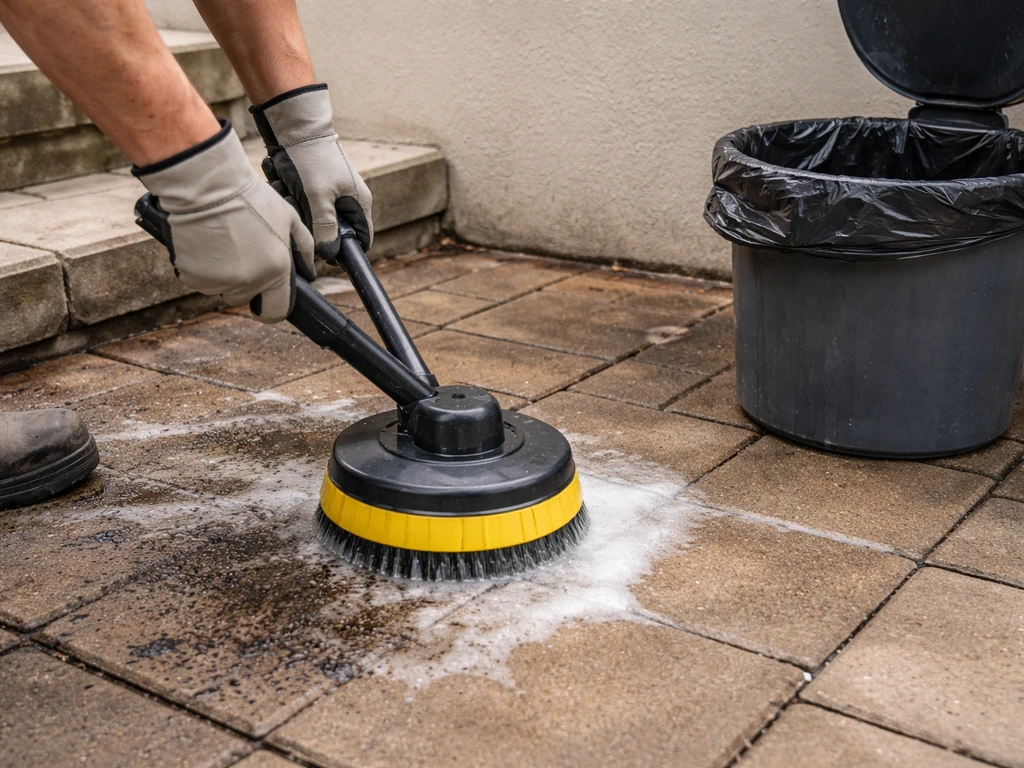
The patio itself is a surface that takes real wear from hosting. Failing to clean up properly is one of the fastest ways to create disputes with landlords, HOAs, and neighbors, and to accelerate physical damage to the space.
Spills and surface damage
Drinks, grease, and food residue left on paver or concrete surfaces can stain and degrade the material over time. Water that pools in low spots after cleaning (or after rain) indicates drainage or grading issues and can break down paver materials and create slip hazards. After any gathering, sweep and rinse the surface, clear any standing water, and check for grease splatter near the grill. Sealed pavers resist staining better than unsealed ones, and if you are renting, damage from a gathering can come out of your deposit.
Trash and storage
Remove all trash, bottles, and food waste from the patio the same night as the gathering. Leaving bags or containers on the patio overnight is one of the most commonly cited HOA and lease violations, and it attracts pests. This also applies to items like towels, sleeping bags, and rugs left on railings or furniture, which many HOA rules explicitly prohibit.
Structural wear
Heavy furniture dragged across pavers, repeated grease exposure near the grill area, and water pooling around the edges all add up. If you are a homeowner, inspect the patio surface seasonally and reseal pavers as needed. If you are a renter, document the patio's condition at move-in so you are not held responsible for pre-existing damage after a gathering.
If neighbors complain: what to do first and how to document
Getting a complaint does not automatically mean you did something legally wrong. It does mean you should respond thoughtfully, because how you handle the first complaint often determines whether it stays a conversation or becomes a formal dispute.
- Listen first. If a neighbor comes to you directly, hear them out without getting defensive. You will learn more about what the actual problem is, and a calm conversation resolves most patio disputes before they escalate.
- Check whether you actually violated anything. Look at your local noise ordinance, your HOA rules, and your lease. If you were within legal hours and your music was not amplified past the ordinance threshold, you have a reasonable position to hold.
- Adjust where you can. Even if you were technically within the rules, reducing the source of the complaint (moving the grill, lowering the volume earlier in the evening) costs you very little and usually ends the issue.
- Document the complaint and your response. Write down the date, time, and substance of the complaint and what you did in response. If the dispute escalates later, this record shows you were a reasonable actor.
- If the neighbor escalates to a formal complaint, start a log. Note dates, times, duration, and the nature of your activity on those dates. US nuisance analysis depends heavily on whether interference was substantial, unreasonable, and repeated. A log helps establish your side of the timeline.
- If you are on the receiving end of someone else's patio activity, the same escalation logic applies: start with a direct, calm conversation. If that fails, check whether the activity violates a local ordinance or statutory nuisance standard (in the UK, councils can issue abatement notices for noise, smoke, and odor). Contact your local council or code enforcement with your documented log.
- Know when to get a professional involved. If a dispute moves beyond conversation and you are facing a formal complaint, HOA action, or talk of legal action, consult a property attorney or your HOA management company. US private nuisance claims require showing substantial and unreasonable interference, and that bar is harder to meet than most people expect.
The phrase 'what happens on the patio stays on the patio' is a fun shorthand for social discretion among friends. But the practical guide to actually keeping patio activity contained, meaning keeping it from spilling into neighbor disputes, HOA violations, or legal headaches, is much more concrete: know your ordinances, set a time limit, clean up completely, and respond to complaints like a reasonable adult. Law Insider’s sample balcony and patio clause, for example, requires tenant use that does not bother, disturb, or annoy other occupants and limits certain outdoor furniture to what the landlord approves in writing blank" rel="noopener noreferrer">spill into neighbor disputes, HOA violations. Use this patio-specific checklist to decide what to wear so you stay comfortable, look put-together, and avoid common neighbor-noise and heat issues what to wear to a patio bar. What many people mean by “patio season” is the stretch of months when outdoor gatherings are most comfortable and social expectations are highest. That is what actually keeps things on the patio.
FAQ
Does saying “what happens on the patio stays on the patio” stop my HOA or landlord from enforcing rules?
No. The phrase is social, not contractual or legal. HOA and lease enforcement is based on their governing documents and the actual conduct or conditions, like noise levels, trash storage rules, or odors. If you are renting, also assume deposit risk from cleaning and surface damage, even if guests agreed to be discreet.
If my guests agree not to tell anyone, can that protect me if there is a complaint?
It can help socially, but it does not prevent authorities or neighbors from reporting what they witnessed or heard. Discretion among guests does not change what is objectively observable from a neighboring yard or window, especially on an uncovered, ground-level patio.
What if my neighbor records video or audio during the patio event?
A neighbor can still complain or provide that material to the HOA or city, even if you told guests to keep things on the patio. Practical mitigation is reducing what can be heard or seen, such as lowering music volume, ending on schedule, and using privacy landscaping where sightlines are direct.
Is the “no roof” part of a patio actually important for neighbors?
Yes. With an uncovered patio, sound, smoke, and light travel more freely in multiple directions, so there is less natural shielding than a covered porch or a walled courtyard. If your patio is next to a neighbor’s window or shared fence line, expect higher visibility and higher likelihood of noise carrying.
Can I host later if everyone is quiet and nobody is “causing a scene”?
Quiet behavior helps, but enforcement often depends on measurable factors like audible music and how far sound carries during quiet hours. Even normal conversation can become a problem if it is sustained, amplified, or combined with music, especially at night. Check your local time windows and any rules targeting amplified sound.
What’s the biggest smoke or odor mistake people make on patios?
Overusing the grill without controlling smoke, or positioning it so smoke drifts toward the property line. Practical fixes include keeping the lid closed during preheat to reduce excess smoke, ensuring proper venting, and paying attention to prevailing wind direction.
Do quiet hours apply to kids and pets too?
Usually yes. Noise rules typically do not exempt children or pets, they are based on the effect on neighboring properties. If kids are playing outside or pets are barking, treat it like any other noise source and plan for earlier end times.
If I get one complaint, should I ignore it because it is just “one person”?
Do not ignore it. The first complaint often determines whether things escalate into a formal dispute. Respond calmly, adjust your behavior for the remainder of the event if it is ongoing, and for future gatherings change the driver of the complaint (music volume, end time, trash handling, or smoke direction).
How can I reduce visibility without major renovations?
Use non-structural privacy tools like dense plantings, lattice panels with climbing vines, tall planters, or hedges along direct sightlines. The key is placement where the neighbor’s line of sight is blocked, not just adding greenery somewhere in the yard.
What cleanup habits matter most for avoiding HOA or landlord problems?
Clear everything the same night, including trash, bottles, food waste, towels, and rugs left on furniture or railings. Also rinse and sweep to remove grease and residue, check for water pooling, and avoid leaving pooled water that can degrade pavers and create slip hazards.
If the patio is pavers or concrete, how do I prevent damage from repeated gatherings?
Prevent grease buildup near the grill, avoid dragging heavy furniture across the surface, and address drainage issues that cause pooling. If you are a homeowner, reseal pavers as needed; if you are renting, document the condition at move-in so you are not blamed for existing stains or wear.
Next Article
What Is a Patio Dress? Definition, Features, and How to Wear It
Learn what a patio dress is, key features for outdoor comfort, how it differs from sundresses, and styling tips.