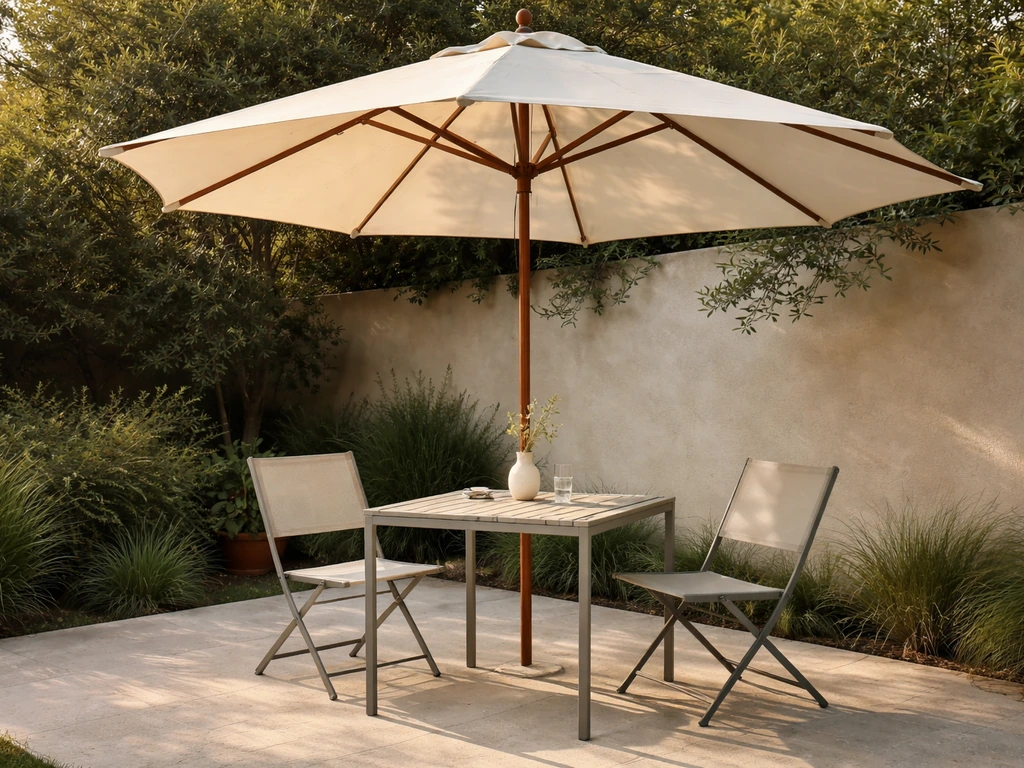
A half patio umbrella is essentially a standard market umbrella sliced into a semicircle. If you are choosing a solar patio umbrella instead, look for an integrated solar panel and light that can run during evening hours solar patio umbrellas.
What Is a Half Patio Umbrella? Definition, Sizing, Fit

Ada Hollis
10 Jul 2026
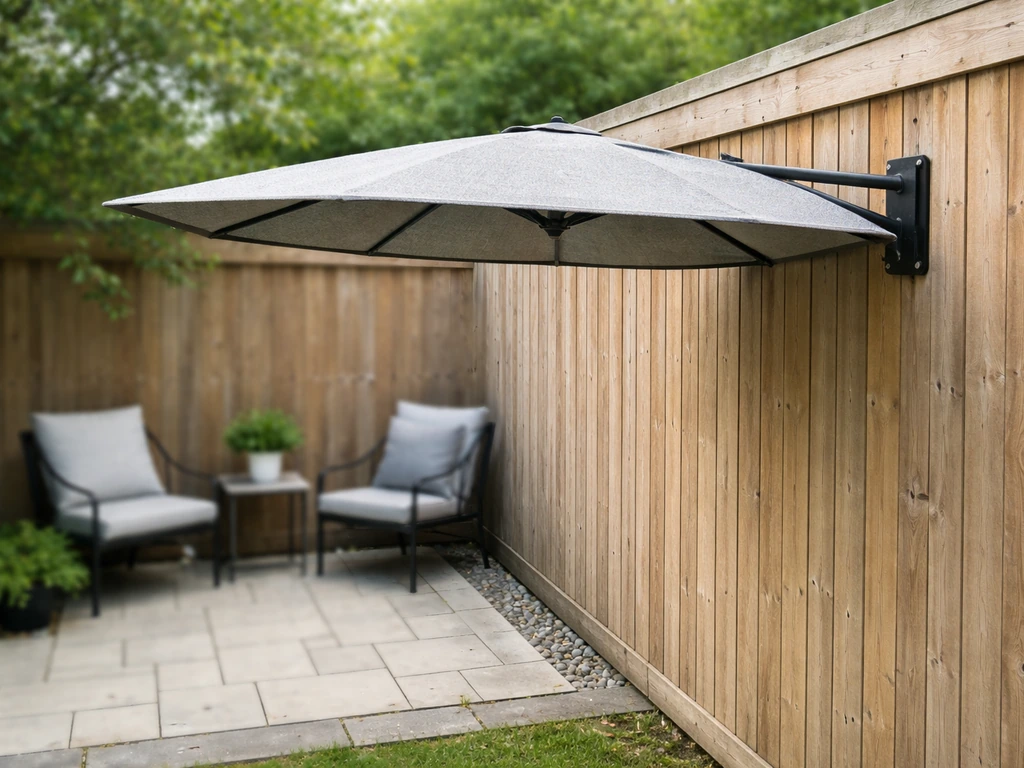
Instead of a full round or octagonal canopy that spreads out in every direction from a center pole, the canopy is flat on one side so the umbrella sits flush against a wall, fence, or the side of your house. You get shade over your seating area without the canopy intruding into a doorway, bumping a wall, or eating up half your patio footprint.
Think of it as a space-smart shade solution for tight setups, corners, and patios built right up against a building.
What "half patio umbrella" actually means when you're shopping
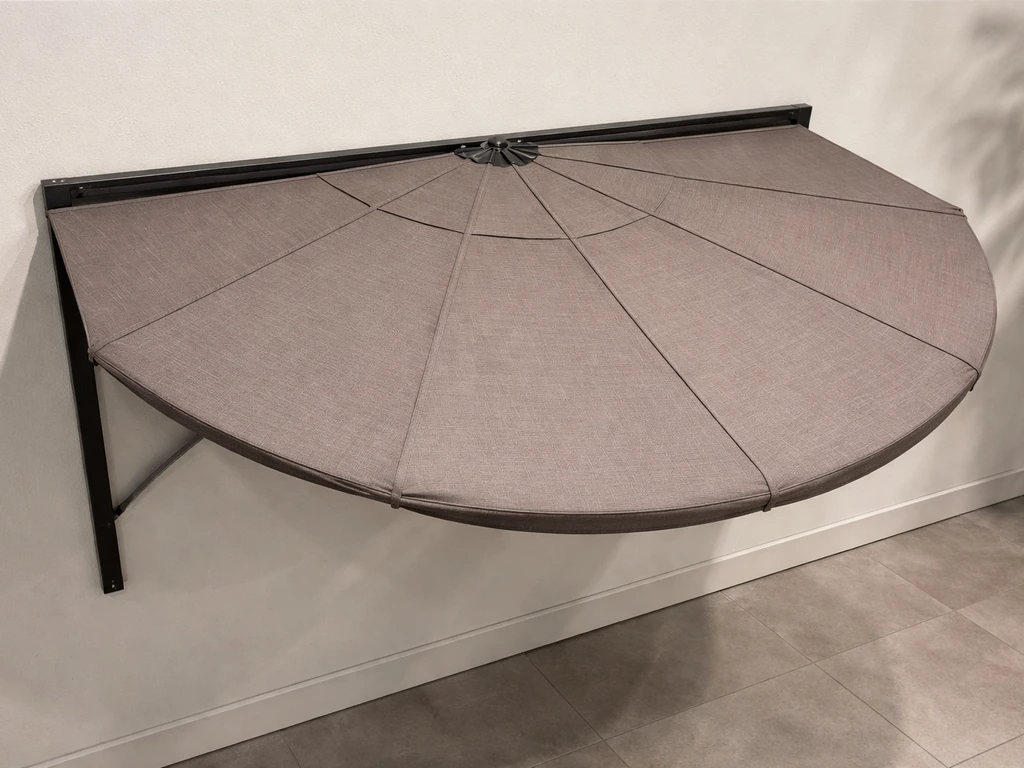
The name is more descriptive than technical. Retailers often list these under the market umbrella category with a "Half" style designation. The defining feature is the flat-backed, D-shaped or semicircular canopy. You'll also see them sold under names like "off-the-wall umbrella" or "flush-mount umbrella," all referring to the same basic design: a canopy built to stand against a vertical surface without any gap between the flat edge and the wall. A patio cover definition is essentially the purpose and features of a shade structure like this, designed to keep outdoor areas comfortable and protected.
The naming can get confusing because "half umbrella" is sometimes used loosely to describe a smaller or narrower umbrella, not necessarily a flat-backed one. When you're shopping, look specifically for a flat or straight rear edge on the canopy, a pole positioned toward the back of the canopy (not dead center), and product descriptions that mention wall or fence mounting. A true half-market umbrella gives you roughly 50% of the footprint of a comparable full-round umbrella.
Since patios vary a lot in layout, it helps to think about where you'd use this. Patios built directly off a sliding glass door, a narrow side patio along a fence line, a small concrete pad beside a garage, or a second-floor balcony with a wall on one side are all natural fits. The half umbrella was essentially designed for these situations where a full umbrella would either be blocked or just take up too much room. A patio awning definition is a guide to how an awning is used to cover an outdoor space, usually attached to a building and designed to block sun and light rain.
How the canopy provides shade with only half the circle
Coverage is surprisingly practical. A 9-foot half umbrella has a canopy spec of roughly 9 ft x 4.76 ft, which translates to about 30 square feet of shade. That's enough to cover one to two chairs or a small bistro table tucked against a wall. An example like the Outsunny 6.6 x 6 ft model comes in at around 78.7 inches long by 74.8 inches wide, so there's real usable shade even at the smaller end of the size range.
The canopy projects outward from the flat edge, meaning all of the shade coverage goes in front of and around your seating area rather than behind it into the wall. Some models tilt front to back, which lets you chase the sun angle as it moves through the day. You adjust by turning a knob and tilting the canopy forward or back, just like you would on a standard market umbrella with a tilt mechanism. A few models also include a vented canopy top to let air flow through and reduce wind uplift.
Common canopy styles
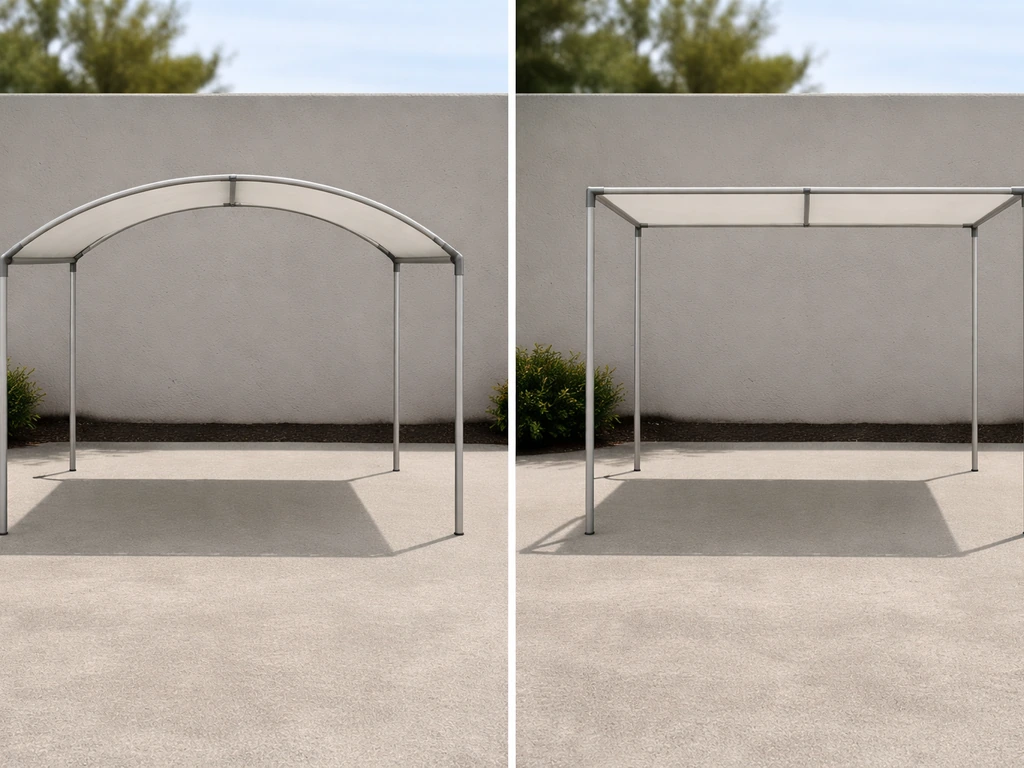
- Semicircular (D-shape): the most common style, flat on one side, curved on the other, pole positioned toward the rear
- Half-square: similar footprint but with a squared-off front edge rather than a curve, often listed with rectangular overall dimensions
- Vented half canopy: adds a secondary vent layer at the crown to improve airflow and wind resistance
- Auto-tilt half canopy: tilts front to back via a crank or knob, useful for tracking the sun across the afternoon
How a half umbrella fits into your patio setup vs. a full umbrella
A full-size market umbrella needs clearance on all sides and typically sits in the center of a table or through a table hole. That works well on open patios with plenty of room, but it fails the moment you push your furniture toward a wall or fence. A half umbrella solves exactly that problem. A patio umbrella is an outdoor shade option designed to sit beside or above your patio seating, often providing comfort on sunny days. The flat back sits against the wall with no gap, so you don't lose shade coverage at the back of your seating zone and you don't block a door or window.
| Feature | Half Patio Umbrella | Full Market Umbrella |
|---|---|---|
| Canopy shape | Semicircle or half-square (flat back) | Round, octagonal, or square (full coverage) |
| Typical coverage at 9 ft | ~30 sq ft | ~50–60 sq ft |
| Footprint on patio | ~50% of full umbrella | Full circular spread |
| Wall/fence clearance needed | None (sits flush) | Full radius on all sides |
| Best for | Small or corner patios, wall-adjacent seating | Open patios, center-table setups |
| Wind stability | Improved when placed on leeward side of wall | Requires heavier base in open areas |
| Base weight requirement (9 ft) | ~20 lb base | Often 50 lb or more for open exposure |
| Pole position | Toward rear of canopy | Center |
The tradeoff is straightforward: you give up total coverage area in exchange for a much smaller footprint and better usability in tight or wall-adjacent spaces. If your patio is small enough that a standard umbrella would overhang a door or crowd the space, the half model is the better practical choice. The patio umbrella meaning is essentially the definition and how the design changes what shade and clearance you get.
If you have an open patio with a full table and four to six chairs, a full umbrella or even a cantilever (offset) umbrella will give you more coverage. Worth noting: cantilever umbrellas are also sometimes used near walls and fences, but they require a heavier side-mounted base and more lateral clearance, so the half umbrella remains the simpler wall-adjacent option.
The half umbrella also fits a different shade philosophy than options like a patio cover or pergola. A patio cover, on the other hand, is a built structure meant to shield the entire area from sun and rain. Those are permanent or semi-permanent structures attached to the house. A half umbrella is portable, storable, and doesn't require permits or installation work. If you're renting or just want flexibility, that distinction matters quite a bit.
What to measure before you buy
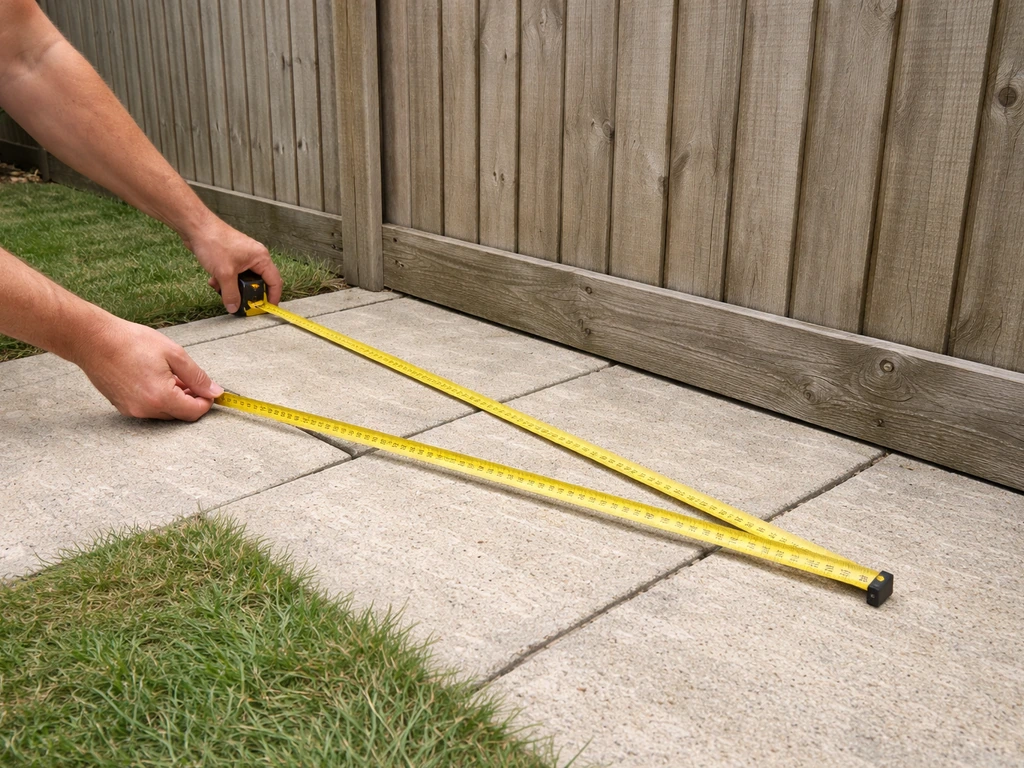
Getting the measurements right before you order saves a lot of frustration. Half umbrellas come in a narrower range of sizes than full umbrellas, so you want to confirm you're buying something that actually fits your space and covers your seating area. If you are comparing patio shade styles, a pergola patio is another option to consider alongside umbrellas and half umbrellas.
- Wall length available: measure the section of wall or fence where the flat back will sit. The canopy width (the flat edge) should fit within this span without running past a window frame, door, or corner.
- Seating depth from the wall: measure from the wall out to the front edge of your chairs or table. This tells you how much canopy projection you need. A 9 ft half umbrella projects roughly 4.5 to 5 feet out from the wall.
- Overhead clearance: check for awning rails, light fixtures, or soffit overhangs. The umbrella height on a standard 9 ft model runs around 94 to 95 inches (about 7.8 ft) at the pole tip.
- Sun angle and direction: note where morning and afternoon sun hits your seating area. Half umbrellas with a front-to-back tilt let you adjust, but you still need to orient the open face of the canopy toward the sun.
- Ground surface: confirm whether your patio is concrete, pavers, wood decking, or tile. This affects which base style you can use and how stable the setup will be.
- Pole diameter: check the base you plan to use against the pole diameter of the umbrella. Common pole sizes are 1.5 inches and 1.9 inches and they are not interchangeable, so match them before buying.
Buying checklist before you commit
Use this as a quick pass before finalizing any half umbrella purchase. Skipping any of these is how you end up returning a product that almost worked.
- Dimensions confirmed: overall canopy size (length x width) fits your wall span and seating depth
- Shade coverage: a 9 ft half canopy covers roughly 30 sq ft, enough for 1 to 2 chairs or a small bistro table
- Pole diameter matched to base: confirm whether the pole is 1.5 in or 1.9 in and buy the base accordingly
- Base weight: for a 9 ft half umbrella in a sheltered spot, a 20 lb base is the common pairing; exposed or windier locations need more weight
- Wind rating acknowledged: a standard 20 lb base may not hold securely above 10 to 15 mph winds; consider a heavier base or wall-adjacent placement to improve stability
- Tilt mechanism: check whether the canopy tilts front to back (knob or crank) so you can track afternoon sun
- Vented canopy: a vented top improves airflow and reduces wind stress on the fabric
- Canopy material: solution-dyed acrylic fabrics (like Sunbrella) resist fading and mildew far better than polyester in outdoor conditions
- Mounting style: confirm whether the base sits on the ground or mounts to a surface; most half umbrellas use a freestanding weighted base, not a wall bracket
- Seating area size: the guide pairing for a 9 ft half umbrella is typically up to a 40-inch table with 1 to 2 chairs
Setting it up safely on your patio
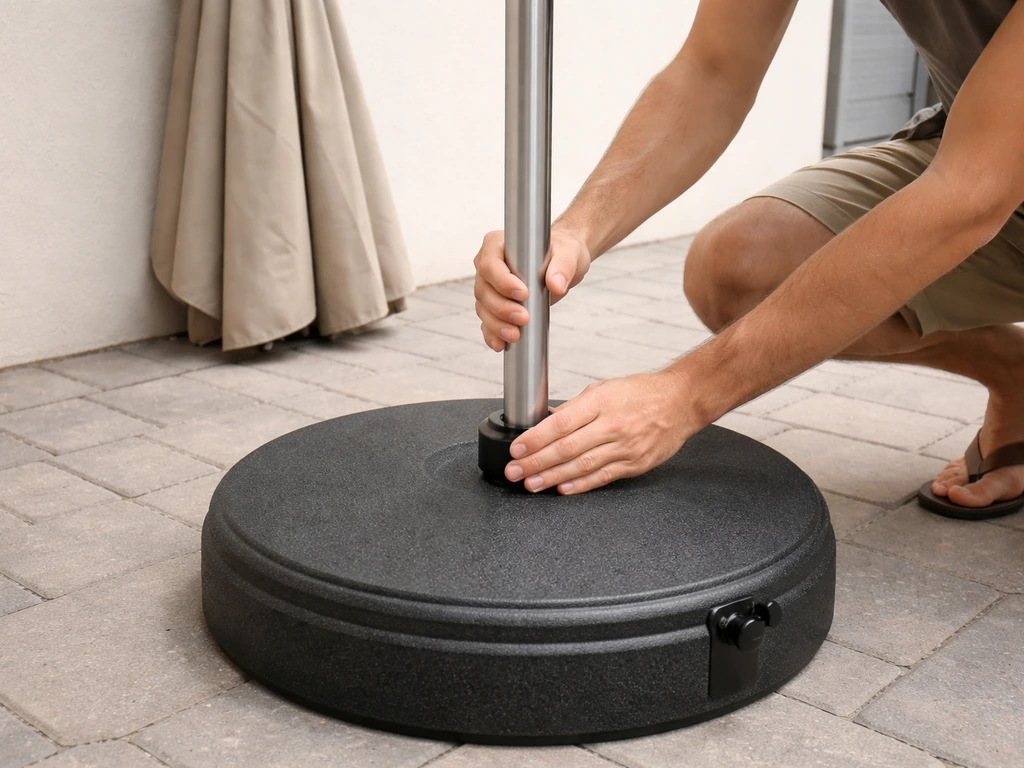
Installation is straightforward, but there are a few steps worth doing properly from the start. Start by placing the base where you want it before inserting the pole. If your base uses fill-in weight containers (a common design where sand or water goes into sectioned compartments inside the base), fill those fully before you raise the umbrella. Manufacturer instructions for weighted bases typically require placing each weight container back into the base frame sections before use. An under-filled base is the single biggest reason umbrellas tip over.
Position the flat back of the canopy facing the wall. The pole will sit slightly in front of the wall, and the flat edge of the canopy should reach back to sit flush with the wall surface when the umbrella is open. Open the umbrella fully before adjusting any tilt. Once it's open, use the tilt knob or crank to angle the canopy toward where you need shade. For afternoon shade, tilt forward. For morning shade, the wall position itself will block most of the low eastern sun.
Wind is the main safety concern with any freestanding umbrella. Placing the umbrella on the leeward side of a wall (meaning the wall is between the umbrella and the prevailing wind) significantly improves stability because the structure itself blocks much of the wind force. If a storm or sustained winds above 15 mph are coming, close and lower the umbrella. A closed umbrella in its stand handles wind far better than an open one.
If you're on a second-floor balcony or a deck with a railing, check whether the base can sit flat and stable on the surface. Some deck surfaces are not level enough for a standard base, and balcony railings are not designed to support umbrella loads. In those cases, a purpose-built railing clamp base or a heavier freestanding base with a wide footprint is a safer choice than improvising.
Keeping it in good shape season after season
Routine care is simple and extends the life of the canopy significantly. For regular cleaning, brush loose dirt off the fabric before it works into the weave, then wash with warm water and mild dish soap. Avoid solvents, abrasives, or bleach-based cleaners on most canopy fabrics as they break down the coating and accelerate fading. Rinse thoroughly and let the canopy air dry completely before closing it.
The most important daily habit is closing the umbrella when you're not actively using it. Never leave an open umbrella unattended in wind or overnight. Closing it reduces UV wear, prevents water pooling in the canopy, and dramatically reduces the risk of wind damage. Even calm evenings can turn gusty, and an unattended open umbrella is an easy way to crack a rib or pull a base over.
Before storing for winter or an extended period, clean the canopy and let it dry completely before folding it down. Storing a wet or damp umbrella is the fastest way to get mildew embedded in the fabric, and once mildew sets in it's very difficult to fully remove. If the umbrella was caught in rain and you had to close it wet, open it as soon as possible to let it dry out before closing it for storage. Store the umbrella inside or in a protective cover away from direct sun and freezing temperatures if possible. Bringing it indoors or into a garage for the off-season will add years to the canopy's life.
FAQ
Is “half patio umbrella” the same as a smaller umbrella, or does it have a specific shape?
It should refer to the flat-backed, semicircular (D-shaped) canopy that sits flush to a wall or fence. Some listings use “half” to mean narrower dimensions, so confirm the product photos show a straight rear edge and a pole that sits toward the back of the canopy, not centered.
How do I measure to make sure a half umbrella covers my seating area?
Measure the space you need to shade and compare it to the canopy footprint spec (often listed as length by width, not just total “9 ft”). Also account for tilt range, because front-tilt can shift the shade slightly forward compared to a fully upright canopy.
Can a half patio umbrella be used in the middle of a patio, or is it only for wall-side setups?
It works best against a vertical surface, but you can use it freestanding if you still have enough clearance for the semicircle to extend into the open area. If you leave the flat back exposed, you may get less practical coverage where you need it, and the stability benefits of wall leeward positioning are reduced.
What type of base should I choose if my patio is uneven or my ground is sloped?
A heavy base with a wide footprint helps, but the key is whether the base sits level. If the surface is noticeably sloped, consider a base designed to compensate for unevenness, or reposition to a flatter spot, because an uneven base increases wobble and makes tilt adjustments feel inconsistent.
How do I prevent tipping if I want to use the umbrella near a doorway or walkway?
Do not rely on “close to a wall” alone, you still need proper weight. Use a fully filled base per the manufacturer’s compartment instructions, keep the pole oriented as designed, and avoid setting the umbrella so the canopy edge overhangs a high-traffic area where people bump it during opening or tilting.
Do half patio umbrellas work well with sliding doors or windows that open outward?
Usually yes, because the flat back is meant to hug the wall and keep the canopy from intruding into the door path. However, check the swing arc of the door and the umbrella in its fully open and fully tilted positions, since tilt can move the canopy forward into the clearance area.
Are half patio umbrellas safe to leave out during light rain?
They are generally fine for brief light rain, but you should close them and secure them afterward. Leaving one open can lead to water pooling in fabric and increases wind risk if weather shifts, especially on exposed balconies.
What wind speed should make me close the umbrella immediately?
Use a conservative threshold. The article notes closing for sustained winds above about 15 mph, and in practice you should close sooner if you see visible wobble, loose fabric, or the base shifts during gusts.
Can I use a half patio umbrella on a deck railing surface?
Only if the base is specifically compatible with the deck and the surface can support the load. Railing-mounted or makeshift setups are risky, many railings are not designed for umbrella torsion, so a railing clamp base or a heavier wide-foot freestanding base is usually the safer route.
What’s the best way to clean the canopy without damaging the coating?
Brush off dry dirt first, then use warm water and mild dish soap. Avoid bleach, solvents, or abrasive scrubbers, and rinse thoroughly. Let it air dry fully before closing, because trapped moisture speeds up fabric breakdown and mildew.
How should I store a half patio umbrella during winter to avoid mildew and fading?
Clean and dry it completely before folding for storage. Store indoors or under a breathable protective cover away from direct sun and freezing temperatures when possible, since damp storage is a common cause of mildew and permanent odor.
What are common shopping mistakes when buying a half patio umbrella?
The most frequent issues are buying a model that doesn’t have a truly flat rear edge (or mislabeling in the listing), under-sizing the canopy for your seating footprint, and neglecting base weight requirements. Also double-check tilt capability and whether the pole position matches your intended shade direction.
Next Article
Patio Umbrella Meaning: What It Is and How to Shop
Learn patio umbrella meaning: outdoor shade umbrella for patio seating and how to spot and shop the right size and type.