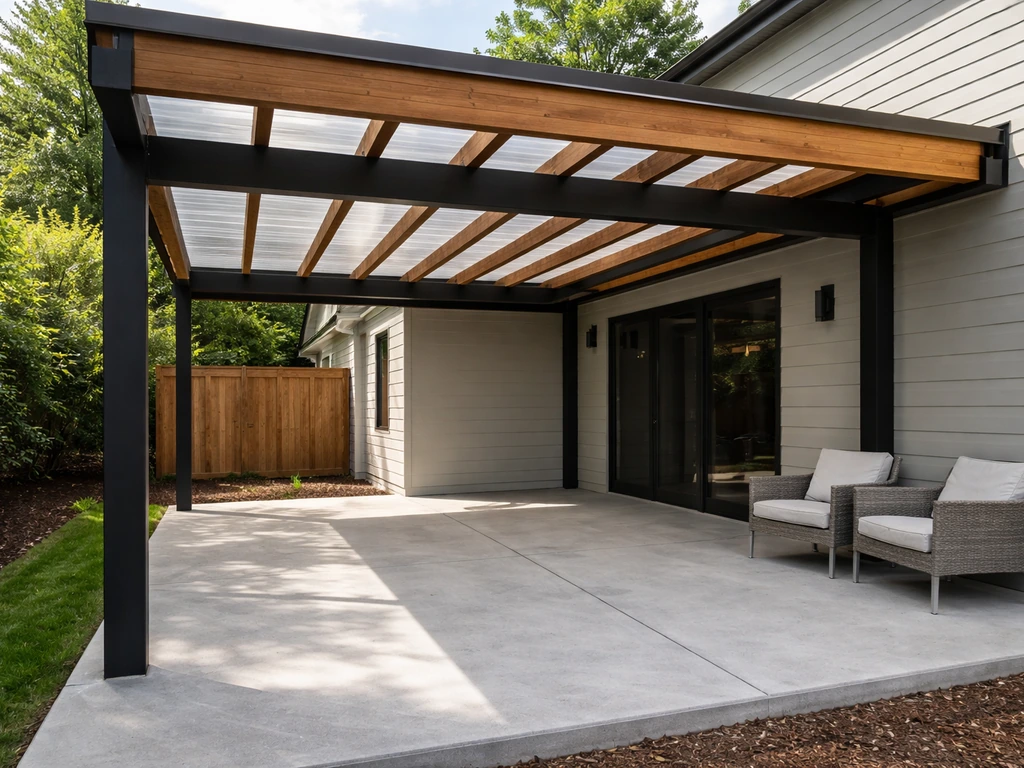
A pergola patio is an outdoor patio space, typically a hard ground surface like concrete, pavers, or a deck platform, topped with a pergola structure: an open framework of upright posts and overhead crossbeams or lattice. The patio gives you the floor; the pergola gives you the overhead structure. Together they create a defined outdoor living zone that feels more like a room than an open yard, but without the full enclosure of an indoor space or the solid roof of a porch.
What Is a Pergola Patio? Types, Styles, and Real Examples

Ada Hollis
31 May 2026
What the pergola + patio combination actually means
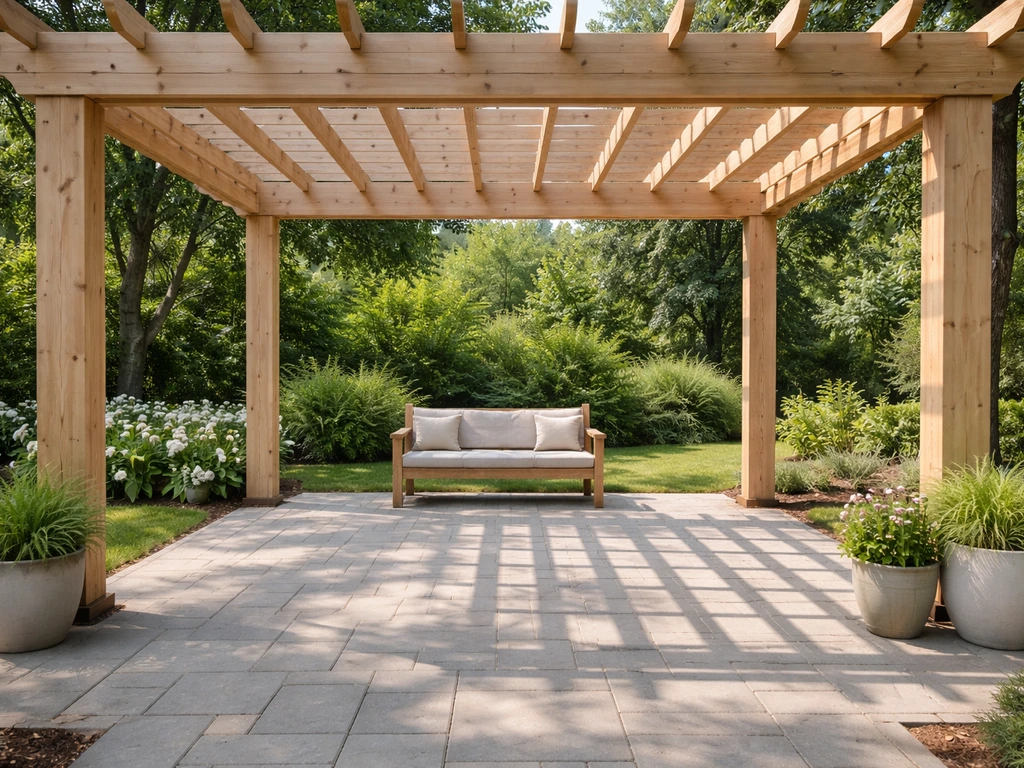
On its own, a patio is just a hard-surfaced outdoor area at ground level. On its own, a pergola is just a structural framework. When you put them together, you get something genuinely useful: a space with a defined footprint, a sense of overhead enclosure, and usually some degree of shade or filtered light. The pergola's crossbeams and slats diffuse sunlight rather than blocking it entirely, which is why a traditional open-slatted pergola gives you soft, dappled shade rather than full cover. That's different from a patio cover or awning, which aims to block sun and rain more completely. The pergola patio sits somewhere in between a bare open patio and a fully covered outdoor room, and that middle ground is exactly what makes the term worth understanding.
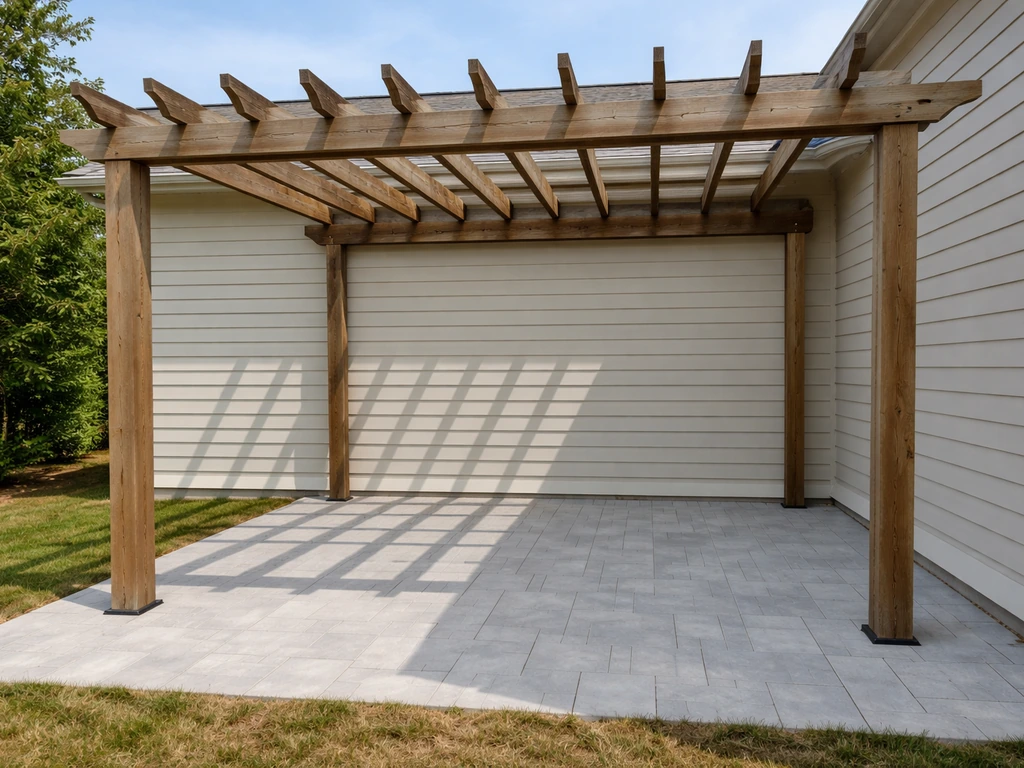
The pergola can be attached directly to the house (often bolted to a ledger board on the exterior wall) or freestanding in the yard, set over a separate patio area. Attached versions share one wall with the house and use two or more posts for the outward side. Freestanding versions use four or more posts and can be placed anywhere the ground allows. Both configurations can sit over the same ground surface types, so the "pergola patio" label applies equally to either.
How a pergola patio differs from a porch, veranda, balcony, and courtyard
These terms get mixed up constantly in real estate listings and home improvement content, so it's worth being precise. Here's how a pergola patio stacks up against the most commonly confused outdoor spaces.
| Space | Ground Level | Roof/Cover | Attached to House? | Key Difference |
|---|---|---|---|---|
| Pergola patio | Ground level (slab/pavers/deck) | Open slats or optional cover | Either | Overhead framework with partial shade; patio is the floor |
| Porch | Ground level or slightly raised | Solid roof (same as house) | Always | Fully roofed, usually part of the building structure |
| Veranda | Ground level or raised platform | Solid roof, often wraparound | Always | Roofed and railed, typically wraps multiple sides of house |
| Balcony | Elevated (upper floor) | Open or lightly covered | Always | Elevated, not at ground level; structural projection from wall |
| Courtyard | Ground level | Open sky (usually) | Surrounded by walls | Enclosed by walls or building on multiple sides; no overhead structure |
| Terrace | Ground level or rooftop | Open | Either | Often a graded or elevated flat surface; no overhead structure assumed |
The clearest distinction is between a pergola patio and a porch. A porch has a solid roof that is structurally part of the house, full rain protection, and is always attached. A pergola patio has an open or partially open overhead framework and may or may not be attached. A half patio umbrella is a smaller shade option that helps cover part of the seating area without enclosing the whole patio. The patio umbrella meaning is usually about creating shade overhead, which aligns with the open overhead feel of a pergola patio. If you see a covered outdoor space with a solid roof that matches the house roofline, it's almost certainly a porch or veranda, not a pergola patio. If the overhead structure has visible gaps, beams, or slats you can see sky through, you're looking at a pergola. If you're also shopping for a patio umbrella, look for the size, tilt, and weather resistance that match how much shade you want.
Common pergola patio styles and layouts
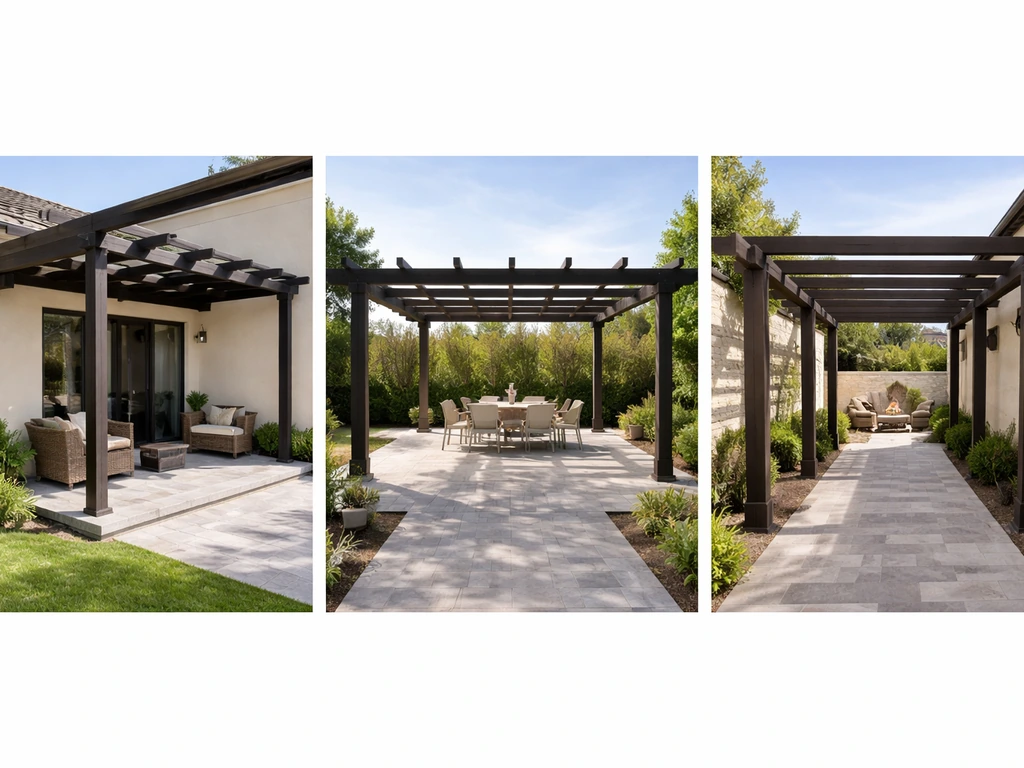
Pergola patios come in a handful of recognizable configurations. Knowing these helps you identify what you're looking at in a listing or planning for your own yard.
- Attached pergola patio: Bolted to the house's exterior wall along one side, with two or more posts supporting the outer edge. Common in suburban backyards where the patio sits directly off the back door or sliding glass door.
- Freestanding pergola patio: A self-supporting structure set over a separate patio area, away from the house. Four posts minimum, can be placed anywhere with a level surface.
- Corner pergola patio: Positioned in a corner of the yard or deck, using the corner's natural enclosure to create a more intimate, sheltered feel.
- L-shaped or perimeter pergola: The overhead structure follows an L-shaped or wraparound layout, often used to define multiple zones (dining on one arm, lounge on the other) under one continuous framework.
- Shade sail or canopy hybrid: Some listings describe a patio with a tensioned fabric canopy or retractable shade as a "pergola patio," though technically this is closer to a patio cover or canopy. The structural posts remain pergola-like, but the roof material differs.
- Louvered pergola patio: A modern configuration using adjustable rotating slats (louvers) that let you control how much sun and air comes through, and in engineered versions, can manage rain with integrated gutters.
Materials, roof options, and what 'covered' actually means here
One of the most confusing parts of the pergola patio world is the word "covered." When someone says "covered pergola patio," they could mean several very different things depending on what's overhead, so it's worth breaking this down. A patio awning definition is also helpful because awnings are a common way to add partial, weather-focused shade to an outdoor space.
Pergola frame materials
| Material | Durability | Maintenance | Cost Range | Best For |
|---|---|---|---|---|
| Wood (cedar, redwood, pressure-treated pine) | Good if maintained | Staining/sealing every 2-3 years | Mid to high | Traditional look, custom shapes |
| Vinyl (PVC) | Very good, won't rot | Low (just cleaning) | Mid | Low-maintenance, painted look |
| Aluminum | Excellent, rust-resistant | Very low | Mid to high | Modern look, powder-coated finishes |
| Steel | Very high, heavy | Moderate (rust risk if uncoated) | High | Large spans, industrial/modern aesthetic |
What goes overhead: the roof options
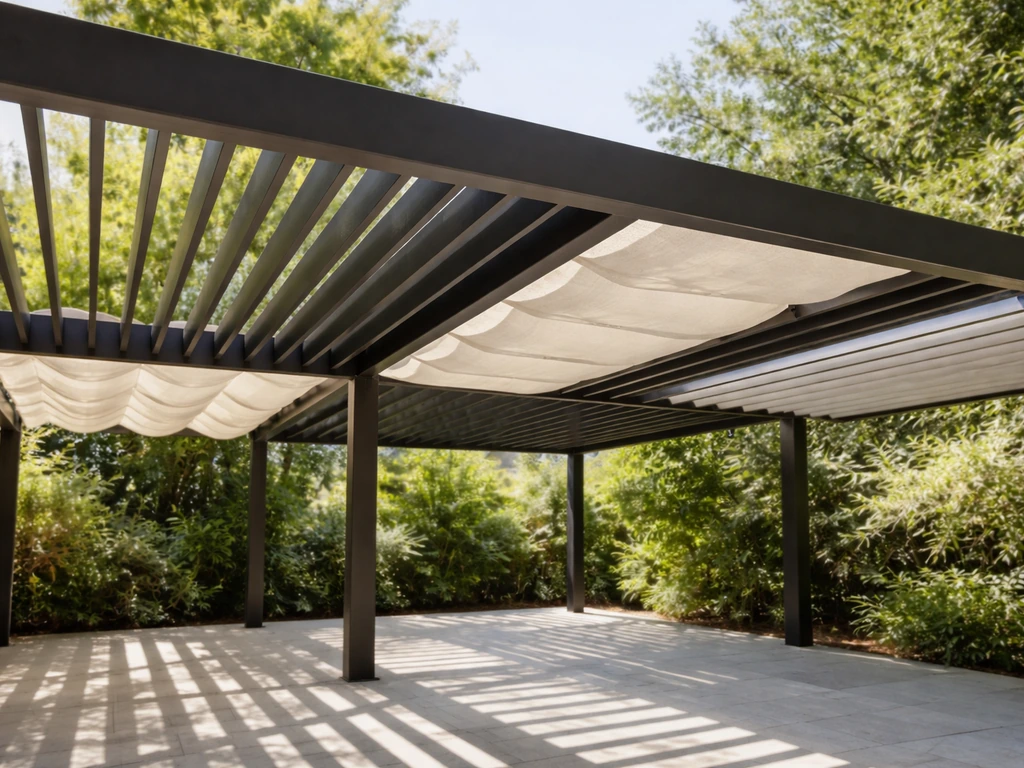
An open-slatted pergola with spaced crossbeams is the classic design. It gives filtered, dappled shade and airflow, but it won't protect you from rain. That's the honest trade-off of a traditional pergola: it's more about atmosphere and soft shade than weather protection.
Fabric or shade cloth panels draped over the beams add more shade and a softer look. Retractable fabric canopy systems let you open or close coverage as needed. These are better for UV protection than rain protection unless the fabric is waterproofed and angled for runoff.
Polycarbonate or clear/tinted roof panels attached across the beams do provide rain protection and significantly increase the "covered" nature of the space, moving it closer to a patio cover in function. Polycarbonate lets light through while blocking rain, which is a popular middle ground.
Louvered pergola roofs use rotating aluminum slats you can adjust to let in as much or as little sun and air as you want. If you want to use sunlight control in a different form, a solar patio umbrella is another way to add shade and sometimes charging power outdoors louvered pergola roofs. Quality engineered louvered pergolas can be effectively waterproof when the louvers are fully closed, because the slats are pitched correctly and the structure includes blank" rel="noopener noreferrer">integrated hidden gutters that channel rainwater down through the posts and away from the patio surface. That said, "waterproof" is not a blanket guarantee: very heavy rain, wind-driven rain from the sides, and imperfect installation can all affect performance. A motorized louvered system is the premium end of pergola patio options and is increasingly common in higher-end home listings.
How to spot a pergola patio in listings and photos
Real estate listings and home improvement ads use inconsistent terminology. Here's what to look for so you can tell exactly what kind of outdoor space you're actually seeing.
- "Pergola patio" or "patio with pergola": Usually means exactly what it says, a paved or decked ground surface with an overhead pergola frame.
- "Covered patio": Could mean a pergola, a patio cover/awning, a solid roof extension, or even a shade sail. Look at the photos carefully to see whether the overhead is open beams or solid.
- "Outdoor room" or "alfresco dining area": Often a pergola patio with furniture, sometimes with polycarbonate or louvered roof.
- "Louvered pergola" or "motorized pergola": High-end version with adjustable slats and usually some degree of weather protection.
- "Shade structure" or "shade canopy": May refer to a fabric canopy on posts rather than a true timber or metal pergola frame.
- "Pergola deck": The patio surface is a timber or composite deck rather than pavers or concrete, but the pergola overhead is still the defining overhead structure.
When you're looking at photos, the fastest check is this: can you see sky through the overhead structure? If yes, it's a pergola (or an open shade structure). If the overhead is solid and continuous, matching the house roof, you're looking at a porch, veranda, or covered patio extension. This distinction matters for things like rain protection, property valuations, and what permits may have been required at build time.
It's also worth knowing that "patio cover" and "pergola" are sometimes used interchangeably in casual listings, but they're not the same thing. If you want a tighter definition, a patio cover is meant to provide overhead weather protection with a solid or near-solid roof. A patio cover is specifically intended to provide overhead weather protection and usually has a solid or near-solid roof. A pergola's defining feature is its open or semi-open overhead framework. Understanding that difference helps you ask the right questions before visiting a property or committing to a build.
What to think through before building or buying
Whether you're planning to build a pergola patio or evaluating one on a property you're considering, a handful of practical factors make a real difference.
Space and layout
Size the pergola to the patio footprint, not the other way around. A pergola that's too small for the patio looks awkward and provides almost no shade where you need it. As a rough guide, a dining set for four to six people needs at least a 10 x 12 foot footprint under the pergola. A lounge area needs similar or more. If you want both zones, an L-shaped or larger rectangle works better than a single small square.
Shade direction
Check where the sun tracks across your yard at the times you plan to use the space. In the northern hemisphere, south-facing patios get the most sun. An east-west oriented pergola roof (beams running east to west) will cast different shade than one running north to south. Open-slatted pergolas give decent morning or afternoon shade depending on orientation, but they won't block overhead midday sun as effectively as a louvered or covered version.
Privacy
A pergola patio is open on the sides by definition, so you'll have neighbors and sightlines to deal with. Common solutions include lattice panels or climbing plants (wisteria, jasmine, or climbing roses) attached to the pergola posts and beams, privacy screens made from timber or composite slats, or strategic placement relative to fences and planting. If privacy is a priority, factor this into the design before you build.
Drainage and anchoring
The patio surface under the pergola needs to slope slightly (typically 1 to 2 percent grade, about 1/8 inch per foot) away from the house to keep water from pooling. This matters even more with a louvered pergola that channels rain into gutters at the perimeter: if those gutters drain onto a flat patio, you'll get puddles. Posts need proper footings anchored into concrete, especially in areas with wind, frost, or soft soil. Check local building codes before you pour footings or anchor to a house wall, because permits are often required.
Maintenance expectations
Wood pergolas need the most upkeep: re-staining or sealing every two to three years, checking for rot at post bases, and treating for insects in humid climates. Aluminum and vinyl pergolas are significantly lower maintenance but may need occasional cleaning and inspection of hardware. Louvered systems with motors need periodic checking of the drive mechanism and gutter drainage channels to prevent blockages. Polycarbonate panels can yellow over time with UV exposure and may need replacement after ten to fifteen years.
How people actually use a pergola patio
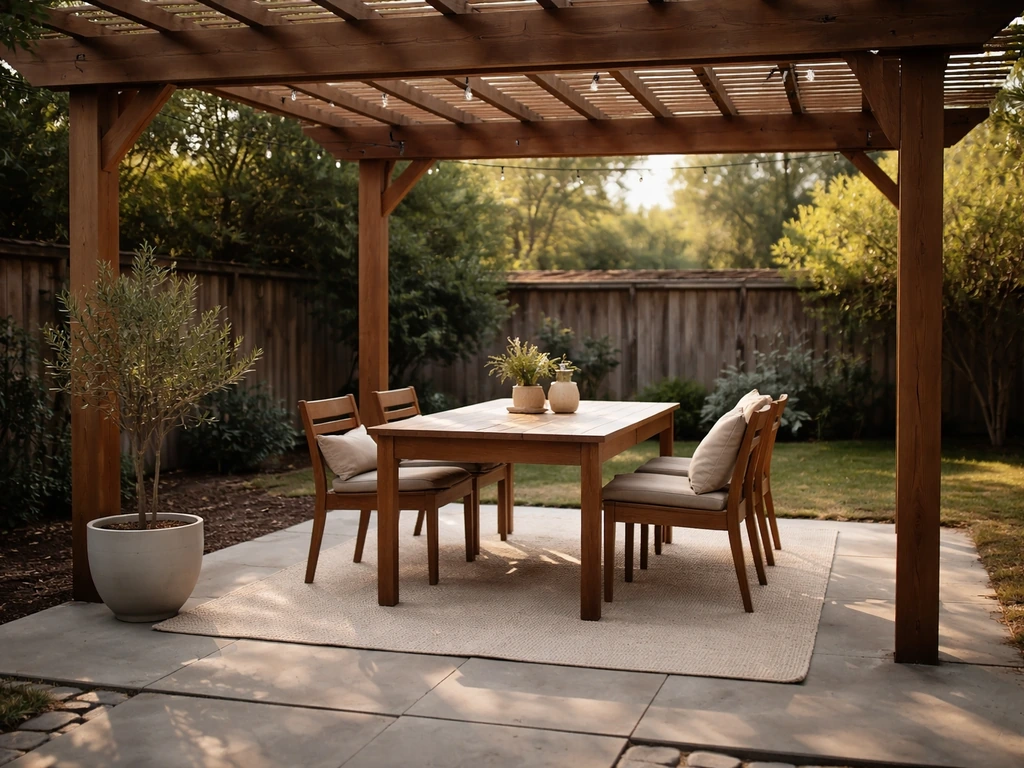
The combination of a defined floor and an overhead structure makes a pergola patio one of the most versatile outdoor setups you can have. Here are the most common ways people use them day to day.
- Outdoor dining: A table and chairs under the pergola frame create a defined dining space that feels intentional rather than just furniture dropped on a lawn. The overhead structure provides enough shade to make midday or afternoon meals comfortable, especially with a fabric shade or louvered roof.
- Lounge and seating zone: Deep sofas, armchairs, and a coffee table work well under a pergola. The overhead structure creates the "ceiling" that makes outdoor seating feel cozy rather than exposed.
- Grilling and cooking area: Many homeowners position a grill or outdoor kitchen at the edge of the pergola patio, where it can be used without being fully under the structure (good for smoke management) while still being part of the overall outdoor room.
- Shade corridor between zones: An attached pergola patio can act as a shaded transition between the house's back door and a further outdoor area like a pool deck or lawn.
- Garden and plant display: The beams of a pergola are ideal for hanging plants, string lights, and climbing vines, making the space feel more like a garden room than a construction.
- Year-round use with the right cover: A louvered pergola patio with outdoor heaters lets you use the space in cooler months, since you can close the louvers against wind and rain while the heaters manage temperature.
If you're planning the layout, a practical approach is to anchor the space with one primary use (usually dining or lounging) and then build out from there. Keep the pergola footprint large enough to feel generous rather than cramped, leave space around furniture for movement, and think about how lighting (string lights along the beams are the most popular choice) will define the space after dark. The pergola patio becomes genuinely useful when it's treated as an outdoor room rather than just a structure you built.
FAQ
What does “covered pergola patio” actually mean, if pergolas are open?
Yes, a pergola patio can be partly covered, but it depends on what “covered” means. If the overhead is still open to the sky (slats, lattice, widely spaced beams), expect shade and some light rain exposure, not full weather protection. If you add a near-solid top (polycarbonate sheets, a tight fabric system, or a fully louvered roof), you can block much more rain, but side splash from wind-driven storms is still common because the sides are open by definition.
Will rain pool on a pergola patio, and how should drainage be handled?
Most pergola patios are designed for drainage away from the house, even when rain only partially reaches the space. Plan for a small slope (often around 1 to 2 percent) and make sure any roof-based runoff is routed to gutters and away from the patio surface, not onto it. If you do not control where water goes, puddling and staining become much more noticeable under sloped roofs.
Can a pergola patio protect against rain the way a patio cover does?
Start by checking how much of the overhead stays open. Traditional open-slatted pergolas provide dappled shade and typically very limited rain protection. If you want usable coverage during typical spring and fall storms, look for polycarbonate or a fully louvered system with proper slope and guttering, and confirm whether the louvers are designed to be effectively closed. Even then, you should expect reduced protection from wind-driven rain through the open sides.
Which pergola top option gives the best sun control without turning it into a solid roof?
If you want a ceiling-height feel but with some shade control, louvered pergolas are usually the most adjustable. Open-slatted designs are better for airflow and a soft, natural light pattern. Fabric canopies are good for sun management and quick changes, but many are not meant to reliably handle heavy rain unless they are specifically waterproofed and installed with runoff in mind.
How can I tell whether my pergola patio will be shaded when I need it most?
Orientation affects how often the space is shaded, but so does when you use it. For example, morning use tends to benefit more from structures that cast shade earlier in the day, while evening use may require a different beam direction or placement. If you want to verify before building, mark the sun angles on your patio area for your target months and usage times, then compare how the beams would cast shade.
Do I need permits to build a pergola patio, especially if it’s attached to the house?
Not always. A pergola attached to a house typically uses ledger-based mounting and may require structural review, especially if the house side beam is tied into roof framing or if the design changes load paths. Freestanding pergolas can still require permits depending on local rules, height, and footings. If your plan includes attaching brackets to the exterior of the house, budget time to confirm code and permitting requirements.
What’s the most common sizing mistake people make with pergola patios?
A common problem is choosing an overhang that is too small for the furniture layout. Size the pergola based on the footprint you want covered, not just the available backyard space. Measure your dining or lounge zone first, then plan for comfortable circulation space around chairs and seating. For example, dining layouts often need an overhead zone that covers not only the table top but also the shoulder width of seats.
When evaluating a louvered pergola in a listing, what details should I inspect?
Check for “edge” details that affect performance, not just the look. Look for how water will leave the system, where gutter downspouts discharge, and whether the patio surface below is graded away from the house. Also verify that the roof or louvers have a designed pitch, and ask whether the system is intended to be closed in rain. Poor installation can reduce waterproof claims even with quality components.
How can I improve privacy on an open-sided pergola patio without blocking airflow?
For privacy, you typically have more options with pergolas than with fully enclosed structures, but you still need airflow. Lattice, slatted privacy screens, and climbing plants can soften sightlines, and adding them early helps avoid years of awkward “it’s private enough” expectations. If you expect strong privacy, plan the location relative to property lines and consider that open tops still allow overhead views.
What maintenance differences should I expect between wood, aluminum, and vinyl pergola patios?
Wood pergolas are workable but need a stronger maintenance plan, especially at post bases where rot starts. Ask about the species and treatment level, and expect periodic sealing or staining, insect checks, and hardware inspection. Aluminum and vinyl usually require less upkeep, but you should still inspect connections and clean off debris that can interfere with drainage in systems with gutters or louvers.
Are motorized louvered pergolas worth it, and what should I ask about before buying?
Yes, but you need to plan carefully for how the motor wiring and control equipment will be protected. With motorized louvered roofs, confirm there is a safe power setup, proper drainage pathways around moving parts, and access to the drive mechanism for service. Also ask about control options (manual overrides, timers, and weather behavior) so a bad forecast does not leave the louvers in the wrong position.
Next Article
What Is a Patio Cover? Types, Names, and Differences
Define patio cover, common alternative names, types, and how it differs from porches, balconies, verandahs, and courtyar