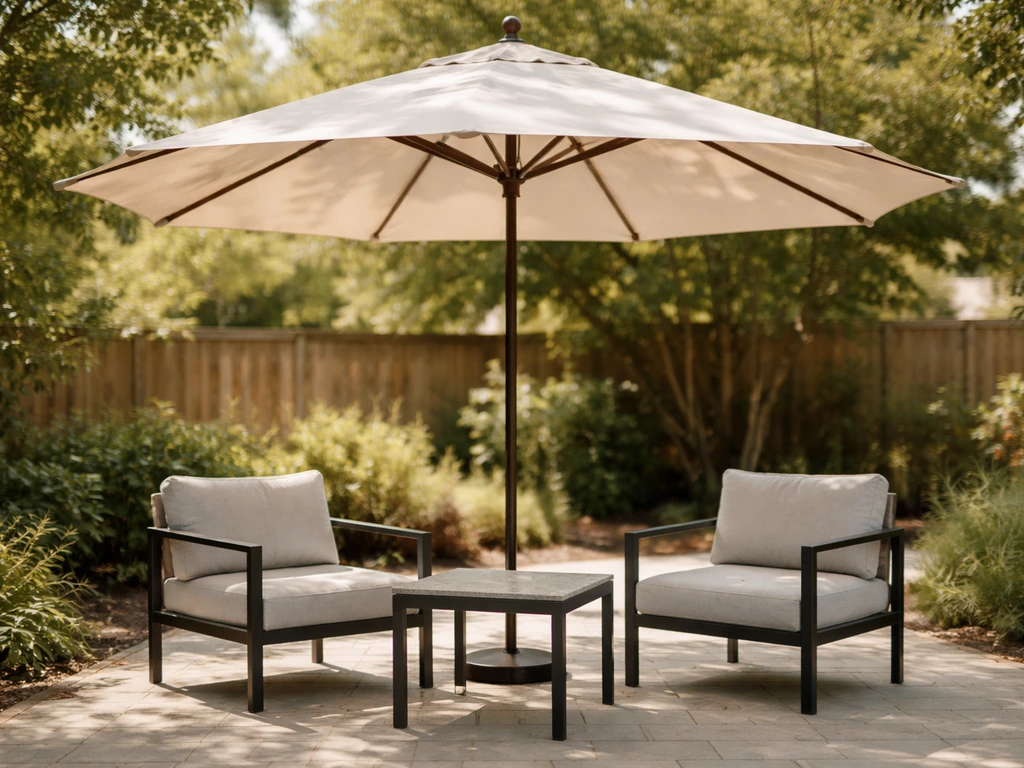
A patio umbrella is a large, freestanding shade structure designed to sit over an outdoor seating or dining area on a residential patio. It typically has a fabric canopy stretched over a metal or wood frame, supported by a central pole that either slots through a hole in a table or stands in a weighted base nearby. If you're trying to picture smaller options, learn how a half patio umbrella works and how its coverage differs from a full-size market umbrella. The whole point is simple: block sun, reduce heat, and make your outdoor space actually comfortable to sit in during the day.
What Is a Patio Umbrella? Types, Uses, and How to Choose

Ada Hollis
9 Jun 2026
What a patio umbrella actually does
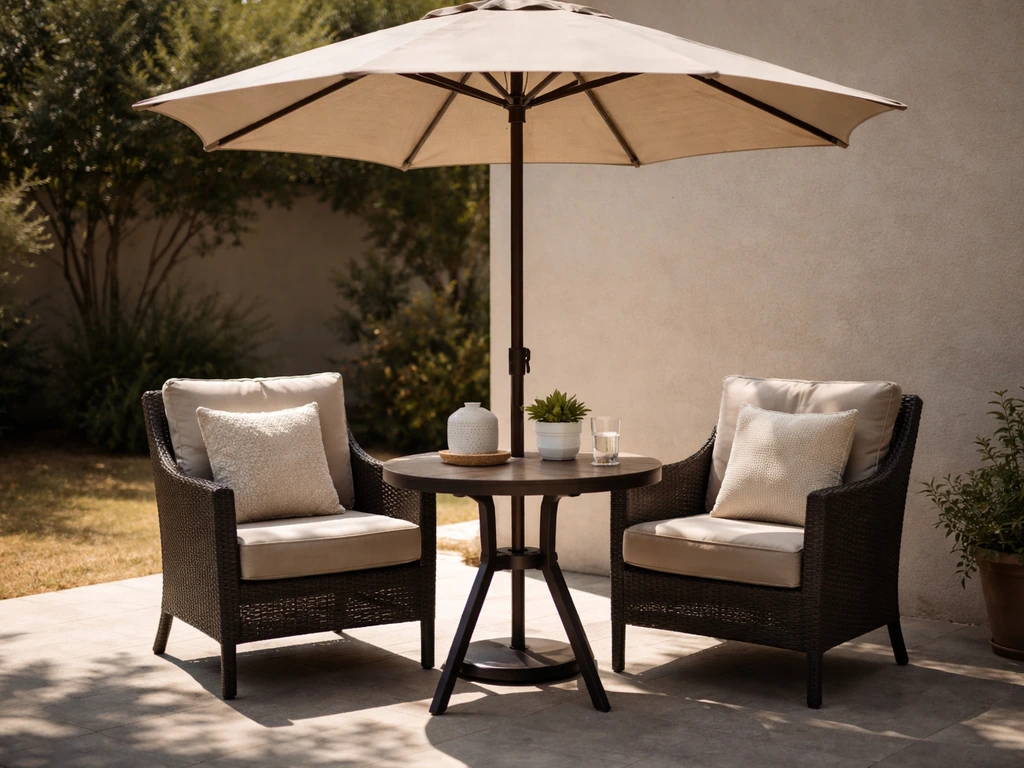
The primary job of a patio umbrella is shade. Direct sun on a backyard patio can make a surface uncomfortably hot within minutes, and a good umbrella cuts that dramatically. Most canopies are made from UV-resistant fabric, so they block a significant portion of ultraviolet radiation, not just visible light. That means cooler skin, less sun exposure, and a space you can actually use in the middle of a summer afternoon.
Beyond shade, a patio umbrella offers light weather protection. It won't stand up to a thunderstorm, but it handles light drizzle and keeps dew off your furniture when positioned correctly. Manufacturers like Frankford recommend closing the umbrella when sustained winds exceed 25 mph, and most major retailers echo that advice. Many canopies include a wind vent at the top, which is a small opening designed to let air pass through rather than catch the canopy like a sail. That feature alone meaningfully extends the umbrella's life and reduces the chance it tips over on a breezy afternoon.
Most patio umbrellas open and close with a crank mechanism built into the pole. Better models allow tilting as well, so you can angle the canopy to follow the sun as it moves across the sky throughout the day. This is more useful than it sounds. A fixed canopy that shades perfectly at noon might leave you squinting by 3 p.m., while a tilting model lets you adjust without moving furniture.
The main types: center pole vs cantilever
If you've ever sat at a café or restaurant patio, you've seen a market umbrella. This is the classic center-pole design, with the supporting pole running straight through the middle of the canopy. You'll also hear it called a patio umbrella, and the two terms are genuinely interchangeable in most retail contexts. Canopy diameters typically run from 6 feet on the small end to 11 feet for larger dining setups. This style is reliable, affordable, and easy to find, but the center pole can get in the way of chairs and conversation if your table isn't set up around an umbrella hole.
A cantilever umbrella, sometimes called an offset umbrella, solves that problem by moving the pole completely off to one side. The canopy hangs out over the seating area from a lateral arm, leaving the entire space underneath open and unobstructed. Cantilever models typically have a heavier base to compensate for the offset load, and many allow 360-degree rotation so you can swing the canopy to wherever the shade is needed. They cost more than center-pole models, but for lounge seating, sectional sofas, or any layout where a center pole would be awkward, they're genuinely worth it.
| Type | Pole Position | Best For | Typical Size Range | Base Requirement |
|---|---|---|---|---|
| Market / Center-Pole | Center of canopy | Dining tables with umbrella hole | 6 ft to 11 ft diameter | Table hole or freestanding weighted base |
| Cantilever / Offset | Side of canopy, lateral arm | Lounge seating, open layouts | 9 ft to 13 ft diameter | Heavy weighted base or in-ground mount |
Canopy materials and what to look for
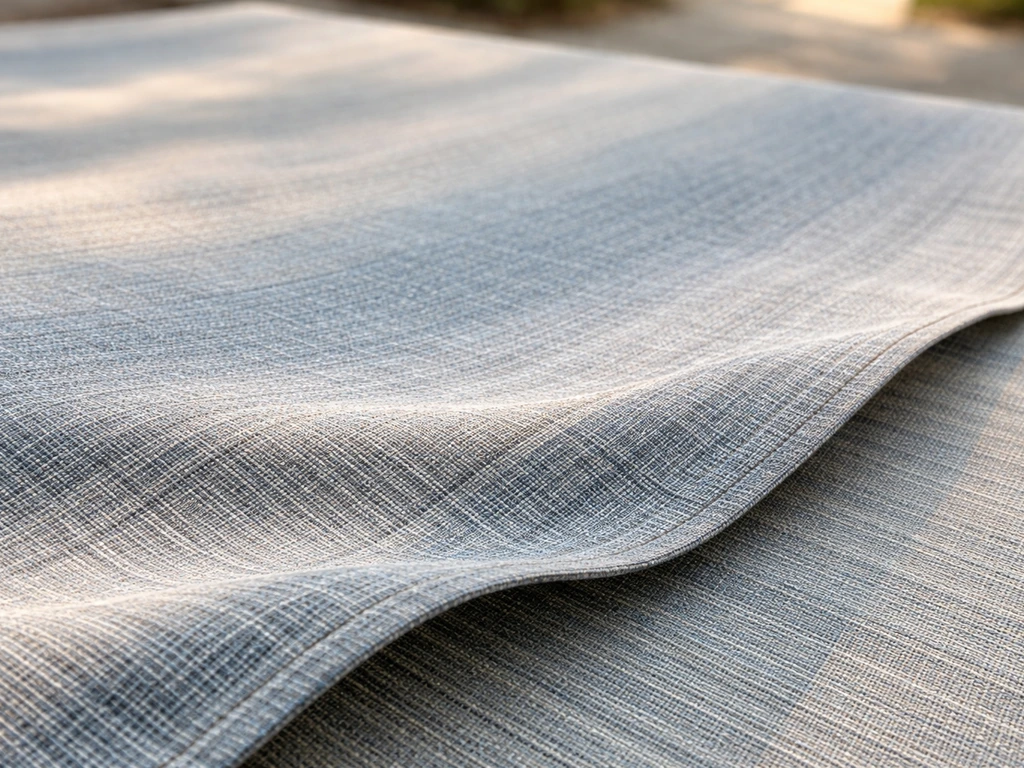
Canopy fabric matters more than most people realize. Solution-dyed acrylic is the industry benchmark for outdoor umbrella fabric. Brands like Sunbrella use this process, where color is baked into the fiber rather than printed on the surface, which means the fabric resists fading, handles UV exposure well, and holds up to repeated cleaning with mild soap and water. Cheaper polyester canopies work fine for occasional use, but if your umbrella is out most of the summer, solution-dyed acrylic will outlast it by several seasons.
How to choose the right patio umbrella
Start with size. The standard rule of thumb is to choose a canopy diameter about 4 to 5 feet wider than the table or seating footprint you want to cover. In practice, that means a 7.5-foot umbrella works well over a small two- to four-person dining table, a 9-foot umbrella covers a standard four- to six-person setup comfortably, and an 11-foot model handles larger gatherings or a wider lounge arrangement. If you're buying a cantilever style, the canopy diameter is measured across the full spread of the arm, so a 10-foot cantilever covers a meaningful footprint even though the pole isn't in the center.
Height and clearance
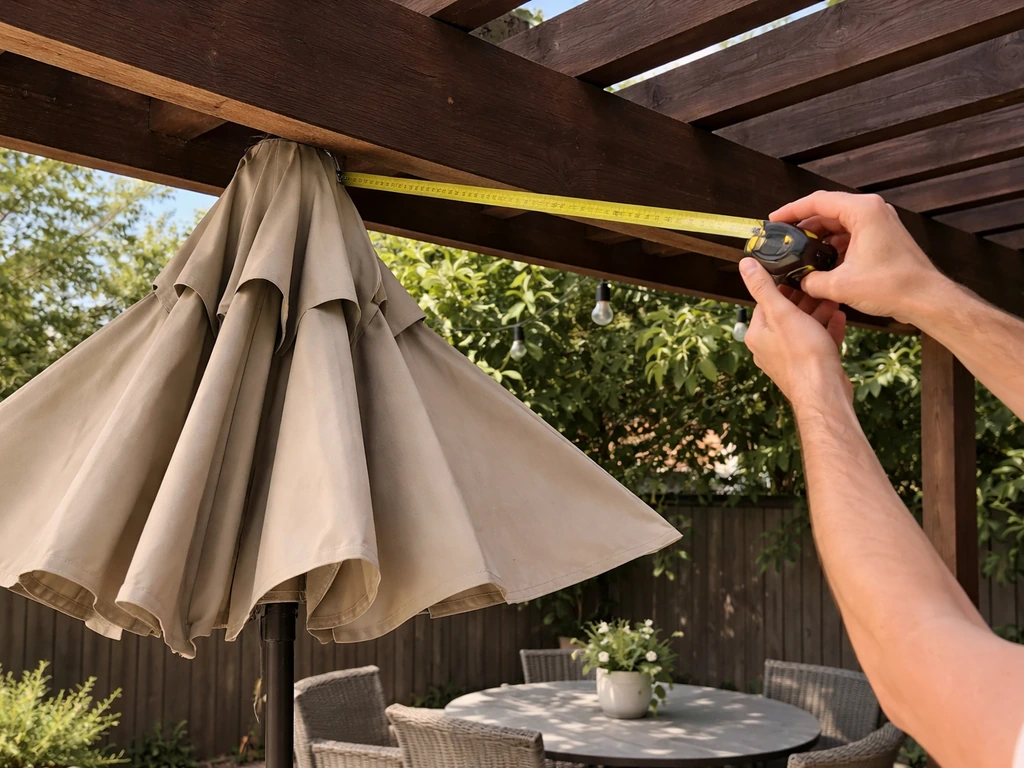
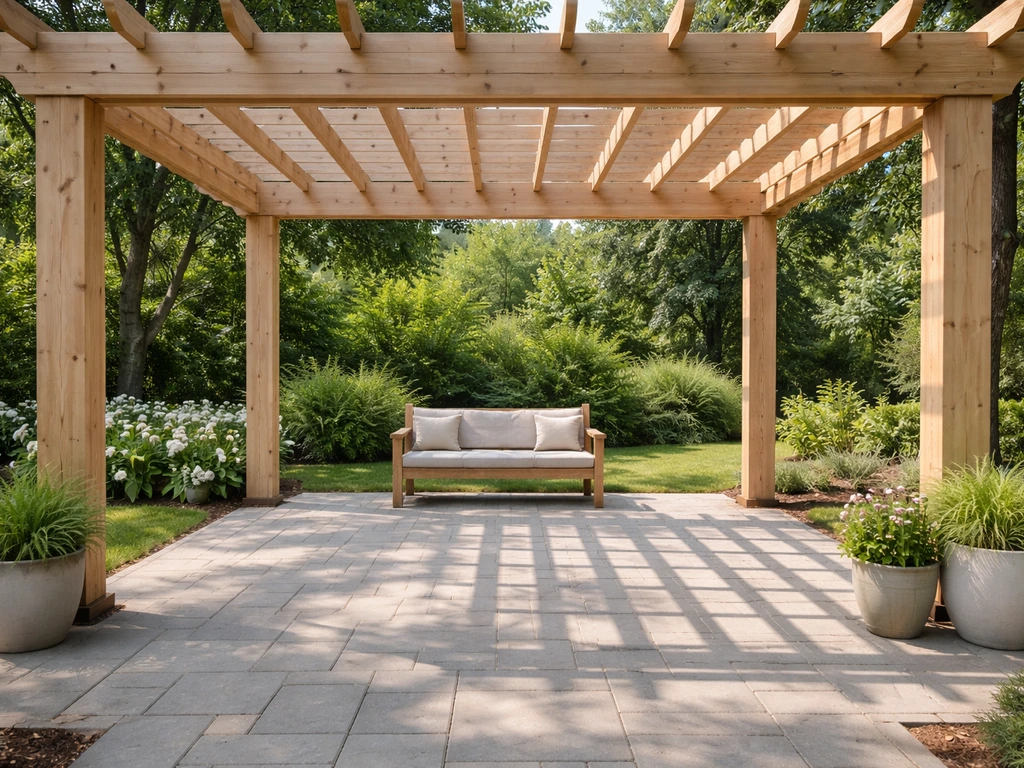
Most patio umbrellas stand between 7 and 9 feet tall when open. That's worth checking before you buy, especially if your patio sits under a pergola, overhang, or any roof structure. A pergola patio is a covered outdoor space that uses beams and rafters for shade, often creating a more permanent alternative to umbrellas. A 9-foot umbrella next to a pergola crossbeam can cause problems when you try to open it. Measure the available clearance above the spot where you plan to place the umbrella, then compare that to the product's open height listed in the specs.
Base and mounting options
Center-pole umbrellas either thread through a hole in a patio table (the most stable option for dining setups) or sit in a freestanding weighted base. Fillable bases made from HDPE plastic are common and can be filled with sand or water for ballast. Treasure Garden’s Base 13 manual includes assembly and location considerations, including choosing an appropriate area and avoiding unsuitable ground conditions to help maintain stability blank" rel="noopener noreferrer">fillable bases made from HDPE plastic are common and can be filled with sand or water for ballast. For cantilever umbrellas, base weight is critical because the offset arm creates significant leverage. You can buy heavy fillable bases specifically rated for offset loads, or opt for a permanent in-ground mount, which involves setting a steel spigot into a concrete footing. In-ground mounting is the most stable solution and makes sense if you have a fixed spot where the umbrella will always live.
A quick checklist before you buy
- Measure your table or seating area and add 4 to 5 feet to find the minimum canopy diameter you need.
- Check overhead clearance if your patio has any roof structure, pergola, or low-hanging feature.
- Decide between center-pole (better for table dining) and cantilever (better for lounge seating or open layouts).
- Confirm the base: table hole, weighted freestanding base, or in-ground mount for permanent installations.
- Look for a wind vent in the canopy and a crank-tilt mechanism for day-long usability.
- Choose solution-dyed acrylic fabric if the umbrella will be out frequently through the season.
Where patio umbrellas fit: patios vs porches, balconies, and verandahs
A patio is typically an uncovered, ground-level outdoor space, most often in a backyard or alongside the home. Because it has no built-in roof, a patio umbrella is the most practical and cost-effective way to add shade. It's portable, adjustable, and doesn't require permits or construction. This is the space where patio umbrellas make the most sense and are most commonly used.
A porch is an attached, roofed structure at the front, side, or rear entry of the house. Because a porch already has a roof overhead, a patio umbrella is redundant there and often impractical given the lower ceiling. You might find small table umbrellas on a porch for decorative purposes, but they're not doing the functional work they'd do on an open patio.
A balcony is an elevated platform extending from an upper floor, usually enclosed by a railing. Space is limited on most balconies, which makes large 9- or 11-foot market umbrellas impractical. Smaller umbrellas with clamp-on bases exist for balcony use, but there's also a real wind-safety consideration: at elevation, wind uplift is more aggressive than at ground level, and an unsecured umbrella on a balcony becomes a hazard quickly. Some HOA and building policies specifically restrict or regulate umbrella use on balconies for this reason.
A verandah (or veranda) is a roofed, open-sided gallery running along one or more sides of a building. Like a porch, it already provides overhead cover, so adding a patio umbrella underneath is rarely useful or necessary. If you're reading a property listing and see a verandah mentioned, assume that outdoor seating space already has shade built in. A patio, by contrast, signals open sky, which means a patio umbrella is the practical next addition.
Courtyards sit somewhere in between. A fully enclosed courtyard with high surrounding walls may already have partial natural shade depending on orientation and time of day, but an open courtyard functions much like a patio in terms of sun exposure. A cantilever umbrella works especially well in a courtyard setting where you want shade coverage without anchoring a pole in the center of a hardscape area.
What to do right now
If you're shopping for a patio umbrella today, start with three measurements: the width of your table or seating area, the available height above that spot, and the footprint of the base you can accommodate. From there, the choice between a center-pole market umbrella and a cantilever model usually becomes obvious based on your layout. Pick a canopy diameter that gives you 4 to 5 feet of overhang beyond your furniture, confirm the base option works for your surface (concrete patio, pavers, or grass), and prioritize a vented canopy with a crank-tilt if you plan to use it through the afternoon. If you're interested in related shade options for your patio, it's also worth understanding how patio covers, pergolas, and awnings compare as more permanent alternatives to a freestanding umbrella. A patio awning provides a more permanent, fixed-style shade solution than a free-standing umbrella, helping you cool and protect outdoor spaces patio awning definition. A patio cover definition can help you distinguish fixed structures from portable shade like umbrellas patio covers. A patio cover is a more permanent shade structure attached to your home or posts, typically used to block sun and protect outdoor areas year-round.
FAQ
Is a patio umbrella considered market umbrella, or are they different?
In most stores, “patio umbrella” and “market umbrella” refer to the same core style, the center-pole umbrella with a crank opening. The key differences you’ll see in listings are canopy size, height, and whether it has tilt and ventilation, not the name.
How do I measure canopy size correctly if my furniture shape is irregular (like an L-shaped sectional)?
Use the widest footprint you need to shade, then add the 4 to 5 feet of overhang target. For irregular layouts, it often works best to measure from the center of the umbrella’s intended base to the farthest seating edge and pick a diameter that covers that distance.
What base should I choose for my patio umbrella if I have pavers or grass instead of concrete?
On pavers, choose a base with a wide footprint so it doesn’t rock or stress individual stones, and confirm there’s enough clearance for the legs to sit flat. On grass, prefer a dedicated, ground-spanning base or an in-ground mount designed for umbrellas, because fillable sand bases on turf can settle unevenly.
Do I really need a wind vent, and what happens if my umbrella doesn’t have one?
A vent reduces how much wind pressure “catches” the canopy like a sail, which lowers wobble and tipping risk in breezier conditions. Without a vent, you may still use it for light days, but you’ll want to be more conservative with wind limits and close it sooner when gusts pick up.
Can I leave a patio umbrella out in the rain or overnight?
It can handle light drizzle, but it’s best not to leave it unattended in steady rain overnight. Waterlogged fabric can sag and hold moisture against frames and fasteners, which increases mildew risk, especially if the umbrella doesn’t fully dry while open.
How do I know the open height will clear a pergola or roof overhang?
Don’t just compare “umbrella height” to your clearance. Check the product’s stated open height, then measure from the exact spot where the base will sit to the closest overhead beam, accounting for any pad or leveling blocks that raise the umbrella.
What’s the safest way to handle and clean solution-dyed acrylic fabric?
Use mild soap and water and let the canopy dry fully before storing. Avoid harsh abrasives or high-pressure washing, because they can rough up the fiber surface and make water bead less effectively over time.
Is a cantilever umbrella worth it if I don’t have an umbrella hole in my table?
Yes, especially if you want unobstructed seating or you have lounge chairs where a center pole would block traffic. Cantilevers also help when your furniture arrangement is tighter, but you must buy a base matched to the offset load so it doesn’t drift in wind.
How heavy should my umbrella base be for a full-size (9 or 11 foot) model?
Base sizing depends more on the umbrella style than the canopy diameter alone. For center-pole umbrellas, you’ll often be fine with a properly rated fillable base, but for cantilever models you should choose a base specifically described as suitable for offset/arm leverage, or use an in-ground mount.
What’s the best way to store a patio umbrella between seasons?
Close it when not in use and store it in a dry, ventilated area if possible, then cover it with a breathable cover. If it stays outdoors, keep it protected from standing water and inspect the crank and fabric monthly for loosened parts or early mildew signs.
Next Article
What Is a Pergola Patio? Types, Styles, and Real Examples
Clear definition of a pergola patio, key differences from other outdoor spaces, styles, materials, and how to spot it in