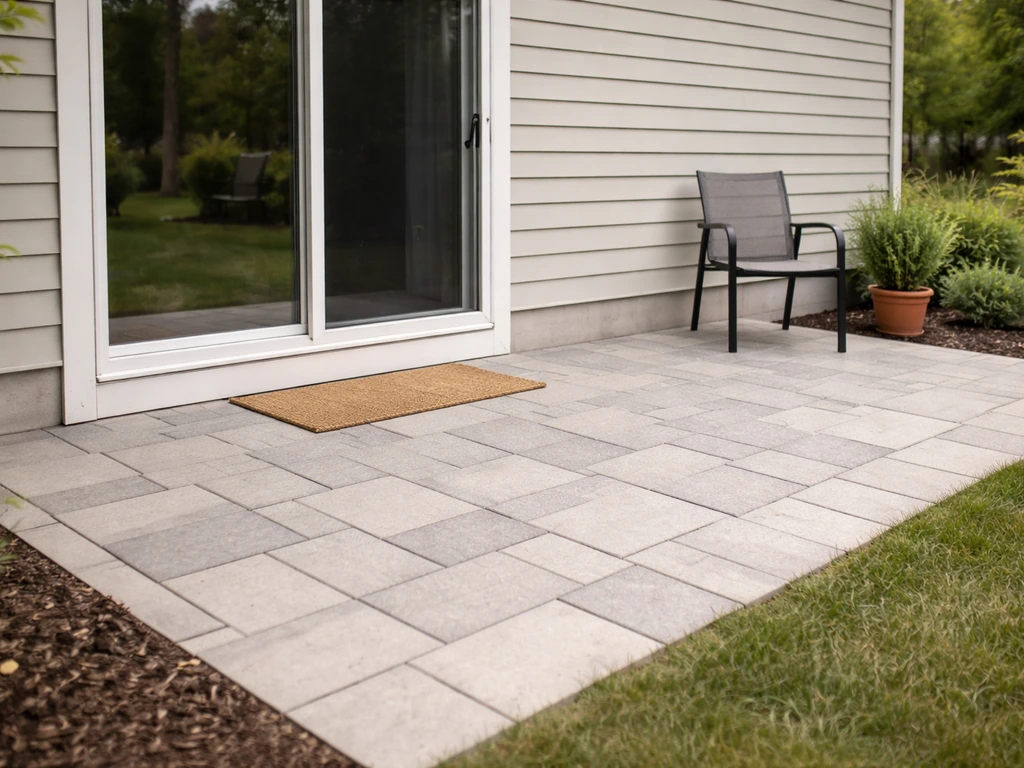
A patio garden is a planting scheme that lives on or immediately around a patio, using containers, raised beds, vertical planters, or integrated flowerbeds rather than a separate lawn or yard. The patio itself is a paved, open-air surface adjoining a home with no roof overhead, and the garden is woven into that hardscape rather than existing apart from it. Think terracotta pots clustered beside a bistro table, wall-mounted herb pockets along a brick wall, or a row of raised timber beds lining the edge of a concrete slab. That integration with the paved surface is what makes it a patio garden specifically.
What Is a Patio Garden? Definition, Examples, and Ideas

Ada Hollis
20 Jun 2026
What "patio garden" actually means
The word "patio" traces back to Spanish, where it originally referred to an inner courtyard, and that origin is worth knowing because it still shapes how the term gets used differently around the world. In mainstream British and American English today, Merriam-Webster defines a patio as a recreation area that adjoins a dwelling, is often paved, and is adapted for outdoor dining. Cambridge adds the key detail: no roof. So a patio is hard-surfaced, open to the sky, attached to the house, and used for living outdoors.
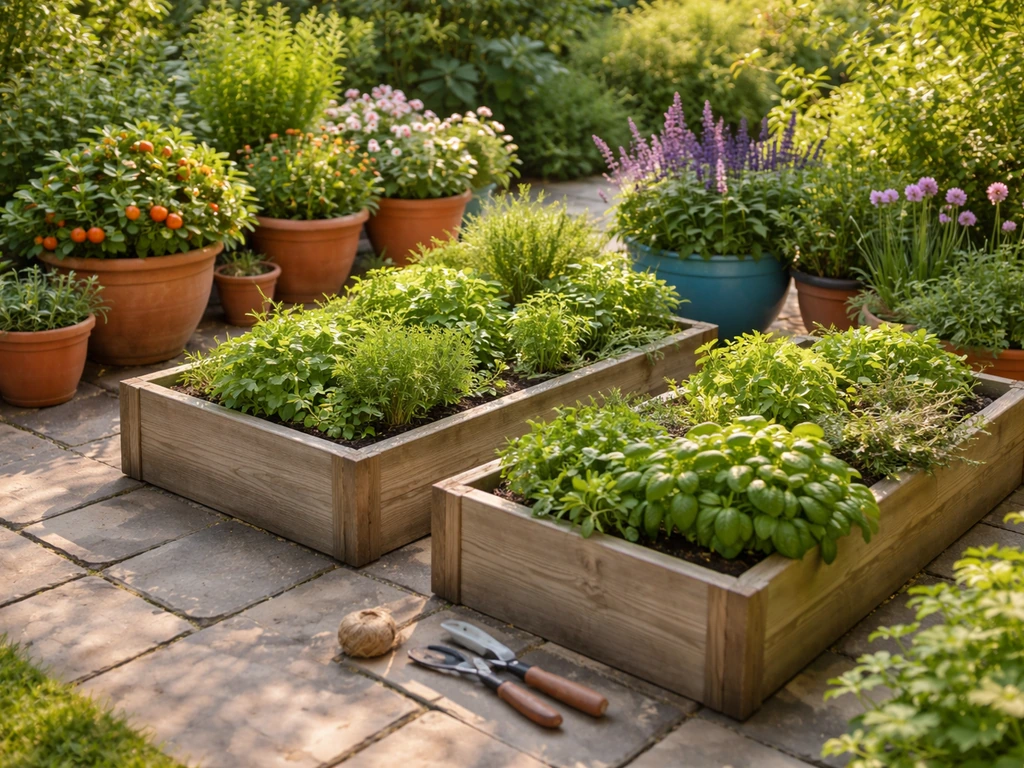
A patio garden layers planting on top of that foundation. The hardscape is still the base layer: the slabs, pavers, gravel, or concrete that defines the space. The garden element is then integrated into that surface through containers, planting pockets within the paving, raised beds along the perimeter, or climbing plants trained up an adjacent wall. You are gardening on a hard surface rather than in open ground, which changes almost everything about how you plan it.
You may also see the phrase "garden patio" used, especially in real estate listings and landscaping content. It typically means the same thing, though it sometimes emphasizes the garden character more than the paved surface. Either way, if a listing mentions a patio garden, you should expect a hard-floored outdoor area with planting integrated into or directly surrounding it, not a separate lawn or kitchen garden elsewhere on the property.
How a patio garden differs from a yard garden
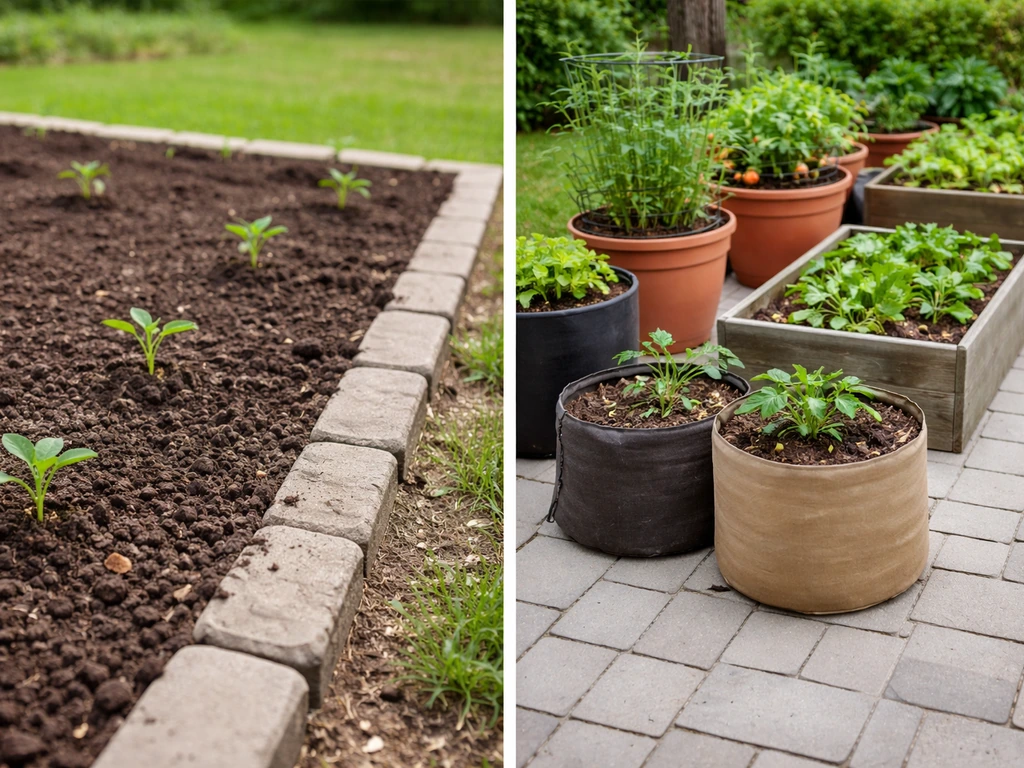
The single biggest practical difference is the absence of in-ground soil. In a yard garden, you dig into the earth, work the soil, and plant directly. On a patio, the paved surface stops you from doing that, so you work with containers, purpose-built raised beds, or narrow border beds cut into the edge of the paving. Many plants grow well in containers that you can place on a porch, balcony, or patio, which is why containers are a common real-world solution for patio planting when in-ground space is limited containers for a patio garden when you cannot use in-ground soil. That constraint shapes every decision you make, from what soil mix you buy to how often you water.
Containers and raised beds dry out faster than garden beds because they have limited soil volume and drainage in multiple directions. The UNH Extension recommends at least 6 to 8 hours of direct sunlight for vegetable growing in containers, and notes that standard garden soil is too heavy for container use. The UNH Extension fact sheet recommends at least 6 to 8 hours of direct sunlight for vegetable growing in containers and says standard garden soil is too heavy for container use. You need a purpose-formulated potting mix. That is not a detail you worry about in a typical yard garden, but it is one of the first things to get right on a patio.
Access and scale are also different. UMN Extension advises designing raised beds so you can comfortably reach the center without stepping into the bed, which usually means keeping beds no wider than about 4 feet. On a patio, you are often working with narrow perimeter beds or pots that you can rotate and move, so planning for arm's reach matters a lot more than it would in an open yard where you can walk around the planting from any side.
Patio vs. porch, balcony, verandah, and courtyard
These terms get mixed up constantly in property listings and everyday conversation, and the distinctions matter when you are trying to figure out what kind of garden space you are actually working with. If you are trying to nail down terminology, it also helps to know where patio comes from since the words are often mixed up with porch, balcony, verandah, and courtyard in listings.
| Space | Roof? | Attached to building? | Typically paved? | Garden potential |
|---|---|---|---|---|
| Patio | No | Yes, adjoining | Yes | Strong: containers, raised beds, vertical planters |
| Porch | Yes | Yes, at entrance | Often | Moderate: shade-tolerant containers only |
| Balcony | No (usually) | Yes, elevated | Yes | Limited by weight and access; containers only |
| Verandah | Yes | Yes, wraps exterior | Often timber | Moderate: similar constraints to porch |
| Courtyard | No | Enclosed by walls/buildings | Often | Strong: sheltered microclimate, in-ground possible |
A porch, as Merriam-Webster defines it, has a separate roof covering the area at an entrance. That roof changes the light conditions dramatically, meaning shade-tolerant plants are usually your only option. A verandah (or veranda) extends that covered, open-sided structure around more of the building's exterior, according to Wikipedia, giving you a similar shaded environment but more linear space to work with.
A balcony is elevated and fully exposed like a patio, but the weight-bearing limits of the floor structure restrict how heavy your containers can get, especially once they are saturated with water. A courtyard, by contrast, is typically enclosed on multiple sides by walls or adjacent buildings, giving it a sheltered microclimate that can actually support a wider range of plants than an open patio. In some older architectural uses, especially in Spanish-influenced design, courtyard and patio were nearly interchangeable, which is part of why the terminology still causes confusion in listings and real estate descriptions.
What patio gardens actually look like
Patio gardens range from a single row of potted herbs by the back door to fully designed outdoor rooms with layered planting at multiple heights. Here are the most common setups you will encounter in real homes.
Container gardens
The most common patio garden format: pots, planters, window boxes, and troughs arranged across the paved surface or clustered along its edges. This works on any patio, regardless of size. Homes and Gardens recommends using planters of varying heights to create visual depth, grouping plants in odd numbers, and placing taller specimens like a compact ornamental tree or large shrub at the back to give the arrangement a canopy layer. A small terracotta pot of basil next to the grill is technically this, scaled down.
Raised beds on paving
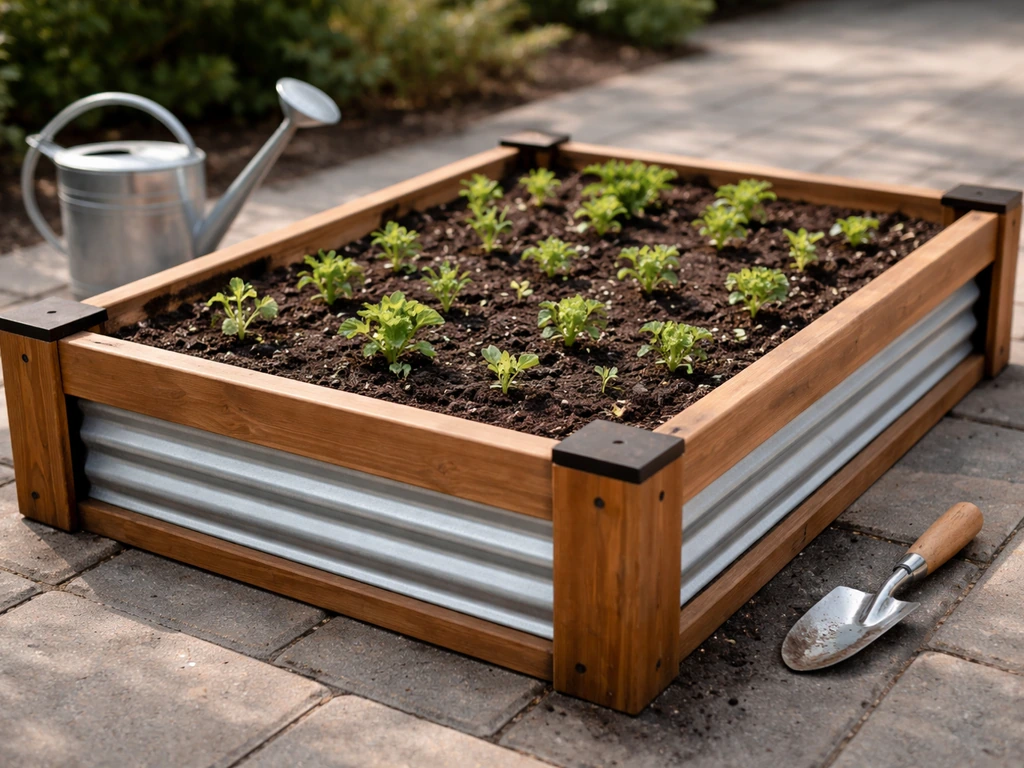
Timber or metal raised beds sitting directly on patio paving are popular for growing vegetables and herbs. They sit above the hardscape, filled with a purpose-mixed growing medium, and they can be positioned anywhere the light is good. Some homeowners line the perimeter of a patio with a series of low raised beds to define the space and grow food at the same time.
In-patio planting pockets
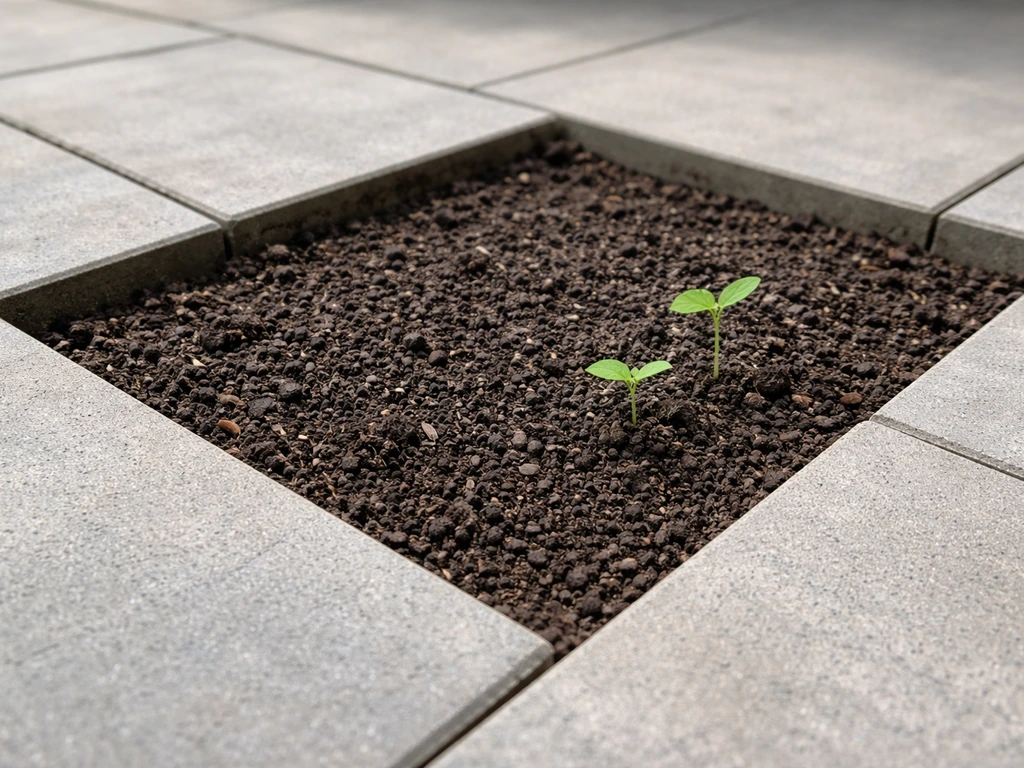
Some patio designs remove one or more paving slabs and fill the space with soil to create an integrated planting bed. Home Depot's garden patio ideas highlight this approach, and it works especially well for structural plants like ornamental grasses or low-growing ground covers that soften the hard lines of the paving without taking up any floor space.
Vertical and wall-mounted planters
When floor space is tight, the walls become usable gardening surface. Wall-mounted pocket planters, trellis systems for climbing plants, and living wall frames are all established options. Home Depot's living wall guide frames these as outdoor wall transformations that turn a blank fence or rendered wall into a planting display. GardenDesign notes that trellis and arbor structures extend planting upward effectively, and trailing plants in hanging baskets work on the same principle, pulling the eye up and making a small patio feel far more lush.
How to design a patio garden
Good patio garden design starts with the hardscape, not the plants. The paving sets the floor plan, and your planting has to work within and around it rather than the other way around.
Map your floor space first
Sketch the patio to rough scale and mark what is fixed: the door, any furniture you need, and any outdoor cooking area. What is left is your planting zone. On most domestic patios, this tends to be the perimeter and the walls rather than the center, which you need clear for movement and seating. Landscapade recommends integrating at least one larger plant, such as a compact tree or large shrub, to anchor the design and give it structure at eye level rather than just a collection of small pots at ankle height.
Layer by height
Homes and Gardens describes a layering approach that borrows from garden border design: a tall background layer (climbers, wall-trained shrubs, or a small tree), a middle layer of medium pots and bushy perennials, and a low foreground layer of trailing or compact plants at the front edge. This gives a small patio the visual depth of a much larger garden without actually needing more floor space.
Container selection and soil
Choose containers sized to the plants you want to grow, not just what looks good. Shallow pots dry out fastest and suit succulents or annual flowers well. Deeper, larger containers hold moisture longer and are better for vegetables, herbs, and perennials. Always use a quality potting mix rather than garden soil, which compacts in containers, restricts drainage, and is too heavy for raised bed frames sitting on paving. Make sure every container has drainage holes.
Going vertical
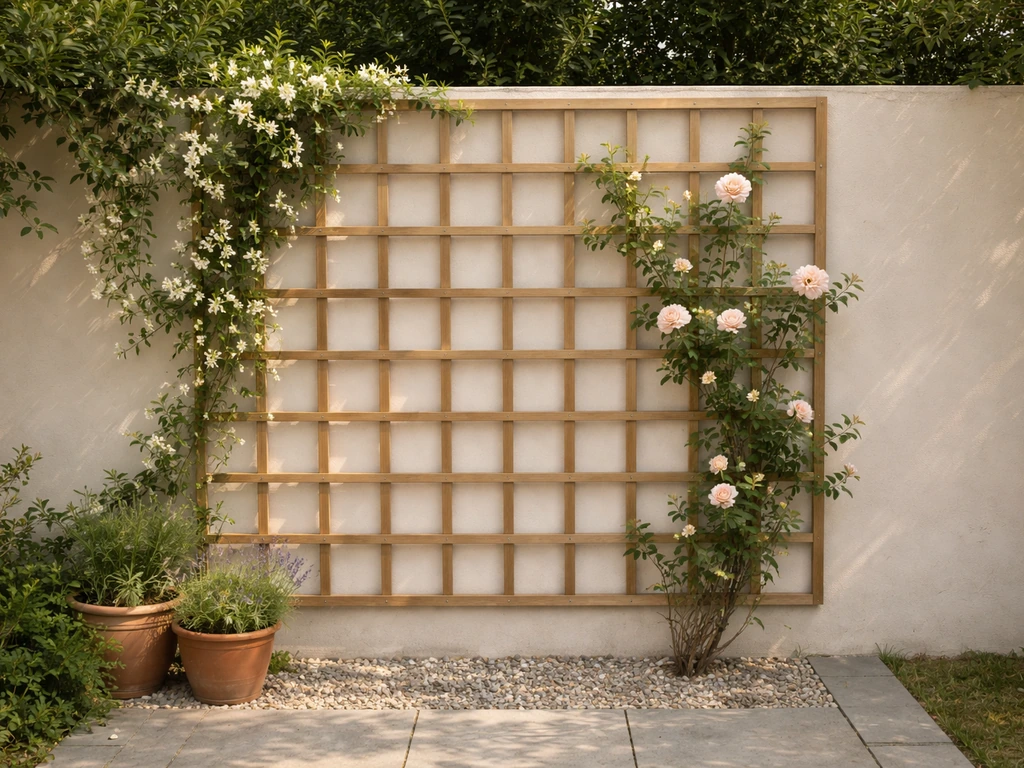
A simple timber trellis fixed to a fence or wall costs very little and immediately multiplies your planting area. Train a climbing rose, jasmine, or clematis up it to create a green backdrop for the whole patio. Hang pocket planters for herbs and small trailing flowers. Wall-mounted systems like modular living wall frames can hold dozens of plants in the footprint of a single poster, and they work especially well for herbs because you can harvest them at eye level without bending down.
Site requirements: sun, shade, drainage, wind, and privacy
Every patio has a microclimate, and it is rarely identical to the rest of the garden. Before buying any plants, spend a day watching where the sun falls on your patio and for how long. The Sill's patio gardening guidance makes the point clearly: count the hours of direct sunlight before choosing plants, not the other way around. A north-facing patio in a shaded courtyard needs completely different plant choices than a south-facing slab exposed to full afternoon sun.
- Sun: Most vegetables and flowering plants need 6 to 8 hours of direct sun daily. Herbs like mint, parsley, and chives tolerate partial shade. Ferns, hostas, and impatiens are better choices for genuinely shady patios.
- Drainage: Hardscape can trap rainwater against the house or drown nearby planting. Livingetc flags this as a common hard-landscaping mistake and recommends checking how water runs off the paved surface before positioning your most sensitive containers. Gravel borders and trench drains help manage runoff.
- Wind: Exposed or elevated patios can be windier than you expect. Wind accelerates moisture loss from containers significantly, so factor in shelter when deciding where to place your most vulnerable plants or whether to add a windbreak structure.
- Privacy: Dense taller container planting, a trellis with climbers, or bamboo in large pots can screen a patio from neighbours while doubling as part of the garden. This is a practical dual purpose that works particularly well on urban patios where the walls are close.
Watering is the single biggest maintenance commitment in a patio garden. Containers dry out much faster than in-ground beds because they have limited soil volume and exposure on multiple sides. The RHS states plainly that container plants rely on consistent gardener watering in a way that plants in garden soil do not. OSU Extension recommends watering slowly until water flows freely from the drainage holes at the base, and Iowa State University Extension notes that frequency depends on container size, potting mix, plant type, and weather. In practice, check your containers daily in summer and water most of them more often than you expect to at first.
Planning, maintenance basics, and what to expect in property listings
Getting started
- Walk your patio at different times of day and note how many hours of direct sun each wall and floor section receives.
- Decide your primary goal: food growing, flowers, privacy screening, or a mix. This drives container size, plant selection, and watering commitment.
- Start with a small number of good-quality containers rather than filling every inch immediately. A few well-placed, well-maintained pots look better than a cluttered arrangement of struggling plants.
- Buy potting mix specifically formulated for containers, and add slow-release fertiliser at planting time. UMN Extension advises starting regular fertiliser applications between 2 and 6 weeks after planting, depending on your potting medium and how frequently you water.
- Install any trellis or vertical structures before the planting around them goes in, not after.
Ongoing maintenance
Container patio gardens need more regular attention than most in-ground gardens: daily watering checks in warm weather, fortnightly feeding once plants are established, deadheading flowering plants to extend the season, and repotting when roots start circling the base or bursting drainage holes. The upside is that everything is accessible and at close range, which makes problems easy to spot early. Pests and disease are easier to catch and treat when your whole garden is within arm's reach of a chair.
Reading property listings correctly
When a listing describes a "patio garden" or "garden patio," it usually means a paved outdoor area with planting integrated into it, not a separate lawn or kitchen garden. “Patio” simply means an outdoor paved sitting area, and “patio garden” refers to planting that is integrated with that paved space. What you get can range from a single pot plant on a concrete slab to a genuinely designed outdoor room with raised beds, mature climbers, and structured planting. Always ask for photos or visit in person, because the terminology is not standardised and regional usage varies. In British listings especially, "patio garden" often indicates a small-to-medium urban or suburban outdoor space where planting compensates for limited lawn area. In US listings, it more often signals a defined seating and dining zone with decorative container planting around it.
It is also worth knowing that the word "patio" carries different connotations in different cultural and linguistic contexts: its Spanish origin as an inner courtyard, its use in some South Asian English to describe outdoor sitting areas, and its occasional conflation with terrace or courtyard in architectural descriptions. If you are researching what patios mean more broadly, how the term compares to related outdoor spaces, or where the word comes from, those threads connect directly to what shapes the design possibilities of any patio garden you are planning or evaluating.
FAQ
Can a patio garden include grass if I want some lawn right next to the planters?
Yes, but it is no longer strictly “patio garden” if the main planting system is a lawn. If the lawn is just a thin edge while most growing is containers, wall pockets, or raised beds integrated with the paving, you can still describe the concept as patio gardening.
What’s the best way to prevent container soil from draining onto the patio surface?
Use trays or saucers under pots if water staining is an issue, and water slowly so it absorbs before runoff. If you have porous pavers or gravel joints, consider a mulch top layer to reduce splash, and keep raised beds slightly elevated with a liner if the base is bare concrete.
How do I choose plants for a patio garden when part of the area is shaded part of the day?
Split the patio into microzones by observing sun and shade for several hours, then match plants to the worst-case light they will receive, not the brightest moment. If a spot gets only morning sun, prioritize herbs and perennials that tolerate lower light there, while saving full-sun crops for the sunniest zone.
Is it okay to use garden soil in containers or raised beds on a patio?
In most cases, no. Garden soil compacts in containers, reduces drainage, and can be too heavy for raised bed frames sitting on paving. Use a lightweight, container-ready potting mix, and for raised beds filled on patio paving, consider adding perlite or similar amendments to keep the mix airy.
What container size should I start with for herbs versus vegetables?
Herbs usually do fine in smaller to medium containers, but vegetables need deeper soil to support roots and stable moisture. A practical rule is to upsize for anything fruiting or root-heavy, then ensure the pot has drainage holes and enough volume that it will not dry out within a day on hot weeks.
How often should I water a patio garden if I’m away for a few days?
Plan for the worst conditions, then add a mitigation step, like drip irrigation on a timer, self-watering planters, or grouping pots together to slow drying. In summer, check daily as a baseline, but if you cannot, set up passive or automated watering rather than relying on someone to “spot water.”
Do patio gardens need fertilizer even if I refresh the potting mix now and then?
Usually, yes. Containers leach nutrients faster than in-ground soil, so feeding once established is typically needed, especially for vegetables and fast growers. If you repot or top-dress in spring, choose a mix that includes slow-release nutrients, then adjust based on plant growth and leaf color.
How do I stop pests or diseases from spreading across many small containers?
Improve airflow and spacing, remove dead leaves promptly, and avoid watering foliage when possible. Because everything is accessible, treat early, quarantine any new plants for a short period, and clean tools between beds or containers to limit cross-contamination.
Is a “garden patio” the same as a “patio garden” in real estate listings?
Often yes, because both descriptions point to a paved outdoor area with planting incorporated nearby. The difference is emphasis: “garden patio” may highlight the decorative planting more, while “patio garden” may emphasize the integrated gardening approach. Always verify with photos or an on-site look because terminology is not standardized.
Can I build a patio garden if my patio is on a slope or has uneven pavers?
You can, but you should level planters and manage drainage. Use pot feet or leveling shims for raised beds and ensure containers sit so runoff goes away from the building, doors, and furniture. For sloped areas, consider fewer large planters instead of many small ones to reduce uncontrolled flow.
What’s the biggest mistake people make when designing a patio garden?
Designing around appearances instead of practical access and light. Common issues are pots placed where you need to walk, containers that dry out too quickly, and plants chosen for the yard’s conditions rather than the patio’s sun hours. Start with the hardscape layout and microclimates, then choose sizes and plants accordingly.
Next Article
What Is a Patio Area? Definition and Key Differences
Define what a patio area is, spot it on a property, and compare it to porches, balconies, courtyards, and verandahs.