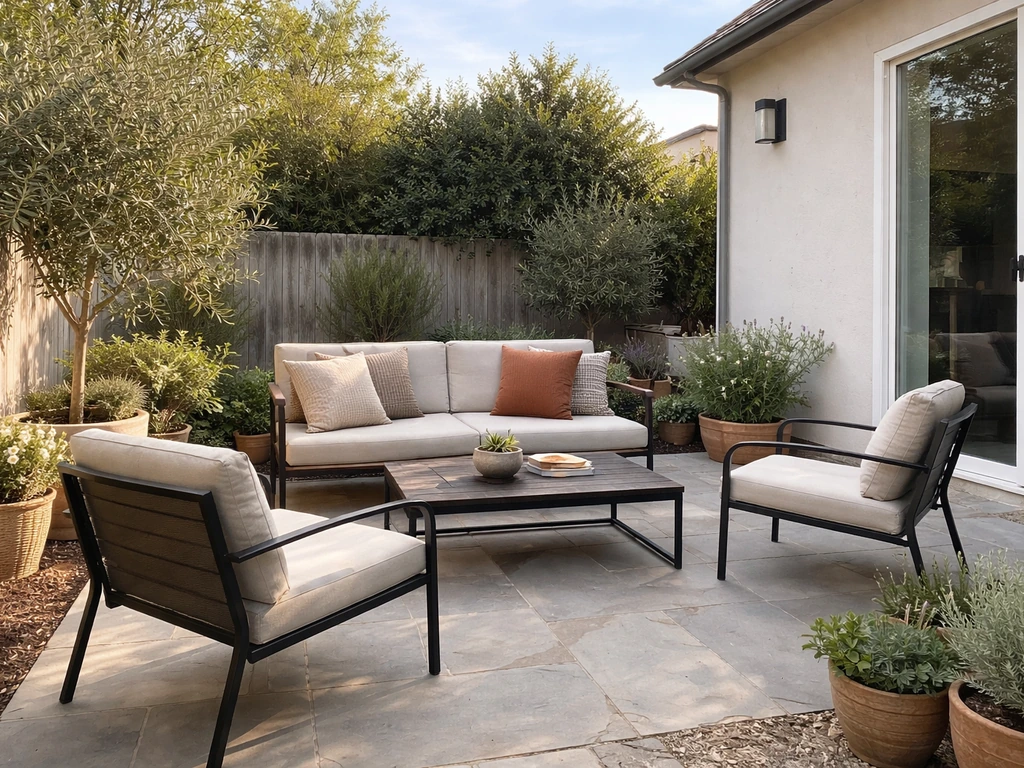
No, "patio" is not a language. It is an architectural term used in English and Spanish to describe an outdoor area adjoining a home, typically paved, and used for sitting, dining, or relaxing. A patio is an outdoor, typically paved area that adjoins a home and is used for sitting, dining, or relaxing. If you searched "is patio a language," you were almost certainly looking for one of two things: what the word "patio" means, or what language the word comes from. Both of those have clear answers.
Is Patio a Language? Meaning of Patio in Architecture

Ada Hollis
28 May 2026
What "patio" actually means in homes
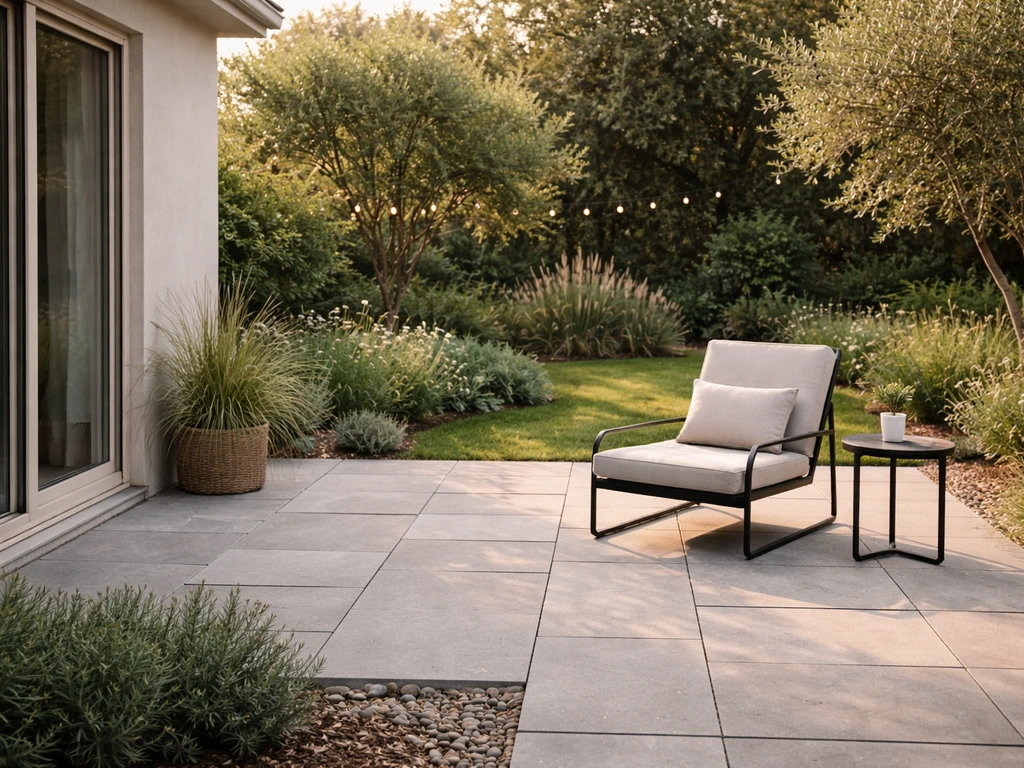
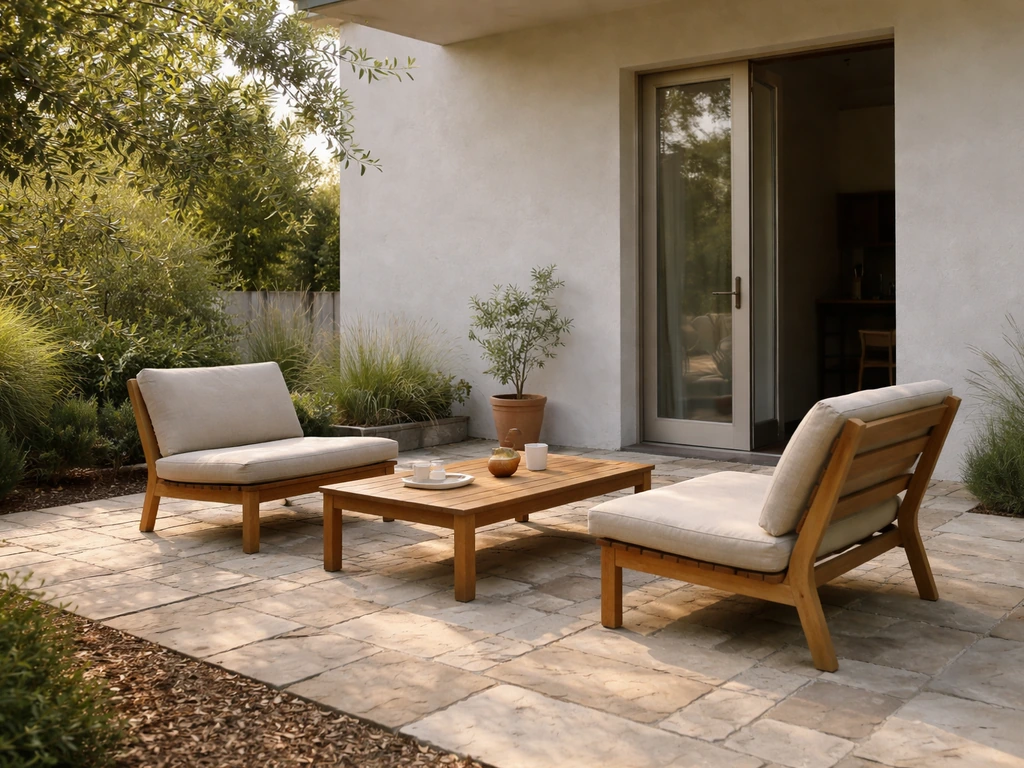
In residential architecture, a patio is an outdoor, typically paved space that sits directly adjacent to a house and is used for leisure: outdoor dining, lounging, barbecuing, or just sitting outside without stepping onto grass. Merriam-Webster defines it as "a recreation area that adjoins a dwelling." Collins puts it plainly as an area of flat stone or concrete next to a house where people sit, relax, or eat. Dictionary.com adds the same framing: usually paved, adjoining a house, used for outdoor lounging or dining.
In practice, a patio sits at ground level, has no roof, and is not enclosed by walls. You walk straight from your back door (or sometimes side door) onto it. Materials vary widely: concrete slabs, natural stone, brick, pavers, or composite tiles are all common. The key defining features are that it is level with or very close to the ground, open to the sky, and directly connected to the home.
One important secondary usage worth knowing: in Canadian English especially, "patio" also commonly refers to the outdoor seating area at a restaurant or bar. So if you see "patio open" on a restaurant sign, that just means outdoor seating is available. The word stretches across both residential and commercial contexts, but the core meaning stays the same: an outdoor, open-air, paved or hard-surfaced area for people to use.
Why people think "patio" might be a language
This is a fair question to stumble into, and it comes from a few different places. The most common reason is that someone heard or read the word "patio" in a non-English context and assumed it might be a language name, the way "Tagalog," "Hausa," or "Swahili" are both cultural and linguistic identifiers. It does not help that "patio" appears in multiple languages with slightly different spellings and uses, which can give it the feel of a standalone foreign term.
Another source of confusion: some place names or cultural terms that resemble common words get associated with language groups. If someone encountered "patio" in a Spanish-language document or a Tagalog text (where the word appears as "patyo," borrowed directly from Spanish), they might reasonably wonder whether it signals a distinct language or dialect they should know about. It does not. It is just the same architectural word traveling across languages.
Search engines also play a role here. People often type fragmented or exploratory queries like "patio language" or "is patio a language" when they really want to know "what language does patio come from" or "what does patio mean in Spanish." The intent is legitimate; the phrasing just gets approximate.
Where the word comes from and how it travels across languages
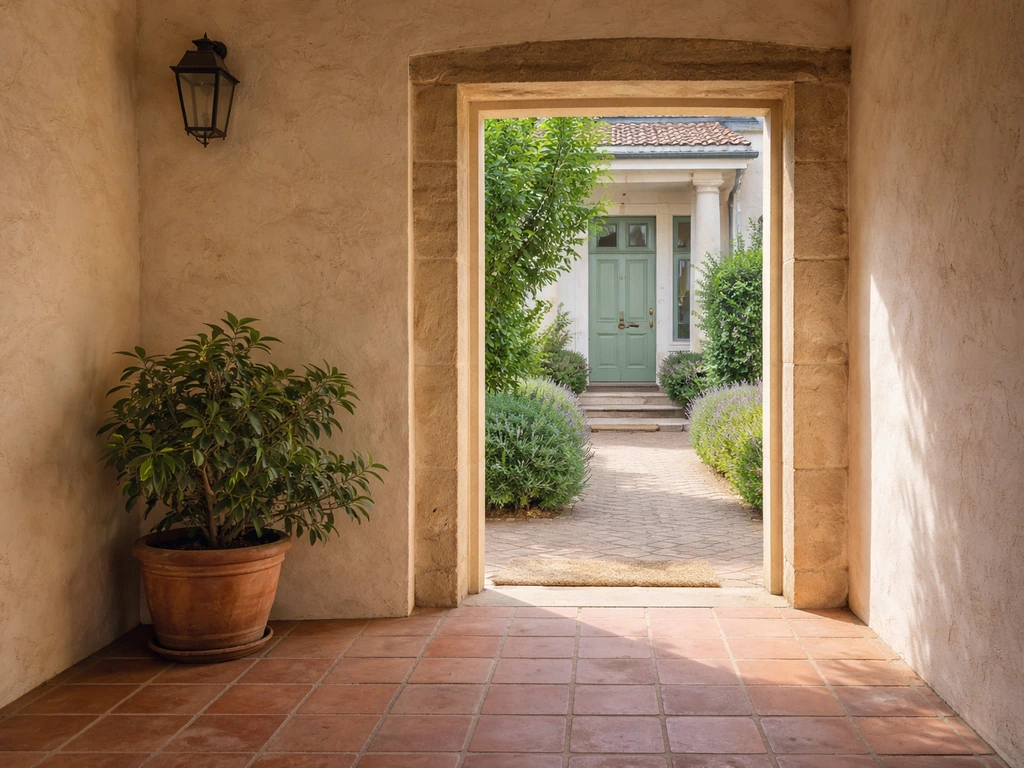
English borrowed "patio" directly from Spanish, where it originally referred to an inner courtyard: an enclosed outdoor space open to the sky, common in traditional Mediterranean and Latin American architecture. Wiktionary traces the Spanish word's deeper roots through Old Occitan and possibly Latin, with connections to the Latin word "patēre" (to lie open) or "pactum." So the word has been around for centuries and carries the same essential idea throughout its history: an open, sky-facing outdoor space attached to a home.
Because the word came into English through Spanish, it shows up naturally in multilingual contexts. Tagalog, for example, uses "patyo" as a direct borrowing from Spanish, meaning courtyard. French uses "patio" the same way English does, describing a Mediterranean-style interior courtyard or garden space. German dictionaries list "patio" as a borrowed architectural noun with the same meaning. The word is genuinely international, but that internationalism makes it a widely shared vocabulary term, not a language of its own.
If you want to explore the full etymology in more depth, the question of where the word "patio" comes from is its own rich topic worth digging into separately.
Patio vs. porch vs. balcony vs. verandah vs. courtyard
These terms get mixed up constantly, especially in real estate listings. Here is a clear breakdown of how each one differs from a patio.
| Term | Location | Level | Roof | Enclosure | Typical use |
|---|---|---|---|---|---|
| Patio | Ground level, beside the home | Ground floor | No roof (open to sky) | Open sides | Dining, lounging, outdoor living |
| Porch | Front or back of home, outside main walls | Ground floor (usually) | Often covered/roofed | Partially enclosed or open | Entry transition, seating |
| Balcony | Upper floors, projecting from exterior wall | Above ground floor | No roof typically | Enclosed by railings/balustrades | Views, small outdoor seating |
| Verandah | Along one or more exterior walls | Ground floor | Roofed, open-walled | Open sides with railing | Wraparound seating, shade |
| Courtyard | Surrounded by building walls on multiple sides | Ground level | Open to sky | Enclosed by walls | Private outdoor space, gardens |
The clearest practical distinctions: a patio is ground-level and unroofed, sitting beside the home. A porch is also at ground level but is usually covered and sits at the entry point of the house. A balcony is elevated, cantilevering out from an upper floor, and enclosed by railings. A verandah is a roofed, open-sided structure that often wraps around the house at ground level. A courtyard is surrounded by walls or building sections on multiple sides and is fully enclosed as a private outdoor room.
In terms of property value and daily use, patios tend to be the most flexible and lowest-maintenance option among these. They require no structural support above, no foundation engineering for elevation, and can be added or expanded by most homeowners without a full building permit (though local rules vary). Courtyards offer the most privacy; balconies offer the best views; verandahs and porches provide shade and weather protection that an open patio cannot.
How to verify meanings and translations for yourself
Depending on what actually prompted your search, here are the most practical next steps.
If you wanted to confirm that "patio" is not a language name, the most reliable tool is the ISO 639 standard, which is the international system for assigning codes to recognized languages. You can search ISO 639-3, which covers thousands of individual languages with three-letter codes, and you will not find "patio" listed there. Glottolog, maintained by the Max Planck Institute of Geoanthropology, is another open-access database of the world's languages that serves the same purpose. If a string does not appear in either of those resources as a language name or code, it is not a language.
If you wanted to know what "patio" means in a specific language, the answer is consistent across most: it means an outdoor space, courtyard, or open-air area attached to a home. A patio garden takes the idea of an outdoor patio and uses it as a dedicated planting space for containers, herbs, and small landscape features. Spanish, French, Tagalog (as "patyo"), and German usage all converge on this architectural meaning. For a quick translation check, Wiktionary, PONS, and Linguee all carry the word with cross-language definitions and translation examples grounded in real-world architectural and property contexts.
If your original question was really about what a patio is, whether you have one at a property you are considering, or how it compares to other outdoor spaces, then the comparison table above and the definition section are your starting points. Real estate listings in particular use these terms loosely, so knowing the precise architectural meaning of a patio versus a porch or courtyard can make a real difference when evaluating a property.
- To check if something is a language: search ISO 639-3 or Glottolog for the exact term.
- To find what "patio" means in a specific language: use Wiktionary, PONS, or Linguee for translated definitions.
- To understand what a patio is architecturally: look for ground-level, unroofed, paved outdoor space adjoining the home.
- To compare patio to similar outdoor spaces in a property listing: use the patio vs. porch vs. balcony distinctions above.
- To explore the word's history: research the Spanish and Latin origins of "patio" for the full etymology.
FAQ
How can I double-check whether “patio” is actually a language name?
No. ISO 639 and Glottolog list recognized languages and codes, but “patio” does not appear as a standalone language name or language code. If you see “patio” labeled as a language in a blog or forum, it is almost certainly a mix-up with a word meaning, a place name, or a borrowing (for example, “patyo” in Tagalog).
If “patio” is not a language, what does it mean in Spanish or Tagalog?
The most common translation in other languages is still “courtyard” or “outdoor sitting area” in an architectural sense. In other words, you should not translate “patio” as a language identifier, even when it looks like a foreign word. In Tagalog, “patyo” is a borrowed form from Spanish with the same architectural idea.
Is a covered patio still a patio, or does it become something else?
A key edge case is a “covered patio” (an outdoor seating area with an overhang or partial roof). Even with a roof, people usually call it a patio if it stays open on the sides and remains primarily a ground-level outdoor extension of the home. If it is fully roofed and enclosed, it may be marketed or categorized differently (often closer to a sunroom or enclosed porch, depending on the design).
Why do I see “patio” used on restaurant signs in Canada?
Yes, it can be. In Canadian usage, “patio” often refers to a restaurant or bar’s outdoor seating area. The wording can show up as “patio open,” “patio seating,” or similar signage, and it usually means open-air dining space rather than a private residential feature.
How do I tell whether a listing means “patio” versus “porch”?
Sometimes real estate listings use the terms loosely, so you should verify by layout. If the space is unroofed, ground level, and directly connected to the house, it aligns with “patio.” If it has a full roof and is tied to a front or main entrance, it is more likely described as a porch in many listings.
Does the etymology of Spanish “patio” match the modern residential meaning?
If you are researching the word’s origin for Spanish, “patio” typically refers to an inner courtyard or an open-air space attached to a building. That said, the definition shifts slightly by context: a residential patio is a leisure area beside a home, while historically the Spanish term points to the courtyard concept (a sky-facing space within a dwelling’s layout).
What should I inspect before assuming a patio is low-maintenance?
For property decisions, treat “patio” as a functional outdoor extension, but check practical constraints like drainage and slope. A patio that is too close to the foundation or poorly sloped can cause water pooling near the house, even if it is “low maintenance” in general. Also ask whether it is built over utilities or requires access for maintenance.
What are the fastest visual cues that distinguish a patio from a courtyard, balcony, or verandah?
If you are comparing patio-like outdoor areas, “courtyard” is usually more enclosed (often by walls or multiple building sides), while “balcony” is elevated and “verandah” or “porch” typically implies roof coverage. When the listing is unclear, look for the words “enclosed,” “elevated,” and “open to the sky” in descriptions or photos.
Next Article
What Does Patio Mean? Easy Definition and Examples
Know what patio means: an open-air outdoor seating space, often by a home, plus how it differs from porches and balconie