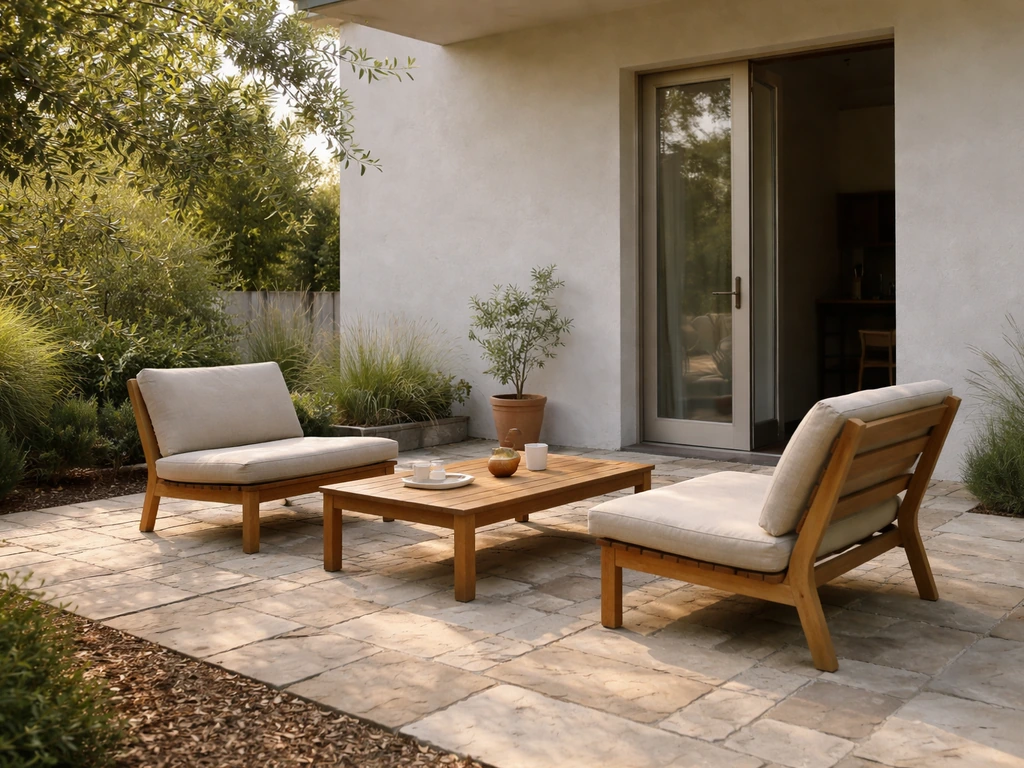
A patio area is a flat, hard-surfaced outdoor space directly attached to or immediately beside a house, used for sitting, dining, or relaxing outside. It sits at ground level, has no roof overhead, and is blank" rel="noopener noreferrer">typically paved with concrete, stone, brick, or tile. When a property listing or lease mentions a "patio area," that phrase almost always means this: a defined outdoor zone where you can pull up a chair, set up a table, and spend time outside without going far from the back door.
What Is a Patio Area? Definition and Key Differences

Ada Hollis
5 Jun 2026
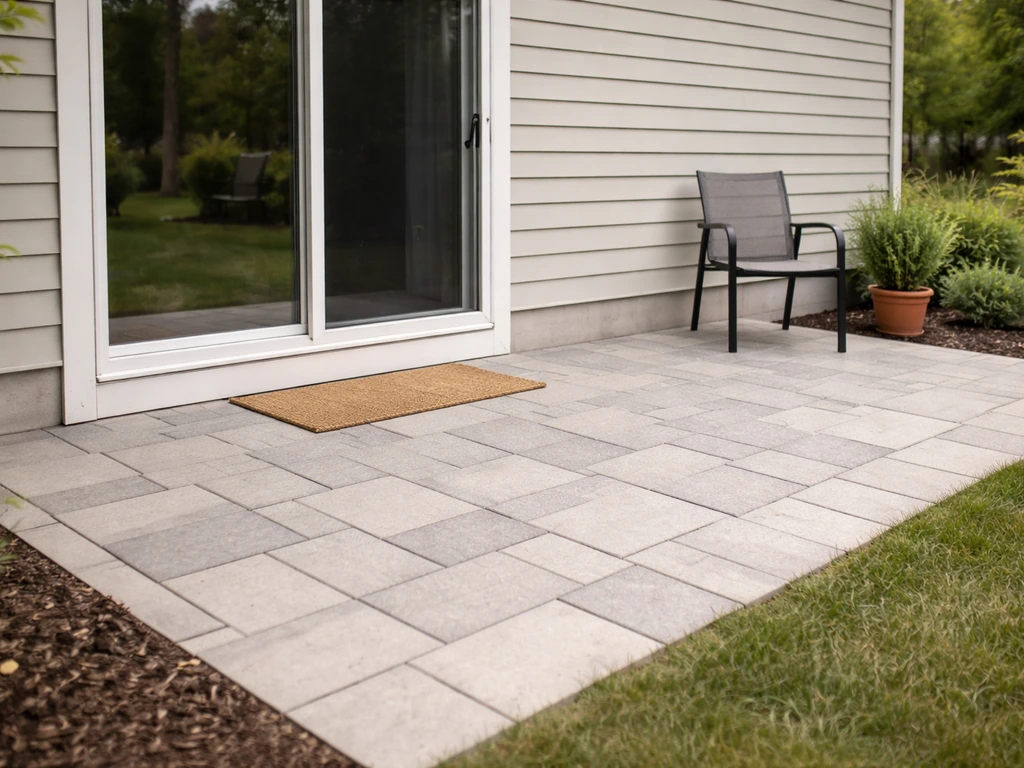
What a patio area actually is
Every major dictionary lands on the same core definition. Cambridge describes a patio as "an area outside a house with a solid floor but no roof." Oxford calls it "a flat hard area outside, and usually behind, a house where people can sit." Dictionary.com and Collins both emphasize it as "blank" rel="noopener noreferrer">a paved area adjoining a house, used for outdoor lounging, dining, etc." Strip those definitions down and you get three consistent traits: it's outside, it has a hard surface, and it has no roof.
The word "patio" itself comes from Spanish, where it originally referred to an inner courtyard or open space within or beside a building. That origin matters a little because it explains why the word still carries slight regional variation today, which is worth knowing if you're reading listings or property descriptions from different parts of the world. But in everyday residential use across the UK, US, Australia, and Canada, "patio" almost universally means that flat, paved outdoor slab at the back (or sometimes side) of a home.
The phrase "patio area" is really just a slightly more deliberate way of saying patio. Sellers, landlords, and architects use it to draw attention to a defined zone within a larger yard, distinguishing the hard-paved section from the surrounding lawn or garden. So if you see "patio area" in a listing, picture a specific rectangle or shape of solid surfacing where outdoor furniture would go, not just a vague patch of garden.
How to spot a patio on a real property
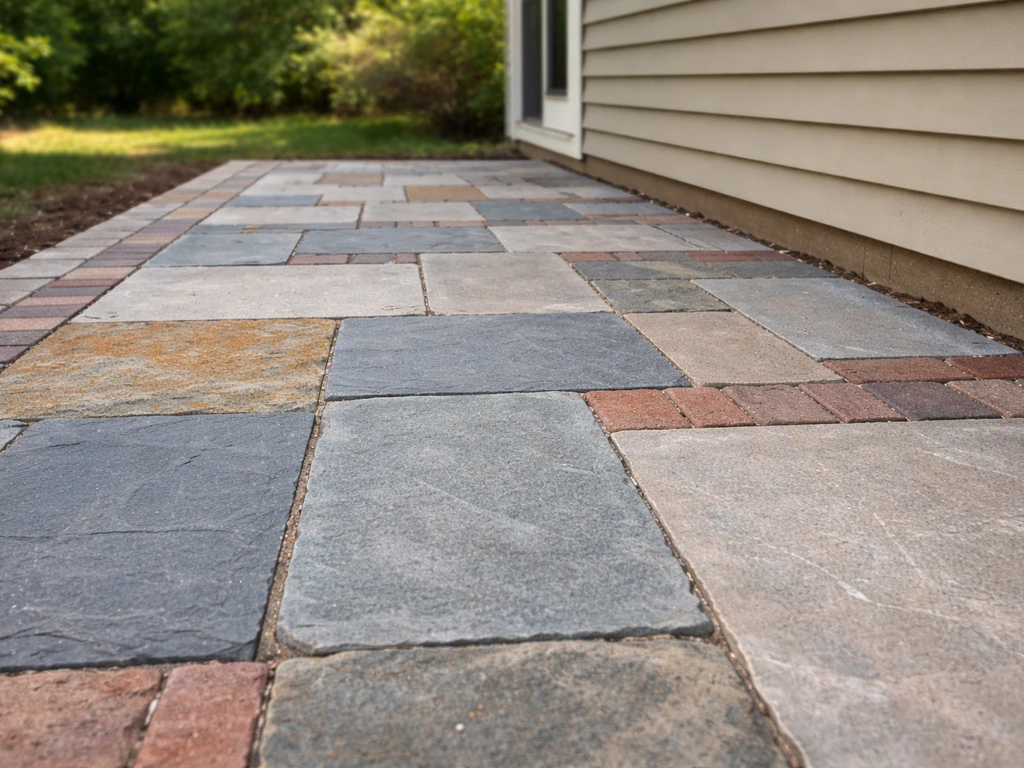
Patios are usually easy to identify once you know what to look for. When you're walking around a property or studying listing photos, a few practical signals will tell you whether what you're looking at is actually a patio area.
- Hard, solid surface: concrete slabs, natural stone (like sandstone or slate), brick pavers, porcelain tile, or gravel-set paving are the most common materials. If the ground under the outdoor furniture is solid and level, it's likely a patio.
- Ground-level placement: a patio sits flush with or just slightly above the surrounding ground. You won't climb steps to reach it the way you might with a raised deck.
- No overhead structure: a true patio has open sky above it. If there's a permanent roof or solid covering overhead, it has crossed into different territory (a covered porch or veranda, for example).
- Direct access from the house: most patios are reached through a back door, sliding glass door, or French doors, placing them right at the threshold between indoors and outdoors.
- Defined edges: the patio area usually has a clear boundary where the hard surface ends and the lawn, garden bed, or gravel begins. This defined edge is often what listing agents mean by "patio area."
Some patios also have partial shade structures like a pergola or sail shade overhead, and whether that still counts as a "patio" depends a little on context. A pergola with open slats still lets in sun and rain, so most people and most listings still call that a patio. A fully waterproofed polycarbonate roof starts to blur the line.
Patio vs porch vs veranda: clearing up the confusion
These three terms get mixed up constantly, especially in listings. The differences come down to two things: where the structure sits relative to the house, and whether it has a roof.
| Feature | Patio | Porch | Veranda |
|---|---|---|---|
| Location | Usually at the rear or side, ground level | Front of the house, at the entrance | Wraps around front or sides of the house |
| Roof | None (open to sky) | Always has a roof | Always has a roof |
| Flooring | Paved: concrete, stone, brick, tile | Decking or solid flooring | Decking or solid flooring |
| Level | At or near ground level | Slightly raised with steps | Slightly raised, often with railings |
| Enclosure | Open on all sides | Open-fronted but covered | Open-sided but covered and often wrap-around |
| Primary use | Dining, relaxing, BBQ | Greeting guests, sitting at entry | Relaxing, shaded lounging, social space |
The clearest distinction: a porch has a roof and typically sits at the front of the house as an entry feature. A veranda (or verandah) has a roof too, usually extending along the front or wrapping around the sides, and is more associated with older or colonial-style homes. A patio has neither a roof nor that front-entry role. It's at the back, it's flat, it's paved, and the sky is directly above you. If you're in the US, you might also hear "stoop" used for a small front entry platform, which is even simpler and smaller than a porch.
Patio vs balcony vs courtyard: placement and purpose
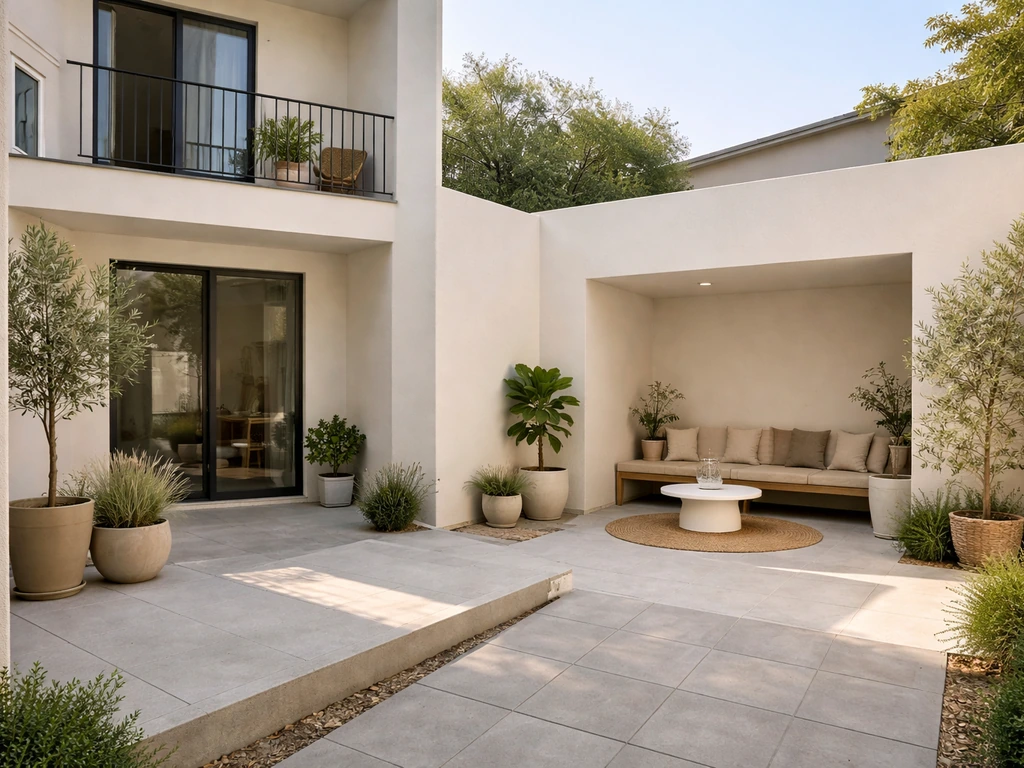
Balconies and courtyards share some surface-level similarities with patios but are meaningfully different in where they're located and how they're used.
A balcony is elevated. It's a projecting platform attached to an upper floor of a building, accessed from inside through a door, and surrounded by a railing or balustrade for safety. You cannot have a balcony at ground level. If you're on the second floor and step outside onto an outdoor platform, that's a balcony. If you're on the ground floor and step outside onto a paved area, that's a patio. For apartment and flat dwellers, this distinction matters a lot: a ground-floor unit may have a patio while upper floors have balconies.
A courtyard is enclosed or partially enclosed by walls or the building itself, typically on multiple sides. It can be at ground level like a patio, but the defining feature is that surrounding structure. Courtyards are common in Mediterranean, Spanish, and Middle Eastern architecture, and they often sit at the center or front of a property rather than the back. Interestingly, the Spanish word "patio" originally described exactly this kind of enclosed interior courtyard, so the two concepts have a shared history. In a modern residential context though, a courtyard implies walls on multiple sides, while a patio is open.
| Feature | Patio | Balcony | Courtyard |
|---|---|---|---|
| Level | Ground level | Upper floor, elevated | Ground level |
| Enclosure | Open, no roof, no surrounding walls | Open-fronted with railing, no roof typically | Enclosed or semi-enclosed by walls/building |
| Access | Direct from house at ground floor | From upper-floor room | From multiple rooms or a gate |
| Typical location | Rear or side of property | Upper floors of house or apartment | Front, center, or within building footprint |
| Common in | Suburban homes, bungalows, ground-floor flats | Apartments, townhouses, multi-story homes | Mediterranean, Spanish, historic, urban homes |
For renters and home shoppers, this matters practically. A listing that says "private patio" for a ground-floor apartment means you have your own outdoor ground-level paved space. A listing that says "balcony" for an upper-floor unit means a raised platform with a railing. Neither is inherently better, but they offer very different outdoor living experiences.
How the term changes depending on where you are
"Patio" is widely understood across English-speaking countries, but how the word is applied and what neighbouring terms mean can shift depending on where you're reading a listing or having a conversation.
In the United States, "patio" is the standard everyday word for a ground-level outdoor paved space at the back of a house. Americans also use "deck" (a raised wooden platform) as a close cousin, and the two are sometimes used interchangeably in casual speech even though a deck is typically raised and made of wood while a patio is paved and at ground level. In real estate listings, the difference usually does show up correctly.
In the United Kingdom, "patio" is equally common and means essentially the same thing. You'll also hear "terrace" used in a similar way, especially in the context of a "terrace house" or a "terraced garden area." In UK listings, a "terrace" can refer to a paved outdoor space much like a patio, though it also carries associations with raised or multi-level outdoor areas. "Garden" is the broader UK term for any outdoor space, so a listing might say "patio garden" to mean a garden that's predominantly hard-landscaped.
In Australia, you'll encounter "alfresco area" as a direct synonym for patio, particularly in new builds. An alfresco is typically a covered outdoor dining space off the back of a home, so it sits slightly closer to the porch end of the spectrum, but it's used where an American might say "patio." "Entertaining area" is another common substitute in Australian listings.
In Spanish, "patio" retains its original meaning of an inner courtyard or open internal space of a building, which is closer to what English speakers would call a courtyard than a patio. So if you're reading Spanish-language property descriptions or looking at homes in Spain or Latin America, the word "patio" may describe an enclosed courtyard rather than the back-of-house paved slab you'd picture in a UK or US context.
In South Asia (India, Pakistan), the concept maps roughly to a "courtyard" or "aangan" in Hindi/Urdu, which is the open inner space of a traditional home. English-language property listings in these markets will often use "terrace" or "sit-out" where a Western listing might say patio. Being aware of these regional variations helps when you're interpreting listings or property plans from different markets, or when discussing the meaning of the term with someone from a different background.
Why the patio area matters for how you live in a home
A patio is one of the most practical outdoor features a residential property can have, and it punches above its weight when it comes to daily usability and property appeal. Here's why it matters across three different reader situations.
For homeowners: it's your most-used outdoor space
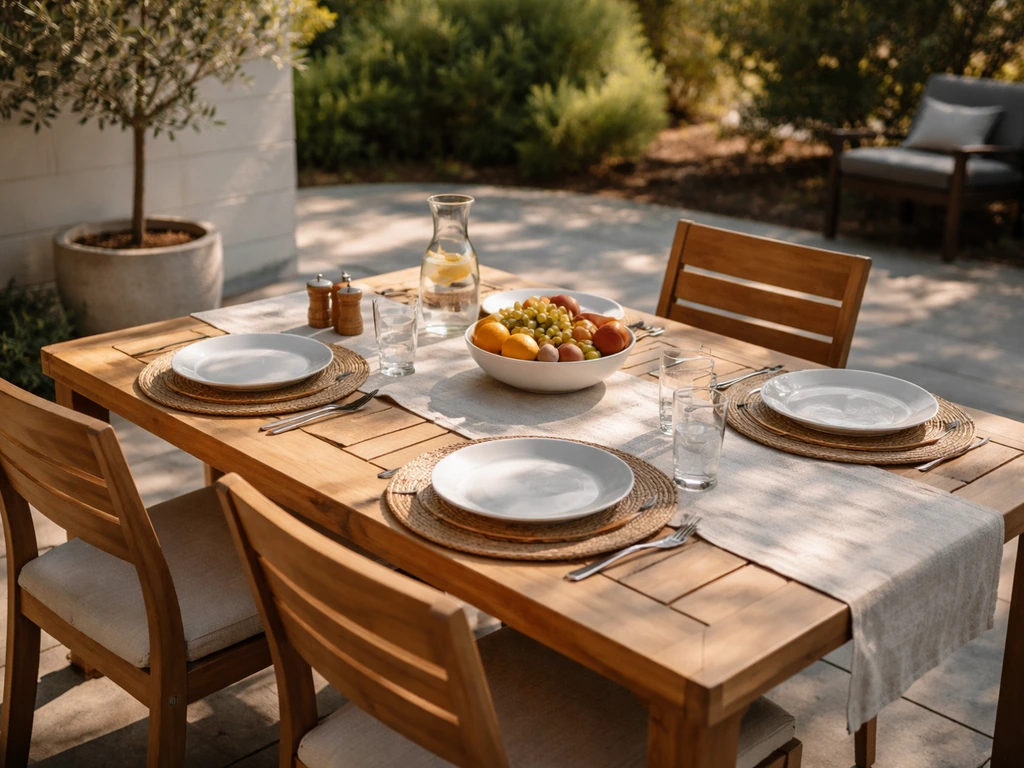
A well-designed patio is where outdoor living actually happens day to day: morning coffee, weekend barbecues, kids' outdoor play on a hard surface, evening dining in summer. Because it's paved, it stays usable after rain faster than a lawn does, and it requires almost no maintenance compared to grass. The size and surface quality of a patio directly affects how usable it is. A patio that's too small for a table and four chairs is barely functional; one that's generously sized and well-drained becomes an outdoor room. If you're a homeowner evaluating your existing patio or planning one, size, drainage, and surface material are the three things worth getting right.
For renters: understanding what you're actually getting
When a rental listing says "private patio," you're being promised a defined, hard-surfaced outdoor area that belongs to your unit, not a shared garden. Some people even search for things like “is patio a language,” but in everyday real estate use patio simply refers to an outdoor paved area. This is a meaningful amenity for ground-floor flat renters who otherwise have no outdoor space at all. Before signing, it's worth confirming the patio's actual size (some are barely larger than a doormat), whether it's genuinely private or overlooked by neighbours, and whether you're permitted to place furniture on it. These are things a listing won't always make clear.
For property shoppers: it affects value and lifestyle fit
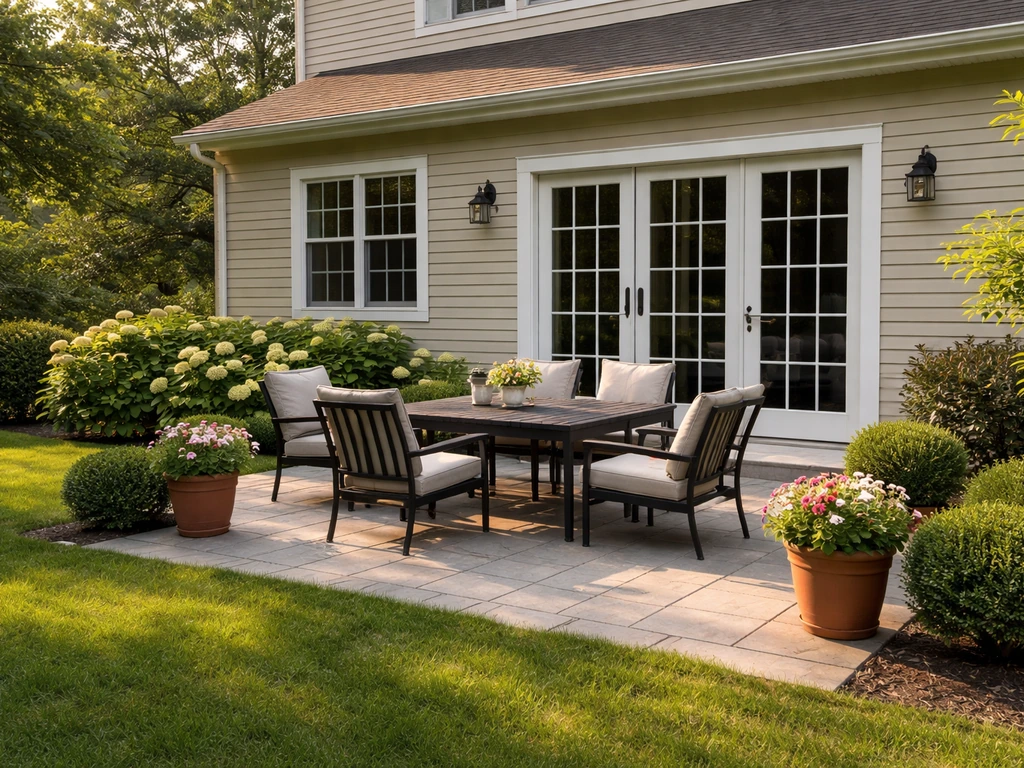
A patio area shows up frequently in property listings because it adds perceived and real value. Properties with usable outdoor spaces consistently appeal to a wider pool of buyers, and a patio is one of the easiest outdoor features to describe, photograph, and value. When you're reading a listing, pay attention to whether the outdoor space described is a patio (ground level, paved, open sky) versus a deck, balcony, or covered veranda, because each offers a different lifestyle and maintenance profile. A "south-facing patio" in a UK listing, for example, tells you something specific and useful: that space gets afternoon and evening sun, which is a meaningful selling point in a climate where sun is not guaranteed.
Understanding exactly what a "patio area" means also helps you ask the right questions. How large is it? What is it surfaced with? Is it private or shared? Does it have drainage? Can you add a pergola or outbuilding? These questions matter whether you're buying, renting, or just figuring out how to make the most of the outdoor space you already have.
FAQ
Does a patio area have to be exactly on the ground level to count as a patio?
In typical residential listings, yes. A true patio is ground-level and open to the sky, while an elevated outdoor platform is usually called a balcony (upper floor) or a deck (often wood and raised). If the listing doesn’t specify height, check whether the space is accessible by a ground-floor door and whether there are steps up or down from the house.
If a patio area is paved but has steps or a sunken level, is it still a patio?
Often it’s still described as a patio if it functions as a paved outdoor sitting/dining zone next to the house. The key test is whether the roof is absent and the space is clearly outdoor and hard-surfaced. A sunken or stepped patio may still be a patio, but drainage and water pooling become a bigger concern.
Can the surface of a patio area be gravel or grass instead of stone or concrete?
Usually no. The term “patio area” in listings strongly implies a hard, walkable surface (concrete, stone, brick, tile, or similar). Gravel might appear as “gravel patio,” “patio paving,” or a “patio with gravel,” but if it’s mostly loose stones, many landlords will not treat it like a paved patio for seating and furniture placement.
What should I check to confirm a “private patio area” is actually private?
Look for sightlines, shared access paths, and adjacency to neighbour windows. A patio can be “private” even without walls if it is fenced or set behind hedges, but it can also be effectively shared if there is a walkway, shared gate, or direct neighbour overlooking. When possible, ask for photos from multiple angles, not just the listing’s best shot.
Are tenants allowed to place furniture, a grill, or a small shed on a patio area?
Not always. Many leases limit changes like planters, flooring, barbecues, or temporary structures, even on private patios. Before moving in, confirm any rules about anchoring items to the ground, using open-flame grills, and whether an outbuilding or canopy is permitted.
How important is drainage for a patio area, and what signs indicate problems?
Drainage is critical because a patio is hard-surfaced and water will not soak into grass. Red flags include water staining, muddy runoff channels, uneven areas where water collects, and standing puddles after rain. If the listing photos show a slight slope away from the house or mention “drained paving” or “permeable paving,” that’s a practical positive sign.
If a patio area has a pergola or partial shade, does it change what it’s called?
It can, but most descriptions still call it a patio if it’s mostly open-air and not fully weatherproof. A pergola with slats or a sail shade usually keeps the “patio” idea intact. If the overhead becomes fully roofed and rainproof, people may start calling it an “outdoor room,” “veranda,” or “covered terrace,” depending on region.
How do I tell whether the outdoor space is a patio area versus a deck?
Decks are commonly raised and made of wood or composite, even if they’re adjacent to the house. Patios are typically paved and ground-level. If you see posts, railings, or a step up from the patio surface, treat it as a deck unless the listing explicitly says otherwise.
What if the listing uses different words, like terrace, sit-out, or alfresco, are they always the same as patio area?
They usually describe a similar outdoor sitting/dining space, but regional meaning can shift. In the UK, “terrace” may imply more than just ground-level paving. In Australia, “alfresco area” can be closer to a covered dining zone. In Spanish-language listings, “patio” may mean an internal courtyard rather than the back-of-house slab.
Is a patio area shared with other units possible in multi-family buildings?
Yes. Some properties label an outdoor paved zone as a patio but still treat it as communal. In multi-unit buildings, “private patio” is the stronger clue, yet you still should confirm whether neighboring units can access it, whether it’s separated by a fence or boundary, and whether maintenance is shared.
What is a good minimum size to expect for a functional patio area?
For everyday usability, aim for enough space for one seating set plus walking room. A very small patio might fit two chairs only, while a dining patio needs room for a table plus comfortable clearance around it. If the listing does not mention dimensions, measure using floor plans or ask the agent for approximate length and width.
Can a “patio area” include amenities like lighting, power outlets, or water hookups?
Sometimes, but not by definition. A patio can be bare paving with no utilities, or it can include outdoor-rated lighting and possibly a nearby outlet for string lights or seasonal devices. If you need power for cooking appliances or outdoor entertainment, ask whether outlets are present, whether they’re GFCI/RCD-protected (in relevant regions), and whether they are exclusive to the patio.
Next Article
Is Patio a Language? Meaning of Patio in Architecture
Find out if patio is a language, what it means in architecture, and how it differs from porch, balcony, verandah, courty