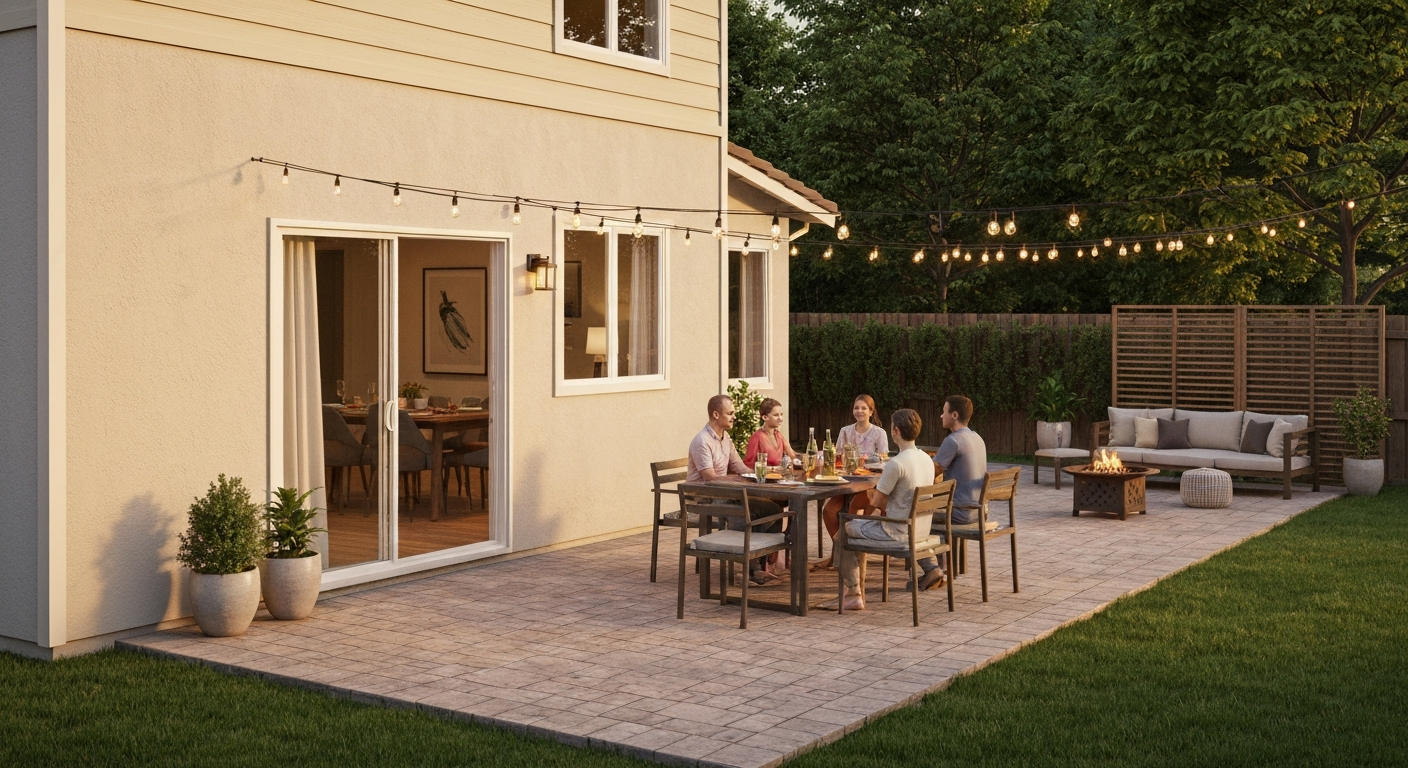
Yes, patios are generally a good investment, but the return depends heavily on what you build, how much you spend, and where you live. A well-designed patio adds livable outdoor space, lifts curb appeal, and makes a home easier to sell or rent. The catch is that patios recoup less of their cost at resale than many homeowners expect: national 2025 Cost vs. Value data puts the average backyard patio project at around $51,454 with an estimated resale value increase of roughly $23,672, meaning you recoup about 46 cents on every dollar spent. That number sounds sobering until you factor in the years of personal enjoyment, the rental premium a private outdoor space can command, and the fact that a modest, well-executed patio costing a fraction of that average often performs better in percentage terms than a lavish one.
Are Patios a Good Investment? Value, Costs, and ROI Guide

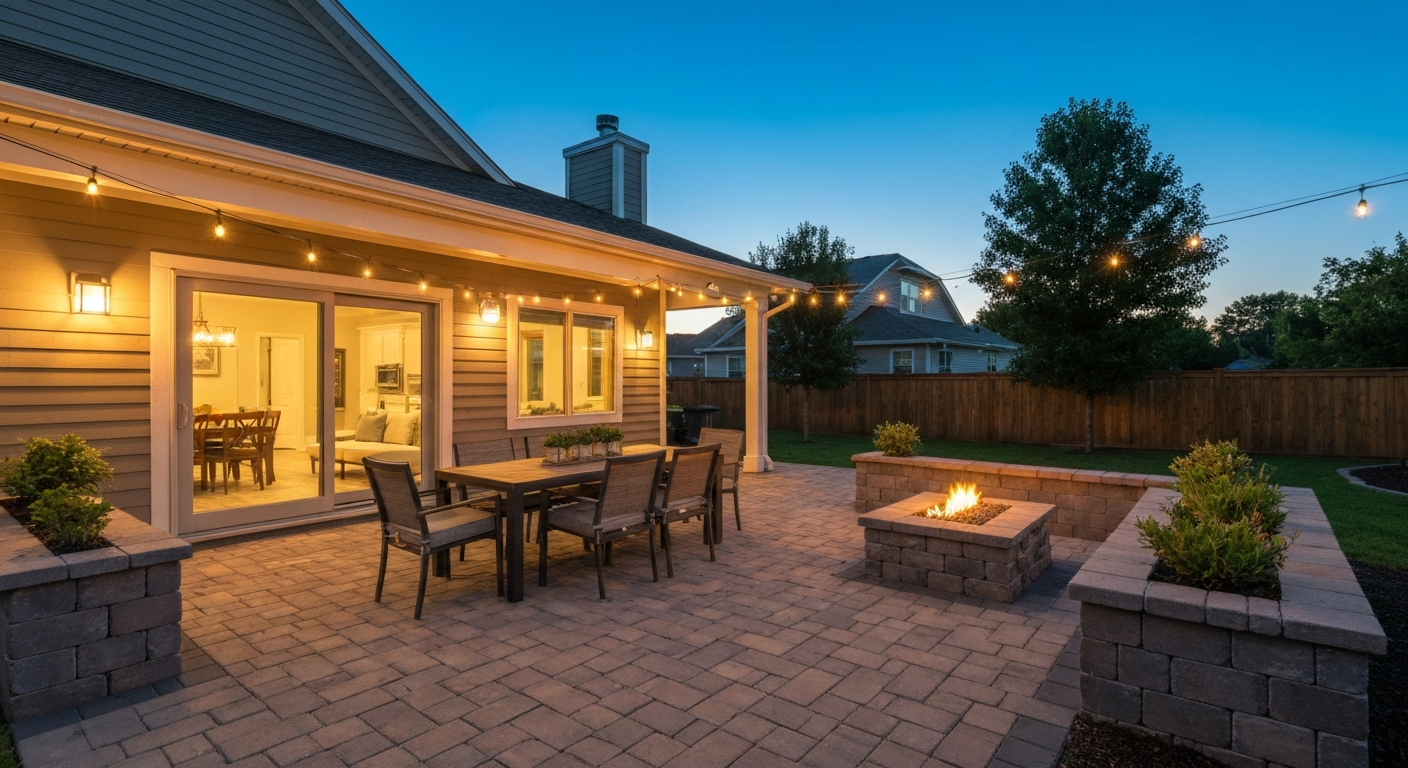
Verdict: are patios a good investment?
A patio is a good investment in most residential markets, with caveats. If your goal is pure resale ROI, a patio rarely pays back dollar-for-dollar the way a kitchen renovation might. But it does consistently increase a home's appeal, time-on-market performance, and perceived value in the eyes of buyers and renters. For homeowners who plan to stay five or more years, the lifestyle return (usable outdoor square footage, entertaining space, increased daily enjoyment) stacks on top of whatever financial return materializes at sale. For landlords, even a basic private patio or fenced ground-floor outdoor space can justify a monthly rent premium of $75 to $200 depending on the market. For short-term rental hosts, a quality outdoor setup with furniture and a firepit can meaningfully lift average daily rate and occupancy. The investment case is strongest when: you keep project costs proportional to your home's value, you choose durable materials suited to your climate, and you treat the patio as a livability upgrade rather than a guaranteed equity play.
Quick summary: what to know if you're a homeowner, renter, buyer, or investor
| Who you are | Key takeaway | Action to consider |
|---|---|---|
| Homeowner (staying put) | Personal enjoyment ROI is high; financial ROI at sale is moderate (~46% nationally) | Keep project cost proportional to home value; pick durable materials |
| Homeowner (selling soon) | A clean, functional patio improves buyer perception; major renovations rarely pay off fully before sale | Refresh rather than rebuild; stage the space for listing photos |
| Buyer | A patio is a livability asset; factor condition and material type into your offer | Inspect drainage and subbase quality, not just surface appearance |
| Renter | Private outdoor space adds daily-use value; confirm what maintenance is your responsibility | Ask about permitted outdoor furniture and any HOA/landlord rules |
| Long-term rental investor | Private patio or yard can add $75–$200/month in rent premium in many markets | Validate with local comps before projecting income uplift |
| Short-term rental (STR) host | Outdoor amenities consistently lift ADR and occupancy in STR analytics | Prioritize seating, lighting, and privacy over expensive hardscaping |
| Patio home buyer/investor | Low-maintenance appeal drives demand from downsizers and retirees; HOA terms matter enormously | Review CC&Rs before purchase for maintenance responsibilities and rental restrictions |
What exactly is a patio? Definition and how it differs from a porch, balcony, verandah, and courtyard
Both Oxford and Merriam-Webster define a patio as a paved outdoor area adjoining a house, and that simple description does most of the work. The word itself comes from the Spanish patio, meaning inner courtyard, which entered English in the early 19th century. In modern residential use, a patio is almost always ground-level, hardscaped (paved, tiled, or graveled), and open to the sky. It sits next to the house rather than underneath it or above it.
Where people get confused is in distinguishing a patio from the cluster of related outdoor spaces. A porch is an attached, covered entry structure, usually at the front or back of the house and structurally part of the building. Trex Protect, What's the difference between deck vs patio vs porch? summarizes industry distinctions: a patio is ground-level and hardscaped, a deck is a raised platform, and a porch is an attached, covered area Trex Protect — What's the difference between deck vs patio vs porch?. A deck is a raised platform, most commonly built from wood or composite materials, that extends from the house above grade level. A balcony is an elevated outdoor platform accessed from an upper floor, typically supported by brackets or cantilevered from the wall. A verandah (or veranda) is a large covered platform running along one or more sides of a house, common in colonial and Victorian architecture. A courtyard is an enclosed or semi-enclosed outdoor space surrounded by walls or building faces, which is actually closer to the original Spanish meaning of patio.
| Space | Typical level | Covered? | Attached to house? | Key distinguishing feature |
|---|---|---|---|---|
| Patio | Ground level | Usually not (can be covered) | Adjacent, not structurally integrated | Hardscaped surface; open to sky |
| Porch | Ground or raised entry level | Yes | Structurally attached | Covered; often at front entry |
| Deck | Raised above grade | Usually not | Attached or freestanding | Elevated platform, wood or composite |
| Balcony | Upper floor | Sometimes | Cantilevered or bracketed from wall | Accessed from interior upper floor |
| Verandah | Ground or slightly raised | Yes (full roof) | Runs along exterior wall | Roofed; wraps one or more sides |
| Courtyard | Ground level | Open (walls not roof) | Enclosed by walls/building wings | Surrounded by structure; more private |
For planning and permit purposes, the distinction matters practically. Many local planning codes, such as guidance used in Oregon municipalities, treat a patio as a ground-level outdoor area and classify it separately from raised decks or porches for permit and setback requirements. If you're adding or enclosing a patio, always check your local code first because what your city calls a patio may affect whether you need a permit.
Patio types, materials, and finishing levels
The material you choose shapes cost, lifespan, maintenance burden, and how the space looks to future buyers. There is no single best option. The right choice depends on your climate, budget, and how you plan to use the space.
The main materials compared
| Material | Typical installed cost (per sq ft) | Lifespan | Maintenance level | Best for |
|---|---|---|---|---|
| Concrete slab | $4–$8 | 30+ years | Low (seal every 2–3 years) | Budget-conscious projects; clean modern look |
| Stamped concrete | $8–$14 (project: ~$3,000–$14,000) | 25–30 years | Low-medium (seal regularly; crack repair) | Decorative finish on a budget |
| Interlocking pavers/brick | $10–$22+ | 25–50+ years | Medium (sand joints; occasional sealing) | Spot-repair flexibility; traditional look |
| Natural/flagstone | $15–$30+ | 30–50+ years | Medium (joint maintenance; sealing) | Premium aesthetics; natural variation |
| Gravel/aggregate | $1–$4 | Indefinite (replenish as needed) | Low-medium (raking; top-up) | Informal gardens; drainage-challenged sites |
| Tile/porcelain | $10–$25+ | 20–30+ years | Low (clean; regrout over time) | Contemporary style; covered or warm climates |
| Composite/wood deck surface | $15–$30+ | 15–25 years | Low-medium (composite); High (wood) | Transition space between house and yard |
Finishing level matters as much as material choice. A basic concrete slab with clean edges and good drainage reads as a functional asset to buyers. A poorly finished or cracked slab with drainage problems reads as a liability. Mid-range projects with consistent material quality, adequate lighting, and simple built-in features (a seating wall, a small built-in planter) tend to return better than either bare-minimum or over-the-top luxury finishes in mid-price neighborhoods. Match the finish level to the home value and neighborhood, not to your personal wishlist.
Cultural and regional variations: what 'patio' means around the world
The word patio is understood across most English-speaking markets, but its connotations shift by region and culture. In Spain and Latin America, a patio retains its original architectural meaning: an open inner courtyard enclosed by the house's own walls, often planted with trees or a fountain, functioning as the home's social heart. You see this form throughout Andalusia and in Mexican colonial architecture. The famous Patios Festival in Cordoba, Spain, celebrates this tradition specifically.
In the United States, Canada, Australia, and the UK, patio almost exclusively means an external hardscaped surface at the back or side of a house, open to the sky. In Australia, what Americans call a patio is sometimes called an alfresco area or entertaining area in real estate listings. In the UK, the term garden terrace is sometimes used interchangeably with patio, particularly for flagstone or paver surfaces. In South Asian real estate markets (India, Pakistan), the Hindi and Urdu concept of an aangan (an interior courtyard) is functionally similar to the original Spanish patio, while an exterior paved area is more likely to be described using English loanword 'patio' in urban listings or a local equivalent depending on the region. If you're researching properties across markets or cultures, it's worth checking what the local term actually describes physically, since the surface-level translation does not always match the architectural reality.
Do patios add value to a house? The resale picture
Patios do add measurable value to a house, but the numbers require context. For a deeper dive on whether patios add value to a house, see our detailed analysis do patios add value to a house. The 2025 national Cost vs. Value data shows an average backyard patio project costing around $51,454 and adding roughly $23,672 in resale value, a cost recoup of approximately 46%. That average project is a substantial, fully finished outdoor living space. A more modest patio, a well-executed paver or concrete installation costing $8,000 to $20,000, can recoup a higher percentage simply because the baseline investment is lower and buyers still perceive meaningful value.
For context, the same 2025 Cost vs. Value report showed a wood deck addition with a national cost recoup close to 95%, which is significantly higher than the patio figure. This reflects the fact that in many markets, a deck is perceived as a more premium addition than a ground-level patio. That said, in markets where lots are flat, small, or where pools dominate the outdoor space, a patio may outperform a deck simply because it fits the lifestyle better.
The key factors that shift resale value impact: material quality and condition (a cracked concrete slab hurts more than helps), size relative to lot and home (proportionality matters), neighborhood comparables (if every competing home has a patio, yours needs one to stay competitive), and how the space is staged for listing. A well-photographed, furnished patio can be a primary hero shot in a listing, drawing buyers who would otherwise overlook the property.
Do patios add rental value? Impact on rent and rentability
For long-term rental properties, private outdoor space consistently justifies a rent premium. Practitioner guidance and landlord resources commonly estimate that a private patio, balcony, or fenced yard can add $75 to $200 per month to achievable rent, depending on market and unit type. Ground-floor apartments with a private fenced patio often rent at a premium over comparable units without outdoor space, particularly in urban markets where outdoor space is scarce. That $75 to $200 monthly uplift compounds: at $100 per month, that's $1,200 per year in additional gross rent on a relatively low-cost improvement.
For short-term rentals (Airbnb, VRBO), outdoor amenities are among the most reliably revenue-positive features. STR analytics consistently show that listings with a quality outdoor setup, think furnished patio, firepit, or outdoor kitchen, command a higher average daily rate and achieve better occupancy than comparable listings without them. The specific uplift varies by market and seasonality, but the directional finding is consistent across multiple STR analytics platforms. If you're managing a short-term rental in a warm or seasonal market, investing in the outdoor space is one of the higher-leverage improvements you can make.
Are patio homes a good investment? Pros, cons, and who they suit
A patio home is a different concept from a house with a patio, and the distinction matters for investment decisions. In U.S. real estate, 'patio home' is a marketing and land-use term describing a small-lot, single-family or attached home, often synonymous with zero-lot-line homes or villa-style units. Municipal codes and MLS classifications commonly use the term to describe homes in clustered developments where one or more side setbacks are reduced or eliminated. These homes typically sit in HOA communities where exterior and landscaping maintenance responsibilities are partly collectivized.
The investment case for patio homes centers on their appeal to a specific and growing buyer pool: empty nesters, retirees, downsizers, and anyone seeking single-level living without yard maintenance obligations. Demand from this demographic is structurally supported by aging population trends in most Western markets, which underpins long-term resale demand. On the buy-to-let side, patio homes tend to attract stable, longer-term tenants who value low-maintenance living, which reduces turnover costs.
Patio home pros and cons
| Factor | Upside | Risk or caveat |
|---|---|---|
| Maintenance burden | HOA typically handles exterior/landscaping | HOA fees reduce net yield; review CC&Rs carefully |
| Buyer/tenant pool | Strong demand from downsizers and retirees | Narrower pool than general single-family; age restrictions in some communities |
| Resale trajectory | Demographic tailwinds support demand | Oversupply risk in some markets with heavy new-build activity |
| Rental restrictions | Stable long-term tenants typical | Many patio home HOAs restrict or prohibit short-term rentals |
| Lot and layout | Efficient land use; lower entry price | Limited privacy; shared walls or zero side setback can affect appeal |
| Single-level living | Premium feature for aging-in-place buyers | Less relevant to younger buyers; limits some resale scenarios |
Before buying a patio home as an investment, the two non-negotiables to review are the HOA's CC&Rs and the rental policy. Some patio home communities have age restrictions (55+) that limit your tenant or buyer universe. Others have outright rental bans or caps on the percentage of units that can be rented at any one time. These rules can fundamentally alter your investment thesis, and they are often not prominently disclosed in listings.
Patio apartments explained: how they compare to patio homes as investments
A patio apartment is a ground-floor apartment unit that comes with a private patio area, typically a defined outdoor space enclosed by a fence, wall, or hedge. The term is widely used in multi-family and apartment marketing. Unlike a patio home (which is a single-family or attached single-family product), a patio apartment is a unit within a larger building or complex.
For investors, the comparison is meaningful. A patio apartment commands a ground-floor premium when the patio is private and well-maintained, but it also carries ground-floor considerations: privacy, security perception, and noise. Patio homes tend to attract longer-term, owner-occupant-style tenants and generate a more stable tenancy profile, but they come with HOA complexity and usually higher entry costs. Patio apartments sit within a standard multi-family investment framework, are easier to finance conventionally, and have a broader potential tenant pool across age groups.
| Factor | Patio home | Patio apartment |
|---|---|---|
| Property type | Small-lot single-family or attached villa | Ground-floor unit in multi-family complex |
| Ownership structure | Fee simple (with HOA) | Condo or rental unit |
| Typical tenant/buyer profile | Downsizers, retirees, empty nesters | Broader: young professionals, couples, pet owners |
| HOA/management complexity | High (CC&Rs govern exterior, rentals) | Moderate (building management handles common areas) |
| Maintenance responsibility | Owner plus HOA (varies by CC&Rs) | Landlord handles building; tenant patio care varies by lease |
| Cash-flow profile | Lower gross yield; stable tenancy | Variable; ground-floor premium offset by patio upkeep |
| STR viability | Often restricted by HOA | Depends on building rules and local STR regulations |
Benefits of a patio: livability, curb appeal, and everyday use
The practical benefits of a patio extend well beyond the financial. At its most basic, a patio extends your usable living space outdoors for a fraction of the cost of an interior addition. A 200-square-foot patio built with pavers might cost $4,000 to $8,000 installed, delivering functional outdoor entertaining and relaxing space that would cost many times more as an interior room.
- Extended living and entertaining space without the cost of an indoor addition
- Increased curb appeal and perceived property value in buyer and renter searches
- Defined outdoor dining and relaxation area that improves daily quality of life
- Platform for outdoor kitchens, fire features, or water features that further lift value
- Year-round usability in mild climates; three-season use in colder markets with a fire pit or heater
- Pet-friendly outdoor space that opens the home to a larger tenant pool
- Low visual barrier between indoor and outdoor space, making homes feel larger than their footprint
Seasonality shapes the benefit calculation meaningfully. In sunbelt and coastal markets, an outdoor patio is usable for nine to twelve months a year, and buyers treat it almost like interior square footage. In northern or high-rainfall markets, the utility is compressed to four to six months, which should proportionally moderate how much you spend on the installation.
Benefits of a patio home: lifestyle, maintenance, and market position
The lifestyle case for patio homes is strong for the right buyer profile. The defining appeal is low-maintenance single-level living in a community setting: no ladder-and-gutter weekends, no large lawn to manage, often a walkable or amenity-rich neighborhood. For investors, this translates to tenants who stay longer, cause less wear and tear, and are less likely to perform unauthorized modifications. The trade-off is yield compression from HOA fees and the narrower buyer pool at resale. See the benefits of a patio home for more on lifestyle advantages, maintenance expectations, and market positioning.
From a market positioning standpoint, patio homes occupy a distinct niche. They are not starter homes (entry prices are usually mid-range to upper-mid) and they are not luxury estates. They compete best in markets with a meaningful retiree or downsizer population and where land costs make larger lots impractical. In those markets, a well-located patio home in a maintained HOA community can hold its value robustly even in softer general market conditions, because the demand from its core buyer segment is relatively inelastic.
Cost estimates and ROI drivers: what actually determines your return
Project costs for a new patio vary enormously depending on size, material, site conditions, and local labor rates. The ranges below are drawn from aggregated national contractor data (RSMeans, NAHB, HomeAdvisor-derived figures) and should be treated as starting points. Always get multiple local quotes before committing, since labor costs in particular vary significantly by region.
Major cost drivers
- Site preparation: grading, excavation, and soil removal can add $500 to $3,000+ before any material is installed
- Drainage: poor drainage is the single most common cause of patio failure; proper subbase and drainage installation adds cost but protects the investment
- Material choice: gravel sits at $1–$4/sq ft installed; natural stone can exceed $30/sq ft; most mid-range options fall between $8 and $22/sq ft
- Labor: typically 30–50% of total project cost depending on complexity and local market rates
- Permits: required in many jurisdictions for patios above a certain size or attached to the house; typically $100–$500 but check locally
- Add-ons: outdoor lighting, built-in seating walls, fire features, and drainage systems each add cost but disproportionately lift perceived value
- Finishing quality: sealed edges, consistent grading, and quality jointing materials separate a professional result from a DIY-looking one
ROI is not purely about resale value recouped. It also includes rental income uplift (quantifiable), personal enjoyment value (subjective but real), reduced time-on-market at sale (which has carrying cost value), and the cost of not having a patio in a market where comparable homes do. In competitive submarkets, the absence of any outdoor living space can be a genuine drag on sale price. The proportionality principle holds throughout: spend 5–10% of your home's value on outdoor improvements and you are likely in a defensible zone. Spend 20%, and you are almost certainly over-improving for most markets.
Maintenance and lifecycle costs: what ongoing ownership actually looks like
Concrete patios, when properly installed, can last 30 or more years with routine maintenance. The main tasks are sealing every two to three years, clearing debris and cleaning the surface annually, repairing hairline cracks before they widen, and maintaining adequate drainage to prevent frost heave or erosion under the slab. Paver systems can last 25 to 50 or more years but require periodic resetting of any sunken or shifted units and refreshing of the joint sand (polymeric sand in wetter climates).
Natural stone and tile patios share similar longevity with proper installation but may require occasional regrouting or releveling over a decade or two. Gravel surfaces need the least upfront investment but require periodic raking, edging, and top-up to maintain appearance. Wood deck surfaces attached to or adjacent to a patio are the highest-maintenance option: natural wood needs staining or sealing every one to three years and can show significant wear within fifteen years in wet climates.
Typical maintenance schedule
| Task | Frequency | Applies to |
|---|---|---|
| Cleaning (sweep, wash) | Seasonally or as needed | All patio types |
| Resealing surface | Every 2–3 years | Concrete, pavers, natural stone, tile |
| Joint sand refresh (pavers) | Every 3–5 years or after settlement | Interlocking pavers and brick |
| Crack inspection and repair | Annually | Concrete slabs; spot-check pavers |
| Drainage check | Annually (spring) | All patio types, especially concrete |
| Gravel top-up and raking | Annually or as needed | Gravel/aggregate surfaces |
| Wood staining/sealing | Every 1–3 years | Wood deck surfaces adjacent to patio |
| Resetting sunken pavers | As needed; check every 5 years | Interlocking pavers and natural stone |
Market and use-case factors that change the value equation
Where you live matters more than almost any other factor. A patio in Phoenix, Arizona or coastal Florida is a year-round living feature and is priced accordingly by buyers and renters. A patio in Minneapolis or Edinburgh adds value but to a proportionally smaller degree because the usable season is shorter. Buyers in warm climates often mentally add outdoor square footage to their effective living space calculation; buyers in cold climates are less likely to do so.
- Climate and seasonality: longer outdoor seasons directly increase perceived and financial value
- Local buyer preferences: in markets where outdoor entertaining culture is strong, patios are near-mandatory for competitive listing
- Neighborhood comparables: if every comparable home has a covered patio or outdoor kitchen, a bare slab undersells the property
- HOA rules: in patio home and condo communities, HOA rules may restrict alterations, plantings, furniture types, or rental use
- Lot layout and privacy: a patio that feels exposed to neighbors or traffic is worth less than one with natural screening or fencing
- Finishing quality vs. neighborhood norms: a premium stone patio in a mid-range neighborhood recovers less than the same patio in a premium neighborhood
- Seasonality of the listing: homes listed in spring and early summer with a well-staged patio benefit from the strongest buyer attention to outdoor space
When to invest: scenarios for buyers, sellers, renters, and investors
When a patio investment makes clear sense
- You plan to stay in the home five or more years and will use the space regularly
- Your home lacks any outdoor living space and comparable homes in your area have one
- You manage a rental property in a market where private outdoor space commands a demonstrated rent premium
- You run or plan a short-term rental in a warm or year-round market where outdoor amenities lift ADR
- You are selling and the patio only needs a refresh or staging rather than a full build
- The project cost is proportional to your home value (roughly 5–10% of property value as a rule of thumb)
When to hold off or scale back
- You are selling within six to twelve months and would need a full new build (resale recoup rarely justifies full project cost at that horizon)
- The proposed patio cost exceeds 10–15% of your home's value without a compelling rental income justification
- You are in a cold or wet climate with a short outdoor season and comparable homes don't feature premium patios
- The lot has unresolved drainage problems that would need to be fixed as part of the project (budget for this or defer)
- Your HOA restricts patio modifications or rental use in ways that undermine the investment rationale
- You are buying a patio home primarily for short-term rental income without first confirming HOA rental policies
Cost vs. benefit checklist: run this before you start any patio project
- Define your primary goal: personal enjoyment, resale value, rental income, or a combination
- Get at least three local contractor quotes covering materials, site prep, drainage, and permits
- Check whether a permit is required in your municipality for the proposed size and attachment type
- Review HOA CC&Rs if applicable for restrictions on materials, add-ons, rental use, or modification approvals
- Compare your proposed spend against 5–10% of your home's current market value as a proportionality check
- Research at least three comparable homes in your street or suburb that have patios and note their listed/sold prices versus those without
- Confirm seasonal usability: how many months per year will you or a tenant realistically use the space?
- If selling within 12 months, get a real estate agent's view on whether a new build or a refresh-and-stage approach is better for your specific listing
Short checklists for common decisions
Annual maintenance checklist
- Clean surface of debris, moss, and stains (spring)
- Inspect for cracks, sunken pavers, or drainage issues (spring)
- Reseal if due (every 2–3 years for concrete and stone)
- Refresh polymeric joint sand if paver joints have eroded
- Check drainage channels and ensure water flows away from the house
- Clean and store or cover furniture at end of season
Pre-sale upgrade priority list
- Repair and clean existing surface before considering new materials
- Power wash and reseal if the surface looks tired but is structurally sound
- Replace broken, cracked, or sunken pavers individually rather than replacing the whole patio
- Add low-cost outdoor lighting (string lights or solar path lighting) for evening listing photos
- Stage with clean, proportional outdoor furniture and one or two potted plants
- Remove clutter, dead plants, and worn-out items before photography
Rental-prep checklist
- Confirm lease terms specify tenant responsibilities for patio cleaning and minor maintenance
- Install durable, low-maintenance furniture if furnishing the patio (powder-coated metal or quality resin over wood)
- Ensure patio drainage is clear to avoid liability issues
- Add a privacy screen, trellis, or potted hedging if the space feels exposed
- For STR: photograph the patio in morning or golden-hour light and feature it in the listing hero image
- For STR: add a firepit, string lights, or outdoor heater to extend seasonal appeal and justify higher nightly rate
Staging, listing, and rental tips to maximize patio value
The patio photograph is often the second or third image in a listing, and it does significant work on buyer and renter psychology. A well-staged patio shot can elevate an entire listing's perceived value even when the home itself is modest. The fundamentals: shoot in morning or late afternoon light (avoid harsh midday shadows), use clean, appropriately sized furniture (too large makes the space feel small), add one or two potted plants with green foliage for life and color, and keep the background tidy. If there is a view or a feature tree, frame it. If the background is a neighbor's fence, angle away from it.
For listing copy, describe the patio concretely: include the approximate size, material, and key features ('200 sq ft travertine paver patio with built-in seating wall and gas fire pit connection'). Buyers and renters respond to specific language because it tells them the space has been thought about, not just happened. Seasonal timing matters: listing a patio-focused home in late winter or early spring captures buyers who are imagining summer entertaining and are in peak buying mode. Homes with outdoor living space that list in July often miss the buyers who were most motivated by that feature and have already found alternatives.
Which patio upgrades pay off before selling: selling and rental tips
The upgrades that consistently pay off before a sale are the ones that correct a negative impression rather than add a premium feature. A cracked, stained, or overgrown patio actively costs you money at sale; fixing it to 'clean and functional' typically returns more per dollar than adding a new pergola or outdoor kitchen to an already decent patio. The exception is in high-value homes in markets with strong outdoor-living culture, where a premium outdoor setup may be expected by the buyer pool and its absence is a genuine gap.
- Power wash and reseal: highest ROI per dollar for any existing patio before sale
- Replace individual broken or sunken pavers: far cheaper than full replacement and removes a buyer objection
- Add outdoor lighting: low cost, high visual impact in listing photos and evening showings
- Stage with clean furniture: rented staging furniture is an option for the listing period if you don't own suitable pieces
- Clear weeds from joints and edges: free improvement that signals maintenance care
- Disclose condition honestly: material defects, drainage issues, or permit history should be disclosed in markets where that is legally required; buyers who discover problems post-offer will renegotiate or walk
For rental listings, the same principle applies: a clean, functional patio photographed well will attract tenants and justify the asking rent. Landlords who add a basic privacy screen, a few pieces of durable furniture, and good lighting before listing often find the patio becomes a primary search-filter feature that drives inquiries above comparable unfurnished-patio units.
Image suggestions for listings and articles
- Hero shot: furnished patio at golden hour with lighting on and a plant or two in frame, shot from a slightly elevated angle to show the full layout
- Material close-up: textured surface of pavers, flagstone, or stamped concrete to show quality and finish detail
- Before and after: cracked/overgrown existing patio vs. cleaned, sealed, and staged version of the same space
- Scale reference: a person seated at an outdoor table gives the viewer a sense of usable area
- Privacy and screening: photo showing a patio with a natural hedge, trellis, or fence that creates a sense of enclosure
- Seasonal use: a patio with a fire pit or heater in use in cooler weather, demonstrating extended-season value
- Indoor-outdoor connection: view from inside the house through sliding doors onto the patio, showing the flow between spaces
- Patio home exterior: a patio home community streetscape showing the zero-lot-line layout and maintained common areas
Next steps: how to move forward with confidence
If you are a homeowner considering a new patio, the practical next steps are: get three local contractor quotes that itemize site prep, drainage, materials, and labor separately; check with your municipality whether a permit is required for your proposed size and type; and if you're in an HOA community, pull the CC&Rs and read the sections on exterior modifications and rental restrictions before committing to anything. If you are buying a home with a patio, inspect the drainage and subbase condition, not just the surface, and factor any remediation cost into your offer.
For a deeper look at the specific financial and lifestyle case for patio homes as an investment type, including HOA dynamics and the age-restricted community angle, there is more detail in the discussion of whether patio homes are a good investment. If you want to explore what a patio actually delivers for daily living before focusing on numbers, the breakdown of the benefits of a patio goes further on usability, curb appeal, and seasonal use. And if you are trying to understand how patios affect property value specifically at resale, the dedicated look at whether patios add value to a house includes additional context on buyer behavior and comparable market analysis. For investors weighing patio apartments alongside patio homes, the explanation of what patio apartments are similar to covers layout, tenant profiles, and cash-flow considerations in more detail.
FAQ
Core question: Are patios a good investment?
Short answer: Usually yes for most homeowners and many landlords, but not always. A well‑designed, well‑built patio typically improves livability, marketability and rental appeal, often delivering positive returns over its life through higher resale value, faster sales and higher short‑term‑rental or long‑term‑rent revenue. Evidence: industry Cost vs Value data shows patios recoup a substantial portion of cost at resale (national averages ~40–60% depending on project and market), while decks often recoup more. For rentals and STRs, analytics show outdoor amenities frequently increase ADR/occupancy. The decision depends on cost, local demand, climate, finishing quality and intended use.
What is a patio and how does it differ from porches, decks, balconies, verandahs and courtyards?
Definition: A patio is a ground‑level hardscaped outdoor area adjoining a house (Oxford/Merriam‑Webster). Differences: - Patio: ground‑level paved area (concrete, pavers, stone, gravel). - Deck: raised wooden or composite platform, often attached and elevated above grade. - Porch: usually covered and attached to the house, often at an entry. - Balcony: elevated platform projecting from upper floors. - Verandah: a roofed, open gallery or porch, typically running along a house. - Courtyard: an enclosed or semi‑enclosed open space, often surrounded by walls or buildings. Local codes sometimes define patios by grade and covering status, so check municipal definitions.
Patio types and common materials — what are the options and tradeoffs?
Common types/materials: - Concrete slab: low–mid cost, durable (30+ years with good prep and maintenance), may crack. - Stamped/colored concrete: lower cost than stone, more finish options. - Interlocking pavers/brick: mid–to‑high cost, very repairable, attractive, lasts 25–50+ years with proper base. - Natural/flagstone: high‑end appearance and cost, durable, irregular installation. - Gravel/aggregate: lowest cost, rustic, easier drainage but can shift. - Tile/porcelain: clean look, requires frost‑rated tile in cold climates. - Wood/composite decking at grade: used where wood look is desired; composite higher cost but low maintenance. Tradeoffs: cost per sq ft, appearance, durability, maintenance (sealing, joint sand, weed control) and frost/ drainage performance.
How much does a patio cost and what ROI should I expect?
Typical installed cost ranges (national aggregate): - Gravel: ~$1–$4/ft² - Plain concrete slab: ~$4–$8/ft² - Stamped concrete: mid range, project totals often $3,000–$14,000 depending on size - Concrete pavers: ~$10–$20/ft² - Natural stone/flagstone: ~$15–$30+/ft² - Wood deck (for comparison): ~$8–$25+/ft²; composite ~$15–$30+/ft² ROI: Remodeling/Cost vs Value (national averages) shows backyard patios recoup roughly 40–50% of cost at resale nationally; decks often recoup a higher share. For rentals, private outdoor space can justify rent premiums (often an estimated $75–$200/month depending on market) and STR analytics show notable revenue uplift for quality outdoor amenities. Local market factors greatly affect ROI.
Do patios add value to resale and rentals?
Resale: Yes—patios improve curb appeal, usable square footage and lifestyle appeal and commonly increase resale value, but exact dollar return depends on market, build quality and neighborhood comparables. National averages show partial cost recoup; high‑quality, well‑designed patios in demand areas do better. Rentals/STR: Yes—private outdoor spaces often command higher monthly rent or ADR and better occupancy. Short‑term rental analytics show patios/outdoor kitchens/firepits correlate with higher revenue.
Are patio homes a good investment?
Patio homes (often marketed as zero‑lot‑line or villa homes) can be a good investment for buyers seeking low‑maintenance living, smaller lots, and desirable community amenities. Benefits: typically smaller yards, HOA may handle exterior upkeep, appeal to downsizers and certain buyers. Considerations: HOA fees, CC&R rental restrictions, and resale demand in your area. Investors should review HOA rules, maintenance allocations and local demand before buying.
Benefits of a Patio: Value, Types, Costs & When to Build
Patio benefits: extra living and entertaining space, curb appeal, ROI, costs, materials, and upgrade tips.