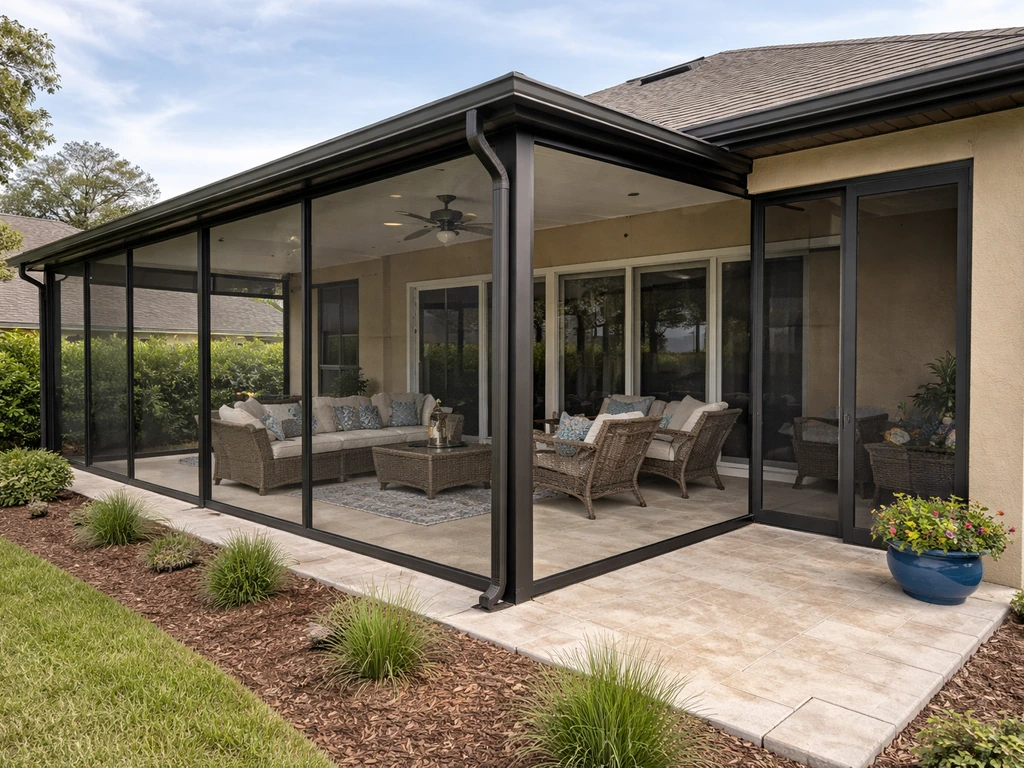
An enclosed patio is a ground-level outdoor living area that has been fitted with physical barriers, screens, glass panels, solid walls, or some combination, to reduce exposure to weather, bugs, and the open air. It sits on a slab or paved surface (like any standard patio), but unlike an open patio, at least part of it is wrapped in a structure that separates it from the surrounding environment. If you’re still wondering what an outdoor patio is, that just means the outdoor living area where people sit, cook, or relax on a hard surface what is outdoor patio. If you’re still comparing options, you can also review common enclosure types like screened patios versus glass enclosures patio enclosure. Think of it as the halfway point between 'fully outside' and 'inside a room.'
Enclosed Patio Meaning: What It Is and How to Verify It

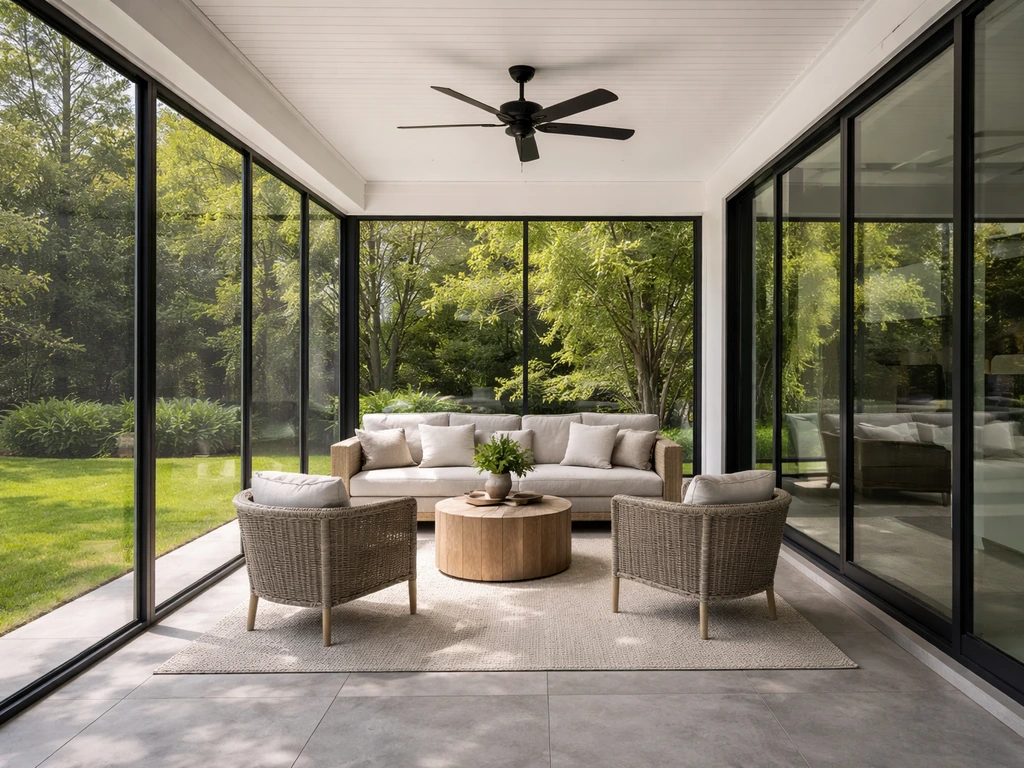
What an enclosed patio actually is, in plain English
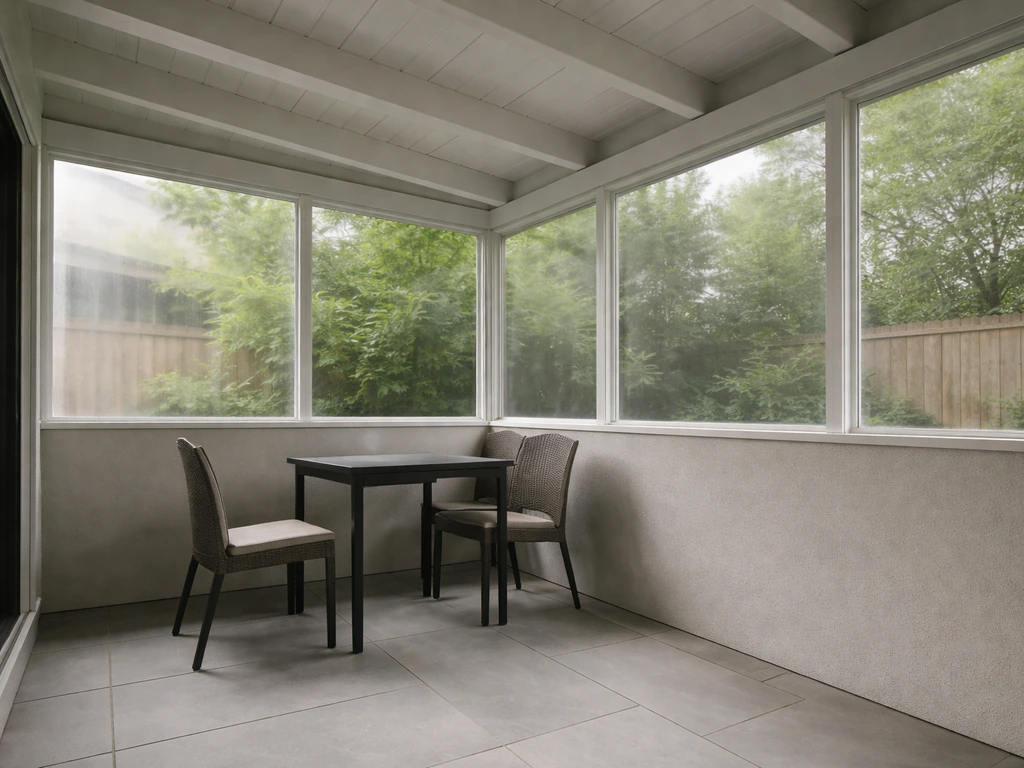
The word 'enclosed' is doing a lot of work here, and it can mean different things depending on who's using it. At its most basic, an enclosed patio is any patio space where someone has added structure around it to contain it. That structure might be full-height glass walls, aluminum-framed insect screens, solid stucco or brick walls, or removable panels that clip on seasonally. The floor is still typically a ground-level hard surface, concrete, pavers, tile, which is what keeps it a 'patio' rather than something else.
The key distinction is that the space has been given a degree of shelter that an open patio doesn't have. You're no longer fully exposed to wind, rain, and insects. How much shelter you actually get depends entirely on the type of enclosure. A screened enclosure keeps bugs out but lets air through freely. A glazed or glass enclosure blocks wind and rain but may or may not be climate-controlled. A fully walled enclosure with a solid roof starts to function more like a room.
What 'enclosed' usually includes
When you hear 'enclosed patio,' you can expect some combination of the following elements, though rarely all of them at once:
- Overhead cover: A roof or ceiling of some kind — often the same roof as the house extending outward, or a lightweight structure made of aluminum, polycarbonate, or screened material. Without a roof, it's typically just a walled garden rather than an enclosed patio.
- Walls or screens: This is the defining feature. Walls can be solid (brick, stucco, wood, vinyl siding), partially solid with windows, screen-only (fiberglass or aluminum mesh stretched in a frame), or glazed (fixed or sliding glass or acrylic panels).
- Glazing: Some enclosed patios go a step further with full glass or acrylic enclosures. These block weather more completely and can be heated or cooled, pushing the space closer to a sunroom or room addition.
- Degree of enclosure: Many patios are only partially enclosed — for example, two solid walls and two screened sides, or a roof with low knee walls and open screening above. The amount of coverage directly affects usability and how the space is classified for permits.
It's worth knowing that local building departments care a lot about these details. Cities like Tampa formally define residential screen enclosures as a habitable or non-habitable space created by enclosing a covered patio with walls of insect screening and/or removable panels, with a roof of screening, plastic, aluminum, or similar lightweight material. That definition affects whether a permit is required and what code standards apply, which matters to you as a buyer or renter.
How an enclosed patio is different from an open patio
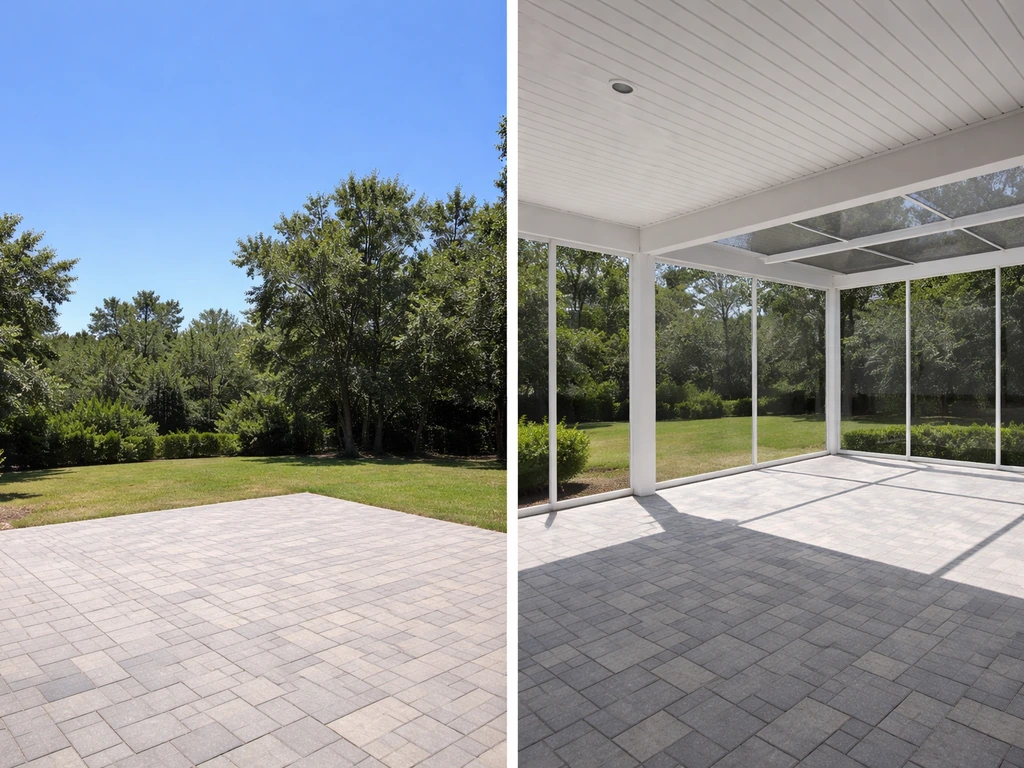
An open patio is just a hard, flat surface outside, no roof, no walls, completely exposed to the elements. You get full sun, full air, and full rain. blank" rel="noopener noreferrer">An enclosed patio takes that same ground-level slab and wraps it in some kind of structure. That’s why understanding outdoor patio meaning can help you tell what kind of enclosure you’re actually looking at. The practical result is that you get more usable hours per day and more usable days per year. You can sit outside during a light rain, eat dinner without mosquitoes dive-bombing your plate, or use the space on a breezy evening that would have sent you back inside from an open patio.
The trade-off is that enclosures cost money to build and maintain, and depending on the type, they can reduce natural light, airflow, or views. An open patio has essentially zero upkeep beyond cleaning the surface. An enclosed one has screens that can tear, glazing that can fog or crack, frames that can corrode, and roofing materials that need periodic inspection. If you're comparing an open and an enclosed patio option for a home purchase or renovation, think about how you actually use the space and what climate you're in, those two factors determine whether the enclosure genuinely adds value to your day-to-day life.
Enclosed patio vs. porch, veranda, sunroom, conservatory, loggia, and screened porch
This is where terminology gets genuinely confusing, and where real estate listings can lead you astray. Here's a clear breakdown of how these spaces differ from an enclosed patio: If you're trying to figure out what is an indoor patio called, an enclosed patio is one of the closest related options to look for in listings.
| Space | Ground level? | Attached to house? | Roof? | Walls/Enclosure | Climate controlled? |
|---|---|---|---|---|---|
| Enclosed patio | Yes (slab/pavers) | Usually | Usually yes | Screens, glass, or solid walls | Rarely, unless glazed and fitted with HVAC |
| Open patio | Yes (slab/pavers) | Usually | No | None | No |
| Porch | Yes (raised or at grade) | Yes | Yes | Partial or none (front/back) | No (typically) |
| Veranda/verandah | Yes (often raised) | Yes | Yes (wide overhang) | Open or partial railings | No |
| Sunroom | Yes | Yes | Yes (solid or glazed) | Full glass or solid walls | Often yes |
| Conservatory | Yes | Yes | Glass or polycarbonate | Mostly glass walls and roof | Yes, typically |
| Screened porch | Yes (raised or at grade) | Yes | Yes | Screen on all sides, no glazing | No |
| Loggia | Yes (ground or upper floor) | Yes (recessed into building) | Yes (part of main structure) | Open arched or columned sides | No |
| Courtyard | Yes (ground level) | Surrounded by building on multiple sides | No (open sky) | Walls of the surrounding structure | No |
The main practical distinction between an enclosed patio and a screened porch is often just the original construction method and attachment style. A screened porch is typically built as part of the house from the start, raised slightly off the ground, with a proper structural roof. An enclosed patio usually starts as a plain concrete slab that someone later added a screen or glass enclosure onto. The end result can look very similar, but the permit history, structural integrity, and property classification may be quite different.
A sunroom or conservatory goes further than either of those by using solid glazing (glass or high-quality polycarbonate) and often adding insulation and HVAC. If a listing calls something an 'enclosed patio' but the photos show double-pane glass walls and a dedicated heat/cool unit, it's really a sunroom, and that distinction affects the property's square footage, tax assessment, and what permits were needed.
Enclosed patio vs. balcony vs. courtyard, clearing up listing confusion
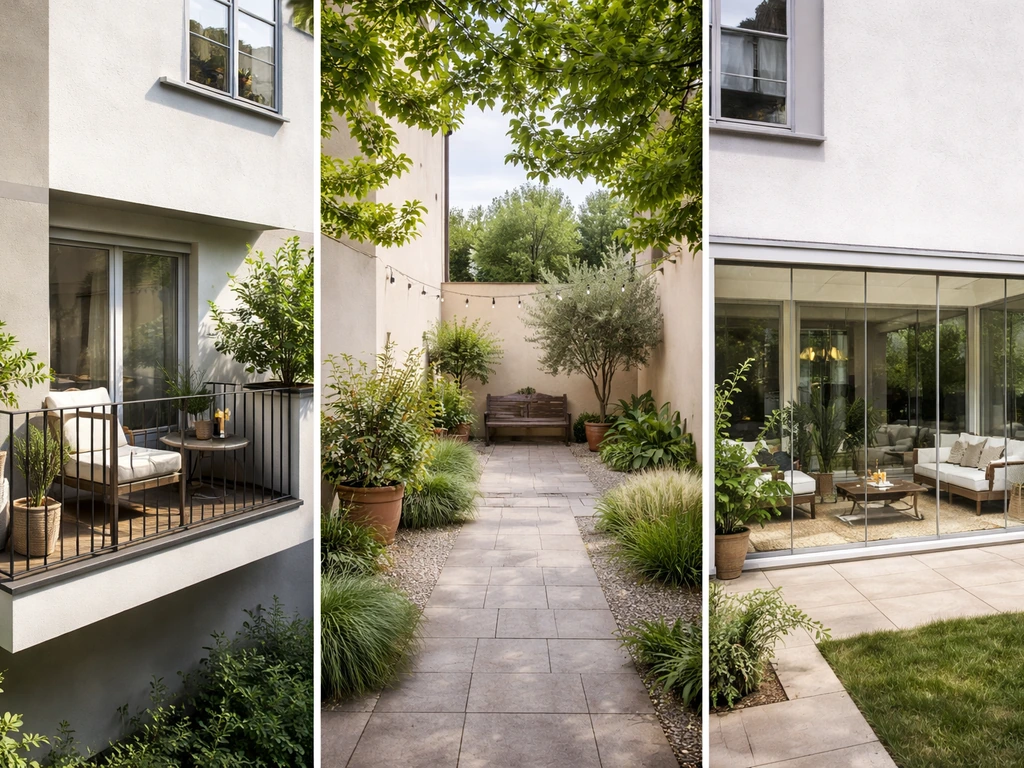
These three terms get used interchangeably in listings, especially for condos and apartments, and they are not the same thing. A balcony is an elevated platform projecting from an upper floor, it has no ground-level slab, and 'enclosing' a balcony typically means adding glass or screen panels around its railing. Some apartment listings describe a glass-enclosed balcony as an 'enclosed patio,' which is technically inaccurate but common in markets where outdoor space is scarce and sellers want to make features sound more substantial.
A courtyard is a ground-level open space surrounded on multiple sides by the walls of a building. It has the enclosed feel of walls around it, but it's open to the sky, no roof. In Southwest U.S. architecture and Mediterranean-style homes, internal courtyards are sometimes marketed as 'enclosed patios' because they're walled in on all sides. They offer privacy and some wind protection but zero rain cover. If you're buying or renting in a region where courtyards are common (Arizona, New Mexico, Southern California), always confirm whether the 'enclosed patio' in the listing has a roof.
The bottom line: if a listing says 'enclosed patio,' ask whether it's at ground level, whether it has a roof, and whether it's an original structure or a conversion. Those three questions will tell you what you're actually getting.
How to read 'enclosed patio' in a real estate listing
Listing language is not standardized. One agent's 'enclosed patio' is another agent's 'screened lanai' or 'glass room.' The term is used loosely, and what matters is the physical reality you'll walk into. Here's how to interpret and verify it before you commit to a showing or an offer.
Questions to ask before the tour
- Is the enclosed patio original construction or a retrofit? Retrofitted enclosures may or may not have permits.
- What is the enclosure material — screen, glass, acrylic, solid walls, or a mix?
- Does it have its own roof, or does it sit under the home's main roof line?
- Is it included in the home's heated/cooled square footage, or is it listed separately?
- Were permits pulled for the enclosure? Can you provide permit records?
- Is the enclosure considered a permitted room addition, a patio enclosure, or an accessory structure under local code?
What to check during the tour
- Look at the floor: Is it a slab, pavers, or raised decking? Ground-level slab = classic patio conversion. Raised wood or composite decking = likely a porch or deck enclosure.
- Check the roof connection: Is the ceiling an extension of the home's roofline, or is it a separate lightweight structure (aluminum frame, polycarbonate panels)?
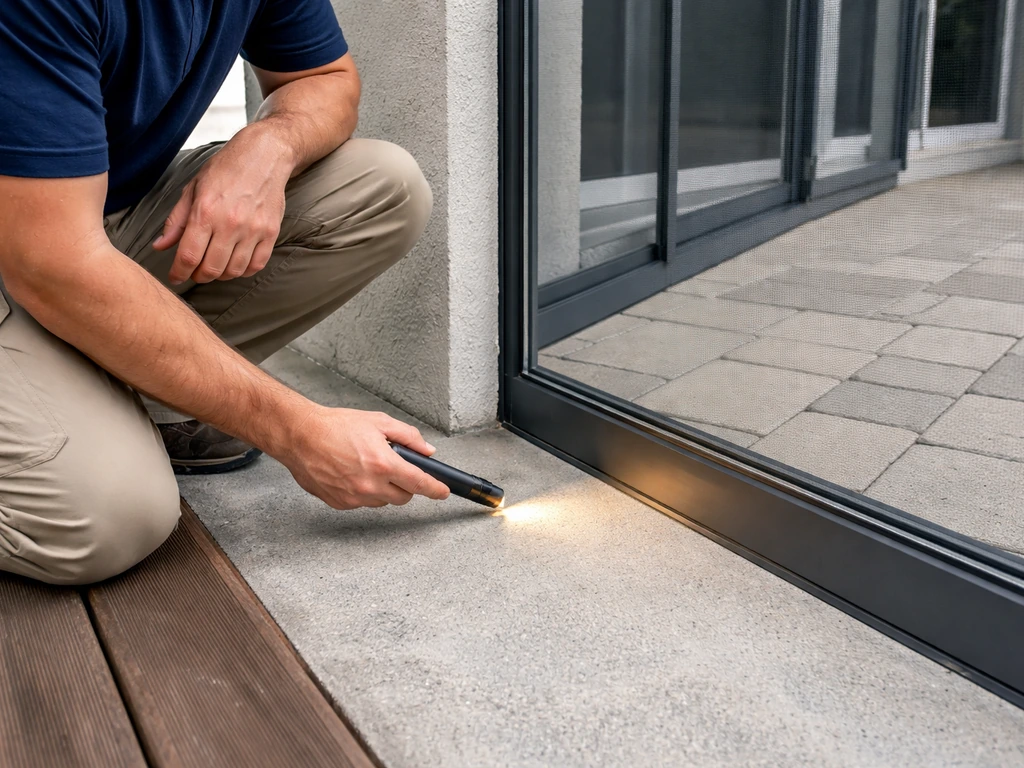
- Inspect the screens or glazing for condition: Torn screens, fogged glass panels, or corroded frames signal deferred maintenance.
- Test any doors or vents: A properly enclosed patio should have at least one accessible door to the outside and ideally some ventilation control.
- Look for electrical or HVAC: Outlets, ceiling fans, or a mini-split unit indicate the space is set up for year-round use. Their absence limits the space to seasonal use.
- Check for water intrusion: Staining on the slab, rust streaks on screen frames, or water marks on the ceiling indicate drainage or sealing problems.
- Note the permit sticker: Many jurisdictions require a permit sticker or placard to be visible on the structure. Its absence doesn't always mean unpermitted, but it's a flag to investigate.
Keep in mind that local governments classify these spaces differently, and the classification has real consequences. Some jurisdictions, like Los Alamos County in New Mexico, have specific guidance sheets distinguishing patio enclosures from sunrooms and room additions, and that line determines which building codes apply, whether the space counts as conditioned square footage, and what the permit process looks like. Los Alamos County also provides patio enclosure and sunroom guidance sheets that distinguish the categories for enforcement and determine which code standards and permit checks apply Los Alamos County in New Mexico. If you're buying a home and plan to rely on the enclosed patio as a year-round living space, it's worth having a home inspector specifically evaluate the enclosure and flagging the permit question to your agent.
The real pros and cons of an enclosed patio
Weather protection and usability
The main appeal of an enclosed patio is extended usability. A screened enclosure gives you protection from insects and light wind almost year-round in warm climates, it's why screened lanais are so popular in Florida and similar states. A glass or glazed enclosure adds rain and cold-wind protection, making the space functional even in shoulder seasons (spring and fall) in cooler climates. Neither replaces proper insulation and HVAC for year-round comfort in cold-weather regions, but both beat sitting on an exposed slab in the rain.
Privacy
Enclosures create a visual and physical boundary that open patios don't have. Even a screen enclosure reduces the sense of being fully exposed to neighbors. Solid walls obviously give much more privacy. If you're in a dense suburban neighborhood or a condo development with close sight lines, an enclosed patio can genuinely change how comfortable you feel using the space.
Ventilation and comfort
This is the main trade-off. Screen enclosures let air through freely, so ventilation is essentially the same as outdoors. Glazed or glass-panel enclosures trap heat significantly, especially in summer, without ceiling fans or an HVAC system, a glass-enclosed patio in a hot climate can become unusable for months. Always check for ventilation when you tour a glass enclosure. Operable windows or vents, a ceiling fan, or a mini-split unit are not luxuries; they're necessities in most climates.
Maintenance
Screens need to be inspected annually and replaced every 5 to 15 years depending on the material, UV exposure, and whether pets or tree debris have been at them. Screen frame hardware, especially aluminum in coastal areas, can corrode in under a decade. Glazed systems require periodic re-sealing of gaskets and inspection of drainage channels. Solid wall enclosures with a proper roof need maintenance similar to any exterior wall surface: painting, caulking, and occasional repair. The ongoing cost is real, and it's worth factoring in when comparing an enclosed versus open patio for a property.
If you're remodeling and deciding whether to enclose an existing open patio, the calculus usually comes down to your climate and how you use outdoor space. In mosquito-heavy or rainy climates, even a basic screen enclosure pays back in usability quickly. In dry, mild climates, an open patio may serve you just as well without the added maintenance. And if your goal is a true four-season room, a screen enclosure won't get you there, you'd be looking at a proper sunroom or room addition instead, which is a different scope, cost, and permit process entirely.
FAQ
If an “enclosed patio” has screens, does it count as inside the house for comfort and use?
Usually it does not. A screen enclosure typically protects against insects and light wind, but it still behaves like outdoor space for temperature. If you want year-round comfort, confirm whether there are operable vents, ceiling fans, insulation details, and whether the enclosure is ever converted to conditioned space.
What roof type still qualifies as an enclosed patio, and what means it’s a sunroom instead?
An enclosed patio can have lightweight screening or a solid roof that shelters from rain, as long as it stays essentially a patio enclosure. If the space has features that make it a room (insulated walls, HVAC/mini-split, double-pane glazing with thermal breaks, or a design intended for conditioned use), listings may be better described as a sunroom or room addition.
How can I tell during a tour whether the enclosure was added later versus being part of the original construction?
Look for permit-related clues and construction transitions. Common signs of a conversion include new slab-to-frame anchoring visible at the edges, mismatched window framing, older house exterior surfaces cut or patched for attachment, and different roof flashing lines compared with the main structure.
Should I worry about glare and privacy loss in glass-enclosed patios?
Yes, especially in sunny climates. Even when glass blocks rain and wind, it can create strong glare and daytime visibility. Ask whether the system includes low-e coatings, tint, blinds, or privacy film, and check for how the glare affects typical seating or dining positions.
What ventilation problems are most common with glass or glazed enclosures?
Heat buildup and poor air exchange. If there is no operable opening (windows or vents) and no mechanical airflow like a ceiling fan or mini-split, the space can become uncomfortable in warm months even if it looks “closed in.” Bring up airflow during the showing and check whether windows open fully.
Do screen enclosures reduce sound, and is that a practical expectation?
They help somewhat, but they are not soundproof. Screening can dampen high-frequency noise and reduce what you hear from direct line-of-sight, yet outside noise often remains clearly audible. If noise reduction is a priority, ask about wall materials, roof construction, and whether any solid panels exist.
Are there insurance or resale classification issues if an enclosed patio was never permitted correctly?
Potentially. Misclassified or unpermitted enclosures can affect what gets counted in appraisals, how the space is described in disclosure documents, and whether insurers require documentation. Ask your agent to check permit history and confirm how the enclosure is recorded in public records.
How should I evaluate maintenance costs before buying, especially for screens and glazing?
Plan for replacement and repairs, not just cleaning. Ask the seller or agent when screens were last replaced, whether frames were coated or corrosion-resistant, and whether glazing gaskets have been re-sealed. Also look for drainage issues around the base and corners, which can drive water infiltration costs.
Can an enclosed patio be used as a bedroom, office, or year-round living space?
Not automatically. Whether it can legally function as habitable space depends on insulation, ventilation, ceiling height, egress, and local code classification. If you intend to use it as living space, request the prior permit classification and have an inspector evaluate code compliance.
What common listing wording mistakes should I watch for around “enclosed patio meaning”?
Listings may call a screened porch, glass balcony, courtyard, or sunroom an “enclosed patio” if the outdoor feel is similar in photos. When the photos show a raised structure, HVAC, solid insulation-like glazing, or a balcony rail enclosure, confirm the ground level, roof coverage, and original build versus conversion.
What question should I ask about flooding or water pooling under the enclosure?
Ask how runoff is handled and whether there are drainage channels or slope corrections. Glass and solid-roof enclosures can concentrate water at seams and edges, and inadequate drainage can lead to staining, moldy baseboards near attachments, or repeated repairs.
What Is a Patio Enclosure? Types, Costs, and Next Steps
Definition of a patio enclosure, types and materials, costs, permitting tips, and how to choose the right one fast.