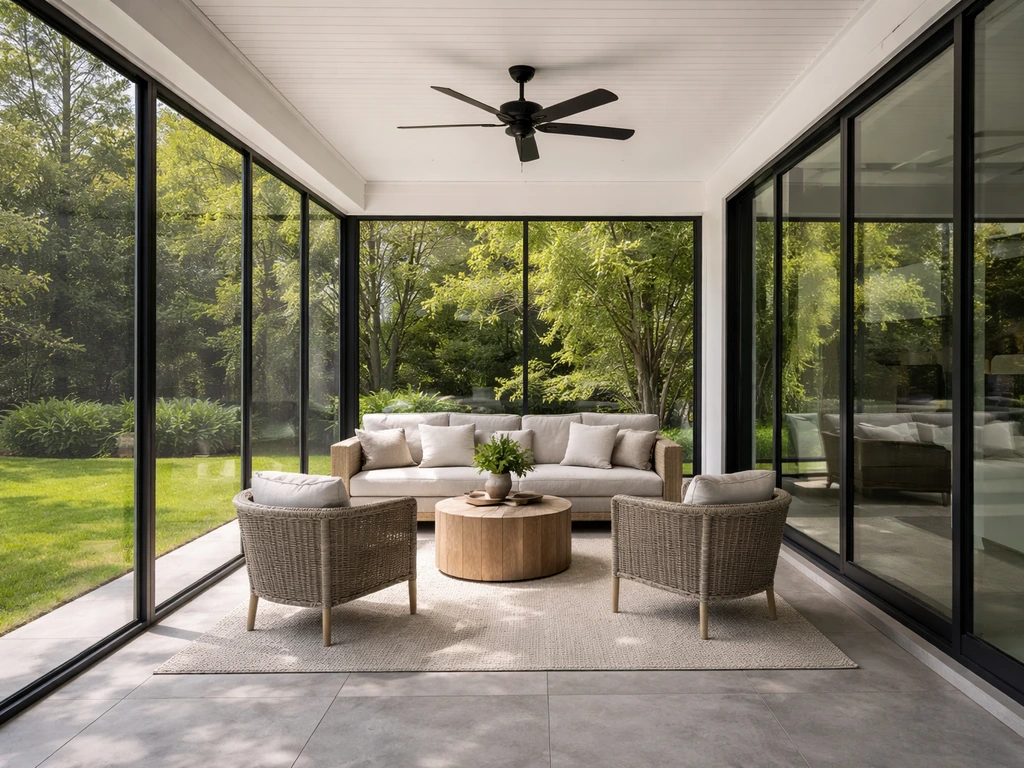
An indoor patio is most commonly called a sunroom, enclosed patio, or solarium, depending on how it is built and where you live. If it is open to the sky but surrounded by walls, "atrium" or "inner courtyard" fits better. There is no single universal term, which is exactly why listings and floor plans use so many different names for what is essentially the same idea: a patio-like space that is either fully enclosed or positioned inside the building footprint.
What Is an Indoor Patio Called? Names and Differences

Ada Hollis
11 Jun 2026
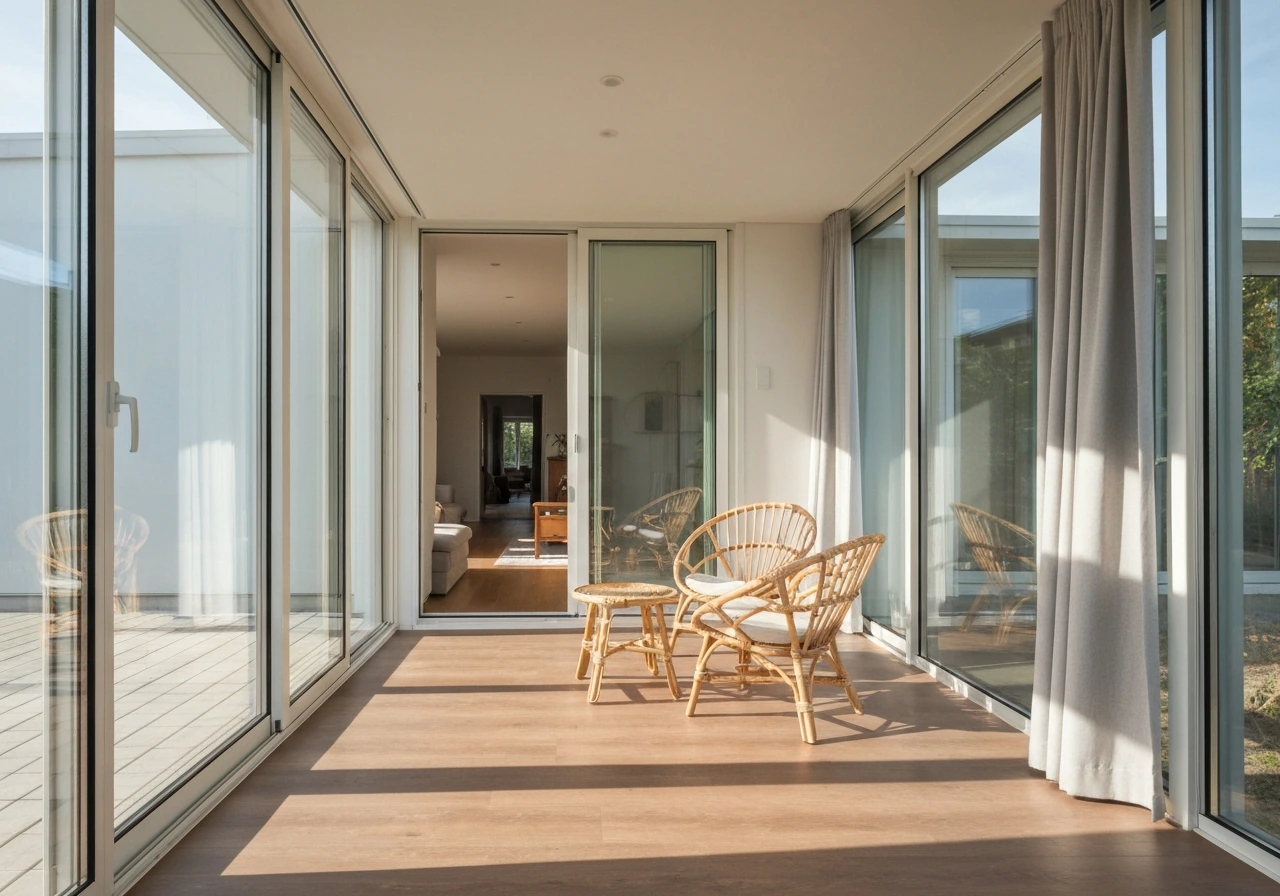
Common terms for an indoor patio
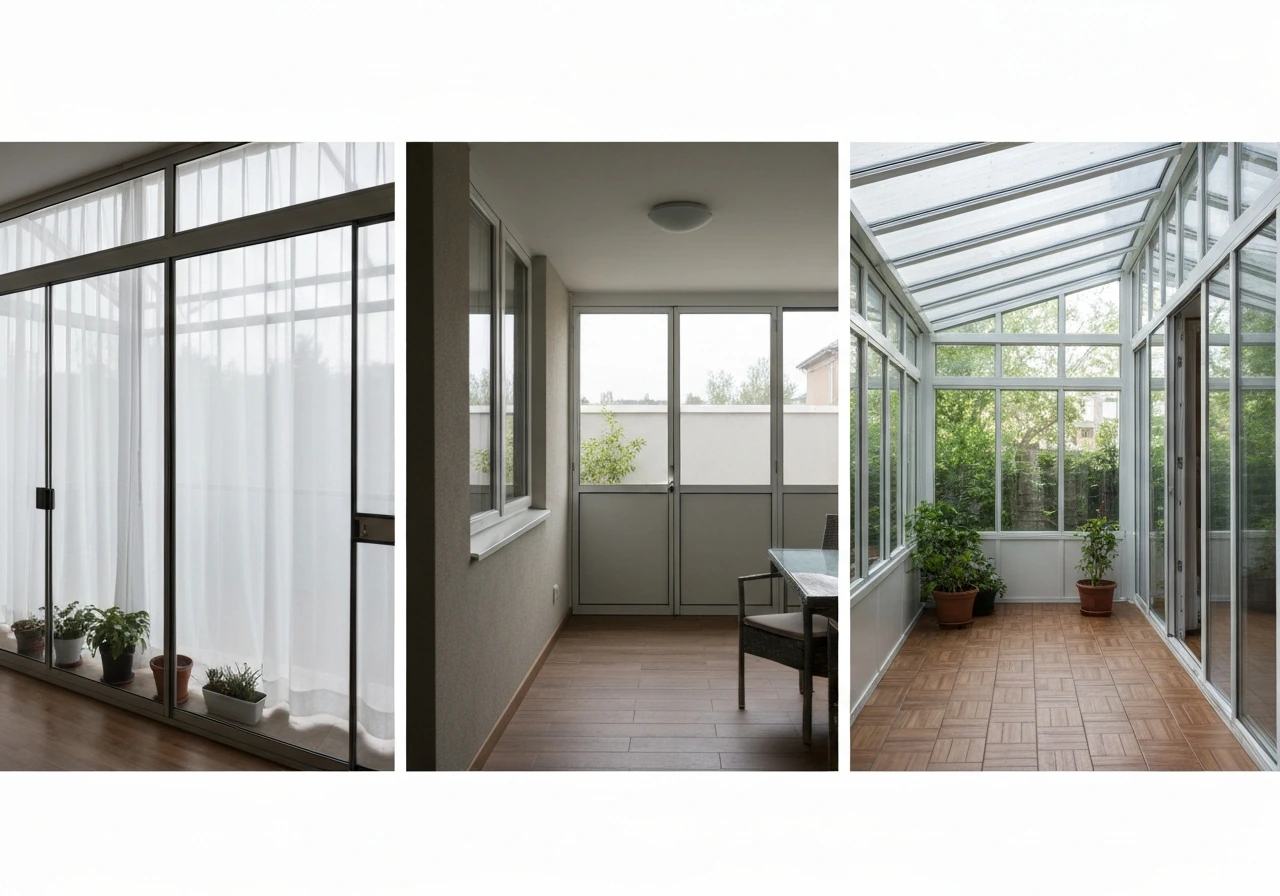
The most widely used names you will encounter are sunroom, solarium, enclosed patio, and Florida room. A sunroom is a glass-walled room attached to the house that lets in a lot of daylight while protecting you from wind, rain, and cold. A “sunroom” is commonly described as a glass-permitted room that shelters occupants from adverse weather while providing abundant daylight and views, and it is also frequently called a “solarium.
” a glass-walled room attached to the house that lets in a lot of daylight while protecting you from wind, rain, and cold. A solarium is essentially the same thing, though the word leans toward spaces with more glass overhead, sometimes a fully glass ceiling.
"Florida room" is a regional American term for a screened or glass-enclosed living space that blurs the line between indoors and out. "Enclosed patio" is the most literal label and shows up frequently in real estate listings, especially when the original outdoor patio was retrofitted with walls and a roof.
Beyond those four, you will also see "patio room," "garden room," "conservatory," and "four-season room." These are mostly marketing or regional variations on the same concept. A conservatory tends to suggest a more formal, glass-heavy structure often used for plants. A four-season room signals insulation good enough to use year-round, not just in mild weather. When a contractor or listing uses any of these terms, they are almost always describing what most people would call an indoor or enclosed patio.
How to recognize an indoor patio from layout and enclosure
The clearest sign is that the space sits on a ground-level slab or concrete floor (the classic patio base) but has been enclosed on most or all sides. Look at floor plan drawings: if a room labeled "patio" or "sunroom" shares a wall with the main living area and is accessible directly from inside, it started life as or was designed to function like a patio. Photos showing tiled or stamped-concrete flooring, ceiling fans, and glass-panel or screen walls are strong visual cues.
Enclosure level matters a lot for naming. A screened-in space is still partially open to the elements and usually called a screened porch or screen room. A space with glass walls and a solid or glass roof is typically a sunroom or solarium. A space with standard insulated walls and HVAC is a four-season room or simply an additional living room, even if the original bones were a patio slab. Knowing which type you are looking at helps you understand how the space functions, what it will cost to heat and cool, and what it adds to the home's usable square footage.
Indoor patio vs true patio (outdoor)
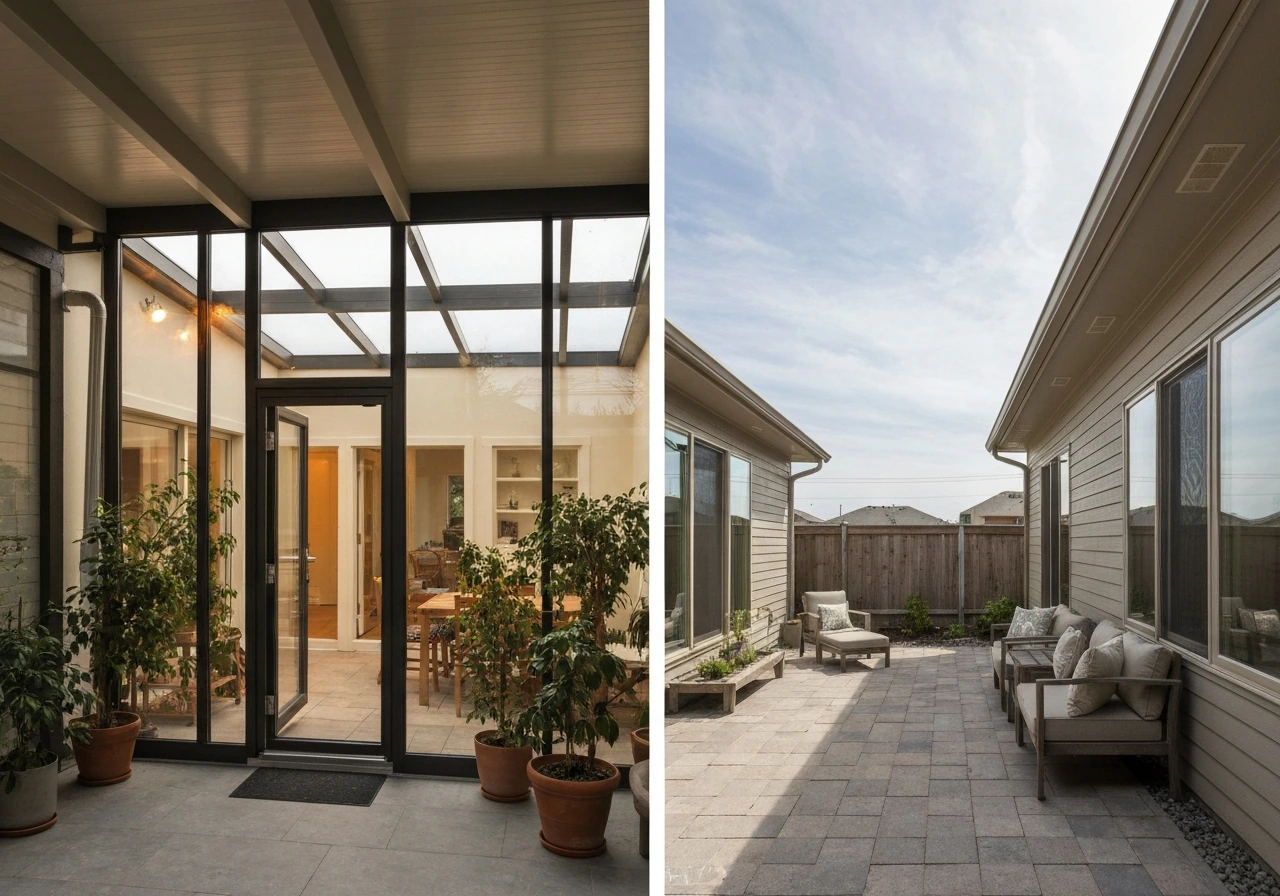
A true outdoor patio is an unenclosed, hard-surfaced area outside the home, open to the sky and air on at least two or three sides. It has no roof of its own (unless a separate pergola or awning is added) and is not counted as interior living space. An indoor patio, by contrast, has been enclosed to some degree, which changes how it is classified for taxes, insurance, and square footage purposes.
| Feature | Outdoor Patio | Indoor/Enclosed Patio |
|---|---|---|
| Roof | None or open pergola | Solid or glass roof |
| Walls/Enclosure | Open on all sides | Glass, screen, or solid walls |
| Sky access | Fully open to sky | None or glass overhead |
| Climate control | No HVAC | Fan, heater, or full HVAC possible |
| Counted as living space | No | Sometimes, depends on finish level |
| Common names | Patio, terrace | Sunroom, solarium, enclosed patio, Florida room |
Indoor patio vs sunroom, solarium, atrium, and courtyard
These terms get mixed up constantly, so here is a straightforward breakdown. A sunroom and a solarium are nearly identical in everyday usage: both are glass-enclosed rooms attached to the house that let in natural light. The difference, where one exists, is that a solarium typically has glass on the ceiling as well, making it feel more like a greenhouse. Both are fully enclosed and weather-protected, which puts them firmly in the "indoor patio" category.
An atrium is different in one key way: it is built into the interior of a building, usually as a central open space that rises through multiple floors with a glass roof above. In a residential home, an atrium might be a skylighted central room with plants and seating. It is enclosed by the surrounding rooms of the house rather than sitting on the building's perimeter.
A courtyard, on the other hand, is typically open to the sky and surrounded by walls or the building structure on multiple sides. Because it is open-air, a true courtyard is closer to an outdoor patio than to a sunroom. A true outdoor patio is typically uncovered and open to the sky, which is what people mean when they ask about the outdoor patio meaning.
When a listing mentions an "inner courtyard," picture an outdoor space that happens to be enclosed by the building rather than a weatherproofed interior room.
| Space | Enclosed? | Open to Sky? | Attached or Interior? | Best Short Label |
|---|---|---|---|---|
| Sunroom | Yes, glass walls | No | Attached to house exterior | Enclosed patio / indoor patio |
| Solarium | Yes, glass walls and ceiling | No | Attached to house exterior | Enclosed patio / indoor patio |
| Atrium | Yes, glass roof | Partially (skylight) | Interior of building | Interior glass room |
| Courtyard | Surrounded by walls | Yes, fully open | Interior or perimeter | Outdoor enclosed space |
| Florida room | Screened or glass | No | Attached to house exterior | Enclosed patio |
Indoor patio vs porch and porch-like terms
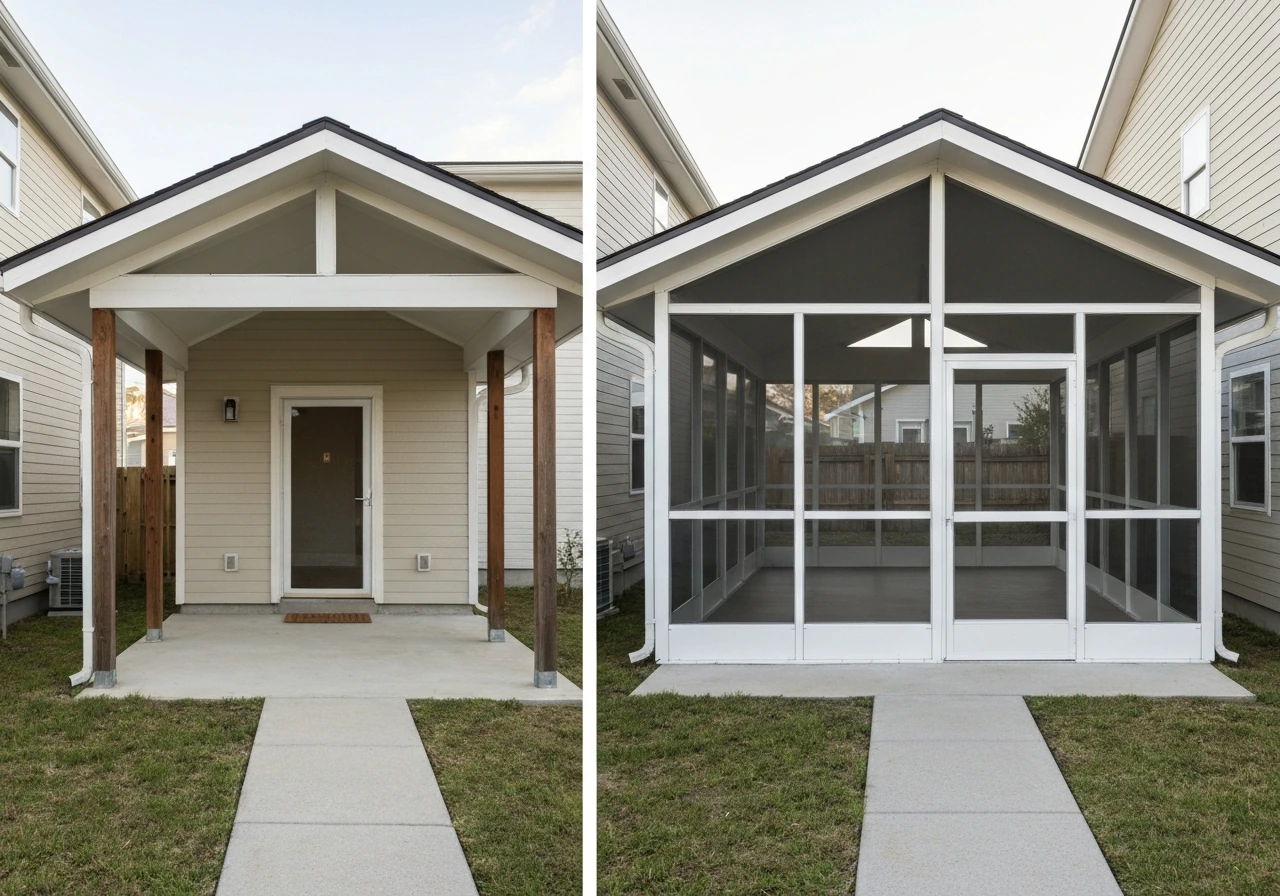
A porch is a covered structure attached to the entrance of a home, traditionally with a roof supported by posts and open sides. It is designed as a transitional space between indoors and outdoors, not as a full living room. The key distinction from an indoor patio is that a porch is usually open on its outward-facing sides and is accessed from outside, not from an interior room. A veranda (or verandah) is essentially a large porch that wraps around one or more sides of the house, again with a roof but open sides.
When a porch gets fully enclosed with glass or screen panels, it often gets renamed in listings as a sunroom or enclosed porch, and at that point it starts overlapping with the indoor patio concept. The origin of the space (porch vs. patio slab) is what distinguishes them structurally: porches are elevated or at-grade entry structures, while patios are ground-level hard-surface areas typically off the back or side of the home. In practice, once either one is enclosed, most buyers and renters treat them as the same type of bonus living space.
How real estate listings use "patio" vs "enclosed patio" (and what regional wording to watch for)
Listing language is inconsistent, and that can genuinely confuse buyers. In the American Southwest and Southeast, you will often see "covered patio" or "enclosed patio" used for what is functionally a sunroom. In the Midwest and Northeast, the same space is more likely to be called a sunroom or four-season room. In Florida and other warm-climate states, "Florida room" and "lanai" (a Hawaiian-origin term for a covered outdoor living area) are common. Internationally, "conservatory" is the standard British and Australian term for what Americans call a sunroom.
The practical issue for buyers is that "patio" in a listing often means outdoor, uncovered space, while "enclosed patio" signals some level of weatherproofing. Neither term guarantees that the space is heated, insulated, or counted in the home's official square footage. Always check the listing photos and, if possible, the property's tax records or floor plan to confirm whether the space is climate-controlled and legally classified as living area. An "enclosed patio" that is not insulated or permitted may not add to the appraised value the way a proper sunroom addition would.
For renters, the stakes are lower but the terminology still matters for understanding what you are actually getting. A listing that says "patio" most likely means an outdoor slab or deck. "Sunroom" or "enclosed patio" means a bonus interior (or semi-interior) room. Sunroom or enclosed patio typically refers to a partially or fully enclosed patio that functions like an indoor living space, depending on how it is roofed and insulated. If you need a year-round workspace or extra living area, the distinction is significant.
What to call it when you are describing the space
If you are describing the space to a realtor, contractor, or in a listing of your own, here is a practical guide. Start with the most accurate physical description, then layer in the commonly understood marketing term.
- If the space has glass walls and a glass or solid roof and is attached to the house exterior: call it a sunroom or solarium. Use "enclosed patio" as a secondary description if the floor is a concrete slab.
- If it is screened rather than fully glazed: call it a screened porch or screen room, not a sunroom.
- If it is open to the sky but surrounded by the home's walls: call it a courtyard or inner courtyard.
- If it is a glass-roofed central interior space: call it an atrium.
- If it was originally an outdoor patio and has been enclosed with any kind of wall or roof: "enclosed patio" is the safest, most universally understood term.
- If you want to emphasize year-round usability and it is properly insulated with HVAC: "four-season room" communicates that clearly to buyers and renters.
- For a listing, lead with the most appealing accurate term (sunroom, Florida room, four-season room) and note the original construction in the description (e.g., "converted from an outdoor patio slab").
When reading someone else's listing, use the photos to override the label. A space photographed with tile floors, ceiling fans, jalousie windows, and wicker furniture is an enclosed patio or Florida room regardless of what the headline calls it. A space with drywall, insulation, and a mini-split unit is effectively an additional room. If you are working through what an enclosed patio is legally or architecturally, or trying to understand what a patio enclosure actually adds to a home, those are closely related questions worth exploring alongside this one.
FAQ
If a patio is screened in, is it still considered an indoor patio?
Usually not. If the room is only screened or open to the elements, it is more often called a screened porch or screen room, not an indoor patio. Look for solid windows or insulated walls and some form of roof enclosure to decide whether it is truly indoor-patio territory.
How can I tell whether it’s an indoor patio or a porch/veranda in a listing?
Use the entrance and adjacency. If you access it from inside the home, it is more likely being marketed as an indoor patio term (sunroom, solarium, enclosed patio). If it is accessed only from an exterior door and functions like an outdoor sitting area, it is more likely a porch or veranda.
Do indoor patios get renamed based on whether they have a glass ceiling?
Yes, and it can change the name you see. An indoor patio that has a glass roof over a perimeter room is often described like a solarium or sunroom, while a space with standard insulated roofing and walls is sometimes labeled a four-season room. The label often follows how complete the enclosure and climate system are, not just the floor plan shape.
Does an enclosed patio always count as living space for taxes or appraisal?
Not necessarily. Even if it’s enclosed, it might lack HVAC, proper insulation, or permits, which means it may not count as heated living area for appraisal and some tax classifications. Ask whether it is on a dedicated thermostat, whether it has insulation in the walls and roof, and what the local assessor lists it as.
What should I look for to know if an indoor patio is climate-controlled?
Start with the HVAC clues. Ceiling fans are common in sunrooms, but they do not equal climate control. A mini-split, baseboard heat, or vents tied into the home usually indicate year-round usability and stronger odds of being classified as an additional room.
In places like Florida or Hawaii, can “lanai” mean the same thing as an indoor patio?
You can, but definitions vary by region and marketing. For example, a “lanai” is commonly used in warm climates for covered outdoor living, which may still be open-air. If it is glass-enclosed with a solid roof, you should treat it similarly to an indoor patio, regardless of the label.
Can flooring like tile or stamped concrete tell me whether a space is an indoor patio?
Check the floor surface and continuity with indoor rooms. Tile, stamped concrete, or a patio slab can still belong to a sunroom, but the strongest sign of an indoor patio is a weatherproof boundary (glass or insulated walls) and an inside connection (doorway or shared wall) to the home.
Why do listings call it a “covered patio” when it looks enclosed?
Sometimes, but the most common confusion is “covered patio” being used for what is essentially an enclosed patio. If photos show screens plus an exterior-feeling setup, assume outdoor. If photos show glazing, weatherproof seams, and interior-style furniture layouts, assume indoor-patio type even when the headline says “patio.”
How do I evaluate whether adding an indoor patio will increase home value in my area?
Not always, and it depends on enclosure type. A fully enclosed, insulated sunroom-style addition often has higher perceived value, but an uninsulated enclosure may be treated like a bonus space. In due diligence, request the permit history, ask about insulation, and confirm whether the property records reflect habitable square footage.
What indoor patio type is best if I want a workspace I can use year-round?
Yes. If you need year-round use, prioritize insulation, vapor barrier details, and a workable heating and cooling plan. If you just want daylight and seasonal lounging, a screened or lightly enclosed setup may meet the goal but will not behave like a four-season room.
Next Article
Enclosed Patio Meaning: What It Is and How to Verify It
Plain-English enclosed patio meaning: features, how it differs from porches and sunrooms, and how to verify it.