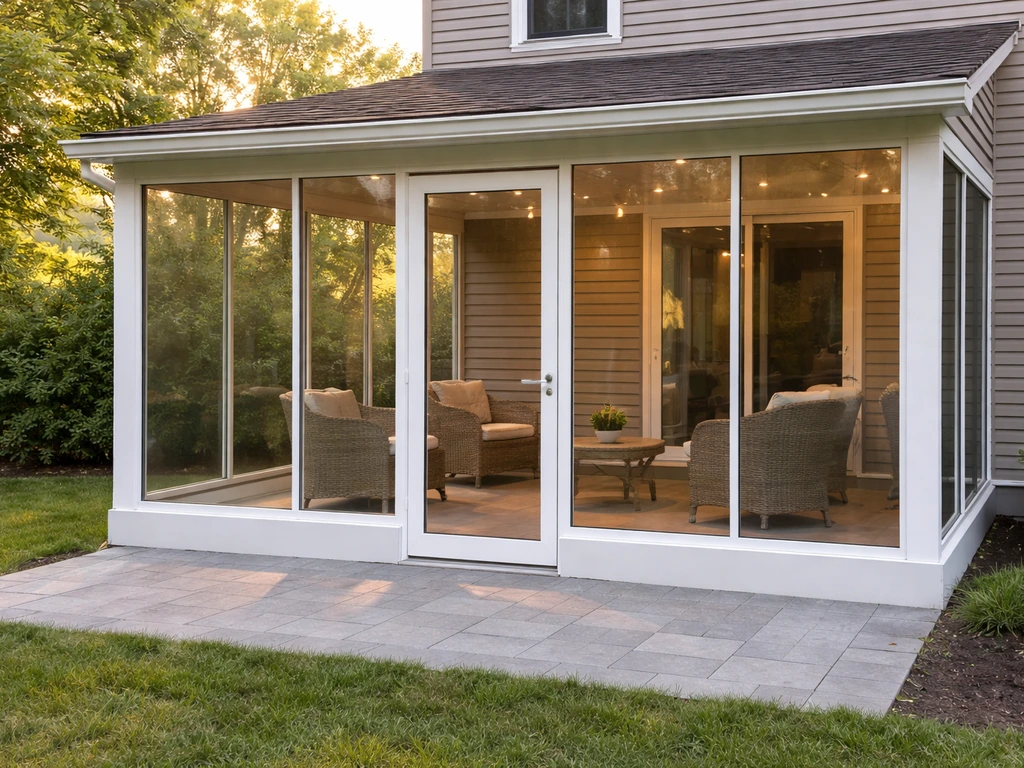
A patio enclosure is a structure built around an existing outdoor patio to partially or fully enclose it, turning open-air space into a protected, usable room. It keeps out rain, bugs, wind, and debris while still letting in light and, depending on the materials, fresh air. The result sits somewhere between a bare patio and a finished indoor room, and that middle ground is exactly what makes enclosures so useful for homeowners who want more from their outdoor space without committing to a full home addition.
What Is a Patio Enclosure? Types, Costs, and Next Steps

Ada Hollis
21 May 2026
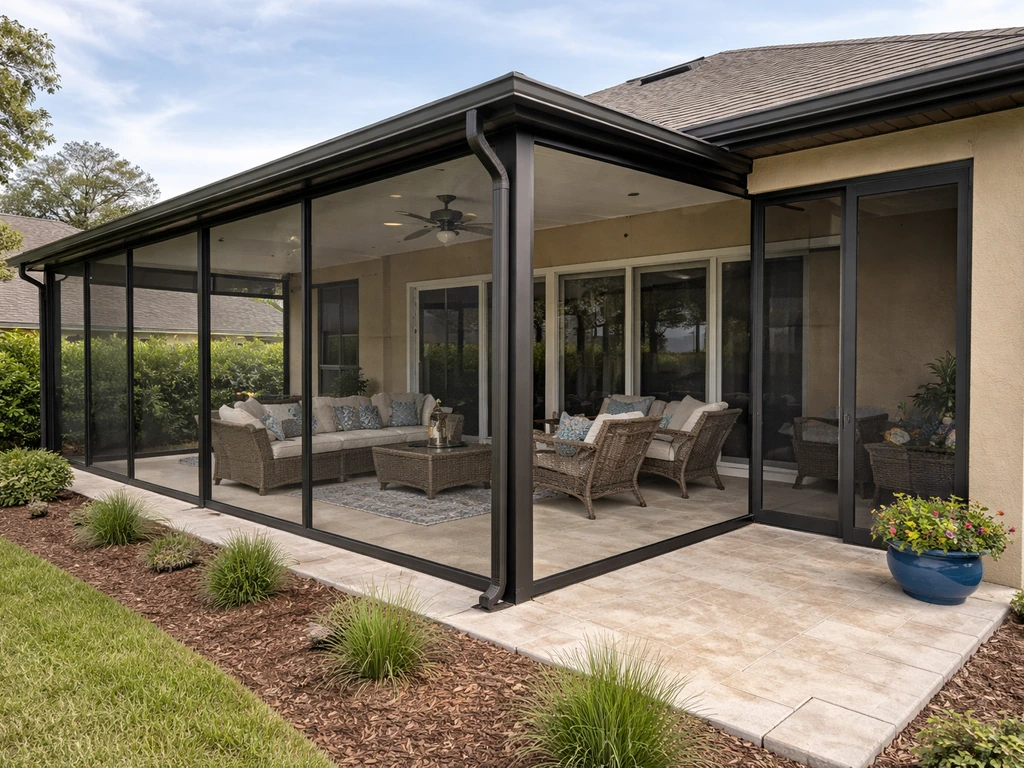
What a patio enclosure actually is
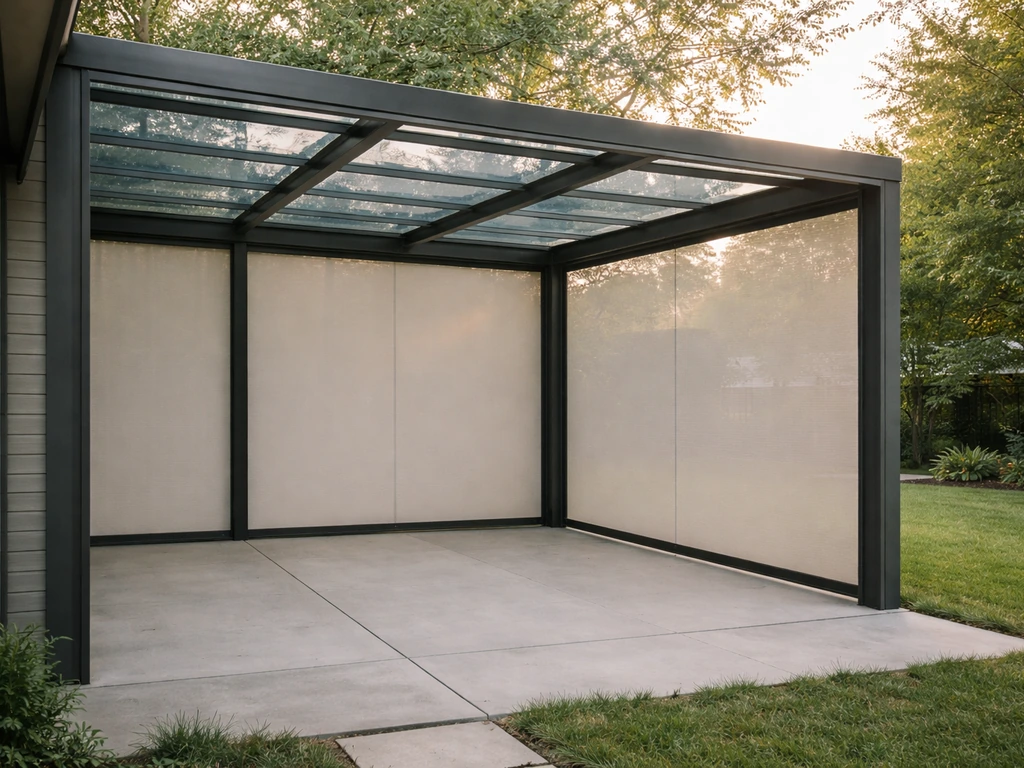
At its core, a patio enclosure is an added framework of walls, screens, panels, or glass that surrounds some or all of an existing patio slab or deck area. The enclosure usually shares at least one wall with the house and sits on the same footprint as the original patio. What varies is how much it closes off: a screen enclosure lets air move freely but blocks insects and debris, while a glass or solid-wall enclosure seals the space entirely and functions more like an indoor room.
The term covers a wide range of products and construction approaches. You might see it used for a simple aluminum-framed screen room snapped onto a concrete slab, or for a fully engineered glass-and-insulated-wall addition that's heated and cooled year-round. Both qualify as patio enclosures. The difference lies in materials, how much weather protection they offer, and how the space is ultimately used and permitted.
How a patio enclosure differs from a regular patio
An outdoor patio is fundamentally an open, ground-level surface, typically paved with concrete, stone, brick, or pavers, with no walls or roof of its own. It's exposed to the elements by definition. A patio enclosure changes that entirely. Once walls and a roof structure are added, the space gains weather protection, year-round usability in most climates, and a degree of privacy and comfort the open patio never had.
The practical difference is immediate: you can sit in an enclosed patio during a rainstorm, at dusk when mosquitoes are active, or on a cool spring evening without retreating inside. You can leave furniture, rugs, and electronics out there without worrying about rain or UV damage the same way you would on an open patio. That usability gap is the main reason homeowners add enclosures in the first place.
It's also worth distinguishing what the enclosure is not. An open patio with just a pergola or shade sail overhead is still an outdoor patio, not an enclosure, because the sides remain open. To help you shop confidently, it also helps to know the outdoor patio meaning of “enclosure” versus simple shade structures. A true enclosure requires some form of vertical barrier around the perimeter, whether that's screen mesh, glass panels, vinyl windows, or solid walls.
Enclosure styles and what they're made of
Patio enclosures generally fall into three broad categories based on how open or closed they are. Understanding these categories makes it much easier to compare quotes from contractors or interpret listings that describe a home's outdoor spaces.
Screen enclosures
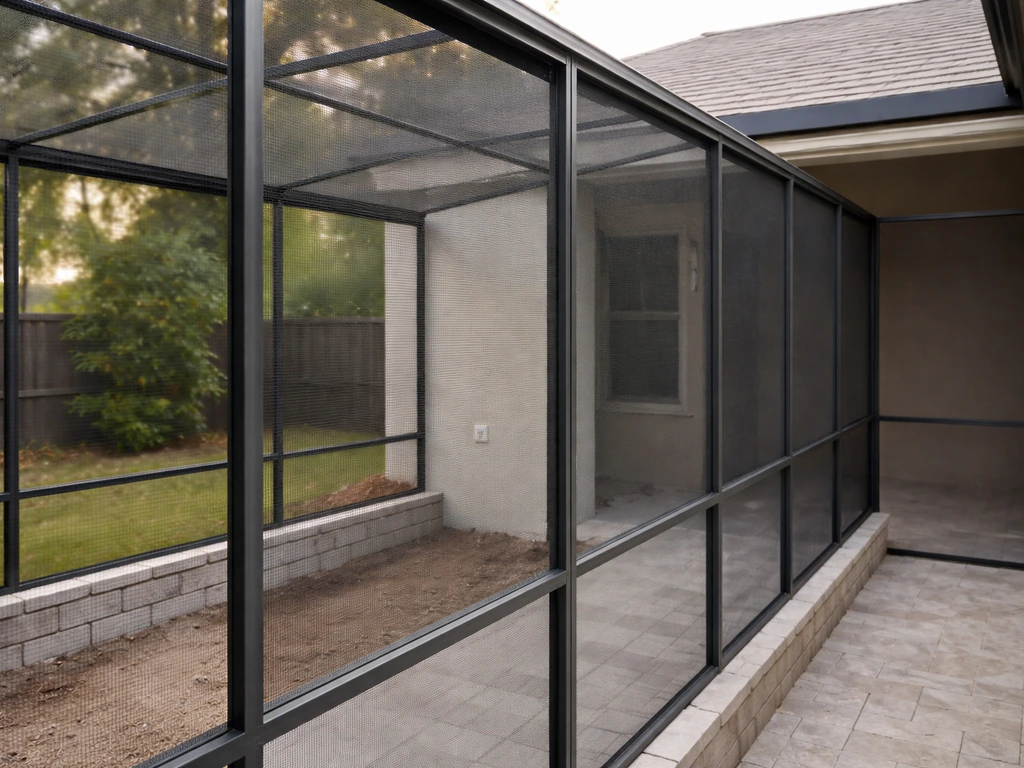
A screen enclosure uses a lightweight aluminum or steel frame filled with fiberglass or aluminum screen mesh. The frame spans from a slab or low knee wall up to a screened roof. These are the most common type in warm, humid climates like Florida, Georgia, and coastal regions of the South, where bugs are the primary problem rather than cold temperatures. They let breeze flow through freely, keep the feel genuinely outdoor, and cost the least of any enclosure type. The trade-off is obvious: no meaningful wind or rain protection beyond light drizzle, and no temperature control.
Glass and acrylic enclosures
Glass enclosures replace the screen mesh with tempered or insulated glass panels. Some use sliding or folding glass doors that can open sections of the wall when weather allows. These provide full rain and wind protection and, with insulated glazing, meaningful temperature buffering. Sunlight still pours in, which makes the space feel bright year-round. In milder climates without extreme winters, a glass enclosure can be used comfortably through most of the year with no added heat or cooling. In colder regions, you'll need some form of heating to make it truly four-season.
Vinyl and solid-wall enclosures
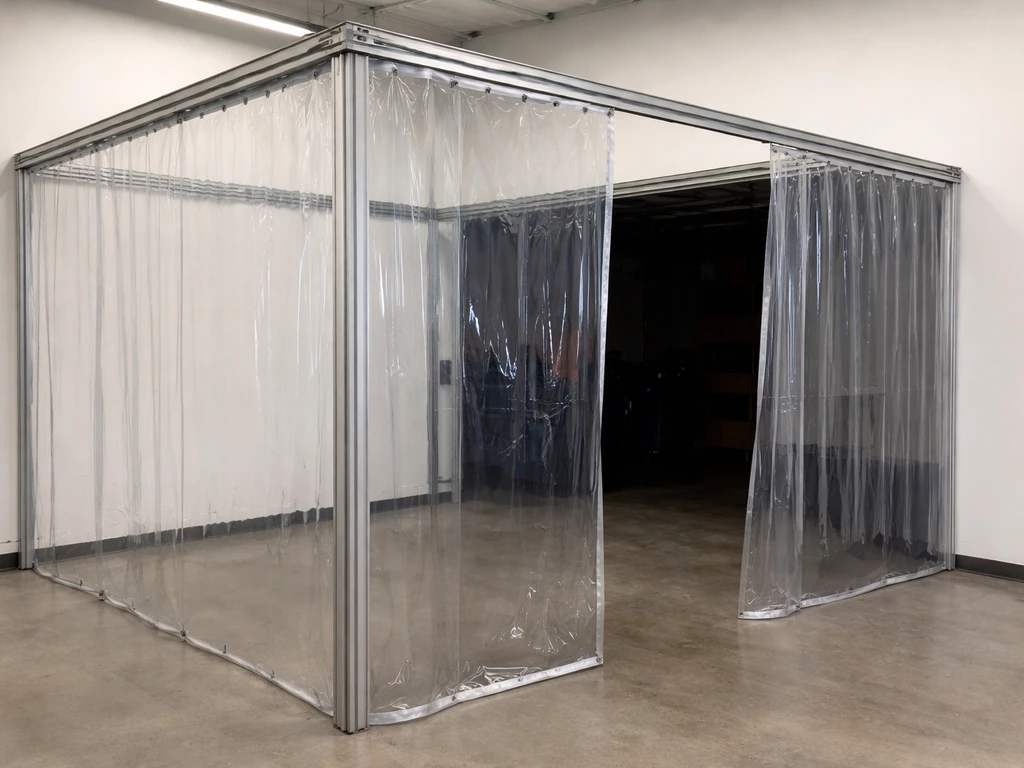
Vinyl-panel enclosures use clear or tinted vinyl sheets that slide or stack to open or close sections of the wall. They're popular as a middle option: more protection than screen, more ventilation than fixed glass, and lower cost than full glazing. Solid-wall enclosures go further, incorporating insulated walls, proper roofing, HVAC, and finished interiors. At that point the structure typically qualifies as a sunroom or a full home addition rather than a simple patio enclosure, and the permitting requirements change accordingly.
Screen vs. glass vs. vinyl: what to expect from each
| Material | Bug protection | Rain/wind protection | Temperature control | Natural airflow | Relative cost | Best climate fit |
|---|---|---|---|---|---|---|
| Screen mesh | Excellent | Minimal | None | Excellent | Lowest | Warm, humid climates |
| Vinyl panels | Good (when closed) | Good | Moderate | Good (when open) | Mid-range | Mild to moderate climates |
| Single-pane glass | Excellent | Excellent | Moderate | Limited (vents only) | Higher | Mild climates, 3-season use |
| Insulated/double-pane glass | Excellent | Excellent | Good to excellent | Limited (vents only) | Highest | Cold climates, 4-season use |
The core trade-off across all these options is ventilation versus protection. Screen enclosures give you the most airflow, which is a genuine feature in hot climates, but they can't keep out a sideways rainstorm or drop the temperature in summer. Glass enclosures seal the space but also trap heat if there's no HVAC, so an unheated glass patio room in July in Texas can become unbearable. Vinyl panels hit a practical middle ground: close them when it's raining or cold, open them when the weather is pleasant. If your climate is relatively mild, vinyl is often the most flexible everyday choice.
Patio enclosures vs. porches, sunrooms, balconies, and more
One thing that confuses a lot of people, especially when reading real estate listings, is how patio enclosures relate to other labeled outdoor spaces. The terminology overlaps, and different regions use different words for very similar things. Here's how to think about each one.
Porch
A porch is typically a roofed structure attached to the front or rear of a house, often elevated slightly from grade and integrated into the home's architectural design. An open porch has no walls or screens. A screened porch adds screen walls to keep insects out while maintaining airflow, which is essentially the same thing as a screen-enclosed patio. The main difference is structural origin: a screened porch was usually built as part of the house or as an intentional porch replacement, while a patio enclosure was added onto an existing patio slab after the fact.
Sunroom
A sunroom (also called a solarium) is a fully enclosed, glass-heavy addition to a home. It has finished walls, a proper roof, and typically some form of heating or cooling. Building codes in many jurisdictions define sunrooms specifically as one-story structures with glazing covering more than 40% of the exterior wall and roof area. Sunrooms cost significantly more than basic patio enclosures and are treated differently by appraisers and lenders because they're more likely to be counted as conditioned living space. A glass patio enclosure is close to a sunroom in materials but usually lacks the insulation, HVAC, and finished interior that push a space into sunroom territory.
Balcony
A balcony projects from an upper floor of a building and is almost always open to the outside. Enclosing a balcony is possible but is a different project from enclosing a ground-level patio, often with tighter restrictions in condo or apartment buildings. If you're asking about enclosed balconies specifically, the terminology and permit landscape differ from what's covered here.
Veranda (or verandah)
A veranda is a roofed platform that runs along one or more sides of a house, typically at ground level and open at the sides. It's similar to a porch but usually larger and more wraparound in design. Verandas are common in Australian, South Asian, and Southern American architecture. Enclosing a veranda with screens or glass follows the same logic as enclosing any porch or patio, but the word veranda usually signals the space has a specific architectural character worth preserving.
Courtyard
A courtyard is an enclosed or semi-enclosed outdoor area surrounded by walls or the structure of the building itself, often open to the sky. Courtyard enclosures are less common and more architecturally complex because you're typically adding a roof or covering to an interior space rather than extending from a back wall. This is a different project from a standard patio enclosure.
Costs, permits, and what enclosures mean for your property
Rough cost ranges
Cost varies widely by material, size, region, and contractor. As a general orientation: a basic aluminum-framed screen enclosure for an average-sized patio (around 200 to 400 square feet) typically runs from roughly $3,000 to $10,000 installed. Vinyl-panel systems can range from $8,000 to $20,000 depending on size and quality. Glass enclosures start around $15,000 to $20,000 for simpler systems and climb to $40,000 or more for fully insulated, four-season setups. Full sunroom additions can exceed $80,000 for high-end builds. Get at least three quotes from local contractors, because labor and permit costs vary enormously by region.
Permits and zoning
Most patio enclosures require a building permit, and skipping that step is a common and costly mistake. Even a screened enclosure usually needs a permit because it adds a roof structure attached to the dwelling. Glass enclosures and solid-wall additions almost always require permits and may trigger additional requirements around structural engineering, energy code compliance, setback distances from property lines, and HOA approval if you're in a community with a homeowners association. Before signing any contract, check with your local building department. A reputable contractor will handle the permit filing for you, but you should confirm it's included in the quote.
Impact on property value and real estate listings
A well-built patio enclosure adds usable square footage and generally improves buyer appeal, particularly in climates where outdoor-indoor living is a priority. However, appraisers typically don't count a screened or unheated enclosure as conditioned living area, so it may not add dollar-for-dollar value the way a bedroom addition would. A fully insulated, climate-controlled glass enclosure with a permit history and finished interior is more likely to be counted in the home's total square footage or assessed at a higher rate.
When you see a listing describe a home as having a "Florida room," "four-season room," "screen room," or "lanai," those are all variations of enclosed patio spaces, and it's worth understanding exactly what type of enclosure is meant before making decisions. If you're wondering what an indoor patio is called, patio enclosures are the close, related category most homeowners mean.
If you're trying to pin down the enclosed patio meaning, look for listings that describe it as a screened room or glass patio that adds vertical barriers and a roof to an existing outdoor space.
Choosing the right enclosure for your situation
The right choice comes down to three questions: what's your climate, what do you want to use the space for, and what's your budget? Climate is the biggest filter. If you live somewhere warm year-round and bugs are your main irritant, a screen enclosure does the job cleanly and cheaply. If you deal with cold winters and want to use the space in January, you need insulated glass and some form of heat, which means a sunroom-grade build and a matching budget. The vast majority of homeowners fall somewhere in between.
- Warm, humid climate (Southeast US, Hawaii, coastal areas): A screen enclosure is usually the most practical and cost-effective option. It maximizes airflow, keeps bugs out, and suits how you'll actually use the space most days.
- Mild climate with occasional cold snaps (Pacific Coast, Mid-Atlantic, parts of the Southwest): Vinyl panels or single-pane glass with a patio heater covers most scenarios without the expense of a four-season build.
- Cold winters (Midwest, Northeast, mountain regions): If you want genuine year-round use, invest in an insulated glass enclosure with HVAC. Otherwise a simpler three-season screen or vinyl room is fine if you accept it's unusable in January.
- Bug-free sitting only: Screen is all you need. Anything more is spending money you don't have to.
- Rain and weather protection without full enclosure: Vinyl panels give you flexibility. Open when it's nice, close when it rains.
- All-weather use, extra living space: Insulated glass with heating and cooling is the answer, and you should plan for the permit process and higher cost from the start.
One practical tip: think about how often you'll actually operate the enclosure, not just how you'd use it in an ideal scenario. Vinyl systems with lots of sliding panels are flexible but require more effort to open and close than a simple screen room. If you want something you can set and forget, a screen enclosure or fixed glass may suit your lifestyle better than a convertible system.
For next steps, start by walking your existing patio and measuring the footprint. Call your local building department to ask what permits are required for the enclosure type you're considering, and check HOA rules if applicable. Then get quotes from two or three licensed contractors who specialize in patio enclosures, not just general contractors, because the material systems and installation details are specialized enough to matter. Ask each one to specify the frame material, screen or glass type, how the roof attaches to the house, and what's included in the permit process. That information will let you compare quotes on equal terms and make a decision you'll be satisfied with long after the project is done.
FAQ
Does a patio enclosure count as extra living space for taxes or resale?
Not necessarily. A patio enclosure can be built as a fixed roofed structure with the same slab, but many areas treat it differently if it is fully unconditioned (no HVAC) versus insulated and climate-controlled. Ask your building department whether your enclosure will be classified as a sunroom, screened room, or accessory structure for permitting and property records.
How do I know if my existing patio can support an enclosure?
Measure both the patio slab and the area you plan to enclose, then confirm the enclosure will share a connection point with the house where required (for example, wall ties, flashing, and roof tie-ins). If your patio has an existing knee wall, determine whether it is structurally designed to hold the enclosure base before ordering materials.
Will a screen patio enclosure handle heavy rain and strong wind?
Yes, but not all systems are equal. Screen enclosures reduce wind and moisture intrusion but can still allow sideways rain and temperature drops, so consider your local wind direction and storm exposure. For heavier rain climates, a vinyl or glass design with full-height closures and proper door sealing typically performs better.
What are common permit-related mistakes homeowners make with patio enclosures?
In some jurisdictions, even a screened enclosure with a roofed portion can require structural review if it attaches to the house or changes loading on the structure. The common failure is assuming a “lightweight” screen means “no permit,” so ask specifically about roof attachment, electrical additions (lights, fans, outlets), and any changes to drainage.
What should I look for if I want my patio enclosure to be usable in winter?
If you plan to use the space during colder months, look for insulated glazing options and a way to address heat loss at the roof and perimeter joints. Also check whether the system includes insulated kick panels or only glass, because drafts often come from the base and corners.
Can I leave furniture and electronics outside in a patio enclosure?
Yes, but it depends on how it is designed and whether it includes weather-rated barriers. For example, screened spaces may still let moisture reach nearby furnishings in humid climates, and certain floor materials (like pavers with gaps) can trap water under cushions. Plan for ventilation and use outdoor-rated materials, and avoid storing electronics without protection.
How do I prevent leaks or condensation inside a glass or vinyl enclosure?
Often you need a moisture management plan even if the enclosure is “sealed.” Ask the contractor how they will handle roof runoff, flashing at the house connection, and interior condensation on cooler glass in humid weather. A good installer will include details about gutters, weep systems, and sealants.
What HOA approvals or design rules should I expect for patio enclosures?
HOA rules vary a lot, but common restrictions include exterior color, maximum height, door style, and whether glazing can be tinted or fully reflective. Before signing a contract, confirm whether the enclosure requires pre-approval and whether screens or vinyl panels are treated the same as permanent windows.
Do patio enclosures require special foundation or anchoring work?
Get clarity on the roof and foundation interface. Some enclosures are attached to a house wall but still rely on posts anchored to the slab, and others require footings or reinforced framing. Ask how the contractor handles slab-level anchoring and whether it matches your soil conditions and local wind load requirements.
What questions should I ask contractors so I can compare quotes fairly?
The best way to compare quotes is to request a written scope that lists frame material (aluminum thickness or steel specs), glass type (tempered, insulated unit type), screen mesh grade, door hardware, roof material, and the warranty terms. Also confirm whether electrical work and permit fees are included, because small add-ons can swing the total price significantly.
Next Article
What Is an Enclosed Patio Called? Common Names and How to Tell
Learn what an enclosed patio is and the common names like sunroom, screened-in porch, patio enclosure, or solarium.