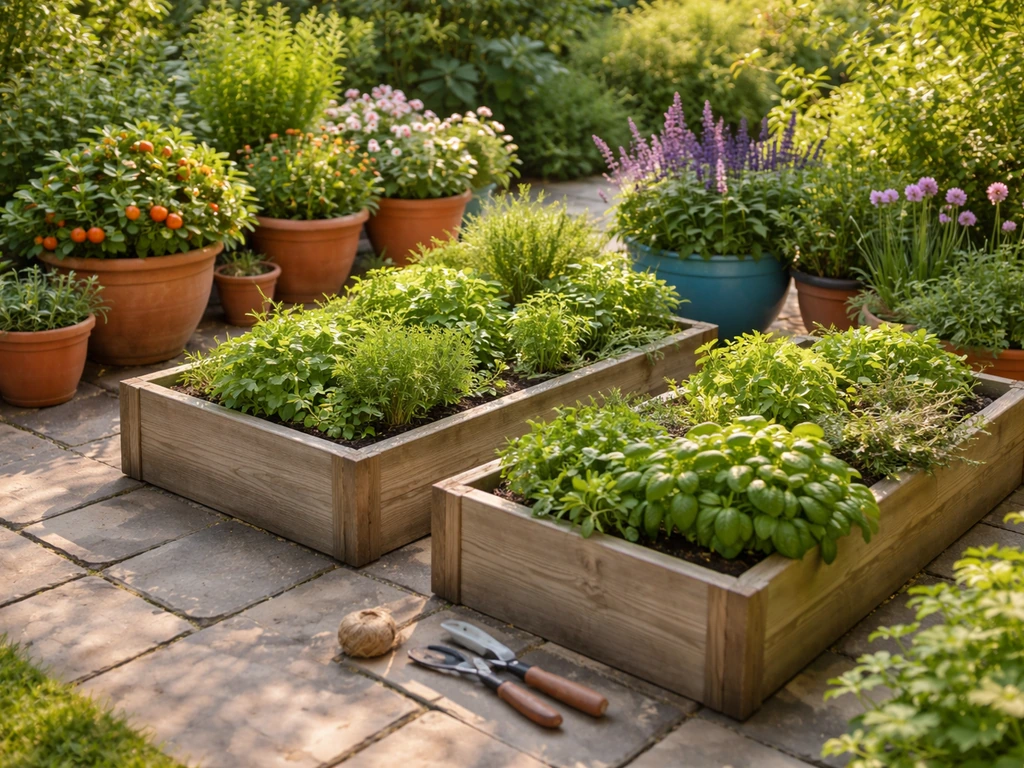
The word 'patio' comes from Spanish, where it originally meant an inner courtyard open to the sky. English borrowed it in the early 19th century, with the earliest recorded use dating to around 1764 to 1818 depending on the dictionary, and it arrived carrying the full architectural concept: an enclosed or semi-enclosed open-air space within or directly beside a building. That origin matters today because it explains why a patio in a real estate listing can mean something quite different depending on whether the writer is thinking of the original Spanish courtyard sense or the modern English backyard-paved-slab sense.
Where Does Patio Come From Etymology and Meaning

Ada Hollis
24 Jun 2026
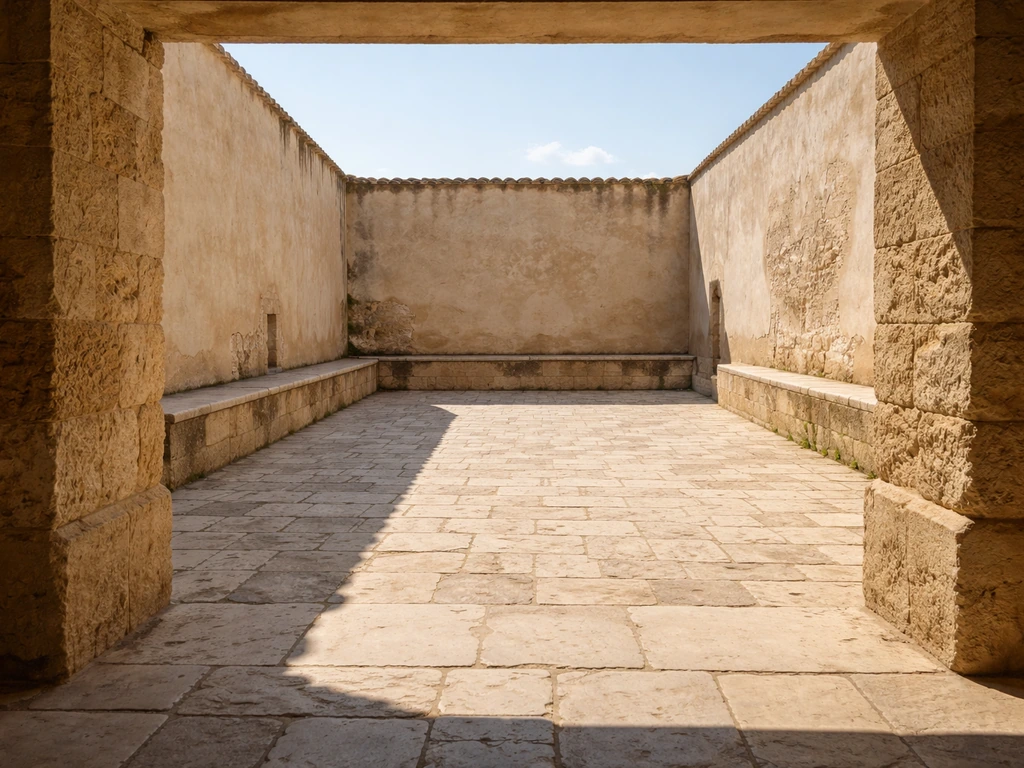
Etymology of 'patio': where the word actually comes from
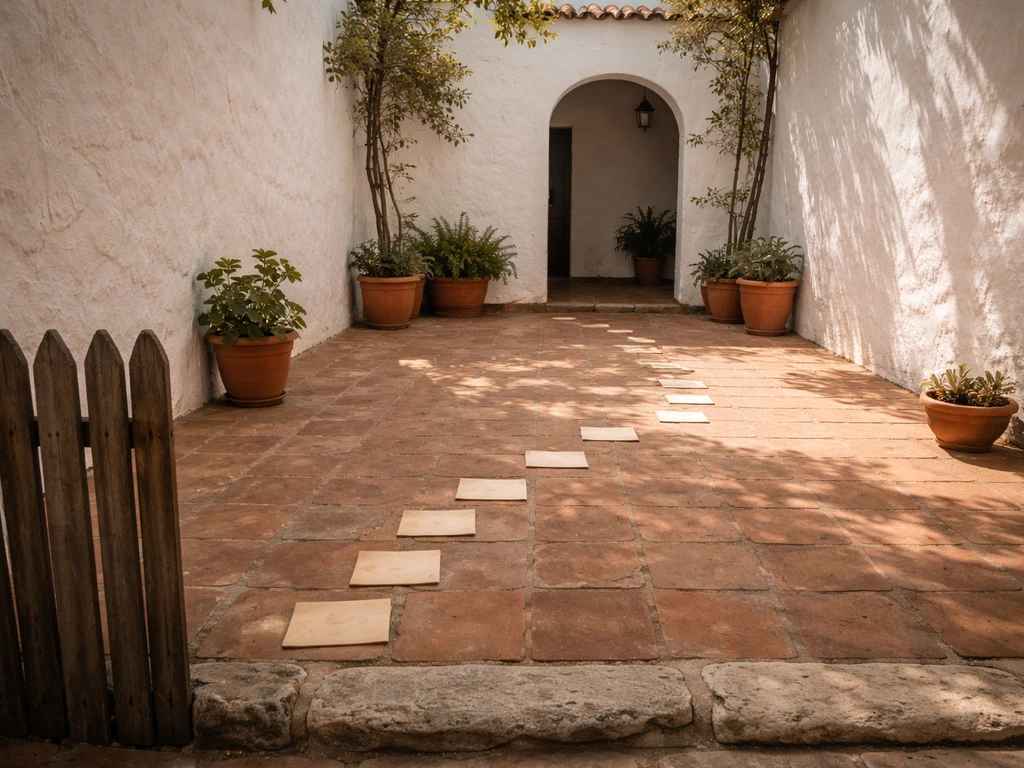
The direct source is Spanish. In Spanish, 'patio' has long referred to an open inner courtyard, the kind of sheltered, sky-facing space you still see in traditional homes across Spain and Latin America. Beyond Spanish, the trail gets a little more interesting. There are two main theories about where Spanish picked the word up.
The first theory, favored by Etymonline, traces 'patio' back through Old Provençal 'patu' or 'pati,' meaning untilled land or communal pasture, which itself connects to Latin 'pactum' (an agreement or covenant) and 'pacisci' (to make a treaty). The logic there is that communal, unbuilt land was land held under a kind of shared agreement. The second theory, noted by Collins and also flagged by Etymonline as a competing hypothesis, links the word to Vulgar Latin 'patium,' possibly shortened from Latin 'spatium' (space) and influenced by Latin 'patere,' meaning to lie open. That second path is more intuitive: a patio is, literally, a space that lies open.
Both theories ultimately point back to Latin roots, but the word reached English through Spanish, not directly from Latin. That distinction matters for anyone who encounters confident claims online that 'patio' is a direct Latin or French borrowing. It isn't. Spanish is the bridge.
How 'patio' entered English and why it stuck
English adopted 'patio' in the early 1800s. Merriam-Webster puts the first known use at 1764, while Etymonline cites 1818 as its earliest documented English record. Either way, the borrowing happened during a period when English writers were actively describing Spanish and Spanish-American architecture, culture, and geography. The word arrived as a technical architectural term, not as casual vocabulary. Early English uses spelled out exactly what it meant: 'an inner court open to the sky,' specifically in Spanish or Spanish-American houses.
The reason it stuck is largely practical. English didn't have a single clean word for that spatial concept. 'Courtyard' came close, but it carried associations with large, formal, or institutional spaces. 'Yard' was too vague. 'Garden' implied planting. 'Patio' arrived pre-loaded with a specific architectural meaning: an open-air, often paved or hard-surfaced area directly connected to a dwelling, designed for outdoor living. As that spatial concept became popular in residential design across the United States and United Kingdom through the 20th century, the word became everyday vocabulary.
One thing worth correcting: a popular notion online suggests 'patio' entered English mainly through Mediterranean tourism or that it was an English coinage with Latin roots. Neither is accurate. The documented borrowing is from Spanish, and the concept came with the word, meaning English adopted both the term and the idea of that specific kind of outdoor living space at the same time.
The patio's architectural roots: it started as a courtyard
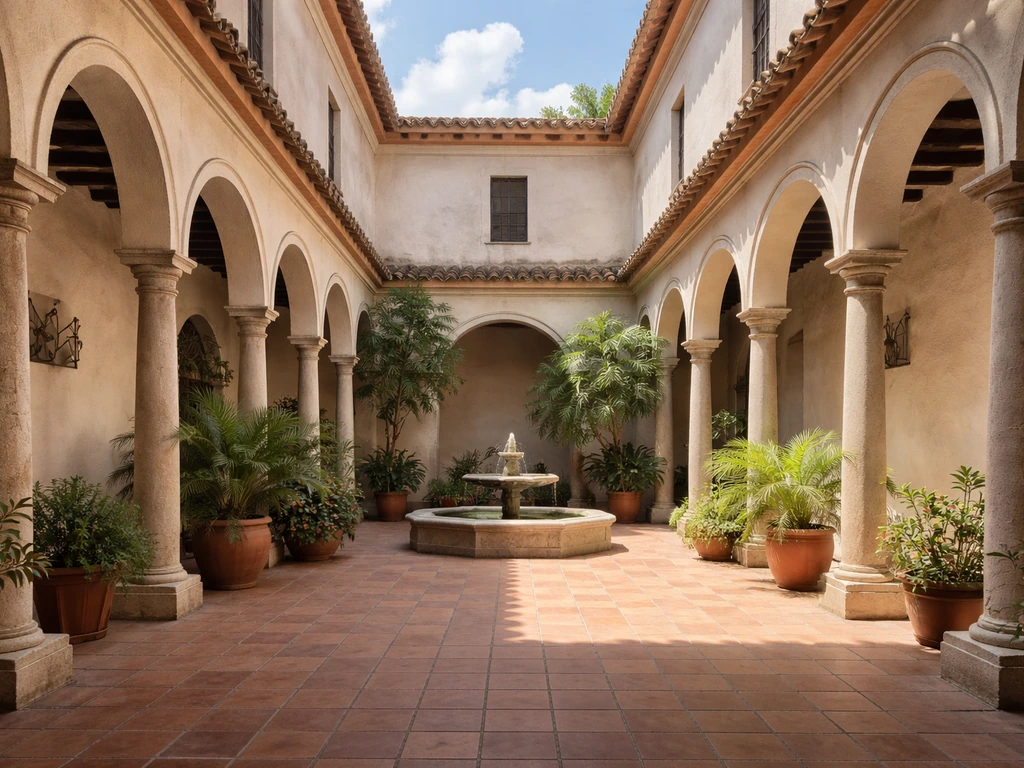
In its original Spanish context, the patio was not a backyard slab behind a suburban house. It was a courtyard within or at the center of a building, open to the sky and typically surrounded by the structure on multiple sides, sometimes with arcaded walkways around the perimeter. Britannica describes it precisely as 'a courtyard within a building, open to the sky.' In Spain's hot climate, this design made serious practical sense: the patio provided shade, circulated air, and gave residents a shielded outdoor space protected from direct sun and street noise.
These spaces were often richly decorated, sometimes with fountains, tilework, and plantings. The architecture was built around the patio as a central organizing element, not tagged on as an afterthought. This courtyard-within-a-building spatial logic is what gives the word its meaning: 'patio' implies a space that is purposefully defined, bounded, and connected to the structure around it, rather than just an open lawn or garden.
When the term migrated into English and eventually into North American residential design, it shed the enclosed-courtyard form but kept the core idea of a dedicated, hard-surfaced outdoor area directly adjacent to and functionally connected with the home. The connection to the word's definition of a patio area, and even the broader question of what a patio garden is, both trace back to this courtyard-rooted spatial concept. If you are wondering what a patio means in this context, it still comes back to the courtyard idea, just used for a defined outdoor space near a home what a patio garden is.
Patio vs. porch, balcony, verandah, and courtyard
These terms get used loosely in listings and everyday conversation, but they describe meaningfully different things. Here's how they actually break down.
| Term | Key features | Roofed? | Ground level? | Attached to building? |
|---|---|---|---|---|
| Patio | Hard-surfaced area adjacent to a dwelling, designed for outdoor sitting or dining | Usually no | Yes | Adjacent but not structurally part of it |
| Porch | Covered platform attached to the exterior wall, typically at entry or rear | Yes (roof is defining feature) | Usually yes (can be raised) | Yes, directly attached |
| Balcony | Elevated platform projecting from an upper floor | Sometimes (loggia if recessed/roofed) | No (upper floor) | Yes, projects from wall |
| Verandah | Roofed, open-air hallway or porch running along exterior | Yes | Ground floor or raised | Yes, attached along exterior |
| Courtyard | Circumscribed open area surrounded by building or complex | No (open to sky) | Yes | Enclosed by structure on multiple sides |
The clearest single distinction for a patio versus a porch or verandah is the roof. Decks, Porches and Patios (City of Millersburg, Oregon) notes that blank" rel="noopener noreferrer">a cover is a porch, but a patio with a cover is not because it is flush. A patio is typically uncovered. Add a continuous roof attached to the exterior wall of the house, and most authorities and local building codes would call it a porch. A verandah is essentially a roofed porch that runs along the length of a building's exterior. Wikipedia defines a verandah as a roofed, open-air hallway or porch attached to the outside of a building blank" rel="noopener noreferrer">A verandah is a roofed, open-air porch or hallway attached to the outside of a building. A balcony is elevated and projects from an upper floor, so it's off the ground entirely. A courtyard is the closest relative to the original Spanish 'patio,' but in English 'courtyard' tends to suggest a larger, more enclosed, or more formal space, often associated with apartment complexes, commercial buildings, or historic properties.
How 'patio' is used across cultures and languages
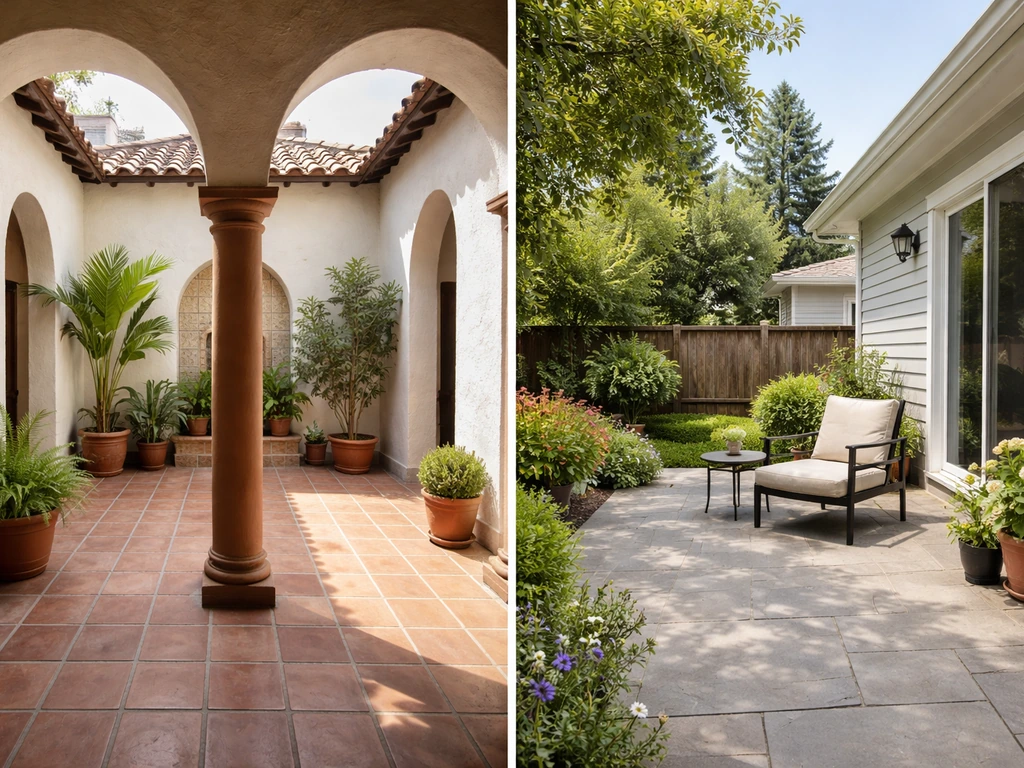
In Spanish, 'patio' still primarily means an interior or inner courtyard, the kind surrounded by the building itself. Cambridge's Spanish-English dictionary frames it as an open space surrounded by houses or walls, closer to the English 'courtyard' than to what most American English speakers picture when they hear 'backyard patio.' A common simplification in Spanish-language learner communities is that 'patio' just means 'yard,' but that flattens out the enclosed-courtyard nuance that the word originally carried.
In American English, the word has two recognized senses that sit side by side. Collins spells this out directly: one sense is the original courtyard-open-to-the-sky meaning, and the other is a paved area adjacent to a house used for outdoor recreation. Both are current. In British English, 'patio' arrived in the 19th century via the same Spanish route and settled into similar usage, typically referring to a paved outdoor seating area at the back of a house, though British listings might also use 'terrace' for the same space.
In Canadian English, the semantic range has broadened even further. 'Patio' is commonly used for restaurant outdoor seating, not just residential spaces. So the same word can mean a Spanish inner courtyard, a paved backyard seating area, or a restaurant's outdoor dining section depending entirely on context and geography.
What this means when you're reading listings or describing your space
Real estate listings use outdoor space terms loosely, and 'patio' is one of the most elastic. So while “patio” is a loanword, it is not a language by itself. Knowing the word's origin helps you ask the right questions rather than assume. Here's what to check when a listing mentions a patio.
- Is it covered or open to the sky? An uncovered paved area is the classic English patio. If there's a roof flush with the house's exterior wall, some agents will still call it a 'covered patio,' though technically that edges into porch territory depending on local building classification.
- Is it at ground level? If the listing says 'patio' but the outdoor space is elevated off the ground, it may actually be a deck (wooden or composite platform) or a balcony. Patios by definition sit at or close to ground level.
- Is it paved or hard-surfaced? The modern English sense of patio assumes a hard surface: concrete, pavers, stone, or tile. A grassy area adjacent to the house is a yard or garden, not a patio.
- Is it enclosed or partially enclosed? If the listing says 'courtyard patio' or 'private patio,' that usually signals a space with walls or fencing on at least one or two sides, which is closer to the original Spanish courtyard meaning. This matters for privacy and noise.
- Which term does the listing pair it with? Phrases like 'rear patio,' 'entertaining patio,' or 'patio garden' all point to a ground-level, hard-surfaced, open-air area. 'Covered patio' means a roof is present but the space is still ground-level and adjacent to the house.
If you're describing your own space, the word 'patio' is the right call when you have a hard-surfaced, ground-level outdoor area directly beside your home, without a permanent roof overhead. A patio area is usually a hard-surfaced, ground-level outdoor space directly beside a home that is designed for relaxing or dining. If it's raised on posts, it's more accurately a deck. If it has a continuous roof attached to your house's exterior wall, most people would recognize it as a covered porch. And if it's surrounded by walls on three or four sides, 'courtyard' or 'courtyard patio' is the more precise description, and the one that actually connects back to what the Spanish word originally meant when English borrowed it over two centuries ago.
The etymology is not just trivia. Understanding that 'patio' entered English as a specific architectural concept, a defined, open-to-the-sky space directly tied to a dwelling, gives you a reliable mental anchor for interpreting the term whenever you encounter it in listings, planning documents, or everyday conversation.
FAQ
How can I tell if a property’s “patio” is actually a deck or something else?
If a listing says “patio” but it is raised above the ground on beams or posts, it is usually describing a deck (or raised platform). A true patio is typically ground-level and hard-surfaced, without structural posts supporting it.
When should I interpret “patio” as a courtyard-style space instead of a backyard seating area?
“Courtyard patio” is the closest phrase to the original Spanish sense because it signals that the space is bounded by the building on multiple sides. If the outdoor area is partially surrounded by walls or the house itself, ask for a site plan or photos from each side to confirm the courtyard feel.
Does “patio” mean the same thing in Spanish compared with American real estate listings?
In Spain and many Latin American contexts, patio often implies an interior courtyard open to the sky, not a slab behind the house. If you are looking at Spanish-language descriptions, don’t assume the English backyard meaning, especially if the description mentions the space being inside or centrally located.
What physical clues should I use to map “patio” to porch, veranda, balcony, or courtyard?
Because dictionaries keep multiple current meanings, you should decide based on physical features: uncovered, ground-level hard surface usually points to the modern English patio sense, while roofed structures attached to the house usually fall under porch or veranda. If it is elevated or cantilevered from an upper floor, it is more likely a balcony.
Why do some sources claim patio is directly Latin or French, and what’s the most reliable way to evaluate those claims?
The main confusion online comes from people treating patio as a direct Latin or French borrowing, or from assuming it entered English through travel. If accuracy matters (research papers, language learning materials), rely on the documented route through Spanish and look for wording that indicates “borrowed into English from Spanish.”
What should I ask a realtor to confirm when a listing uses “patio” loosely?
When terms are used loosely in listings, ask the agent to confirm whether it is covered, its elevation relative to the interior floors, and whether it is adjacent to the primary living area. These three checks quickly distinguish patio from covered porch and from deck.
How does “terrace” relate to “patio” in UK listings?
If you see “terrace” in a British listing, it often describes a paved outdoor seating area similar to the English patio, usually at the back of a house. The safest move is to ask whether it is covered and whether it is ground-level, since terrace can also be used for different landscape or elevated contexts.
Next Article
What Is a Patio Garden? Definition, Examples, and Ideas
Learn what a patio garden is, how it differs from other outdoor spaces, and ideas for plants, layout, and care.