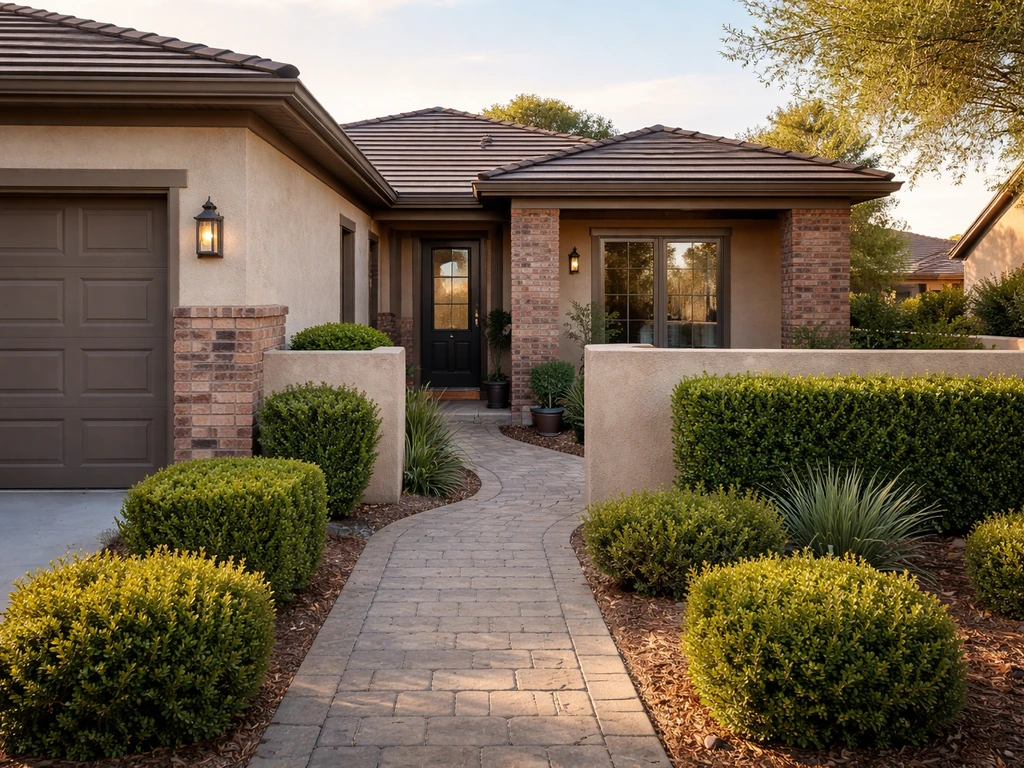
Most patio homes do not have full basements. The majority are built on a concrete slab or over a crawlspace, which is exactly why they're marketed as low-maintenance, single-level living. That said, some patio homes do include a small or partial basement, and a few sit on sloped lots that allow for a walkout-style lower level. The only way to know for certain is to check the specific listing, read the seller disclosure, and verify in person before you commit. If you are weighing the pros and cons of patio homes, the basement setup is one of the biggest factors to check early.
Do Patio Homes Have Basements? How to Check Fast

Ada Hollis
21 May 2026
What a patio home actually is (and why that matters for basements)
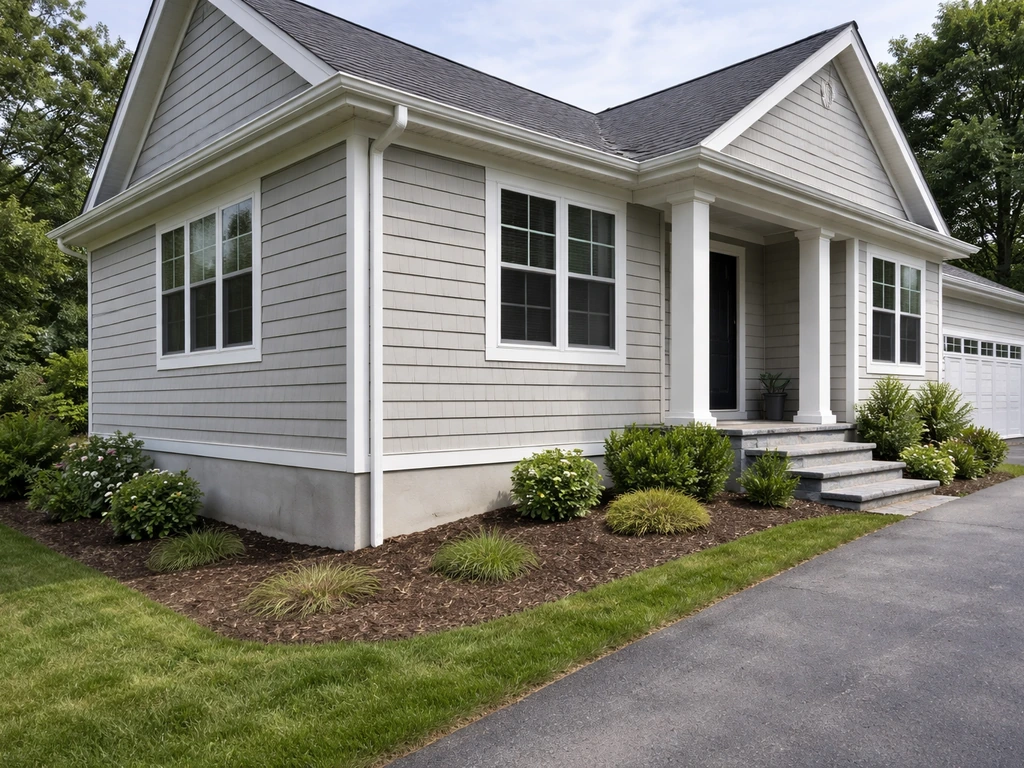
The phrase "patio home" is a real estate marketing term, not a legally defined housing category. Wikipedia is explicit that there is usually no legal definition, and the same home could be listed as a patio home, garden home, courtyard home, cluster home, or even a carriage home depending on the builder and the market. Redfin describes patio homes as attached single-story or one-and-a-half-story houses with small lot footprints and minimal yard. That single-level, compact design is central to understanding the basement situation.
Because patio homes are designed for easy, low-maintenance living, builders often choose slab-on-grade construction. A concrete slab poured at ground level is cheaper and faster to build than excavating for a full basement, and it fits the low-maintenance pitch perfectly. FastExpert notes that patio homes are often built on a concrete slab as a cost-effective approach, and Redfin acknowledges a basement only as a possible exception ("small basement"), not a standard feature. So right from the design philosophy, basements are the exception rather than the rule.
Basement options you might actually find in a patio home
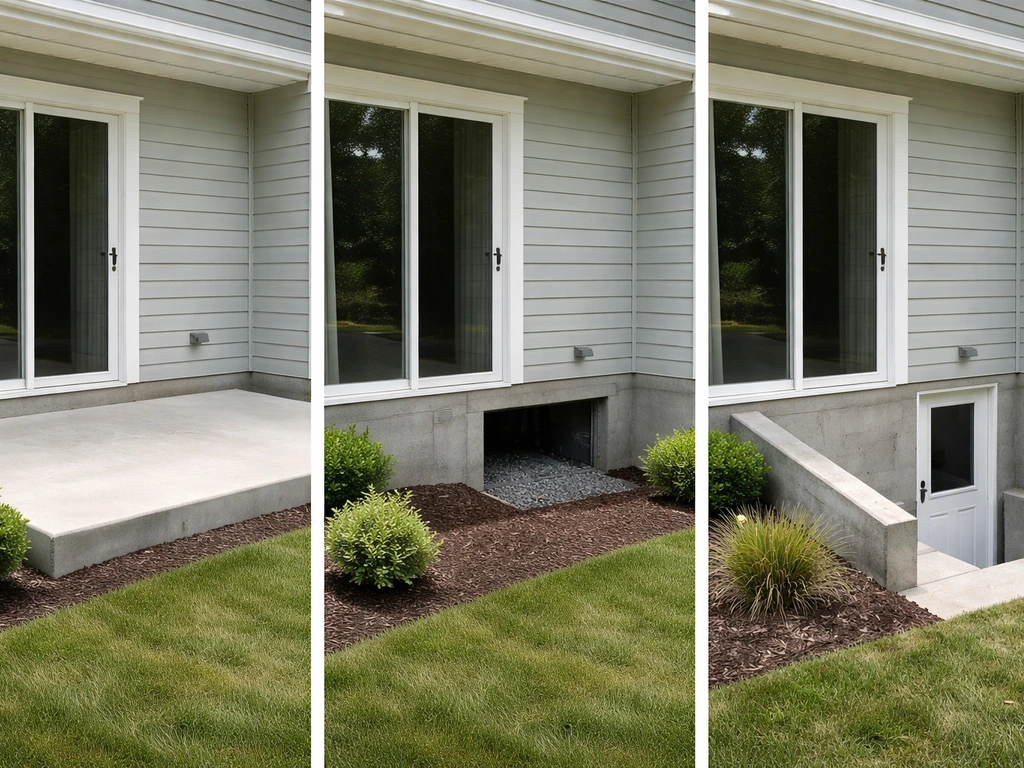
Not every patio home is identical. Here is a realistic breakdown of what you might encounter below the main floor.
Slab-on-grade (most common)
The home sits directly on a poured concrete slab. There is no basement, no crawlspace, and no below-grade storage. Mechanical systems like the furnace and water heater sit inside the living area or in a utility closet. This is the most common setup for patio homes, particularly in warmer, southern markets and flat-terrain developments.
Crawlspace
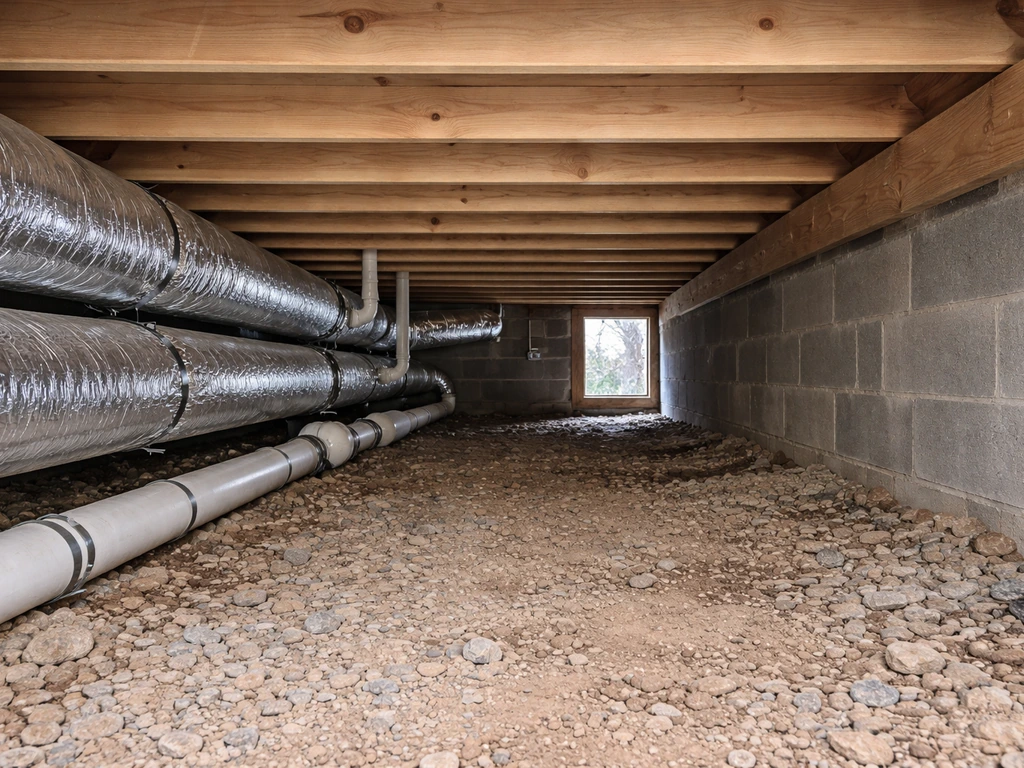
A crawlspace sits between the ground and the floor structure, typically 18 inches to a few feet high. It is not usable living space or real storage, but it houses the mechanical "guts" of the home: ductwork, plumbing, and electrical runs. Realtor.com describes crawlspaces as holding everything that would normally live in a basement. If a patio home has a crawlspace, the listing may not call it out prominently, but you can usually spot the vents on the exterior foundation wall.
Partial or small basement
Some patio homes include a small basement under part of the footprint, often beneath the garage or a single room. Redfin acknowledges this possibility directly, framing it as an occasional feature rather than a given. If a partial basement exists, it usually shows up as a below-grade utility room or storage area, not finished living space.
Walkout or daylight lower level
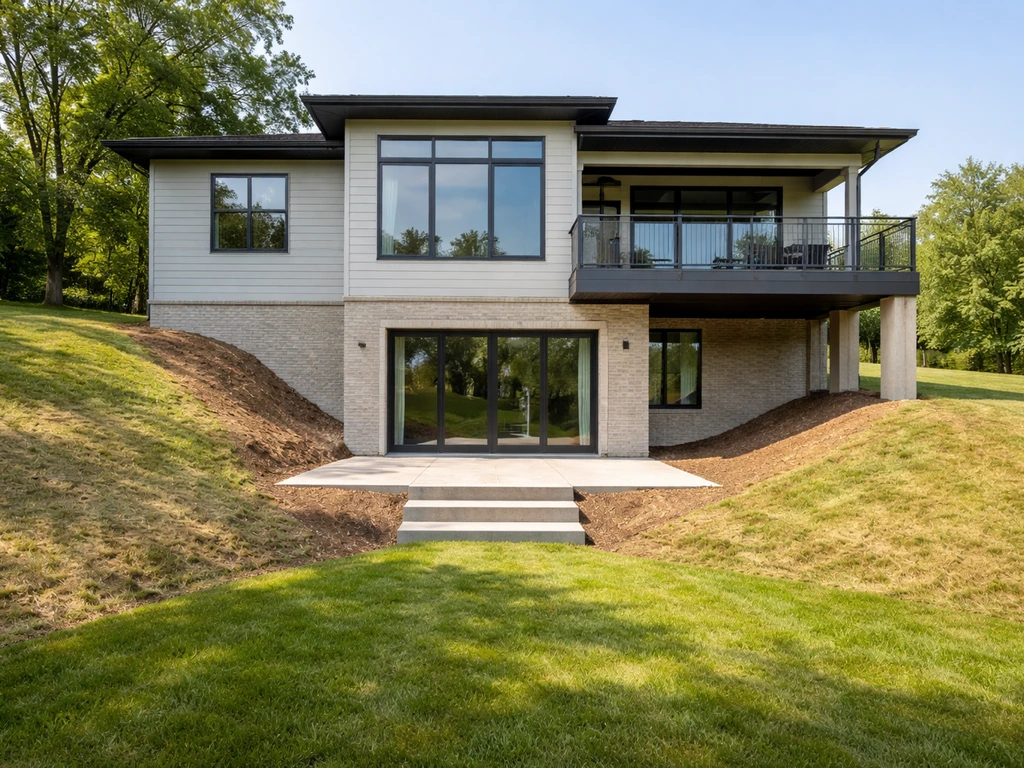
On a sloped lot, a builder can excavate one side of the home and create a lower level that opens to grade on that side. Angi describes this as a walkout basement: partially exposed because of the terrain, with exterior access from the lower level. blank" rel="noopener noreferrer">FEMA's floodplain guidance notes that a walkout-on-grade lower level is not always treated as a "basement" in the regulatory sense, because at least one side sits at or above adjacent grade. That means a listing might describe this space as a "lower level" or "bonus room" rather than a basement, even though it is below the main floor on three sides. FEMA also distinguishes lower walkout or daylight terrace-type levels as typically below-grade on only some sides, which is why a listing may show “below grade” without calling it a full basement blank" rel="noopener noreferrer">walkout or daylight terrace-type lower levels as typically below-grade on only some sides. If you see a sloped lot in the listing photos, this is worth asking about directly.
How to confirm the basement situation before you buy or rent
Do not rely on the listing headline alone. Here is a practical sequence for verifying what is actually below the main floor of any patio home you are seriously considering.
- Read the listing details carefully. Look for terms like "slab," "crawlspace," "lower level," "walkout," or "below grade." If none of those words appear, the home is probably slab-on-grade.
- Request the seller disclosure. Most states require sellers to disclose the foundation type and any known issues with basements or crawlspaces. Pennsylvania's disclosure form explicitly calls for basement and crawlspace disclosures. New Jersey's form asks whether the seller is aware of any water or dampness problems in the basement or crawlspace. Read that section carefully.
- Ask your agent directly: "What is the foundation type? Is there any below-grade space, including a crawlspace, partial basement, or walkout lower level?" Make them confirm it in writing if you need certainty.
- Check for window wells. If you see small rectangular metal or plastic wells dug against the foundation at ground level, they almost certainly serve basement windows. No window wells usually means no full basement.
- Look for a basement door or exterior hatch. A bilco-style exterior hatch or an interior door leading down are obvious signs of below-grade space.
- Find the furnace and water heater. On a slab home, these will be in a closet or utility room on the main floor. On a basement home, they are typically downstairs. If the furnace is in a main-floor closet, that is a strong indicator there is no basement.
- Check the exterior foundation. If you can walk around the home and see crawlspace vents (small screened openings near the base of the walls), the home has a crawlspace, not a basement.
- Verify the grade relationship. Walk around the outside and look at whether the ground slopes away from the house on all sides equally, or whether one side sits noticeably lower. A significant drop on one side can signal a walkout-style lower level.
Where basements are more (or less) likely in patio homes
Whether a patio home has any below-grade space often comes down to where it was built, not just how it was marketed. Four factors drive this more than anything else.
| Factor | More likely to have a basement | Less likely to have a basement |
|---|---|---|
| Climate and frost depth | Northern states (Midwest, Northeast, Great Plains) where deep frost lines already require deep footings | Southern and coastal states where frost depth is shallow or nonexistent |
| Lot slope | Sloped lots where walkout or daylight basements are naturally feasible | Flat lots where full excavation adds significant cost with no grade advantage |
| Soil and groundwater | Well-draining soils with low water tables | High water tables, clay-heavy soils, or areas with poor drainage |
| Flood risk | Low-flood-risk zones where below-grade space is insurable and practical | FEMA flood zones where basement construction raises insurance complexity and risk |
FEMA's residential building materials explain that basements in flood-prone areas face significant insurance and mitigation constraints, which is a real reason builders avoid them in certain markets. Engineering sources note that high groundwater makes basement excavation expensive and risky, which is why slab-on-grade construction dominates in many coastal and southern markets regardless of the home type.
Why people get confused: patio homes, patios, porches, and everything in between
A big part of the confusion around "patio home basements" comes from people not being sure what a patio home actually is in the first place. The word "patio" on its own refers to an outdoor surface area, hard-floored, with no roof, used for relaxing or dining. Cambridge Dictionary defines it simply as an outside area with a solid floor but no roof. That is the patio as a physical feature. A "patio home" is something else entirely: a real estate product type that often does not even have a prominent patio attached to it. The phrase "patio homes meaning" refers to this real estate marketing definition, which can be different from what the word patio suggests A "patio home" is something else entirely. Redfin notes the irony that patio homes frequently come with little to no yard or outdoor space, despite the name.
This naming gap leads to real confusion in property searches. Someone searching for a home with a nice backyard patio may land on patio home listings and assume these are homes built around outdoor entertaining, then be surprised by the compact footprint and limited outdoor space. Garden home and patio home can be marketed in overlapping ways, but the basement expectations still mostly come down to the actual foundation type shown in the listing patio home listings. And someone reading about a patio home's features might confuse the outdoor space type with a porch, a veranda, a courtyard, or even a balcony.
| Term | What it actually is | Has a roof? | Attached to home? |
|---|---|---|---|
| Patio | Hard-floored outdoor surface, at ground level | No | Usually yes, adjacent to home |
| Porch | Covered outdoor area attached to the home's entrance or side | Yes | Yes |
| Veranda (Verandah) | Roofed open gallery wrapping one or more sides of a home | Yes | Yes |
| Courtyard | Enclosed outdoor space surrounded by walls or the structure itself | No (open sky) | Integrated into the building layout |
| Balcony | Elevated platform projecting from an upper floor, with a railing | Usually no | Yes, projecting from wall |
None of these outdoor space types indicate whether a home has a basement. The presence of a patio, porch, or courtyard tells you about the outdoor living setup, not what is happening below the main floor. When you are evaluating a patio home listing specifically, those two questions need to be treated as completely separate.
It is also worth knowing that patio homes overlap with several other housing categories. As noted in the context of patio home vs. townhouse and patio home vs. condo comparisons, the same physical property might be described multiple ways depending on the developer and the market. Because the terms can overlap in listings, the comparison of patio home vs townhouse often comes down to how the basement or lower level is configured. Redfin points this out directly: "if you're mixing up a patio home with a condo or a townhouse, you're not alone." That marketing fluidity means expectations about features like basements can shift significantly depending on which label the listing uses.
What to do if you need more space and the patio home has no basement
If you are drawn to a patio home but need more space than a single-level slab home provides, you have a few realistic paths. Adding a full basement after the fact is almost never practical. Retrofitting a basement under an existing slab requires lifting or demolishing the foundation, excavating, waterproofing, and rebuilding, and FEMA and engineering sources both flag this as extremely complex when groundwater and drainage are involved. If the lot is in a flood zone, the regulatory complications add another layer. It is expensive enough that most buyers treat it as a non-starter.
These are the options that actually work for most patio homeowners who need more room.
- Maximize the garage. Many patio homes include an attached one- or two-car garage, and this is often the best legitimate storage space in the home. Adding wall-mounted shelving, overhead storage racks, or a small workshop setup can replace a lot of what a basement would provide.
- Use the crawlspace for mechanical access, not storage. If the home has a crawlspace, it is not a substitute for storage (moisture and pest issues make that impractical), but it does free up main-floor closets because the mechanicals live there.
- Look for an attic. Some patio homes are one-and-a-half stories, with a usable attic space or loft. That half-story can be finished or used for light storage if the structure supports it.
- Consider an outbuilding. A small shed or detached storage unit on the lot (where zoning allows) is a straightforward solution for the storage gap a basement would otherwise fill.
- Prioritize the right listing from the start. If basement space genuinely matters to you, you may be better served by a different home type. A full comparison of the trade-offs between patio homes and other attached or detached home types can help you decide whether the patio home format fits your actual needs.
The practical takeaway: if a patio home listing does not mention a basement, there almost certainly is not one. Verify the foundation type using the checklist above, read the seller disclosure carefully, and ask your agent to confirm in writing before you assume any below-grade space exists. Once you have confirmed what is actually there, you can make a clear-eyed decision about whether the storage and space trade-offs work for your situation.
FAQ
If a patio home listing does not mention a basement, should I assume there is no below-grade space at all?
Mostly, yes. If the listing is silent on basements and also shows a slab foundation, you should assume there is no true below-grade level. However, confirm in the disclosures, because a home can still have a small partial area (for example under a garage) or a utility pit without the listing calling it a basement.
What should I look for in photos or the exterior to distinguish a slab, crawlspace, and partial basement?
For a slab, you usually will not see foundation vents at all, and the exterior grade sits right at the wall. For a crawlspace, look for low vents and skirting near ground level. For a partial basement, watch for a lower window well area, a distinct concrete wall section that drops below grade, or an exterior door from a lower utility level on one side.
Can a “walkout” or “lower level” be treated as a basement for insurance and flood risk purposes?
Not automatically. Even if it looks like a basement because it is below the main floor on multiple sides, regulatory and insurance treatment can depend on whether it is exposed to grade on one side. Ask your agent or insurer to confirm how the space is classified, especially if you are in or near a floodplain.
How do groundwater and drainage affect the chance a patio home has a basement?
High groundwater and poor drainage make basement excavation more expensive and risky, which is why slab-on-grade construction is common in areas with those conditions. If the listing mentions sump pumps, extensive drainage systems, or water management features, ask whether any below-grade area exists or whether the home is protected against moisture rather than excavated for a basement.
Is it common for mechanical systems to be located in a crawlspace in a patio home?
Yes. In many patio homes with crawlspace foundations, the “guts” such as HVAC ducting, plumbing lines, and electrical runs are routed below the living level. If the listing calls out ductwork locations, maintenance panels, or crawlspace access, that is a practical clue that you will not have a basement, but you may have restricted underfloor access.
What documents or wording should I request to confirm the basement status in writing?
Ask for the seller disclosure and the foundation or site plan details included with the listing package. Also ask your agent to confirm the foundation type (slab, crawlspace, or partial below-grade) in the purchase agreement addendum or an email that becomes part of your record, so there is no ambiguity later.
If I really need more space, can I add a basement after buying a patio home?
In most cases, no. Retrofitting a full basement under an existing slab is usually impractical because it requires demolition or lifting the slab, extensive excavation, waterproofing, and reconstruction, and it can trigger major drainage and permitting challenges. Treat it as a non-starter unless a structural engineer and local permitting team review your exact site.
Why do patio homes seem to be described differently across listings, and how does that affect basement expectations?
“Patio home” is a marketing label, not a strict legal category, so the same type of property can be labeled patio home, courtyard home, garden home, or clustered depending on the market. Because of that, basement expectations can change a lot from one listing to another, so you should base your decision on foundation evidence, not the label.
Should I trust the “amenities” section if it mentions storage or a “bonus room” but not a basement?
Be cautious. Storage and “bonus room” language can describe a partially below-grade utility space, a lower level on a slope, or enclosed space that is not classified as a basement. Ask whether the space has exterior egress, whether it is finished, and whether it is below grade on three sides or only partially.
Next Article
Pros and Cons of Patio Homes: Costs, Privacy, and Checklist
Pros and cons of patio homes: costs, privacy, HOA fees, upkeep, and checklist plus comparisons to similar housing types.