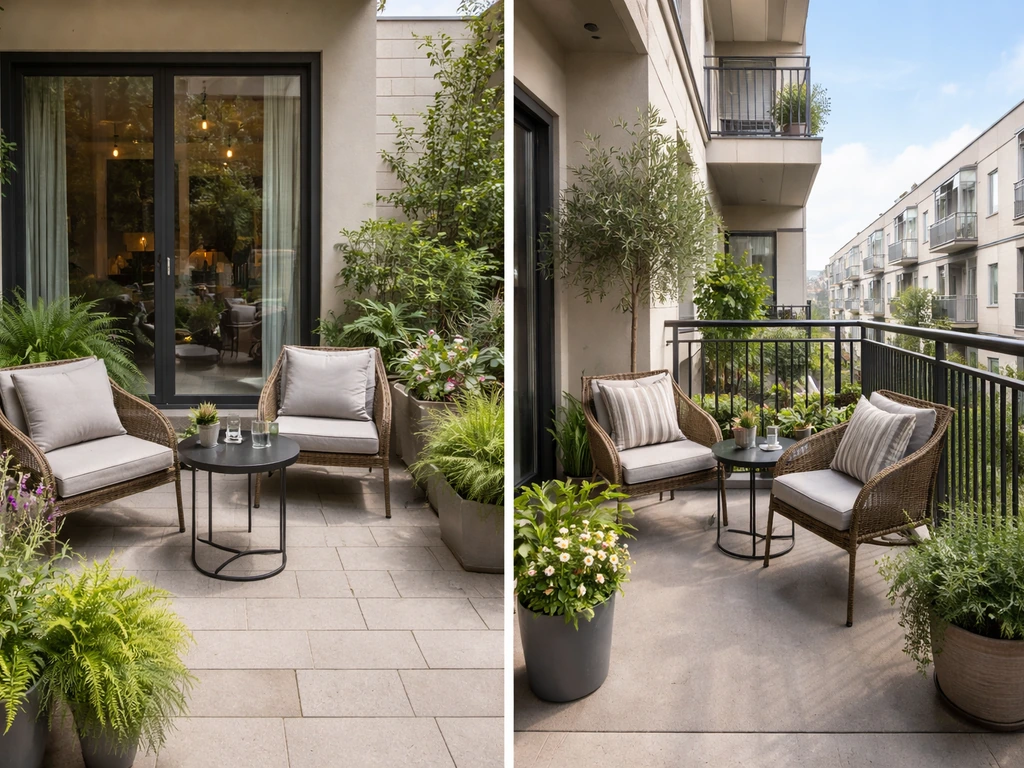
No, a patio and a balcony are not the same thing. A patio sits at ground level, right next to the house, and is usually paved with concrete, stone, or brick. A balcony is an elevated platform that projects from an upper floor of a building, surrounded by railings, and accessed from inside. The two spaces feel completely different to use, serve different practical purposes, and are treated as separate categories in real estate listings, building codes, and HOA rules. If you're trying to figure out which one a property has, the simplest question to ask is: is it on the ground, or is it up in the air hanging off the building?
Is Patio and Balcony the Same? Key Differences Explained

Ada Hollis
30 May 2026
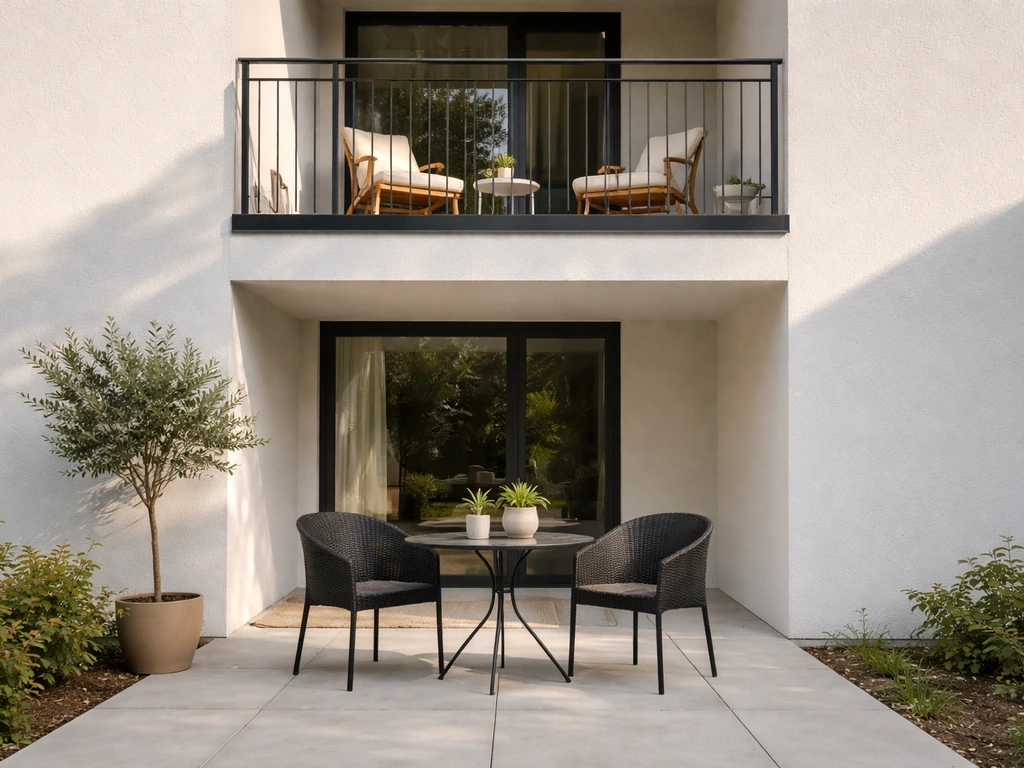
What a patio actually is
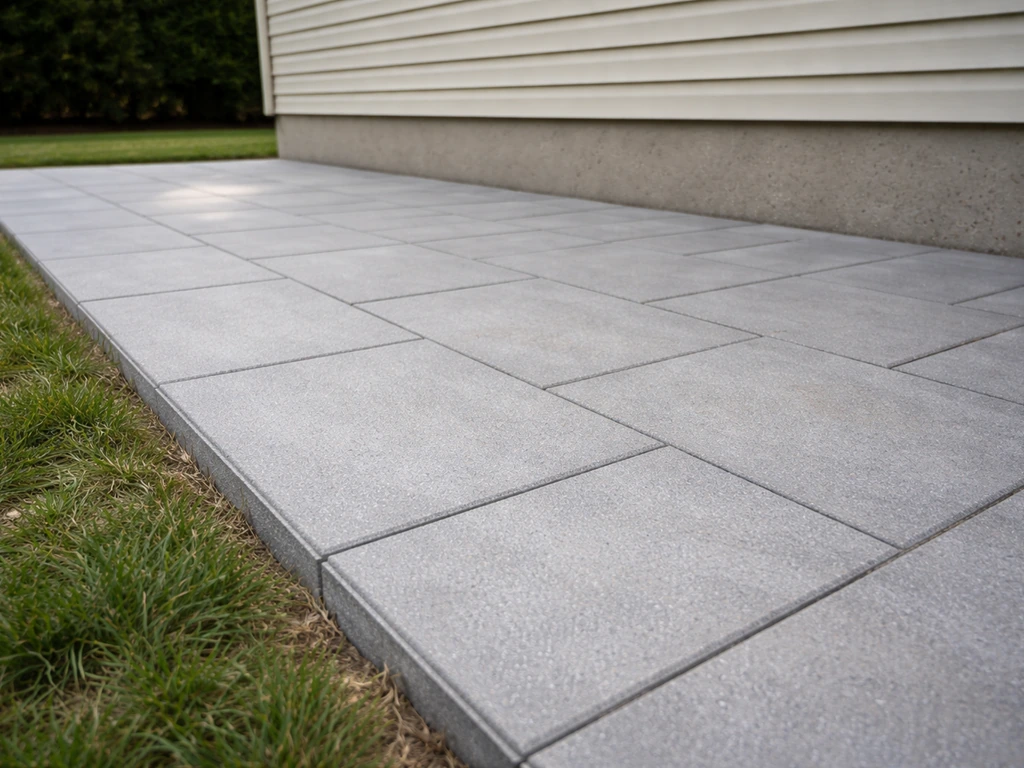
A patio is a hard, flat outdoor surface that sits directly on the ground and adjoins the house. Merriam-Webster calls it "a recreation area that adjoins a dwelling, is often paved, and is adapted especially to outdoor dining." That description nails it pretty well. You'll find patios behind or alongside a home, flush with the ground, made from concrete, pavers, brick, stone, or tile. There's no elevation involved, no structural projection from the building, and no railing requirement.
Patios are typically uncovered, though some homeowners add pergolas, shade sails, or roofing after the fact. Their size can range from a modest 10x10 seating nook to a sprawling outdoor living area that wraps around the back of a house. Because they're at ground level, patios are easy to step out onto directly from a sliding door or French door, which makes them a natural extension of an interior living or dining room.
One practical privacy note: because a patio sits low and close to the home, it can actually feel quite private, especially if it's bordered by walls, fencing, or planting. That's different from what most people assume when they picture outdoor spaces.
What a balcony actually is
A balcony is an elevated platform that projects outward from the exterior wall of a building, typically on an upper floor. It's supported by columns, brackets, or the building's own structural system, and it's enclosed by a railing, balustrade, or low wall. You access it through a door directly from a room inside the building, most often a bedroom or living area. The Britannica definition puts it simply: a raised platform connected to the side of a building, surrounded by a low wall or railing.
Balconies are almost always smaller than patios. They're designed for a couple of chairs and maybe a small table, or just a spot to step outside briefly. Because they're elevated and accessed from interior rooms, they do offer a certain kind of privacy from street-level views, though neighbors in adjacent buildings may have a direct sightline.
Structurally, a balcony is a more complex and regulated feature than a patio. Building codes govern railing heights (typically around 36 to 42 inches), guardrail spacing, and load capacity. In California, for example, balcony inspections are legally required for multi-unit residential buildings precisely because of the structural risks involved with elevated, weather-exposed platforms. For example, the California balcony safety and water-intrusion FAQ notes that balcony concerns relate to weather-exposed (not interior) areas and discusses guardrails, handrails, walkways, and stairway systems as key components weather-exposed platforms and guardrails/handrails/walkways/stairway systems. A patio has no such overhead concerns because it's on the ground.
Patio vs. balcony: the key differences side by side
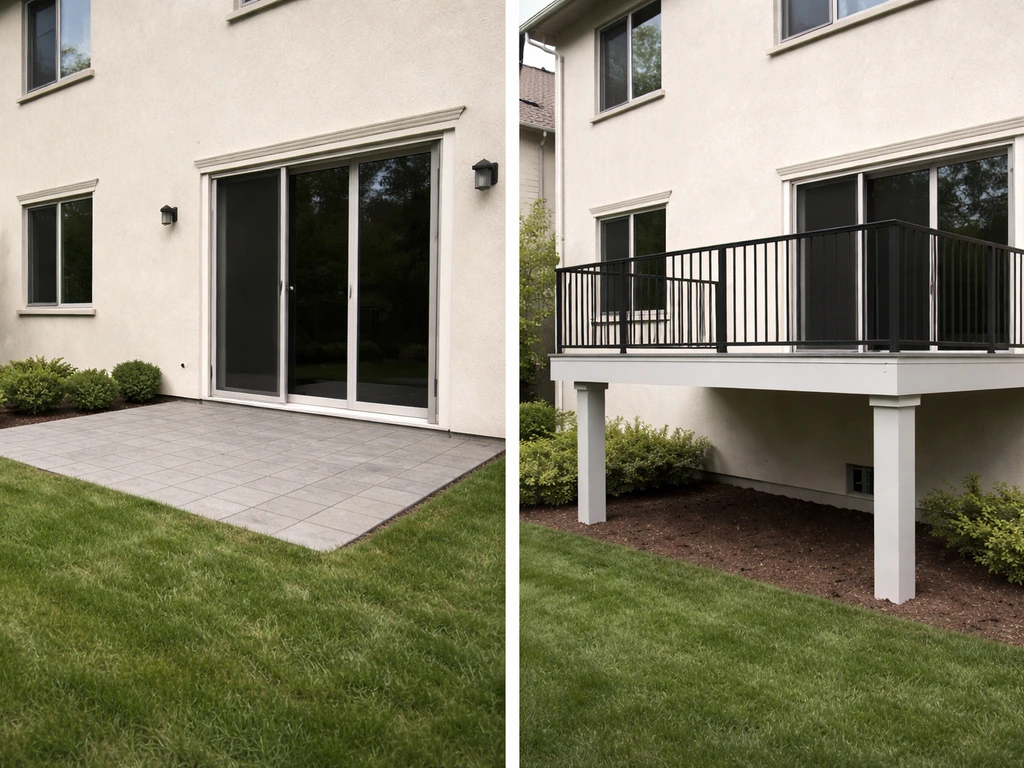
| Feature | Patio | Balcony |
|---|---|---|
| Location | Ground level, adjacent to the home | Upper floor, projecting from the building exterior |
| Structure | Flat paved surface on the ground | Elevated platform supported by brackets or columns |
| Railing required? | No (it's at ground level) | Yes, always enclosed by railing or balustrade |
| Access | Usually via sliding or French door at ground floor | Via door from an upper-floor room |
| Typical size | Varies widely, often larger | Usually compact, designed for 1-4 people |
| Building codes | Minimal structural requirements | Regulated for load, railings, and weather exposure |
| Common materials | Concrete, pavers, brick, stone, tile | Concrete slab, wood, or metal platform with railings |
| Privacy | Can be high if enclosed or landscaped | Elevated but potentially visible to neighbors |
| Found in | Houses, ground-floor apartments, townhomes | Apartments, condos, upper-floor townhomes |
The single most reliable difference is elevation. A patio is on the ground. A balcony is not. Everything else, size, material, privacy, structural complexity, follows from that one fact.
Why people mix these terms up
The confusion mostly comes from two places: marketing language and regional vocabulary. Real estate listings, especially for apartments and condos, sometimes use "patio" loosely to describe any outdoor space attached to a unit, even if it's technically a ground-floor slab or an elevated terrace. A practical floorplan guide similarly notes that condo floorplans may label outdoor areas with terms like “balcony or terrace” in the amenity depiction context, so those labels can refer to the same feature unless the layout and labeling clarify otherwise patio loosely to describe any outdoor space attached to a unit, even if it's technically a ground-floor slab or an elevated terrace. Conversely, smaller ground-floor outdoor spaces in condo buildings sometimes get called "balconies" in floor plan labels when they're really just patio-level slabs.
Regional language plays a role too. In the UK and parts of Australia, "patio" and "terrace" are often used interchangeably, and the word "balcony" can sometimes be applied to any outdoor platform regardless of floor level. In the U.S., markets like New York City use "terrace" to describe large elevated outdoor spaces that in other cities would simply be called a balcony or rooftop patio. StreetEasy, for instance, specifically distinguishes a terrace from both a patio and a balcony in the New York apartment context, where the terminology carries real price implications.
There's also a manufacturer and product-marketing angle. Companies selling outdoor furniture, enclosures, or glazing systems often group patios and balconies together in their marketing materials because the products can serve both spaces. That category blurring in advertising makes it easy to assume the spaces themselves are interchangeable. They're not.
How to tell which one you're looking at in a listing or floor plan
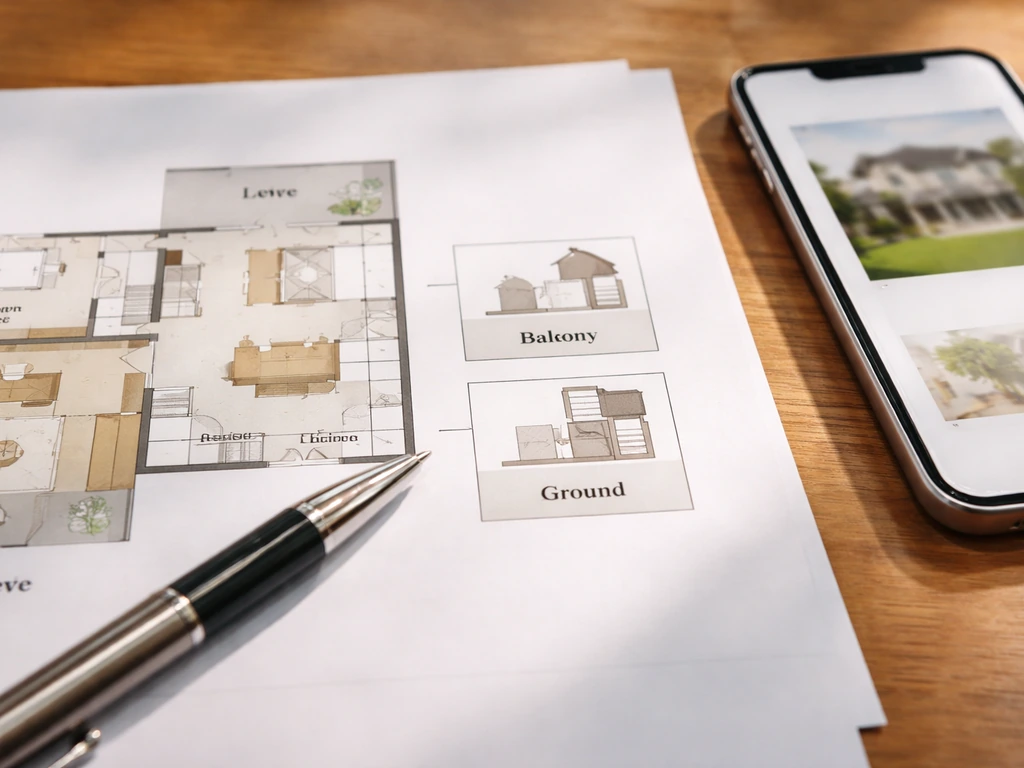
When you're reading a home listing or studying a floor plan, here's how to cut through vague labeling and figure out what the space actually is.
- Check the floor level. If the outdoor space is on the ground floor, it's almost certainly a patio (or a deck or porch, more on those below). If it's on the second floor or higher, it's most likely a balcony.
- Look for a railing on the floor plan. Balconies always show a railing or balustrade on the plan. Patios typically don't have one because they're at grade.
- Look at how it's accessed. A door off the main living area or kitchen at ground level usually leads to a patio. A door off a bedroom or living room on an upper floor usually leads to a balcony.
- Check the listing's amenity tags. The MLS (Multiple Listing Service) system used by U.S. real estate agents specifically separates "balcony" (usually upper-floor attached platform) from "patio" (usually hard/paved outdoor area). If both are listed, the property likely has both.
- Ask directly. If you're touring a property or contacting a landlord, just ask: "Is the outdoor space on the ground level or is it elevated?" That single question resolves most confusion immediately.
- Look at photos critically. Real listing photos can mislead if they're taken from inside looking out. Try to find an exterior shot that shows where the outdoor space sits relative to the building's floors.
One thing worth knowing: some condo buildings and HOAs treat patios and balconies as separate categories with different rules. A Florida condo document might permit plants and outdoor furniture on both, but prohibit storage on either, while still listing them as distinct spaces in the governing documents. That separation is intentional and matters for what you can actually do with the space.
Don't confuse these with a porch, veranda, or courtyard either
While you're getting clear on patios vs. balconies, it's worth knowing the other terms that get tangled up in this conversation, because listings and architects use all of them.
Porch
A porch is a covered outdoor structure attached to the front, side, or rear of a house, typically at ground level and level with the main entrance. The key distinguishing features are that it's covered (has a roof, usually the same roof as the house) and it's attached to the building's structure. A patio is typically uncovered and simply paved. If the outdoor space has a roof but no walls, it's almost certainly a porch, not a patio.
Veranda (or Verandah)
A veranda is essentially a large, roofed porch that often wraps around more than one side of the house. It's at ground level, covered, and usually open on the sides. The term is more common in Australian, British, South Asian, and Southern U.S. architectural vocabulary than in everyday American usage. If you see "veranda" in a listing, think: roofed, ground-level, wraparound-style outdoor living space.
Courtyard
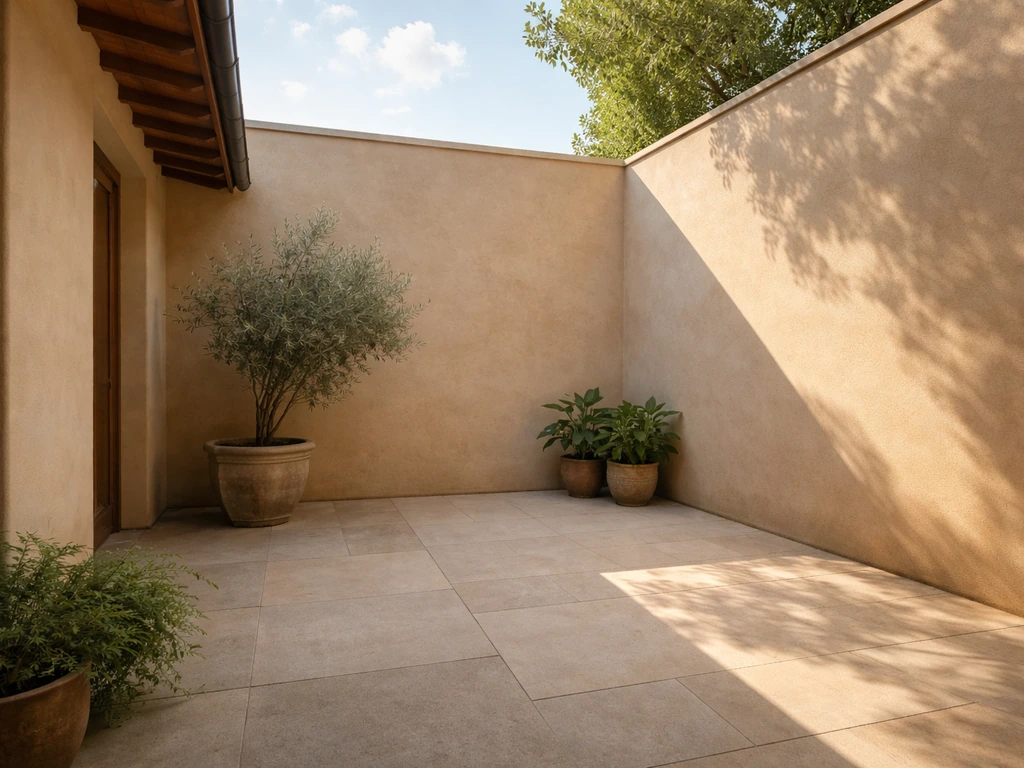
A courtyard is an enclosed outdoor space, typically surrounded by walls or the walls of the building itself, and open to the sky. It's at ground level like a patio, but it's defined by enclosure rather than by being adjacent to the back of the house. Spanish-style and Mediterranean homes often feature interior courtyards. A patio in the original Spanish architectural sense was actually an interior courtyard, which is where the English word "patio" comes from.
Lanai
A lanai is a term that originated in Hawaii and refers to a roofed, open-sided outdoor space that can function like a porch, a veranda, or an enclosed patio. It's commonly used in Florida and Hawaii in real estate listings. The key difference from a patio is that a lanai typically has some kind of overhead covering and often screens or partial enclosure. If a listing in those states says "lanai," expect something more sheltered than an open patio.
Terrace
A terrace is one of the most overloaded terms in outdoor architecture. It can mean a large flat outdoor platform on an upper floor (essentially a big balcony), a ground-level paved area similar to a patio, or a stepped landscape feature. In New York City real estate, "terrace" usually signals a larger, premium outdoor space on an upper floor. In British usage, a "terrace" can refer to the outdoor seating area of a pub or restaurant, or even a row of houses. Context matters a lot with this one.
The bottom line: which do you actually have?
If you're standing on it and your feet are basically at the same level as your yard or the surrounding ground, it's a patio (or possibly a deck or porch, depending on whether it has a roof and what it's made of). Knowing the patio balcony difference helps you interpret listings and choose the right furniture, privacy setup, and layout for the space. If you stepped out through a door on an upper floor and there's a railing between you and a long drop, it's a balcony. Those two situations are genuinely different spaces with different structural requirements, different uses, and different implications for how you'll actually live in or enjoy the property. If you're deciding between a patio vs balcony apartment, the elevation and access point will shape everything from privacy to daily convenience. The terminology in listings and floor plans doesn't always get it right, but the physical reality is usually pretty obvious once you know what to look for.
FAQ
Can a place be called a “patio” even if it is elevated?
Sometimes a listing calls an elevated ground-level space a “patio,” especially in condo marketing. If the surface is not accessed from an upper floor door and there is no guardrail or drop risk, it is usually a ground patio slab or terrace-level area rather than a true balcony.
How do I tell if it is a balcony versus a patio when the listing description is vague?
In most cases, the easiest tell is railing and access height. Balconies typically have a railing or balustrade and are reached via a door from an upper room, while patios generally have no guardrail because they sit at yard level.
What if the outdoor space is covered, is it still the same as a patio?
If it has a roof or overhead covering, it may be a porch, veranda, or lanai instead of a patio, depending on whether it is roofed and how it is attached or enclosed. A “covered patio” is still a patio if it sits on the ground and the feet-level is with the yard.
Do HOA rules usually treat patios and balconies the same?
HOAs and condo rules sometimes treat them differently even in the same building, for example allowing potted plants on both but restricting built-ins, storage, flooring alterations, or awnings on one category only. Always check the governing document section that uses the exact word “patio” or “balcony.”
Do patios and balconies usually have different maintenance or safety responsibilities?
Expect different insurance and liability considerations. Elevated balconies can carry more risk due to guardrail integrity, falling-object concerns, and water intrusion from above, so maintenance rules and inspection requirements may be stricter than for ground patios.
What about decks, are they closer to patios or balconies?
Yes. A “deck” can look like a patio furniture setup, but a deck is typically a raised wood or composite platform, so it often behaves more like a balcony from an elevation standpoint. If it is attached to an upper floor and has a guardrail, treat it as balcony-type even if the word “deck” is used.
Which is usually more private, a patio or a balcony?
For privacy, patios tend to feel private because they are near fencing, landscaping, or side walls, while balconies may offer privacy from street view but still have line-of-sight to neighboring units across air space. Consider where the sightlines are from windows directly across from the railing.
If a balcony is enclosed with screens or glazing, does it become a patio?
If the space is enclosed with screens, windows, or partial walls, it can shift categories in real life. A screened, roofed balcony-like platform is often marketed as a lanai or enclosed balcony, so confirm whether the enclosure changes the permit or HOA classification.
How should I interpret “terrace” in a listing compared to patio and balcony?
In listings, “terrace” often refers to a premium outdoor area that might be elevated in some markets, or ground-level in others. Verify by checking whether the door access is from an upper floor and whether there is a guardrail between the area and a drop.
Next Article
Patio vs Balcony Apartment: Differences and Best Choice
Patio vs balcony apartment explained: placement, noise, privacy, weather use, maintenance, and leasing checklist.