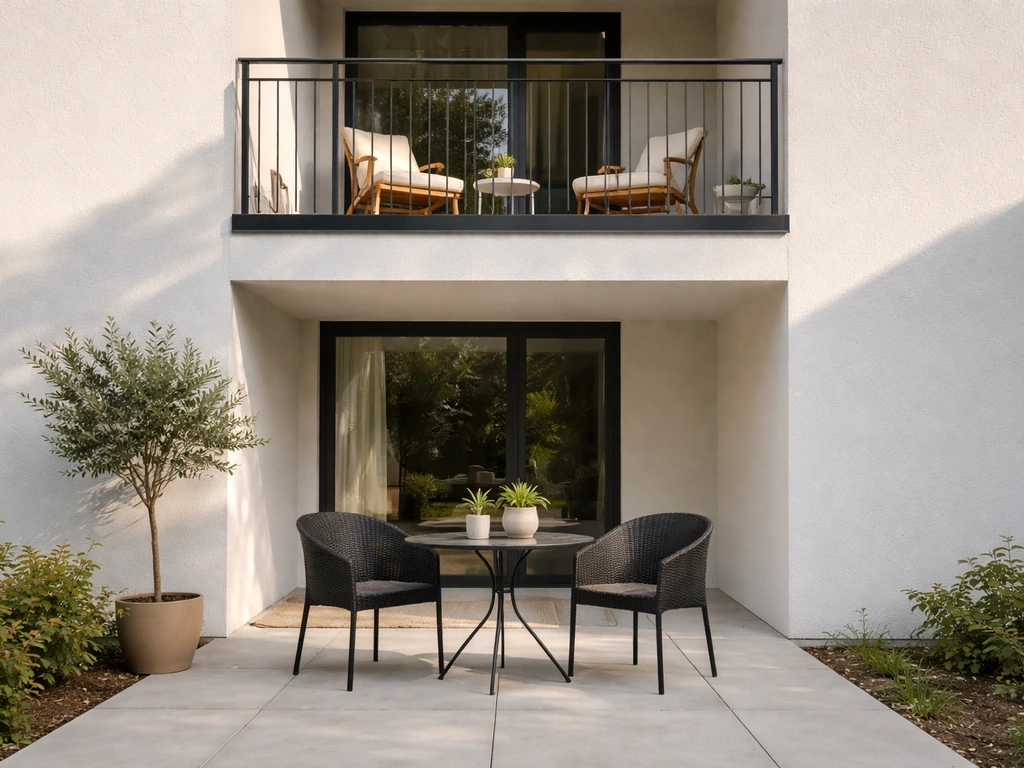
A patio is a ground-level hard surface (concrete, pavers, brick) right outside a house, usually in the back, where you sit, eat, and hang out. A balcony is an elevated platform that projects from the wall of an upper floor, surrounded by a railing or balustrade, and accessed from inside the building through a door or window. Those two things are genuinely different structures, and when a real estate listing uses one term vs. the other, it tells you something concrete about where the space sits, how you reach it, and what you can realistically do there.
Patio or Balcony Meaning: Differences, Types, and Checklist

Ada Hollis
10 Jun 2026
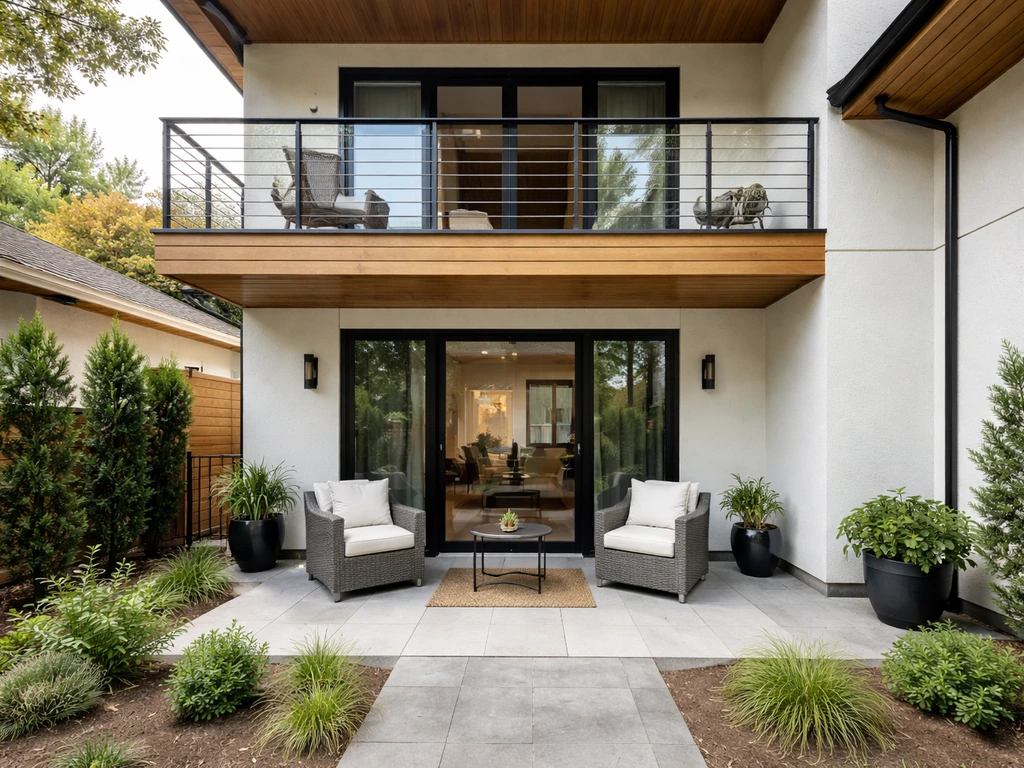
Patio and balcony: the core definitions
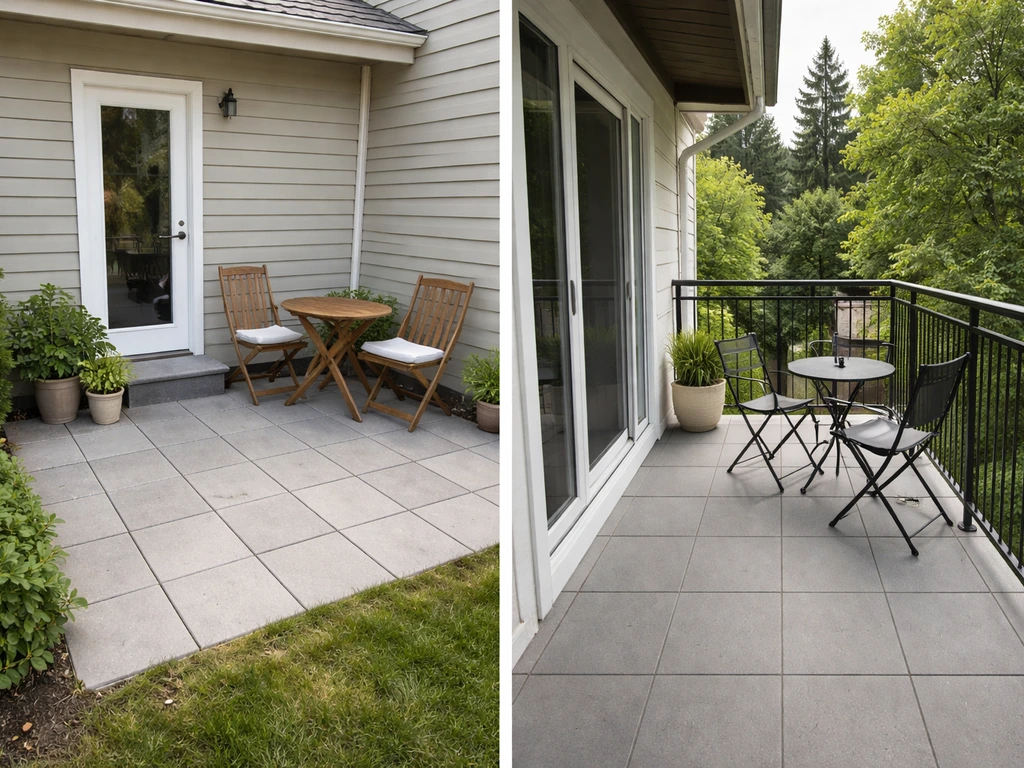
Oxford puts it simply: a patio is "a flat hard area outside, and usually behind, a house where people can sit." Merriam-Webster adds that it adjoins a dwelling, is often paved, and is "adapted especially for outdoor dining." Both definitions anchor the patio firmly on the ground, right next to the main living level of the house. It's part of the lot, not part of the building structure itself.
A balcony, by contrast, is defined by Cambridge as "an area with a wall or bars around it, joined to the outside wall of a building on an upper level." Collins spells it out even more directly: "a platform on the outside of a building, above ground level, with a wall or railing around it." Britannica describes balconies as external extensions of an upper floor, enclosed up to about three feet (roughly one meter) by balusters or railings. The elevation and the railing are the two consistent features across every definition.
What actually separates a patio from a balcony
The fastest way to tell them apart is elevation. If your feet are on the same level as the yard and the surrounding ground, it's a patio. If there's a drop below you and a railing keeping you from falling off, it's a balcony. That single distinction shapes everything else about the two spaces, from how they're built to how they're used. If you want a quick refresher, the patio balcony difference mostly comes down to elevation and access.
| Feature | Patio | Balcony |
|---|---|---|
| Elevation | Ground level (on the lot) | Above ground, upper floor or higher |
| Structural attachment | Sits on the ground; may or may not attach to the house | Projects from or is embedded in the building wall |
| Railing required | Not typically (no drop hazard) | Yes, by building codes (guard against fall) |
| Roof or cover | Usually open to sky; can have a pergola or awning added | Usually open (unroofed); occasionally covered |
| Access | Through a back door, side door, or sliding door at ground level | Through an upper-floor door or window |
| Typical size | Larger; 100–400+ sq ft common for residential | Smaller; often 30–80 sq ft in apartments |
| Material | Concrete, pavers, brick, stone, tile | Concrete slab, steel frame, tile, or composite decking |
| Primary use | Dining, entertaining, lounging, BBQ | Seating, fresh air, small-scale relaxing |
One thing worth noting: balconies are typically unroofed. Architecture references describe them as open platforms, which is why they're exposed to weather in a way a porch or verandah isn't. If a listing says "covered balcony," that's a genuine extra feature worth confirming, because it changes how usable the space is in rain or direct sun.
How these terms get used in everyday conversation
In everyday speech, people sometimes use "patio" loosely to mean any outdoor sitting area attached to a property. In Canadian English especially, "patio" is also used for restaurant outdoor seating, which is why you'll see signs saying "patio open" at a bar or cafe even when there's no residential house involved. That's a totally normal usage, but when you're reading a home listing or floor plan, the residential definition applies: a paved, ground-level outdoor area adjacent to the home.
"Balcony" doesn't get stretched the same way. In everyday use, it reliably means an elevated platform off an upper floor. You'll hear it most in apartment and condo listings, where the unit is on floor two or higher and the outdoor space hangs off the building rather than sitting on the ground. In a single-family home context, a second-story balcony off a master bedroom is the most common residential version.
Regionally, the terminology can shift slightly. In Spanish, "patio" (same spelling) traditionally refers to an interior courtyard, common in Mediterranean and Latin American architecture, which is quite different from the North American backyard-paved-area meaning. In British English, "patio" maps closely to the North American usage. If you're interpreting listings in different countries or cultural contexts, it's worth knowing that the word carries different spatial meanings depending on where you are.
Where patios and balconies fit among other outdoor spaces
Patios and balconies are just two items in a whole vocabulary of outdoor residential spaces, and listings use all of these terms. Here's how the main ones compare so you can decode property descriptions quickly.
Porch
A porch is a covered structure at the entrance of a house, sitting at ground level. Oxford Learner's Dictionaries defines a porch as a small covered area at a building entrance, covered by a roof.
The key word is "covered" (it has a roof overhead) and it's typically at the front or back of the home at the main entry level. Oxford's definition emphasizes the roof: a porch has a covered area. That's the primary difference from a patio, which is usually open to the sky. A porch is a covered entry structure at the front of a house, so it differs from a patio mainly by being roofed and positioned at the doorway.
That porch patio difference is mainly about whether the space has a roof overhead primary difference from a patio. A front porch is also more of a transitional or greeting space, while a patio tends to be a full outdoor living zone.
Verandah (or veranda)
Merriam-Webster defines a verandah as "a usually roofed open gallery or portico attached to the exterior of a building." Think of it as a porch that wraps around more of the house, often on multiple sides. It's ground-level, roofed, and open on the outer side. The verandah is associated with older Victorian homes and colonial architecture. It's more expansive than a porch but shares the roofed, ground-level character.
Terrace
"Terrace" is one of the trickier terms because it can mean different things in different contexts. Merriam-Webster defines it as a flat roof or open platform, and Wikipedia describes it as an external, raised, open, flat area near a building (which can also be a roof terrace on a flat roof). In practice, a terrace is often used interchangeably with patio in casual speech, but it more precisely refers to a raised outdoor platform, sometimes on top of a lower floor or on a rooftop. A roof terrace in a city apartment building is, by definition, elevated, making it closer to a balcony in function, though typically much larger.
Courtyard
A courtyard is an outdoor space that's enclosed or semi-enclosed by walls or the building itself on multiple sides. It's ground-level like a patio but defined by its enclosure rather than just being an open area behind the house. In the Spanish architectural tradition, the interior patio (patio interior) is essentially a courtyard, which is why the word "patio" can cause confusion across languages.
Lanai
A lanai is a roofed, open-sided veranda or porch originating in Hawaiian architecture. Merriam-Webster describes it as a roofed porch or veranda. It may be screened or partially enclosed. In Florida and other warm-climate states, "lanai" is used to describe a screened outdoor room attached to the back of the house, often at ground level. It's essentially a screened patio with a roof.
Types and placements you'll actually encounter
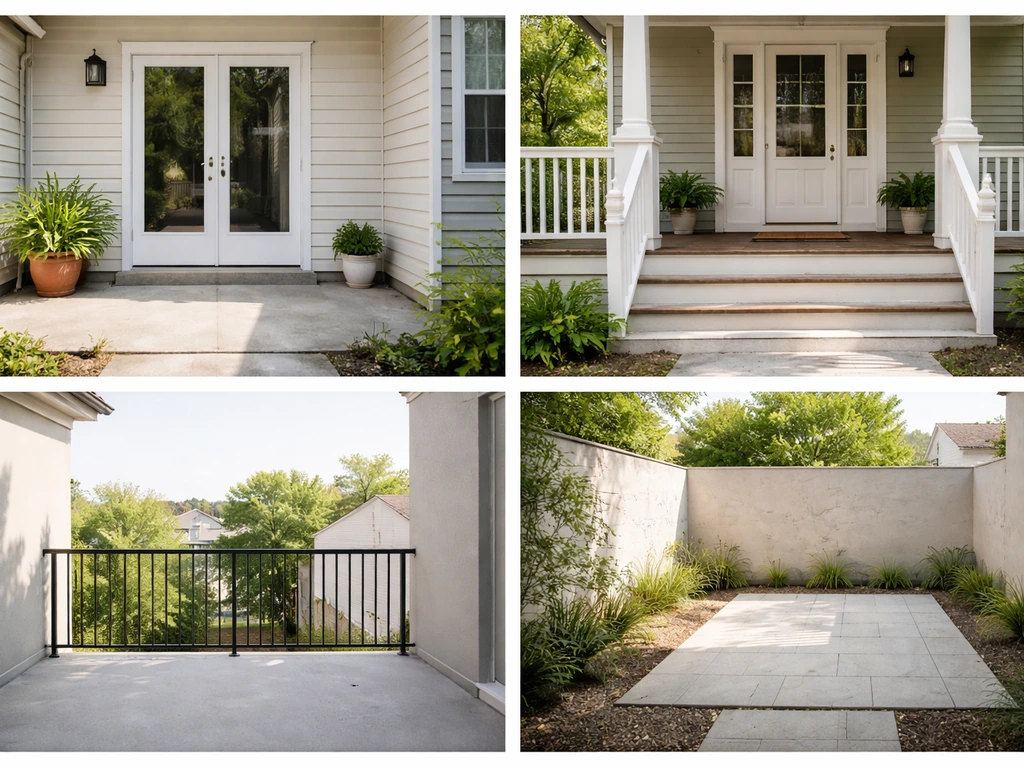
Not every patio or balcony fits neatly into the textbook definition. Here are the most common real-world variations and what they mean in practice.
Patio types
- Attached patio: directly connected to the house, accessible through a back or side door. The most common residential type. You step straight out from the kitchen or living room.
- Detached patio: a paved area in the yard not directly touching the house structure. Often used as a separate entertaining zone or fire pit area.
- Covered patio: has a pergola, awning, or solid roof structure overhead. Adds significant usability in hot or rainy climates.
- Screened or enclosed patio: surrounded by screens or glass panels. Common in Florida and the Southeast, sometimes marketed as a "Florida room" or lanai.
- Courtyard patio: enclosed by walls or fencing on multiple sides, giving a more private, contained feel. Common in townhomes and urban properties.
Balcony types
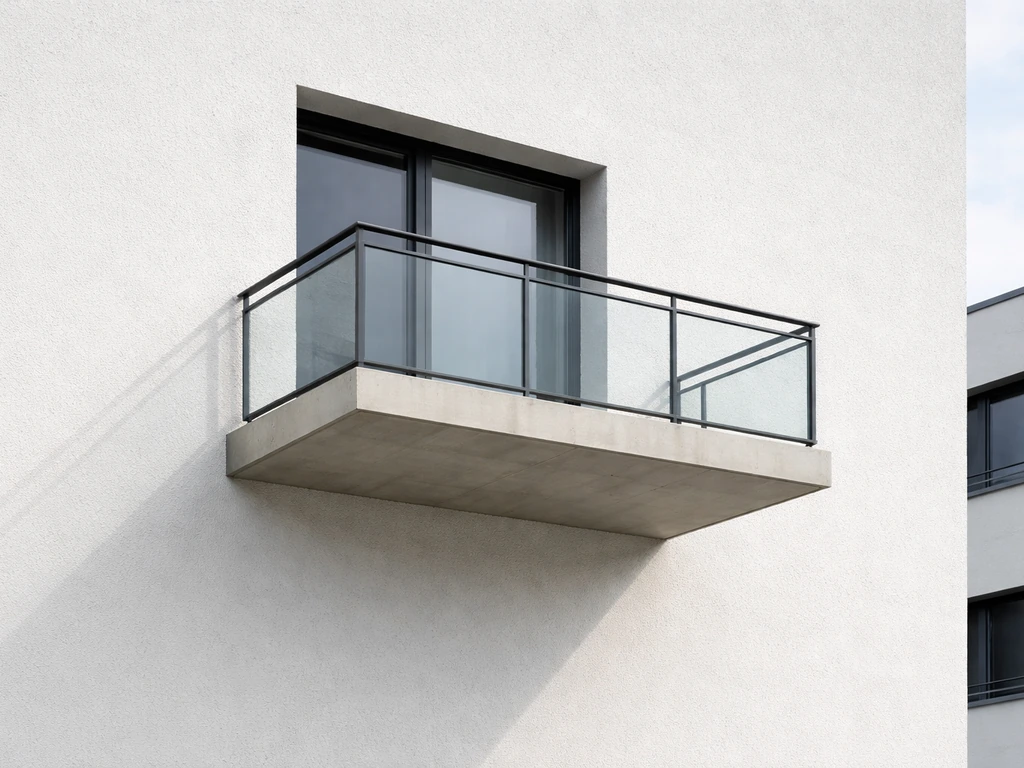
- Projected (cantilevered) balcony: extends out from the building wall with no columns supporting it from below. Most common in modern apartments and condos.
- Recessed balcony (loggia): set into the building so the floor above acts as a roof. More sheltered from weather and often larger than a projected balcony.
- Stacked balconies: in apartment buildings, balconies on successive floors that sit directly above each other. The balcony above effectively covers the one below.
- Juliet balcony: a very shallow railed platform (or just a railing) in front of a full-length window or door. Technically a balcony by structure but offers almost no usable standing space.
- Second-story residential balcony: off a bedroom or upper hallway in a single-family home. Often smaller than apartment balconies and highly private.
Reading listings and floor plans like a pro
When you're scanning a real estate listing or floor plan, the patio vs. If you're unsure about how real estate uses these labels, it helps to also compare the patio vs balcony meaning patio vs. balcony distinction. balcony distinction tells you something immediately useful: which floor the outdoor space is on, how you access it, and roughly how big it is. Here's what to look for and what to ask.
Key words and what they signal
| Listing term | What it likely means | What to verify |
|---|---|---|
| Patio | Ground-level paved area, usually at the back | Confirm size, whether it's covered, and if it's private or shared |
| Balcony | Elevated platform off an upper floor with a railing | Confirm which floor, size (sq ft), and whether it's projected or recessed |
| Terrace | Raised outdoor area or rooftop space; sometimes used interchangeably with patio | Clarify the elevation and whether it's shared or private |
| Covered patio | Ground-level paved area with overhead structure | Ask about the roof type (pergola, solid cover, awning) and enclosure |
| Private balcony | Balcony accessed only from your unit, not shared | Double-check HOA rules on furniture and use |
| Juliet balcony | A railing in front of a door/window with minimal or no floor depth | Confirm whether there's actual standing/sitting space |
| Porch | Covered ground-level entrance area | Check if it's front or back, whether it's screened, and its size |
Questions worth asking before you commit
- What floor is the balcony on, and what's the square footage? A 40 sq ft balcony fits two chairs; a 120 sq ft one is a genuine outdoor room.
- Is the patio shared with other units or exclusively yours? In condos and townhomes, ground-level patios can be assigned to a unit but technically be common property.
- Is the outdoor space enclosed or open to the elements? A screened patio and an open patio have very different daily usability.
- What's the access point? Is the patio off the living room, the kitchen, or a side gate? For a balcony, which room does the door open from?
- Are there HOA or building restrictions on how the space can be used, what furniture is allowed, or whether you can add a cover?
- Is the balcony a projected cantilever or a recessed loggia? Recessed ones are usually better sheltered and more private.
- What's the condition of the railing or balustrade? Building codes require guards on balconies to specific heights, and aging railings are a common inspection flag.
One thing that trips people up in apartment searches: a listing might say "patio" for a ground-floor unit's outdoor area and "balcony" for the same-sized space on the third floor. In a patio vs balcony apartment comparison, the main difference is whether the outdoor space sits at ground level or projects from an upper floor. The footprint could be identical, but the elevation changes how it feels to use it, how much privacy you have, and what the view is. Ground-floor patios in dense buildings can feel exposed unless fenced; upper-floor balconies trade ground access for elevation and separation from foot traffic.
Floor plans label these spaces differently too. Look for the label, then note what floor of the plan it appears on. If it's on the main floor plan and opens off the kitchen or living room, it's almost certainly a patio (or ground-floor terrace). If it appears on an upper-floor plan and the label shows a railing symbol, it's a balcony. When in doubt, ask the agent for the outdoor space's elevation and access point. Those two facts answer the patio-vs-balcony question every time.
If you're also trying to untangle whether something is a porch vs. If you're also trying to untangle whether something is a porch vs. difference between balcony and patio a patio, or a terrace vs. a balcony, those are genuinely separate distinctions worth sorting out before you start seriously comparing properties. a patio, or a terrace vs. a balcony, those are genuinely separate distinctions worth sorting out before you start seriously comparing properties. The vocabulary overlaps enough that two listings for similar homes can describe their outdoor spaces with completely different words, and knowing what each term actually means keeps you from being surprised after you move in.
FAQ
What if a listing calls it a “terrace” but it sounds like it should be a balcony or patio?
Yes, some listings blur the terms, especially with “terrace” and “balcony.” If a space has a railing and is on a raised level, treat it as balcony-functionally, even if the listing says terrace. For ground-floor units, confirm whether the area is at yard level or slightly raised (for example, a few steps up can still be considered patio-level in many markets).
How can I tell patio vs balcony from a floor plan when the labels seem inconsistent?
Check the floor plan symbols, not just the words. A balcony typically appears on an upper-floor sheet with a railing element, and the door that serves it will be on that upper level. If the outdoor label appears only on the main level sheet, it is usually a patio or ground-level terrace. If the plan is unclear, ask for the floor-to-floor level or step count between the door and the outdoor surface.
Does a “covered balcony” automatically mean it’s really a patio?
In many climates, roof cover matters as much as elevation. A “covered balcony” or “covered patio” changes weather usability, but the defining structural difference still applies: balcony remains elevated and typically rail-enclosed, patio remains at ground level next to the house. When comparing properties, ask whether the cover is a true roof, a partial awning, or retractable shading.
Which offers more privacy in real life, a patio or a balcony?
For privacy, elevation is only half the story. A ground-floor patio can feel private with fencing, landscaping, or an offset layout, while an upper-floor balcony can feel overlooked if it faces another building’s windows or a common walkway. When touring, note what you can see from the seated position, not just what you see standing up.
What should I check for safety and accessibility before choosing a patio or a balcony?
Safety and access are different for each. Balconies usually require guardrails and may have stricter building code requirements, and they can be harder to use for kids or mobility needs if the door is high or steps are involved. Patios may have hazards like uneven pavers or trip edges near the threshold. Ask whether the outdoor doors are step-free and whether the railing height is sufficient.
Can one property have both patio and balcony spaces that both get labeled as “outdoor area”?
Yes. Corner units can have “wrap” outdoor spaces where one portion functions like a balcony (railed and elevated) and another portion functions like a patio (ground-level). This is more common in multi-level townhomes and duplexes. If you see multiple outdoor labels on different floor sheets, treat each area separately when estimating usability and cost.
In apartment rentals, how should I verify the term if the listing says “patio” for an upper-floor unit?
Rental listings sometimes use the wrong term, because marketing prefers “balcony” for premium appeal. If the unit is on floor two or higher but the listing says “patio,” verify the access point by asking whether the door opens to a raised platform or directly to yard-level ground. The correct term matters for furniture planning and for how you’ll feel looking out from the height.
What are common maintenance or water-drainage issues for patios versus balconies?
You may need to look at drainage and maintenance. Patios often collect water near the foundation edge or along the door threshold, and paver settling can create dips. Balconies can have runoff issues at the wall interface, especially if the waterproofing is older. Ask how long ago the balcony deck surface and waterproofing were last updated, especially for older buildings.
Next Article
Is Patio and Balcony the Same? Key Differences Explained
Clear definitions and side by side comparison of patio vs balcony, plus how to tell them from porches and courtyards.