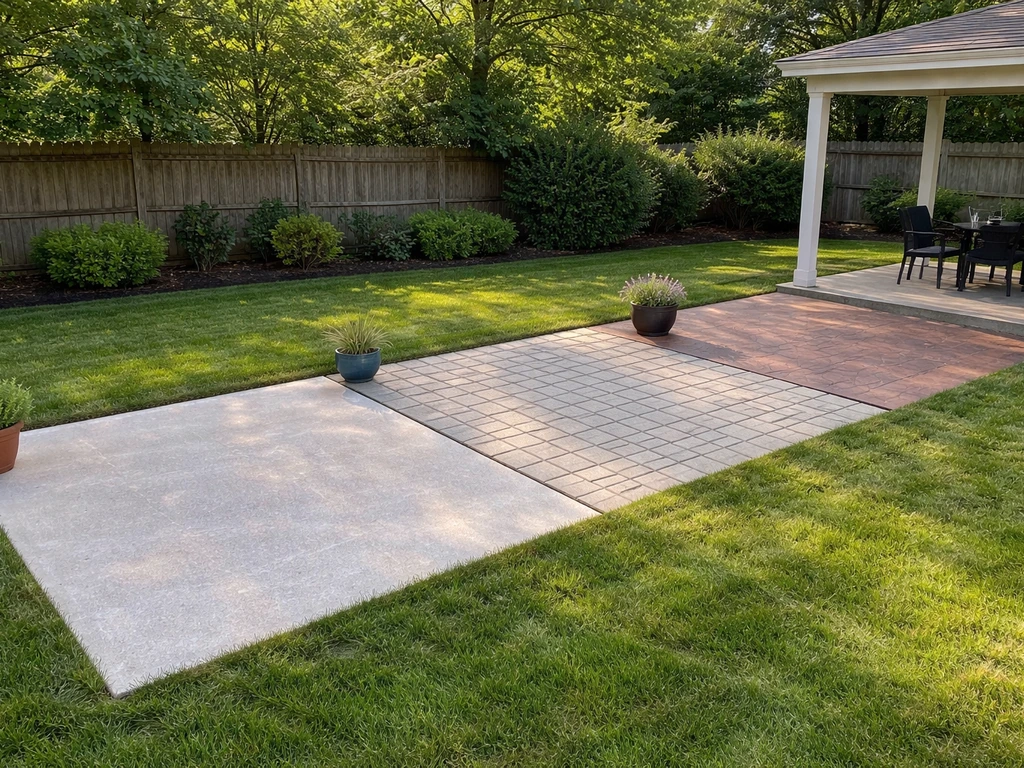
Patios are most commonly made of concrete, natural stone, brick, or concrete pavers, with gravel, tile, and wood or composite materials rounding out the common options. Each material is built up in layers: a compacted gravel base, a bedding layer, and the surface material on top. What you choose changes how the patio looks, how long it lasts, how much maintenance it needs, and whether it holds up through freezing winters or baking summers.
What Are Patios Made Of? Materials, Costs, and Durability

Ada Hollis
3 Jun 2026
First: what exactly is a patio?
A patio is a ground-level outdoor surface, typically located beside or behind a house or apartment building, designed for seating, dining, and general outdoor leisure. The defining feature is that it sits flush with the ground rather than being raised on a structure. Merriam-Webster frames it as an outdoor area used for leisure and social activities, often courtyard-style in feel. That ground-level distinction is important: a deck is typically raised off the ground on joists and posts, while a patio is laid directly on a prepared earth base, which is why drainage (sloping the surface away from the house) matters so much for patio construction.
Understanding what a patio is matters when you're reading a property listing, planning a renovation, or comparing outdoor space options. The types of patios and their sizes vary widely by home style and region, but the material choice shapes nearly everything about the experience. If you're comparing options, the main differences usually come down to the surface material, installation approach, and how each performs in your local climate types of patios.
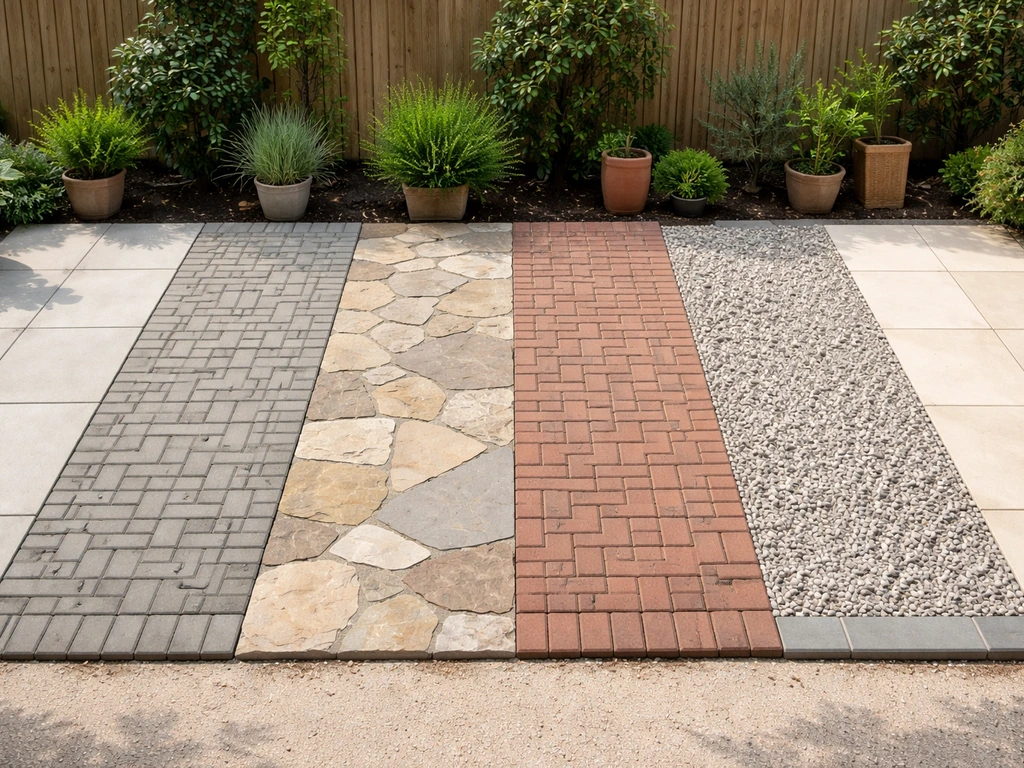
The main materials patios are made of
Concrete (poured and stamped)
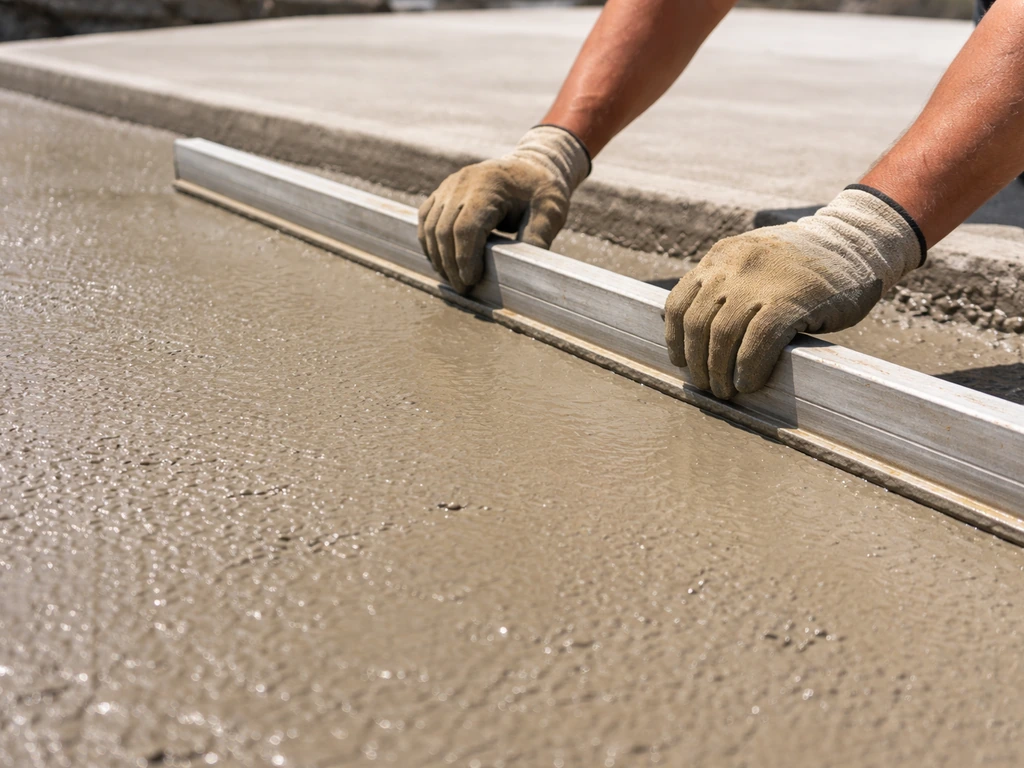
Poured concrete is the most common patio material in North America. It's a mixture of Portland cement, aggregate (gravel and sand), and water that's poured as a liquid, leveled, and finished as it cures. Basic poured concrete patios run roughly $6 to $10 per square foot installed. Stamped concrete uses the same material but adds color pigment and textured stamps pressed into the surface before it fully cures, mimicking the look of stone, brick, or tile at a lower cost than the real thing. Exposed-aggregate concrete is another finish option: the outer cement paste is washed away while the concrete is still fresh, uncovering the decorative stone or gravel within the mix. This creates a naturally textured, slip-resistant surface without any coating.
Natural stone (flagstone, slate, bluestone, travertine, granite)
Natural stone patios use quarried slabs or irregular pieces set in mortar or on a compacted sand-and-gravel base. Flagstone is the broadest category, covering any flat, irregular stone cut for paving. Bluestone is a popular flagstone in the northeastern US, typically sold in natural cleft (split) or thermal (honed for better traction) finish. Slate has low water absorption and handles freeze-thaw better than more porous stones. Travertine is attractive but more porous, making it less suitable for cold climates where water that soaks in can freeze and crack the stone. Granite is dense, durable, and very low maintenance. Natural stone patios typically cost $15 or more per square foot installed, which can be roughly three times the cost of basic poured concrete.
Brick
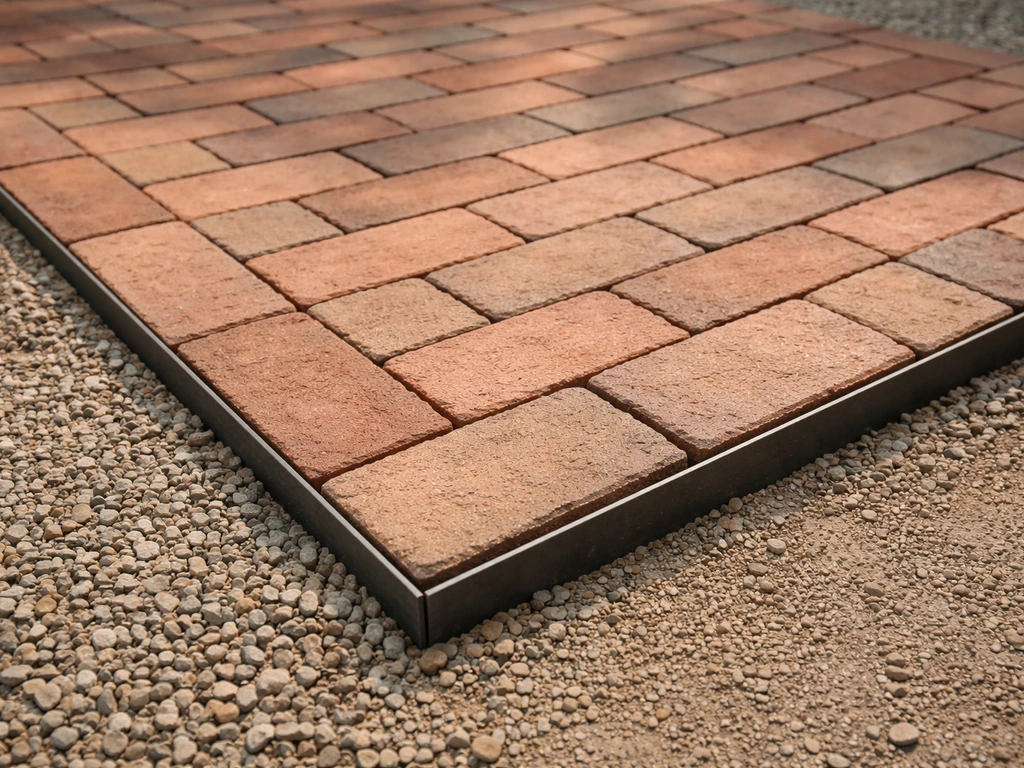
Traditional clay brick is one of the oldest patio materials and gives a warm, classic look. Patio brick is typically set on a compacted gravel base with a sand bedding layer, either in mortar joints or with dry-sand joints. The main durability concerns are freeze-thaw cycling (look for brick rated for exterior use in cold climates) and the joints, which can allow weed growth over time if not properly maintained.
Concrete and stone pavers
Pavers are precast units, either manufactured concrete or cut natural stone, designed to interlock or sit tightly together on a prepared base. Concrete pavers run roughly $8 to $15 per square foot installed. The standard installation system is a compacted crushed-stone base of 4 to 6 inches, followed by about 1 inch of fine chip stone or concrete sand as a bedding layer, then the pavers themselves, finished with polymeric sand swept into the joints. Polymeric sand is a key detail: it hardens slightly when wet, which significantly reduces weed growth and insect intrusion compared to plain sand. A geotextile fabric between the subgrade and the base prevents contamination and mixing of soil into the base over time. Edge restraints keep the whole system from spreading.
Gravel and crushed stone
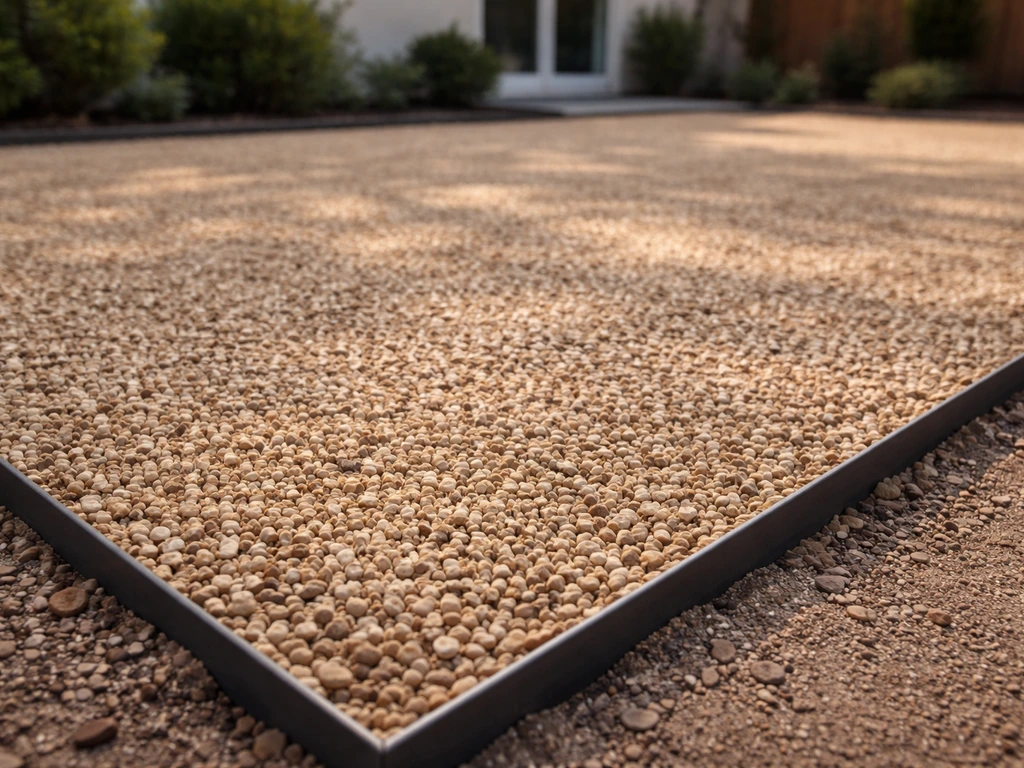
Gravel patios are the lowest-cost and easiest-to-install option. The surface is loose crushed stone, pea gravel, or decomposed granite contained within edging. Drainage is excellent since water passes directly through the material. The downsides are that it shifts underfoot, scatters onto lawns, and requires periodic raking and top-up. It's better suited to informal spaces or properties where cost is the primary concern.
Outdoor tile (porcelain and ceramic)
Tile patios use ceramic or porcelain tiles set in mortar on a concrete slab. For outdoor use in any climate with freezing temperatures, the tile must have a water absorption rate of 0.5% or less, which is the threshold for vitrified porcelain. Low absorption means water can't penetrate the tile and freeze inside it. Porcelain pavers, which are thicker tiles designed specifically for outdoor use, are increasingly popular. Tile on an outdoor slab also needs careful attention to drainage slope and control-joint placement in the substrate: if a tile is installed directly over a concrete control joint and that joint moves, the tile above it will crack.
Wood and composite decking on patios
Some ground-level outdoor spaces use wood or composite decking laid on sleepers directly on a gravel or concrete base. Technically these blur the line between a patio and a deck, but when the structure sits at ground level without a raised frame, the space still functions as a patio. Hardwood and composite materials resist rot better than treated pine, but wood surfaces require regular sealing or staining to prevent weathering, and composite materials can get hot in direct sun.
Less common materials
Rubber pavers (often made from recycled tires) appear in some patios where cushioning is a priority, such as around play areas. Metal grating is occasionally used in modern or industrial design contexts. These are niche choices and not what most homeowners are working with or shopping for.
How these materials compare in look, feel, and durability
| Material | Look & Feel | Durability | Maintenance | Approx. Installed Cost |
|---|---|---|---|---|
| Poured Concrete | Utilitarian; can be colored or stamped | Very high if air-entrained; prone to surface scaling without it | Occasional sealing; crack repair over time | $6–$10 per sq ft |
| Stamped Concrete | Mimics stone or brick | Same as poured; surface pattern can wear | Requires periodic resealing to protect color/pattern | $12–$20+ per sq ft |
| Natural Stone | Unique, premium appearance | Varies by stone; slate/granite excellent; travertine weaker in cold | Sealing recommended; joint maintenance | $15+ per sq ft |
| Brick | Classic, warm, traditional | Good; susceptible to freeze-thaw if not properly rated | Joint maintenance; occasional cleaning | $10–$20 per sq ft |
| Concrete Pavers | Uniform; many style options | Excellent; individual pavers can be replaced | Polymeric sand joints; occasional resetting | $8–$15 per sq ft |
| Gravel | Informal, natural | Low; shifts and scatters | Regular raking and top-up | $1–$4 per sq ft |
| Porcelain Tile | Sleek, modern, wide design range | Excellent if low-absorption rated; substrate failure is main risk | Easy to clean; grout maintenance | $10–$20+ per sq ft |
| Wood/Composite | Warm, natural or modern | Composite outlasts wood; both require proper drainage | Wood needs sealing; composite needs cleaning | $10–$25+ per sq ft |
What's actually involved in installing each type
Every patio starts with the same foundation work: excavating the area, grading the soil, and compacting a crushed-stone base. If a scale drawing of a patio is shown at right, use it to confirm the measurements before you plan the base and materials same foundation work. What changes is what goes on top of that base and how skilled or specialized the labor needs to be.
Concrete slabs
Poured concrete requires forming, pouring, and finishing in a single continuous operation before the concrete sets. Control joints need to be cut or tooled at planned intervals to manage where cracking occurs, because concrete always cracks: the goal is to control where. In freeze-thaw climates, the mix must be air-entrained, meaning microscopic air bubbles are introduced into the mix to give water room to expand when it freezes, preventing surface scaling. Using chemical deicers on a concrete patio that isn't properly air-entrained accelerates scaling damage significantly.
Pavers (concrete or stone)
Paver installation is more labor-intensive but more forgiving long-term. The typical sequence is: excavate and compact subgrade, lay geotextile fabric, spread and compact 4 to 6 inches of crushed gravel base, add approximately 1 inch of bedding material (fine chip stone or concrete sand), set pavers, compact the entire surface with a plate compactor (this is done before joint sand is added, not after), sweep polymeric sand into joints, and wet to activate it. Edge restraints keep the field pavers from migrating outward over time. Individual pavers can be lifted and reset later if settlement occurs, which is a big long-term advantage over poured slabs.
Natural stone
Natural stone can be set in mortar on a concrete base or set dry on a prepared sand-and-gravel base depending on the stone and design. Mortar-set systems are more rigid and less tolerant of settlement, but they keep joints tight and clean. Dry-set systems allow more flexibility but joints need maintenance. Stone typically comes in 1 to 1.25 inch thickness for pedestrian patios. Sealing is recommended for most stone types: it retards staining and, for porous stones, slows moisture absorption.
Tile
Tile patios need a solid, crack-free concrete substrate that has fully cured before installation begins. New concrete typically needs at least 28 days before tile is set on it. The slab must slope for drainage (typically 1/8 to 1/4 inch per foot away from the house), and the tile layer must not bridge over control joints in the concrete below. If it does, the tile will crack when the joint moves. This is one of the most common failure modes for outdoor tile patios.
Gravel
Gravel installation is straightforward: excavate a few inches, lay landscape fabric to suppress weeds, install edging to contain the stone, spread and rake gravel to an even depth of 2 to 4 inches. It's a realistic DIY project and the lowest-cost option by a wide margin.
Picking the right material for your climate and how you use the space
Cold climates with freeze-thaw cycles
Freeze-thaw cycling is the most damaging force acting on patio materials in northern climates. Water expands about 9% when it freezes, and any material that absorbs water and then freezes is at risk. For concrete, air entrainment in the mix is non-negotiable in cold climates. For stone, choose low-absorption options: slate, granite, and bluestone handle cold well; travertine and some limestones do not. For tile, use only porcelain rated at 0.5% water absorption or less. Pavers in cold climates perform very well because the jointed system can flex slightly with ground movement rather than cracking as a monolithic slab would. Avoid chemical deicers on concrete and natural stone; they accelerate deterioration dramatically. In freeze-thaw regions where supplementary cementitious materials are present and deicers are used, FHWA notes that deicer scaling resistance may be evaluated using ASTM C 672.
Hot, sunny, or humid climates
In hot climates, the main concerns are heat retention, slip resistance when wet, and UV fading. Light-colored concrete and natural stone reflect more heat than dark materials. Porcelain tile can become extremely hot in direct sun and slippery when wet, so look for tiles with a coefficient of friction (COF) rating appropriate for wet outdoor use. Composite decking in direct sun can also get hot enough to be uncomfortable barefoot. Gravel is actually comfortable in heat because it doesn't retain surface heat the way solid materials do.
High-traffic entertaining spaces
For a patio that sees regular entertaining, concrete pavers or stamped concrete offer the best combination of durability, appearance, and repairability. Natural stone looks premium but costs more and some types require careful maintenance to avoid staining from food, drinks, and outdoor furniture. Brick works well and is repairable but needs periodic joint attention. Gravel is not practical for an entertaining area: furniture sinks in, heels catch, and it tracks into the house.
Budget-first decisions
If cost is the primary driver, poured concrete gives you the most durable, low-maintenance surface per dollar. Gravel is cheaper upfront but has ongoing maintenance costs and limited usefulness. Pavers cost more to install but individual units can be replaced years later without redoing the whole surface, which is a long-term cost advantage.
Patios vs. porches, verandas, balconies, and courtyards
These terms get used interchangeably in casual conversation and real estate listings, but they describe meaningfully different things. Knowing the difference matters when you're shopping a property or planning a project.
- Patio: ground-level outdoor surface, usually at the rear or side of a house, flush with the yard. No roof required. Made of hard or semi-hard materials. The defining characteristic is that it sits on the ground.
- Porch: a structure attached to the outside of the main walls of a building, typically covered and often at the front entrance. A porch is part of the building's architecture in a way a patio is not. It may be screened, open, or partially enclosed.
- Veranda (or verandah): a roofed, open-sided porch that typically runs along the front or sides of a house. More common in Australian, South Asian, and Southern US architectural traditions. Think of it as a formal, often wraparound covered porch.
- Balcony: an elevated platform projecting from an upper-floor wall of a building, enclosed by a railing. A balcony is always raised above ground level, which is the clearest difference from a patio.
- Courtyard: an enclosed or partially enclosed outdoor space surrounded by walls or buildings. The Cambridge dictionary places patios and courtyards in overlapping territory, and in some regional and Spanish-language usage, 'patio' and 'courtyard' are near-synonyms. In Spanish, 'patio' literally means an inner courtyard or open-air space within or adjacent to a building.
In practice, the distinction that matters most for construction and real estate is ground level vs. raised. A patio is always at ground level. A balcony and most decks are raised. Porches and verandas are attached covered structures. A courtyard can overlap with a patio but typically implies an enclosed space with walls on multiple sides. If your patio is fenced in a rectangle layout, it can define a clear boundary for seating, dining, and outdoor play a patio in the shape of a rectangle is fenced.
How to identify what your existing patio is made of
If you're moving into a property or inspecting an existing patio, here's a quick way to identify the material. Tap the surface: a hollow sound under tile or a paver may indicate a failed bond or settlement beneath. Look at the joints: wide, irregular joints with irregular stones suggest natural flagstone; uniform joints with uniform units suggest concrete pavers or brick; no visible joints suggest a poured concrete slab. Scratch a corner gently with a metal key: natural stone will not scratch easily; concrete pavers will show a faint mark; soft brick may crumble slightly at the edge. Look for color variation and natural veining, which indicates real stone rather than stamped or manufactured material. Check the surface texture: the rough, pebbly feel of exposed aggregate is distinctive and different from the smooth surface of stamped concrete.
Before you choose a new patio material
There's no universally best patio material. If you’re not sure what styles to consider, browse examples of patios to see how different materials and layouts look in real spaces patio material. The right choice depends on your climate, how you use the space, your budget for both installation and long-term maintenance, and what the space needs to look like. Concrete pavers are the most versatile choice for most homeowners: they're mid-range in cost, handle freeze-thaw well, look good in a wide range of settings, and individual pieces can be replaced without a full redo. Natural stone is the premium choice if appearance is the priority and budget allows. Poured concrete is the best value for a clean, durable surface. Tile works well in mild climates with a properly prepared substrate. Gravel is the right answer only when cost is the overriding concern or the space is informal and low-traffic.
Before committing, get clear on your patio's size (since material costs scale directly with area), the condition of the subgrade, and whether any drainage issues need to be solved at the base level before the surface goes in. A quick way to estimate your patio size is to match it to how many people you want to seat comfortably and the size of your furniture. If you are trying to plan a layout, common patio sizes can help you estimate how much space you need for seating, dining, and circulation patio's size. A patio that drains poorly will fail regardless of what material is on top. Starting with the right base is more important than any surface material choice.
FAQ
When someone quotes a patio cost per square foot, what details should I confirm are included?
If you are comparing two patio listings, ask whether the price includes excavation, base material (crushed stone and bedding), and edge restraints. Some “per square foot” numbers cover only the surface material, while the foundation work typically makes up a large part of the total cost for concrete, pavers, stone, and tile.
Can I install tile over existing concrete patio slabs?
Yes, but only if the concrete is correctly built for outdoor use. In cold climates, the slab should be air-entrained and have properly spaced control joints so cracking happens in the planned lines, not randomly.
What are early warning signs that a paver patio base was installed incorrectly?
For pavers, you can often spot a poor base by looking for uneven settling or joints that are wider than expected after a freeze season. Because pavers sit on a layered base with bedding and joint sand, minor movement can be reset, but major washouts or contaminated base layers usually require more than just re-sanding the joints.
Are de-icing chemicals safe to use on patios?
If you live in freezing winters, avoid chemical deicers on concrete, natural stone, and most mortared stone systems. They can accelerate scaling and surface deterioration, even when the material itself is rated for freeze-thaw.
Is stamped concrete durable and slip-resistant for outdoor entertaining?
Stamped concrete can get slippery when wet unless the finish is textured appropriately, and it can also show surface wear where it is most walked. If you entertain often, consider choosing a finish with a higher traction texture, and avoid sealing choices that reduce grip over time.
What causes outdoor tile patios to crack, even when the tile looks fine at first?
Tile can fail outdoors when water bridges under or through the assembly. Make sure the substrate is crack-free, cured, sloped for drainage, and that the tile layer does not span and rigidly lock onto any moving control joints below.
What should I look for in poured concrete patios to reduce cracking and surface problems?
A poured concrete patio needs planned cracking control (control joints at intervals) and adequate curing. Many contractors also finish with a surface texture that improves traction; without that, some surfaces become slick in rain.
Is gravel always “maintenance-free” since water drains through it?
Gravel is one of the most drainage-friendly options, but it can still fail if the base is not compacted or if edging is weak. Without solid edging and periodic top-up, gravel migrates and can undermine nearby foundations and landscaping.
How do I choose patio materials that stay comfortable and safe in extreme heat?
For patios in hot climates, light-colored surfaces generally feel cooler, and materials with good wet slip resistance matter more than color alone. If you choose tile or pavers, confirm there is an appropriate traction rating for wet outdoor conditions before installing.
Which patio materials are easiest to repair after years of wear?
If you want a patio that can be repaired years later without replacing the whole surface, prioritize jointed systems like concrete pavers or natural stone set dry or with a more flexible approach. Monolithic surfaces like poured concrete and mortared stone can crack in ways that are harder to localize without visible patching.
Next Article
Examples of Patios: Types, Layouts, and How to Spot One
See real patio examples and layouts, learn how to spot them, and tell patios apart from porches, balconies, and courtyar